




Vertigo can cause persistent dizziness and imbalance, often affecting daily activities. In some cases, neck muscle dysfunction and poor postural control contribute to these symptoms. Kinesio taping therapy is a supportive physiotherapy technique used to improve sensory feedback, neck stability, and balance.
This article explores how Kinesio taping works for vertigo, when it may help, and how it is used as part of a comprehensive physiotherapy-based treatment approach.
What is Kinesio Taping for Vertigo?
Kinesio taping for vertigo is a therapeutic technique that uses a specialized elastic tape (like KT Tape, RockTape, or Kinesio Tex Gold) applied to the skin, typically around the neck and upper back. It is a non-invasive, drug-free approach used as part of a comprehensive treatment plan to reduce symptoms of dizziness, imbalance, and vertigo.
The therapy is not a direct "cure" for the inner ear problem itself. Instead, it works by providing the brain with enhanced sensory information from the muscles and joints in the neck, which helps the brain better interpret the body's position in space and override conflicting signals that cause vertigo.
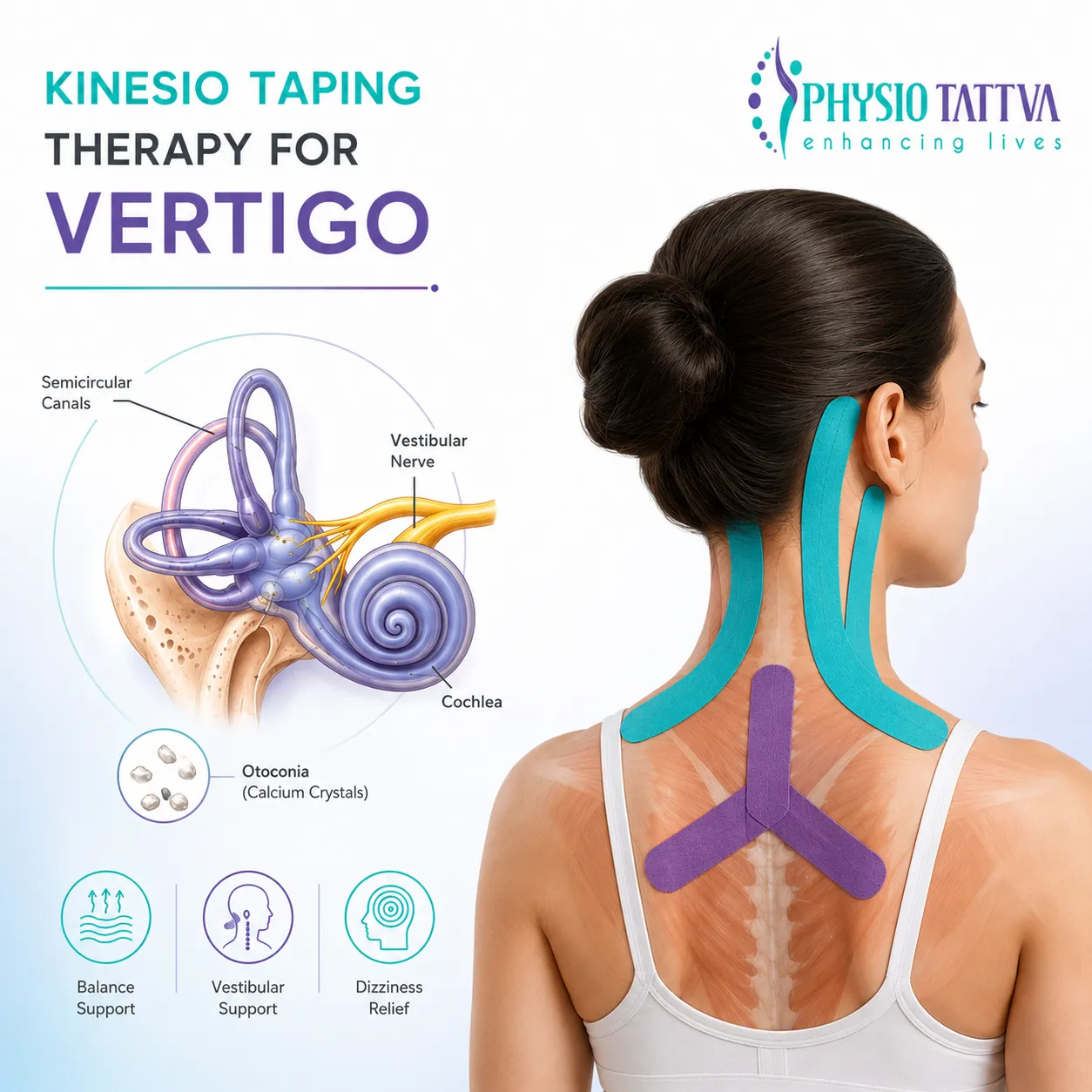
How Kinesio Taping Works for Vertigo
Vertigo often occurs when the brain receives conflicting information from the three main balance systems:
- Vestibular System (Inner Ear): Senses head motion, rotation, and gravity.
- Visual System (Eyes): Senses where you are in space and if you are moving.
- Somatosensory System (Proprioception): Nerves in your skin, muscles, and joints that sense body position and movement.
Kinesio taping primarily influences the somatosensory system to help resolve this conflict. Here’s how:
- Enhanced Proprioceptive Input: The gentle pull and sensory feel of the tape on the skin constantly stimulate mechanoreceptors (nerves that sense touch, pressure, and vibration). This provides the brain with clear, consistent feedback about head and neck position, which can help override the faulty signals coming from the vestibular system.
- Neurological Gating: The constant, gentle sensation from the tape can act as a "distraction" or "gate," down-regulating the abnormal and distressing vertigo signals before they reach the brain for processing. Think of it like rubbing your elbow after you've hit it—the rubbing sensation helps reduce the pain signal.
- Muscle Support and Re-education: For vertigo linked to neck issues (cervicogenic dizziness), the tape can help inhibit overactive muscles (like the upper trapezius or sternocleidomastoid - SCM) and facilitate underactive ones, promoting better neck posture and reducing strain that can trigger dizziness.
- Decompression and Increased Blood Flow: The tape subtly lifts the skin, which is thought to decompress the underlying tissue. This may improve blood and lymphatic flow, potentially reducing inflammation and muscle tension in the neck.
Which Types of Vertigo Can Kinesio Taping Support?
Kinesio taping is most effective for certain types of vertigo and is often used as an adjunctive therapy (in combination with other treatments).
- Cervicogenic Dizziness: This is the primary condition where taping shows the most promise. Cervicogenic dizziness originates from dysfunction in the neck muscles and joints. Since the tape is applied directly to the neck to improve mechanics and sensory feedback, it directly addresses the root cause.
- Benign Paroxysmal Positional Vertigo (BPPV): Taping is not a primary treatment for BPPV, which is caused by displaced inner ear crystals. The primary treatment is a repositioning maneuver like the Epley or Semont. However, taping is often applied after a successful maneuver to:
- Remind the patient to avoid provocative head movements.
- Reduce associated neck stiffness and guarding that often develops with BPPV.
- Vestibular Neuritis or Labyrinthitis: In the recovery phase of these conditions, the brain must learn to compensate for a weakened vestibular nerve (a process called vestibular compensation). Taping can provide extra sensory input to assist the brain during Vestibular Rehabilitation Therapy (VRT) exercises.
- Persistent Postural-Perceptual Dizziness (PPPD): This condition involves a hypersensitivity to motion stimuli. The constant, grounding sensation of the tape on the neck can sometimes help desensitize the nervous system and reduce feelings of unsteadiness.
How Kinesio Taping Is Applied for Vertigo
Kinesio taping should ideally be performed by a physical therapist, chiropractor, or athletic trainer with specialized training in vestibular and neurological conditions. Proper application is key to its effectiveness.
Common taping patterns for vertigo include:
- Suboccipital Taping: A strip of tape is applied at the base of the skull to influence the small muscles that control fine head movements.
- Sternocleidomastoid (SCM) Inhibition: An "I" or "Y" strip is applied along this large neck muscle, often with light tension, to discourage overactivity and strain.
- Upper Trapezius and Levator Scapulae Support: A "Y" or "fan" strip is applied from the shoulder up towards the neck to reduce tension in muscles commonly associated with poor posture and neck pain, which can contribute to dizziness.
Regardless of the taping pattern used, the following general principles are observed:
- The area is cleaned and dried.
- The tape's ends (anchors) are applied with no stretch.
- The middle of the tape is applied with a specific, light stretch (usually 15-25%) over the target muscle or area.
- The tape can typically be worn for 3-5 days, even during showering.
Evidence and Effectiveness of Kinesio Taping for Vertigo
Current evidence suggests that Kinesio taping can play a supportive role in vertigo management, although research is still evolving.
- Promising for Cervicogenic Dizziness: Several studies have shown that Kinesio taping, especially when combined with manual therapy and exercise, can significantly reduce the frequency and intensity of cervicogenic dizziness.
- Supportive Role: For other vestibular disorders like BPPV and vestibular neuritis, evidence points to its role as a helpful adjunct to gold-standard treatments like canalith repositioning maneuvers and VRT, rather than a standalone cure.
- Patient-Reported Benefits: Many patients report an immediate subjective feeling of being "more stable" or "grounded" after the tape is applied, which can help reduce the anxiety that often accompanies vertigo.
Benefits and Potential Risks of Kinesio Taping for Vertigo
Like any supportive physiotherapy technique, Kinesio taping comes with both advantages and limitations. Understanding these helps set realistic expectations and ensures it is used appropriately as part of a broader vertigo management plan.
Key Benefits of Kinesio Taping for Vertigo
When applied correctly by a trained professional, Kinesio taping offers several practical benefits for individuals managing vertigo symptoms:
- Non-invasive and drug-free.
- Provides continuous sensory feedback 24/7 while worn.
- Can reduce muscle guarding and pain associated with vertigo.
- Relatively inexpensive and low-risk.
- Empowers patients by giving them a physical tool to manage symptoms.
Potential Risks of Kinesio Taping Therapy for Vertigo
Although Kinesio taping is considered safe, a few potential risks should be kept in mind, particularly if it is applied incorrectly or without professional guidance:
- Skin Irritation: The most common side effect. It can be caused by an allergy to the adhesive or traction on the skin. A small test patch is recommended.
- Incorrect Application: Applying the tape with too much tension can increase pain or muscle strain.
- False Sense of Security: The tape is a supportive tool, not a cure. It's crucial to continue with prescribed exercises and treatments.
Supporting Vertigo Care with Kinesio Taping Therapy
Kinesio taping therapy can play a supportive and low-risk role in managing vertigo, especially when symptoms are linked to cervicogenic dizziness and neck dysfunction. By improving sensory feedback from the neck, it helps the brain better interpret head position and reduce conflicting balance signals.
Although it is not a standalone cure, Kinesio taping is most effective when applied by a trained professional and combined with vestibular rehabilitation, manual therapy, and targeted exercises based on an accurate diagnosis. When used appropriately, it can enhance symptom control, confidence, and overall balance recovery.
At Physiotattva physiotherapy clinics in Bangalore and Hyderabad, you receive personalised care tailored to your specific needs, ensuring effective results and comfort throughout your journey to recovery.
Don’t wait to start your recovery! Get in touch with Physiotattva for more details! Contact us at +91 89510 47001.
Why Physiotattva?
22+
50,000+
95%
200+
25+
4.8
Cities We Serve

Bangalore
At Physio Tattva, we are committed to bring access to quality physio care through ultra-modern clinics and high-skilled practitioners to all.
.webp)
Hyderabad
At Physio Tattva, we are committed to bring access to quality physio care through ultra-modern clinics and high-skilled practitioners to all.
.webp)
Vishakhapatnam
At Physio Tattva, we are committed to bring access to quality physio care through ultra-modern clinics and high-skilled practitioners to all.
Core Treatments
Core Conditions
Core Symptoms
Frequently Asked Questions
Is Kinesio taping for vertigo safe?

Can I apply the tape myself at home?
How quickly will I feel relief?






%20(1)-p-3200.jpeg)


.jpg)
.webp)
.webp)
.webp)