




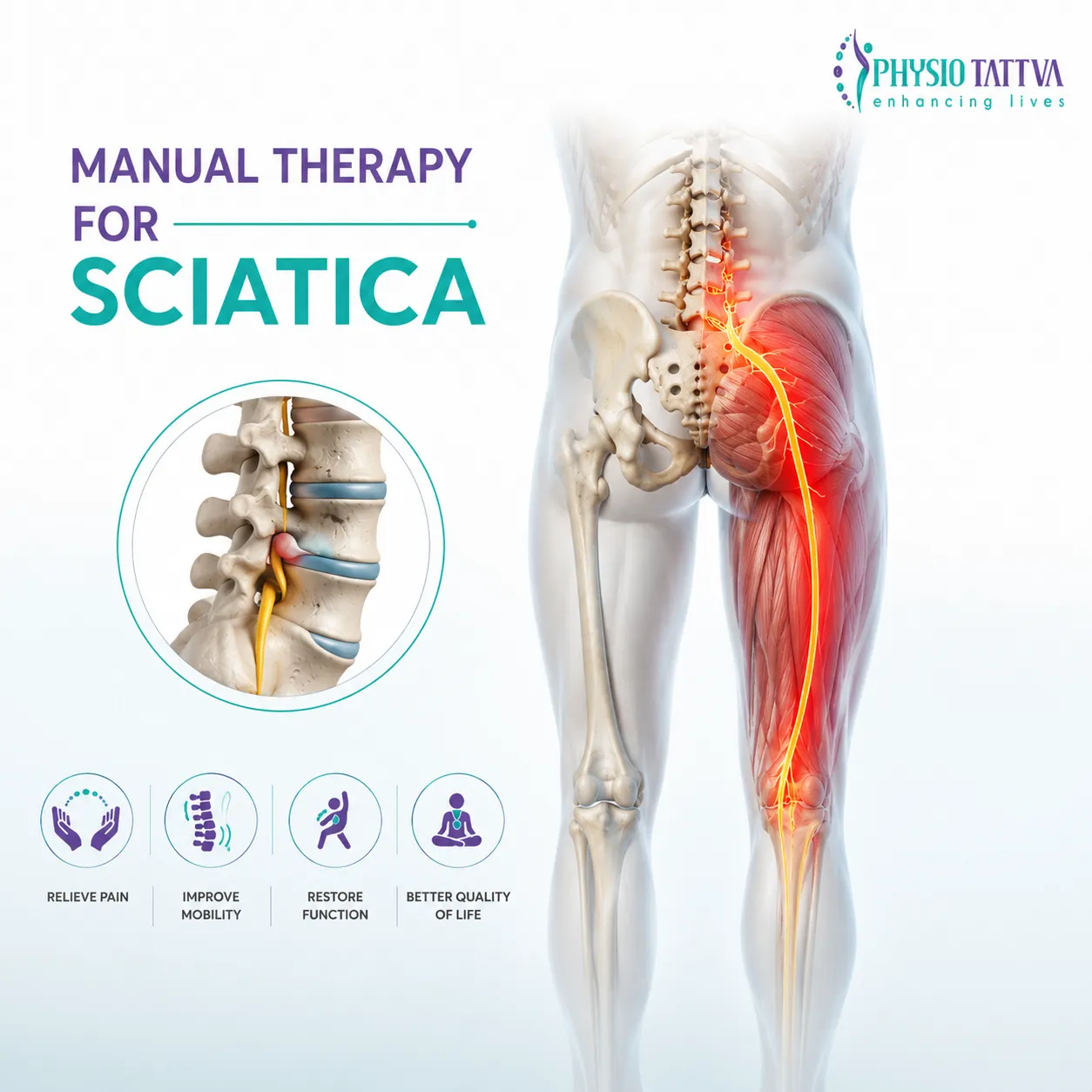
Sciatica is more than just back pain. It’s a sharp, radiating, and often debilitating pain that can travel from your lower back, through your buttock, and down your leg. For the millions who suffer from it, finding effective relief can feel like an endless journey. While medication can mask the pain, manual therapy for sciatica offers a powerful, hands-on approach that targets the root cause of the problem.
If you're looking for a drug-free, non-invasive treatment, understanding how manual therapy works is your first step toward reclaiming a pain-free life.
What Is Sciatica?
It's important to know that sciatica isn't a diagnosis itself, but rather a symptom of an underlying issue. It occurs when the sciatic nerve—the longest nerve in your body, becomes compressed or irritated.
Common causes include:
- Herniated or Slipped Disc: The soft center of a spinal disc pushes out and presses on the nerve root.
- Spinal Stenosis: A narrowing of the spinal canal, which puts pressure on the nerves.
- Piriformis Syndrome: The piriformis muscle, located deep in the buttocks, spasms or tightens and irritates the sciatic nerve.
- Degenerative Disc Disease: The natural wear and tear of spinal discs can lead to nerve compression.
- Spondylolisthesis: One vertebra slips forward over another, narrowing the space for the nerve.
Because the cause can vary, a skilled therapist will first identify the source of your sciatica before starting treatment.
What is Manual Therapy?
Manual therapy is a specialized form of physical therapy where clinicians use their hands to diagnose and treat musculoskeletal conditions. It's not a generic massage. Instead, it involves precise, hands-on techniques designed to decrease pain, reduce inflammation, and improve mobility.
The primary goals of manual therapy for sciatica are to:
- Decompress the Sciatic Nerve: Relieve the pressure on the nerve.
- Restore Mobility: Improve movement in the lumbar spine, hips, and surrounding tissues.
- Reduce Muscle Tension: Relax tight muscles (like the piriformis) that may be contributing to the problem.
Key Manual Therapy Techniques for Sciatica
A qualified physical therapist, chiropractor, or osteopath will use a combination of techniques tailored to the specific cause of your sciatica.
Spinal Mobilization and Manipulation
This technique focuses on restoring healthy movement in the spine to relieve pressure on irritated nerve roots and improve overall spinal function.
- What it is: This involves applying controlled pressure or movements to the joints of the spine.
- Mobilization: Gentle, passive movements to increase the range of motion in a stiff spinal joint.
- Manipulation: A faster, more forceful (but still controlled) movement, often associated with a "pop" or "crack." This can help open up the joint space where the nerve root exits the spine.
- Why it helps: By improving the mobility of your lumbar vertebrae, manipulation and mobilization can directly reduce pressure on the compressed sciatic nerve root caused by a herniated disc or stenosis.
Soft Tissue Mobilization
This approach targets tight, overactive muscles and restricted connective tissues that commonly contribute to sciatic nerve irritation.
- What it is: This is a broad category of techniques aimed at the muscles, ligaments, and fascia (the connective tissue surrounding muscles). It includes targeted massage, trigger point therapy, and myofascial release.
- Why it helps: If your sciatica is caused by piriformis syndrome, this technique is essential. A therapist can apply deep, sustained pressure to the tight piriformis muscle, encouraging it to relax and stop irritating the sciatic nerve. It also breaks down scar tissue and adhesions in the muscles of the lower back and glutes.
Nerve Gliding (or Nerve Flossing)
This method helps restore normal movement of the sciatic nerve, especially when pain is caused by nerve entrapment or sensitivity.
- What it is: Think of it like flossing your teeth, but for your nerve. Nerve gliding involves specific, gentle exercises and movements designed to help the sciatic nerve slide more freely through its pathway without getting "stuck" on surrounding tissues like bone, disc, or muscle.
- Why it helps: Adhesions (scar tissue) can cause the nerve to become entrapped. Nerve flossing gently breaks up these adhesions and improves the nerve's mobility, reducing pain, numbness, and tingling. A therapist will guide you through these movements in-session and teach you how to do them at home.
Myofascial Release
This technique addresses deep connective tissue restrictions that can silently contribute to sciatic nerve compression and persistent pain.
- What it is: A technique that applies gentle, sustained pressure to the fascia—the web of connective tissue that covers everything in your body. Restrictions in the fascia of the lower back, pelvis, and legs can create tension that contributes to nerve compression.
- Why it helps: Releasing fascial restrictions restores balance and allows muscles and nerves to function properly, providing significant sciatica pain relief.
Muscle Energy Techniques (MET)
This approach uses controlled muscle activation to correct imbalances, improve joint alignment, and reduce nerve irritation.
- What it is: MET uses your own muscle contractions to relax and lengthen tight muscles and improve joint mobility. A therapist will position your leg or spine and ask you to gently push against their resistance for a few seconds, then relax.
- Why it helps: This is an effective and gentle way to "reset" overactive muscles (like the piriformis and hip flexors) and improve pelvic alignment, which is often a contributing factor to sciatic pain.
Benefits of Choosing Manual Therapy for Sciatica
Manual therapy does more than temporarily ease symptoms. It focuses on restoring normal movement, reducing nerve irritation, and supporting long-term recovery through hands-on, evidence-based techniques tailored to the cause of your sciatica.
- Addresses the Root Cause: Unlike pain medication, manual therapy works to correct the underlying mechanical problem.
- Non-Invasive and Drug-Free: It's a conservative treatment that can help you avoid injections or surgery.
- Pain Relief: Most patients experience a significant reduction in pain, often after the first few sessions.
- Improved Mobility and Function: Restores your ability to bend, walk, and sit without pain.
- Patient Education: A good therapist will teach you exercises, stretches, and postural corrections to prevent future flare-ups.
What to Expect During Your Appointment?
A manual therapy session for sciatica is structured, personalised, and focused on identifying the exact source of your pain. Each step of the appointment is designed to ensure safe treatment, effective relief, and lasting results.
- Thorough Assessment: Your first visit will involve a detailed history and a physical examination to pinpoint the cause of your sciatica.
- Personalized Treatment Plan: Your therapist will explain their findings and create a plan using the most appropriate manual therapy techniques for you.
- Hands-On Treatment: The core of the session will be the hands-on manual therapy.
- Home Exercise Program: You will almost always be given specific exercises and stretches (including nerve glides) to perform at home to accelerate your recovery.
Is Manual Therapy Right for You?
Manual therapy is considered a safe, evidence-based, and effective treatment option for many individuals experiencing sciatica. It is particularly beneficial when sciatic pain is caused by mechanical issues such as disc irritation, joint stiffness, muscle tightness, or nerve mobility restrictions. By addressing these underlying contributors, manual therapy can help reduce pain, improve movement, and support long-term recovery.
That said, sciatica is not a one-size-fits-all condition. A proper clinical assessment is essential before beginning treatment. A qualified physiotherapist or musculoskeletal specialist will first identify the exact cause of your symptoms and screen for any “red flag” signs. These may include progressive muscle weakness, significant loss of sensation, or changes in bowel or bladder control, which could indicate a more serious condition requiring immediate medical attention rather than conservative care.
If you have been relying on painkillers, rest, or short-term fixes without lasting relief, manual therapy may offer a more targeted solution. Rather than simply managing symptoms, it focuses on correcting movement dysfunctions, reducing nerve irritation, and restoring normal function. Consulting a skilled professional can help determine whether manual therapy for sciatica is the right step toward achieving sustained pain relief and a return to daily activities with confidence.
Supporting Long-Term Sciatica Relief with Physiotattva
Sciatic pain can significantly disrupt daily life, making even simple movements uncomfortable and limiting independence. A hands-on, movement-focused approach offers a way to address the source of this pain rather than relying solely on temporary relief measures. By improving spinal and joint mobility, reducing muscle tension, and restoring normal nerve movement, this approach supports both symptom relief and long-term recovery. When guided by a thorough assessment and personalised care plan, it remains safe, non-invasive, and highly effective for many individuals. Combined with corrective exercises and practical guidance, it helps reduce recurrence, improve function, and enable a more confident return to everyday activities with lasting comfort.
At Physiotattva physiotherapy clinics in Bangalore and Hyderabad, you receive personalised care tailored to your specific needs, ensuring effective results and comfort throughout your journey to recovery.
Don’t wait to start your recovery! Get in touch with Physiotattva for more details! Contact us at +91 89510 47001.
Why Physiotattva?
22+
50,000+
95%
200+
25+
4.8
Cities We Serve

Bangalore
At Physio Tattva, we are committed to bring access to quality physio care through ultra-modern clinics and high-skilled practitioners to all.
.webp)
Hyderabad
At Physio Tattva, we are committed to bring access to quality physio care through ultra-modern clinics and high-skilled practitioners to all.
.webp)
Vishakhapatnam
At Physio Tattva, we are committed to bring access to quality physio care through ultra-modern clinics and high-skilled practitioners to all.






%20(1)-p-3200.jpeg)


.jpg)
.webp)
.webp)
.webp)