




Kinesio Taping (also known as Kinesiology Taping or KT) is a therapeutic tool increasingly used by physical and occupational therapists as part of a comprehensive treatment plan for individuals with Cerebral Palsy (CP). It is a non-invasive, drug-free method that can help manage symptoms, improve function, and support therapeutic goals.
This article explores the benefits, techniques, and applications of Kinesio taping therapy for Cerebral Palsy.
What is Kinesio Taping?
Kinesio Tape is a flexible, elastic, and adhesive cotton tape designed to mimic the properties of human skin. Unlike rigid athletic tape, which immobilizes a joint, Kinesio Tape is designed to be worn for several days and allows for a full range of motion. Its primary proposed mechanisms of action include:
- Sensory Input: The tape on the skin provides continuous sensory stimulation to the area. This feedback travels to the brain, which can help increase body awareness (proprioception) and influence motor control.
- Mechanical Decompression: The tape gently lifts the skin, creating a microscopic space between the skin and the underlying tissues. This is thought to reduce pressure, improve blood circulation, and enhance lymphatic drainage (reducing swelling).
- Muscle Facilitation or Inhibition: Depending on the direction and tension of the tape application, it can be used to either facilitate (activate) weak, underactive muscles or inhibit (relax) overworked, spastic muscles.
- Positional Support: The tape can provide gentle structural support to joints and muscles, encouraging better alignment and posture without restricting movement.
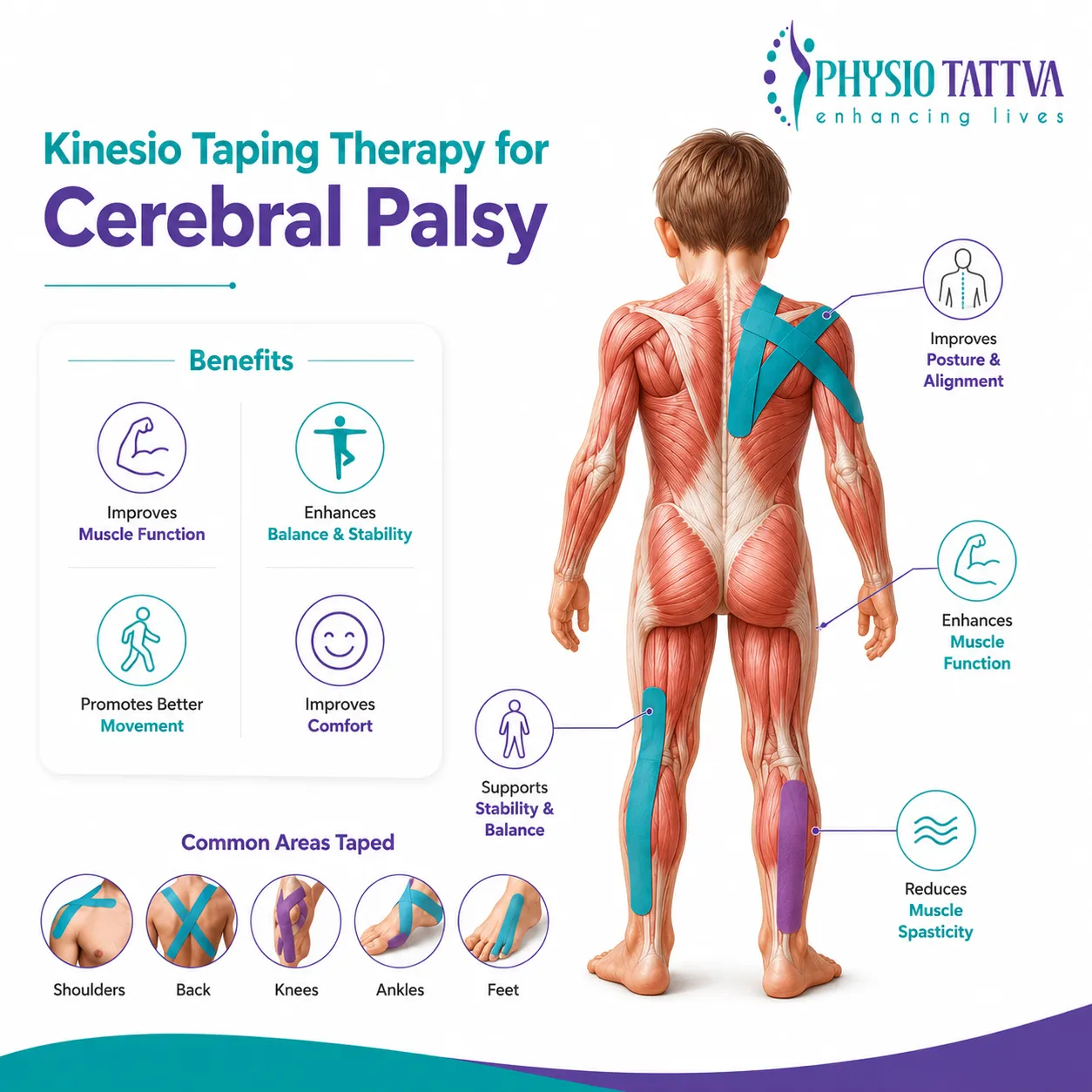
How is Kinesio Taping Therapy Used for Cerebral Palsy?
For children and adults with Cerebral Palsy, therapists use Kinesio Tape to address a wide range of specific goals. The application technique is highly individualized based on the person's unique muscle tone, movement patterns, and therapeutic objectives.
Managing Muscle Tone (Hypertonia/Spasticity and Hypotonia)
Kinesio taping therapy is used to regulate muscle tone by applying different techniques for both spasticity and hypotonia. This approach helps improve muscle function and stability:
- For Spasticity (Hypertonia): Therapists apply the tape with light tension, typically from the muscle's end-point to its origin (an "inhibitory" technique). This aims to send a signal to the nervous system to reduce over-activity in the spastic muscle, promoting relaxation.
- For Low Tone (Hypotonia): The tape is applied from the muscle's origin to its end-point with slightly more tension (a "facilitatory" technique). This is intended to stimulate the muscle, encouraging activation and improving postural stability.
Improving Posture and Core Stability
Taping techniques can be applied to the trunk (abdominal and back muscles) to provide sensory cues for maintaining an upright posture. This can be particularly helpful for children with low core strength, helping them sit or stand with better alignment.
Enhancing Gait and Walking Patterns
Kinesio taping can also assist with improving walking patterns and mobility. It helps support proper gait mechanics by targeting specific muscles involved in foot positioning and movement:
- Foot Drop: Taping can be used to facilitate the dorsiflexor muscles (on the front of the shin) to help lift the foot during walking.
- In-toeing or Out-toeing: Specific rotational taping techniques on the leg can provide a gentle cue to encourage a more neutral foot position.
- Knee Hyperextension: A taping application across the back of the knee can provide sensory feedback to prevent the knee from locking backward.
Improving Upper Limb and Hand Function
Kinesio taping can support upper limb function by targeting the muscles and joints that contribute to arm and hand movements. This can be particularly beneficial for improving fine motor skills:
- Scapular Stability: Taping around the shoulder blade can help stabilize it, providing a solid base for arm and hand movements.
- Wrist and Finger Extension: For a fisted hand or flexed wrist, inhibitory tape can be applied to the forearm flexors, while facilitatory tape is applied to the extensors, encouraging a more open and functional hand position.
- Thumb Position: A common technique is used to help bring the thumb out of the palm into a more functional, opposable position.
Managing Drooling (Sialorrhea)
A specific taping protocol can be applied to the skin over the muscles involved in swallowing (suprahyoid and infrahyoid muscles). The sensory input is thought to increase awareness and cue more frequent, effective swallowing, thereby reducing drooling.
Potential Benefits of Kinesio Taping for Cerebral Palsy
Kinesio taping offers a range of benefits for individuals with Cerebral Palsy, making it a valuable addition to their therapeutic plan:
- Non-Invasive and Drug-Free: It serves as a gentle, complementary therapy without side effects associated with medications.
- Complements Other Therapies: It is not a standalone cure. It is most effective when used to prolong the benefits gained during physical therapy (PT), occupational therapy (OT), or speech therapy sessions.
- Continuous Therapy: Because the tape is worn for 3-5 days, it provides continuous therapeutic input long after a therapy session has ended.
- Increases Body Awareness: The constant sensory feedback can significantly improve a child's proprioceptive awareness, helping them better understand where their body is in space.
- May Delay or Reduce Need for More Invasive Measures: By improving alignment and function, taping may help manage symptoms that could otherwise lead to a need for more intensive bracing or surgical intervention.
Key Considerations and Limitations of Kinesio Taping for Cerebral Palsy
While Kinesio taping can be highly effective, there are several important factors to consider before incorporating it into a treatment plan for Cerebral Palsy:
- Must Be Applied by a Trained Professional: This is critical. The effectiveness of Kinesio Taping is entirely dependent on the correct assessment and application. A certified physical therapist, occupational therapist, or other clinician with specific training in Kinesio Taping for neurological conditions should perform the application. DIY application from online videos is strongly discouraged, as incorrect taping can be ineffective or even counterproductive.
- It Is a Tool, Not a Cure: Kinesio Taping does not cure Cerebral Palsy. It is a supportive tool used to manage symptoms and help achieve functional goals.
- Skin Sensitivity: The tape is hypoallergenic, but skin checks are essential. The tape should be removed immediately if there are signs of irritation, redness, or rash. Therapists will often use a small "test patch" first.
- Evidence is Emerging: While there is a growing body of positive case studies and some promising research, large-scale, high-quality studies are still needed to definitively establish its efficacy across all applications. Results can be highly variable from person to person.
Does Kinesio Tape Work for Cerebral Palsy? The Evidence
The clinical evidence for using Kinesio Tape in Cerebral Palsy is considered emerging and mixed, but promising.
- Several studies and systematic reviews have shown positive effects on improving gait parameters, gross motor function, upper limb function, and core stability.
- Other studies have found no significant difference between groups using Kinesio Tape and control groups.
- Much of the support comes from strong clinical observation and case reports from therapists who see functional improvements in their patients. The consensus is that when used correctly as part of a holistic therapy plan, it can be a valuable tool.
Achieve Functional Goals and Improve Quality of Life with Physiotattva
Kinesio taping therapy for Cerebral Palsy offers a promising, non-invasive method to manage symptoms and improve function. While it is not a cure, it can complement other therapies, enhance motor skills, and provide continuous support. When applied by trained professionals as part of a comprehensive treatment plan, Kinesio taping can help children with Cerebral Palsy achieve functional goals, improve body awareness, and reduce reliance on invasive measures.
At Physiotattva physiotherapy clinics in Bangalore and Hyderabad, you receive personalised care tailored to your specific needs, ensuring effective results and comfort throughout your journey to recovery.
Don’t wait to start your recovery! Get in touch with Physiotattva for more details! Contact us at +91 89510 47001.
Why Physiotattva?
22+
50,000+
95%
200+
25+
4.8
Cities We Serve

Bangalore
At Physio Tattva, we are committed to bring access to quality physio care through ultra-modern clinics and high-skilled practitioners to all.
.webp)
Hyderabad
At Physio Tattva, we are committed to bring access to quality physio care through ultra-modern clinics and high-skilled practitioners to all.
.webp)
Vishakhapatnam
At Physio Tattva, we are committed to bring access to quality physio care through ultra-modern clinics and high-skilled practitioners to all.
Core Treatments
Core Conditions
Core Symptoms
Frequently Asked Questions
Is Kinesio taping therapy painful for a child with CP?

How long does the tape stay on, and can my child bathe with it?
Can Kinesio taping cure Cerebral Palsy?
Is Kinesio taping safe for sensitive skin?
How soon can we see results?






%20(1)-p-3200.jpeg)


.jpg)
.webp)
.webp)
.webp)