





Dry needling therapy for osteoarthritis is a physiotherapy treatment that targets tight and painful muscles around arthritic joints using thin, sterile needles. By releasing trigger points in surrounding muscles, the therapy helps reduce muscle tension, ease pain, and improve movement comfort.
It is often used for osteoarthritis affecting joints such as the knee, hip, spine, or shoulder, where muscle tightness adds to stiffness and discomfort. Dry needling is usually combined with physiotherapy exercises, stretching, and movement training to support better mobility and daily function.
What Is Dry Needling Therapy for Osteoarthritis?
Dry needling therapy for osteoarthritis is a physiotherapy technique used to treat tight and painful muscles around an arthritic joint. It involves placing very fine sterile needles into specific muscle points to address muscle tension that may develop along with joint pain and stiffness.
Some key characteristics of this treatment include:
- Muscle-focused approach: It is used to target tight and sensitive muscles around the affected joint.
- Uses fine sterile needles: The needles are single-use, very thin, and no medicine is injected through them.
- Targets trigger points: It is commonly used to address painful muscle knots or tight bands that may add to discomfort and movement restriction.
- Used in joint-related musculoskeletal care: It may be considered for osteoarthritis affecting areas such as the knee, hip, or spine.
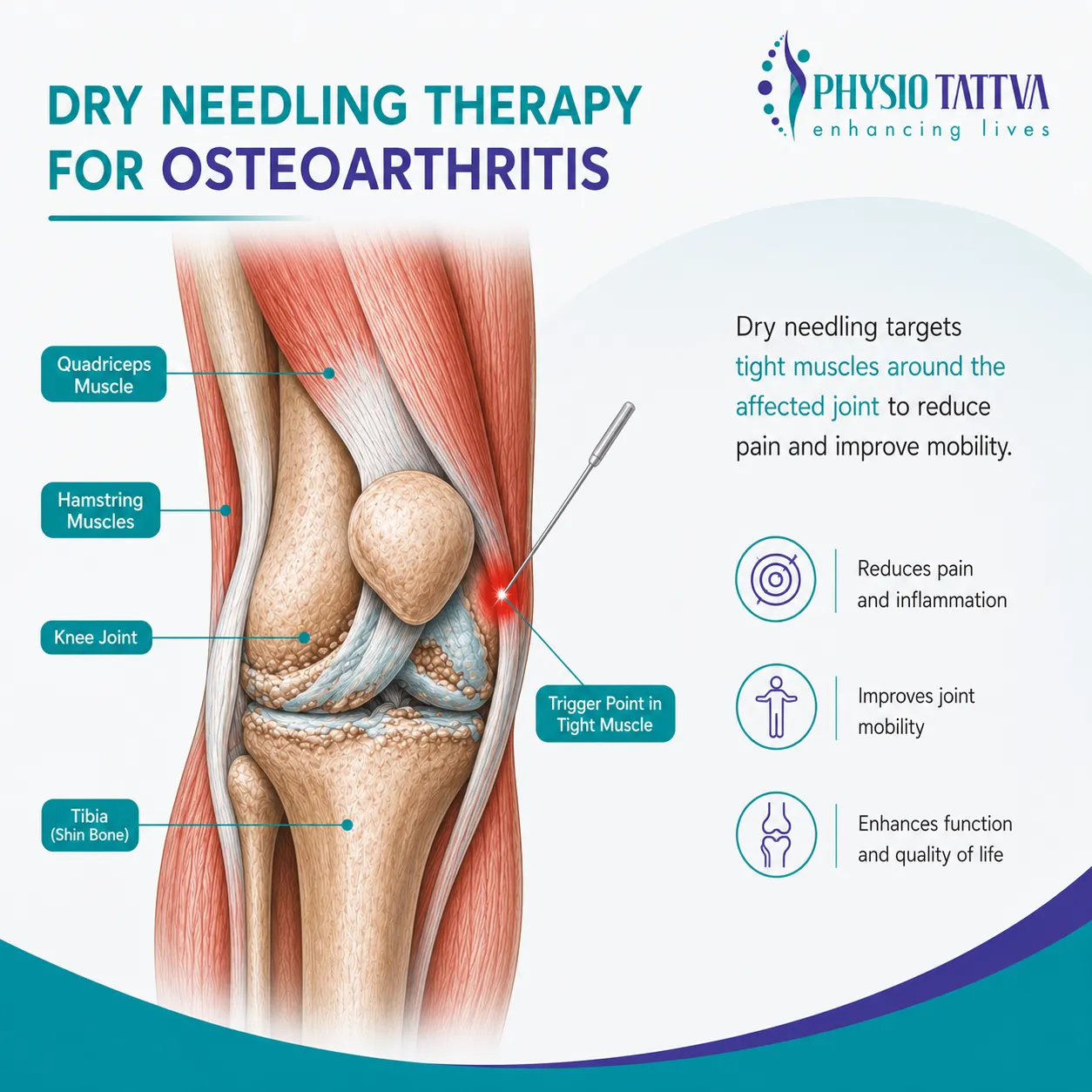
How Does Dry Needling Therapy for Osteoarthritis Work?
In osteoarthritis, the joint is affected, but the surrounding muscles can also become tight and sensitive over time. Dry needling for osteoarthritis is used to target those muscles so the treatment focuses on the muscular part of the problem, not the cartilage itself.
Here is how the process usually works:
- The painful joint is assessed first: The physiotherapist checks the joint, surrounding muscle tightness, movement pattern, and painful areas before planning treatment.
- Tight muscle points are identified: The focus is on trigger points or tense areas in the muscles around the affected joint.
- A fine needle is placed into the selected muscle: Very thin sterile needles are inserted into the target muscle points.
- The muscle gives a local response: In some cases, the muscle may briefly twitch or feel sore when the trigger point is reached.
- The area is allowed to settle after treatment: Once the needle is removed, the muscle may gradually feel less tense or less sensitive.
- The session is usually followed by rehab work: Dry needling treatment for osteoarthritis is often used along with exercises, movement training, and other physiotherapy care.
What Osteoarthritis Conditions Can Dry Needling Therapy Be Used For?
Dry needling is not limited to one joint. It may be considered in osteoarthritis cases where the muscles around the affected area have also become tight, painful, or overworked. In these cases, the treatment is used to target the muscle component around the joint rather than the joint damage itself.
It may be used in osteoarthritis affecting areas such as:
- Knee osteoarthritis: It may be used for tight and painful muscles around the knee, such as the quadriceps, hamstrings, and calf muscles.
- Hip osteoarthritis: It may be considered when the muscles around the hip, including the gluteal muscles and hip flexors, are also contributing to pain or stiffness.
- Spinal osteoarthritis: It may be used for osteoarthritis affecting the neck or lower back when surrounding muscles have become tense or sensitive.
- Shoulder osteoarthritis: In some cases, it may be considered when muscle tightness around the shoulder is adding to movement discomfort.
What Are the Benefits of Dry Needling Therapy for Osteoarthritis
When tight muscles around an arthritic joint are adding to pain or stiffness, this treatment may help as part of a wider rehab plan. The main dry needling benefits are usually linked to comfort and movement rather than any change to the joint itself.
- May help ease pain: Dry needling for osteoarthritis is often used when tight surrounding muscles are adding to joint discomfort.
- May reduce stiffness: It may help the muscles around the joint feel less tight, which can make movement more comfortable.
- May improve movement comfort: Some patients find daily activities like walking, standing, or bending feel easier after treatment.
- May help support function: When pain and muscle tightness are reduced, it may become easier to continue normal movement and activity.
- May work well with rehab: Dry needling treatment for osteoarthritis is often used alongside exercise and other physiotherapy care.
Who Should Avoid Dry Needling for Osteoarthritis?
Dry needling is not suitable for every osteoarthritis case, so a physiotherapist should always decide this after proper assessment. The treatment may need to be avoided or used with extra caution when certain medical or safety concerns are present.
Dry needling may not be suitable in cases such as:
- Severe needle fear or anxiety: Patients who are extremely uncomfortable with needles may not tolerate the treatment well.
- Skin infection, irritation, or open wound near the area: Treatment is usually avoided if the skin or tissue around the target area is not healthy.
- Bleeding disorders or blood thinner use: Extra caution is needed when there is a higher risk of bleeding or bruising.
- Pregnancy in certain situations: Dry needling may be avoided depending on the area being treated and clinical judgement.
- Active medical concerns that need review first: The physiotherapist may delay or avoid treatment if there are safety concerns that need further assessment.
How Is Dry Needling Different from Acupuncture for Osteoarthritis?
Dry needling and acupuncture may both use thin needles, but they are usually described and practised as different treatment approaches. In osteoarthritis care, the main differences are generally seen in the treatment framework, target area, and point selection.
- Treatment framework: Dry needling is commonly used within a musculoskeletal and physiotherapy approach, while acupuncture is traditionally linked to Traditional Chinese Medicine.
- Target area: Dry needling usually focuses on tight muscles and trigger points around the affected joint, while acupuncture uses selected acupuncture points based on its own treatment model.
- Assessment style: Dry needling is often guided by muscle tightness, pain pattern, and movement findings, while acupuncture follows a different diagnostic approach.
- Needle placement: In dry needling, the needle is usually placed into specific painful or tight muscle points, while acupuncture point selection may not always be directly over the painful area.
How to Prepare for Dry Needling Therapy for Osteoarthritis
A little preparation before the session can help the treatment go more smoothly and make it easier for your physiotherapist to assess the area properly. Most patients do not need to do anything complex, but a few simple steps are helpful.
- Wear comfortable clothing: Choose clothing that allows easy access to the affected joint and the surrounding muscles.
- Share your medical history clearly: Tell your physiotherapist about blood thinners, pregnancy, skin issues, infections, or any past reaction to needling.
- Do not come dehydrated or skip meals completely: Having some water and a light meal beforehand may help you feel more comfortable during the session.
- Be ready to describe your symptoms: Mention where the pain is, when stiffness is worse, and which movements or activities make the joint feel more uncomfortable.
- Know that the session is usually brief: The dry needling part itself often takes only a few minutes, though the full appointment may take longer depending on the assessment and treatment plan.
- Follow any pre-session advice given by the clinic: If your physiotherapist has shared specific instructions, it is best to follow those before treatment.
Targeted Osteoarthritis Pain Relief Through Dry Needling at Physiotattva
Dry needling therapy for Osteoarthritis is not a cure, but it is a powerful tool for managing the muscular pain and stiffness that accompany the condition. By addressing the trigger points that develop as a secondary consequence of joint degeneration, it can break the cycle of pain, restore mobility, and significantly improve quality of life. It is most effective when used as part of a comprehensive treatment plan that includes strengthening exercises, stretching, and activity modification, as prescribed by your healthcare provider.
At Physiotattva physiotherapy clinics in Bangalore and Hyderabad, you receive personalised care tailored to your specific needs, ensuring effective results and comfort throughout your journey to recovery.
Don’t wait to start your recovery! Get in touch with Physiotattva for more details! Contact us at +91 89510 47001.
Key Takeaways
- Dry needling therapy for osteoarthritis targets tight muscles around arthritic joints to help reduce pain and stiffness.
- The treatment focuses on releasing trigger points in surrounding muscles rather than treating the joint cartilage directly.
- It may be used for osteoarthritis affecting joints such as the knee, hip, spine, or shoulder.
- Dry needling can help improve movement comfort when muscle tightness contributes to joint stiffness.
- The therapy is usually combined with physiotherapy exercises, stretching, and movement training.
- A physiotherapy assessment helps determine whether dry needling is appropriate for your osteoarthritis condition.
Why Physiotattva?
22+
50,000+
95%
200+
25+
4.8
Cities We Serve

Bangalore
At Physio Tattva, we are committed to bring access to quality physio care through ultra-modern clinics and high-skilled practitioners to all.
.webp)
Hyderabad
At Physio Tattva, we are committed to bring access to quality physio care through ultra-modern clinics and high-skilled practitioners to all.
.webp)
Vishakhapatnam
At Physio Tattva, we are committed to bring access to quality physio care through ultra-modern clinics and high-skilled practitioners to all.
Core Treatments
Core Conditions
Core Symptoms
Frequently Asked Questions
How many sessions will I need for my osteoarthritis?

Are there any side effects of dry needling for Osteoarthritis?
Can dry needling be used for knee and hip osteoarthritis?
Who should avoid dry needling?
How long do dry needling benefits last?
Is Dry Needling Good for Osteoarthritis?






%20(1)-p-3200.jpeg)


.jpg)
.webp)
.webp)
.webp)