Dry Needling Therapy for Sciatica at Physiotattva offers an effective solution for relieving pain and improving mobility. By targeting muscle tension and trigger points, this non-invasive therapy reduces inflammation around the sciatic nerve and enhances blood flow. Combined with other treatments like physical therapy, dry needling provides a comprehensive approach to managing sciatica symptoms. Experience personalised care with advanced techniques to address your specific needs. Contact Physiotattva today to explore how dry needling can help you find lasting relief.
Dry needling therapy for sciatica is a minimally invasive technique that targets muscle trigger points contributing to sciatic nerve irritation. It works by inserting thin, sterile needles into tight muscles around the lower back, glutes, and hamstrings. This helps relieve pain, muscle tension, and stiffness, promoting better mobility and circulation.
Typically, sessions last 20–40 minutes, and while mild soreness may occur for 24–48 hours afterward, it is a safe, effective treatment when performed by a trained professional. Best results are achieved when dry needling is combined with physiotherapy and posture correction as part of a comprehensive rehabilitation plan.
Dry needling therapy involves inserting thin needles into specific muscle points, known as trigger points. These points are often tight or tender areas in your muscles. Dry needling for sciatica improves the blood flow in the area affected, which can reduce the tension of muscles and cause a “relaxing” sensation in the affected area. It is an effective treatment plan for Sciatica as it can reduce inflammation around the sciatic nerve.
Dry needling therapy for Sciatica uses needles to stimulate the muscles, encouraging the release of muscle knots. This relaxation can reduce pain and increase the range of motion. If done regularly, it is an effective treatment plan for Sciatica.
For many patients, dry needling for sciatica is used alongside physical therapy or medication. It’s a flexible, targeted approach that adapts to your specific condition. At Physiotattva, we provide personalised care with state-of-the-art methods designed to treat sciatica trigger points effectively.
Dry needling therapy manages sciatica by targeting muscle knots that contribute to nerve pain. This method complements various treatments and can significantly improve pain relief and mobility. Understanding how dry needling works and its benefits can enhance your recovery plan. At Physiotattva, we offer tailored care with advanced techniques to address sciatica effectively.
What is Dry Needling Therapy for Sciatica?
Dry needling therapy for sciatica involves inserting thin needles into specific points in the muscles, known as dry needling points for sciatica. This technique helps release muscle tightness and improve blood flow.
It aims to reduce pain and enhance movement by targeting the underlying issues contributing to conditions like sciatica trigger points, and nerve compression.
In dry needle therapy for sciatica, the treatment specifically focuses on muscles surrounding the sciatic nerve, such as the glutes and hamstrings, to relieve nerve compression and ease radiating pain. This makes it an effective, non-invasive approach for managing both acute and chronic sciatica symptoms. For many patients wondering does dry needling help sciatica, the answer is yes, it can significantly relieve discomfort caused by sciatic nerve trigger points and muscle stiffness.
What Are the Types of Dry Needling Therapy for Sciatica?
Trigger point dry needling targets specific muscle knots. Deep tissue dry needling focuses on deeper muscle layers. Myofascial dry needling addresses the connective tissue around muscles. Each type aims to relieve pain and improve muscle function. Your therapist will choose the method that best suits your specific condition and needs.
Trigger Point Dry Needling Therapy for Sciatica
Trigger point dry needling focuses on specific tight areas in muscles, known as trigger points. These points can cause or contribute to sciatic pain. By inserting thin needles into these areas, the therapy helps release muscle tension and reduce pain.
The process also improves blood flow to the affected area, aiding in faster recovery. This type of dry needling is often used to address muscle knots in the lower back and buttocks that can put pressure on the sciatic nerve.
Superficial Dry Needling Therapy for Sciatica
Superficial dry needling therapy consists of inserting needles just below the skin to address pain and tension in the muscles near the surface. This technique helps relieve discomfort and improve mobility in areas affected by sciatic pain.
It is generally used for less intense pain or as a complementary approach to deeper needling techniques, contributing to overall pain management and muscle relaxation.
Deep Tissue Dry Needling Therapy for Sciatica
Deep tissue dry needling for sciatica goes deeper into the muscle layers to target underlying areas that may contribute to sciatic pain. The needles are inserted into deeper muscle tissues to release chronic tension and improve blood circulation.
This method helps reduce pain and enhances muscle function by addressing issues that are not accessible with more superficial techniques.
Functional Dry Needling Therapy for Sciatica
Functional dry needling targets specific muscles and their roles in movement patterns. It focuses on improving muscle function and addressing dysfunctional movement that contributes to sciatica.
By inserting needles into muscles involved in movement, this technique helps restore normal function and reduce pain. It’s useful for individuals with sciatic pain linked to movement issues or muscle imbalances.
How Does Dry Needling Help Sciatica?
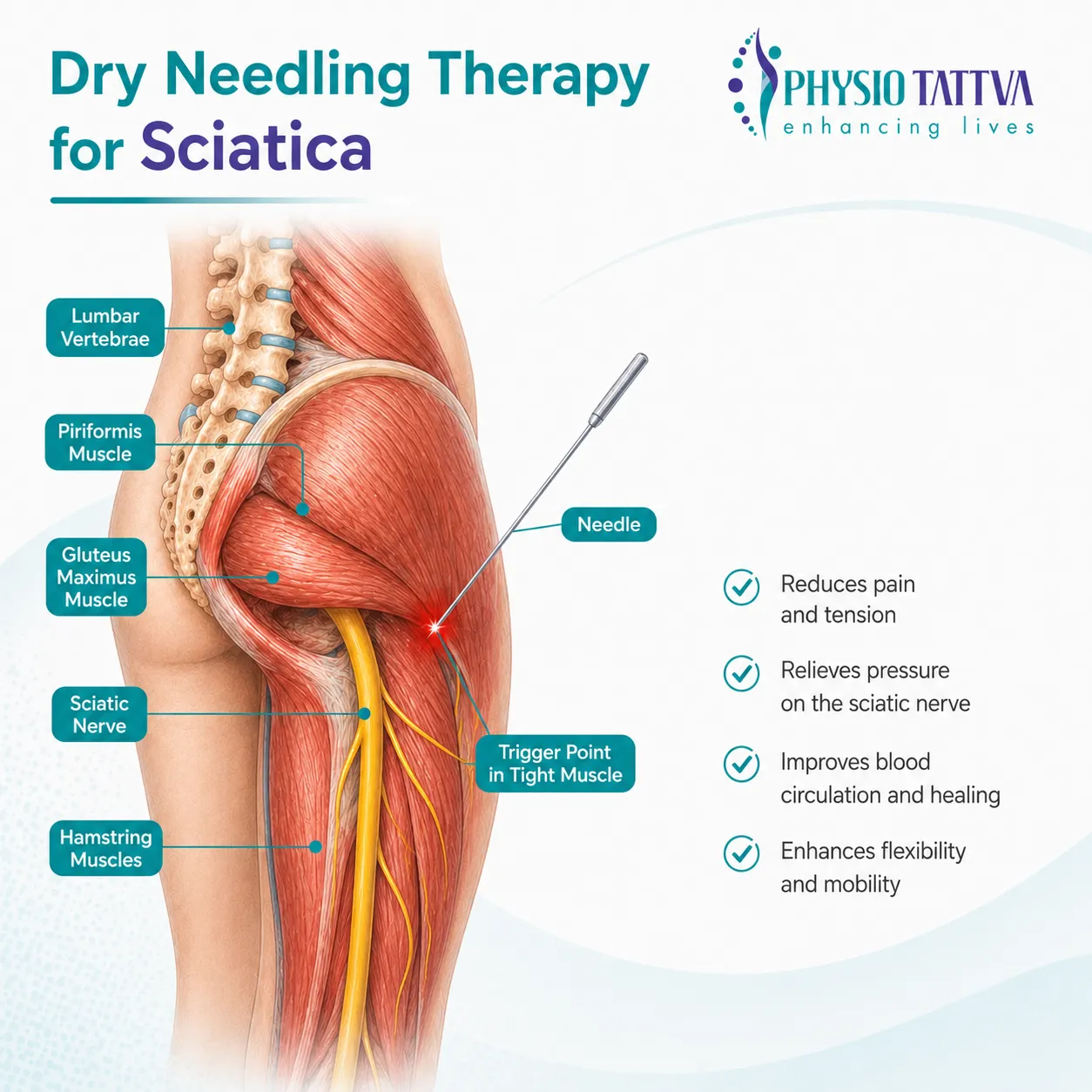
Dry needling for sciatica helps relieve pain by targeting the deep muscles that surround the sciatic nerve, especially areas prone to tension like the gluteus medius, piriformis, and hamstrings. When these muscles tighten, they can irritate or compress the nerve, causing radiating pain or tingling down the leg.
During dry needle therapy for sciatica, thin sterile needles are inserted into specific dry needling points for sciatica, stimulating muscle contraction and release. This improves blood circulation, reduces inflammation, and relieves nerve pressure.
Over time, this treatment relaxes tight muscles, restores mobility, and reduces chronic pain by calming the sciatic nerve trigger points that cause discomfort. Combined with physiotherapy and posture correction, dry needling for sciatica becomes a powerful, non-invasive tool for long-term recovery.
What to Expect During a Dry Needling Session for Sciatica
Dry needling sessions for sciatica are structured, clinically guided, and tailored to your symptoms. Understanding the process helps reduce anxiety and sets realistic expectations about how the therapy supports pain management and mobility improvement.
Initial assessment of symptoms and movement patterns.
Identification of active trigger points around the sciatic nerve.
Insertion of sterile, single-use needles into targeted muscle areas.
Brief muscle twitch response may occur.
Session typically lasts 20–40 minutes depending on severity.
Mild soreness may occur for 24–48 hours.
A rehabilitation plan is discussed for continued improvement.
Sciatic Nerve Trigger Points and Treatment Focus
Sciatic nerve trigger points are tight or hypersensitive muscle areas that can compress or irritate the sciatic nerve, causing radiating pain, numbness, or tingling down the leg. These sciatica trigger points are typically located in muscles such as the gluteus medius, piriformis, hamstrings, and lower back.
During dry needle therapy for sciatica, the physiotherapist carefully inserts fine needles into these specific dry needling points for sciatica to release tension, improve circulation, and restore normal nerve function. This targeted stimulation reduces pain and enhances mobility by relieving pressure on the sciatic nerve.
By focusing on these critical muscle zones, dry needling for sciatica not only reduces discomfort but also enhances flexibility, supports better posture, and promotes faster recovery from both chronic and acute sciatic pain.
Benefits of Dry Needling Therapy for Sciatica
Dry needling therapy offers several benefits for managing sciatica. It provides pain relief by targeting the source of muscle tension and reducing pressure on the sciatic nerve.
The therapy also improves muscle function by releasing tight spots and enhancing blood flow. As a result, you may experience better mobility and reduced discomfort.
Pain Relief
In dry needling, needles are used to stimulate pain points, which helps reduce muscle tension and improve blood flow. This process can help decrease pain and discomfort associated with various conditions, including sciatica.
Regular sessions can lead to more effective and sustained pain relief over time.
Increased Blood Flow
When the needles are inserted, they stimulate the area that is injured, helping to increase blood circulation. This increased blood flow delivers more oxygen and nutrients to the muscles, aiding in the healing process. Improved circulation can help reduce pain and speed up recovery.
Reduced Muscle Spasms
When the needles are inserted into tight or knotted muscles, they help release the tension that triggers spasms. This process eases muscle stiffness and improves relaxation, leading to fewer and less intense spasms over time.
Regular sessions of dry needling for sciatica can also reduce pressure on sciatic nerve trigger points, helping restore normal muscle function and improve comfort during movement.
Improved Mobility and Nerve Function
Regular dry needling for sciatica helps release tension in tight muscles that restrict movement and compress the sciatic nerve. By targeting key sciatica trigger points, this therapy restores normal nerve function, improves flexibility, and enhances mobility in the lower back and legs.
Over time, patients experience smoother movement and reduced discomfort during daily activities.
Enhanced Rehabilitation
Dry needling therapy is used on trigger points on the body that improve blood flow. Dry needling helps in the healing process and muscle function. This makes it easier to engage in physical therapy exercises and other rehabilitation activities.
Integrating Dry Needling with Rehabilitation
A long-term recovery plan should integrate dry needling for sciatica with structured rehabilitation. While dry needling reduces muscle tension and nerve compression, physiotherapy rebuilds strength, stability, and posture, ensuring lasting results.
Combining dry needle therapy for sciatica with stretching and targeted exercises supports healing and prevents future flare-ups. This approach also improves blood flow around key sciatic nerve trigger points, enhancing recovery speed and flexibility.
At Physiotattva, our therapists combine manual therapy, movement retraining, and dry needling for sciatica in one integrated plan, helping you manage pain effectively and return to normal function faster.
Choosing the Dry Needling Therapy Provider
When choosing a dry needling therapy provider, look for a qualified and experienced therapist who specialises in treating sciatica. Check their credentials, experience, and reviews from other patients. A good provider will assess your condition thoroughly and tailor the treatment to your needs.
They should also explain the procedure clearly and answer any questions you have. At Physiotattva, our team is skilled in dry needling and focused on helping you manage sciatica effectively. Reach out to us to see how we can assist you with personalised care.
What to Look for in a Provider?
When selecting a dry needling provider, consider their qualifications and experience in treating sciatica. Look for licensed professionals who use proper techniques and follow safety protocols. Check their reputation through patient reviews and testimonials.
A provider should have a clear understanding of your condition and explain how dry needling can help. At Physiotattva, our certified therapists are trained to offer effective dry needling treatments tailored to your needs. Contact us to learn more about our services.
Questions to Ask Your Therapist
When meeting with a dry needling therapist, ask about their experience with treating sciatica specifically. Inquire about the number of sessions you might need and the expected outcomes. Ask about the safety measures they follow and any potential side effects.
Ensure they explain the procedure and what you can expect during and after treatment. At Physiotattva, our team is ready to answer your questions and provide detailed information about how dry needling can help you.
Preparing for a Dry Needling Session for Sciatica
Proper preparation can improve comfort and help your therapist deliver safe, effective treatment. A short discussion about your health history ensures the procedure is appropriate for your condition.
Wear loose, comfortable clothing that allows easy access to the lower back and leg area.
Eat a light meal before the appointment to prevent light-headedness.
Inform your therapist about medications, especially blood thinners or pain relievers.
Stay hydrated, as adequate hydration supports muscle response.
Discuss any prior reactions to needles or history of fainting during procedures.
Key Considerations and Precautions for Dry Needling Therapy for Sciatica
When considering dry needling therapy for sciatica, ensure the therapist evaluates your condition properly before starting treatment. Be aware of your medical history and discuss any concerns or conditions that might affect the therapy.
Ensure the provider follows strict hygiene and safety protocols to prevent any complications. At Physiotattva, we take these considerations seriously and tailor our treatments to ensure they are safe and effective for managing sciatica.
Safety of Dry Needling Therapy for Sciatica
Dry needling therapy is generally safe when performed by a trained professional. It involves inserting needles into specific muscles to relieve pain and improve function. The procedure is minimally invasive and usually well-tolerated.
However, it's essential to discuss any health conditions or concerns with your therapist before starting treatment.
What Are the Potential Risks and Side-Effects of Dry Needling Therapy for Sciatica?
While dry needling is effective for sciatica, it does carry some risks. You might experience mild soreness or bruising at the needle sites. There is a small risk of infection if proper hygiene isn’t followed. Always discuss your medical history and any potential risks with your therapist.
Contraindications for Dry Needling Therapy
Dry needling therapy isn’t suitable for everyone. Avoid it if you have certain conditions like infections at the treatment site, bleeding disorders, or if you’re pregnant. It may also be unsuitable if you have a history of severe reactions to needles or are on blood-thinning medication.
Always discuss your medical history with your therapist to ensure dry needling is safe for you. At Physiotattva, our team will evaluate your condition thoroughly to determine if dry needling is a good option.
How to Include Dry Needling Therapy in Your Comprehensive Sciatica Management Plan?
Integrating dry needling into your sciatica management plan can be very effective. Combine it with other treatments like physical therapy or medications for a comprehensive approach. Dry needling targets muscle knots that contribute to sciatica pain, while physical therapy can improve overall strength and flexibility.
Working with your healthcare provider to create a customised plan that includes dry needling can help you manage pain more effectively and enhance your recovery.
Creating a Holistic Sciatica Pain Management Strategy
Creating a holistic sciatica pain management strategy involves combining various treatments for the best results. Include approaches like dry needling, physical therapy, and medication.
Focus on lifestyle changes such as improving posture and incorporating exercises that strengthen your back and legs.
Combining Dry Needling with Physical Therapy
Combining dry needling therapy for Sciatica with physical therapy can enhance your treatment. Dry needling targets specific muscle points to reduce pain and improve muscle function. Physical therapy complements this by focusing on strengthening exercises and improving flexibility.
Together, they address both the symptoms and underlying causes of sciatica. This combined approach can speed up recovery and help you return to daily activities with less pain.
Consulting a Healthcare Professional for Optimal Results
Consulting a healthcare professional ensures that you get the right diagnosis and treatment plan for your sciatica. They can assess your condition, recommend suitable therapies, and monitor your progress.
One-on-one sessions with the healthcare providers help create a personalised treatment plan, which can help figure out the treatment plans that work best for you.
When to Consider Dry Needling Therapy?
Consider dry needling therapy for Sciatica if you have persistent muscle pain, stiffness, or sciatica that hasn’t improved with other treatments. It’s especially useful if muscle knots are contributing to your symptoms.
If traditional methods aren’t providing sufficient relief, dry needling might be a good addition to your treatment plan. Consult with your therapist at Physiotattva to see if dry needling is the right choice for addressing your specific needs and pain levels.
When Should I Avoid Dry Needling in Sciatica Pain?
Dry needling is generally safe when performed by a trained professional, but it is not suitable for everyone. Certain medical conditions and risk factors may increase the likelihood of complications. A proper clinical assessment helps determine whether this treatment is appropriate for your sciatica.
Active infection or skin condition at the treatment site
Uncontrolled bleeding disorders or clotting abnormalities
Use of blood-thinning medication without medical clearance
Severe needle phobia or anxiety related to injections
Pregnancy (certain areas may be avoided)
Compromised immunity or delayed wound healing
Recent surgery near the affected area
Lack of clear diagnosis for radiating leg pain
Why Choose Physiotattva for Sciatica Pain Relief?
Choose Physiotattva for sciatica relief because we offer personalised care with state-of-the-art technology. Our skilled team provides targeted treatments like dry needling and physical therapy to address your specific needs.
We focus on creating a comprehensive plan to relieve your pain and enhance mobility. Contact us to experience how our expert care can make a difference in managing your sciatica effectively.
At Physiotattva physiotherapy clinics in Bangalore and Hyderabad, you receive personalised care tailored to your specific needs, ensuring effective results and comfort throughout your journey to recovery.
Key Takeaways:
Dry needling therapy for sciatica targets muscle trigger points that may contribute to sciatic nerve irritation and radiating leg pain.
It focuses on tight muscles around the lower back, glutes, and hamstrings, which can compress or irritate the sciatic nerve.
The technique uses thin, sterile needles to stimulate muscle release, improve circulation, and support mobility.
It may help reduce pain, muscle spasms, and stiffness, especially when muscle tension is a key contributor to symptoms.
Sessions typically last 20–40 minutes, and mild soreness for 24–48 hours can occur after treatment.
It is generally safe when performed by a trained professional, but may not be suitable for individuals with infections, bleeding disorders, or certain medical conditions.
It works best as part of a comprehensive rehabilitation plan, rather than as a standalone solution for structural spinal conditions.
The purpose of dry needling therapy is to relieve pain and improve muscle function by inserting thin needles into trigger points. It helps release tight muscles and promotes healing in the affected area.
Is dry needling good for Sciatica?
Yes, dry needling can be good for sciatica. It targets muscle tension and trigger points that may be contributing to sciatica pain, helping to reduce discomfort and improve mobility.
Does dry needling reduce stiffness?
Yes, dry needling therapy for Sciatica can reduce stiffness by targeting tight muscles and trigger points. It helps release muscle tension and improve range of motion, leading to reduced stiffness and improved movement.
Is Dry Needling Therapy Effective For Sciatica?
Yes, dry needling therapy for sciatica can help by targeting muscle knots and trigger points that contribute to pain. It reduces muscle tension and improves circulation, which can alleviate sciatica symptoms and many patients report improvement when it is combined with physiotherapy and corrective exercises. Results may vary depending on the cause and duration of sciatica.
Can dry needling cure sciatica?
Yes, dry needling can be good for sciatica. It targets muscle tension and trigger points that may be contributing to sciatica pain, helping to reduce discomfort and improve mobility.
How many dry needling sessions are needed for sciatica?
The number of dry needling sessions for sciatica depends on symptom severity, duration, and underlying cause. Mild, muscle-related sciatica may improve within a few sessions, while chronic cases often require a structured plan over several weeks. Progress is typically reviewed regularly and adjusted based on response.
Is dry needling safe for chronic sciatica?
Dry needling can be used safely for chronic sciatica when performed by a qualified physiotherapist after proper evaluation. It is commonly integrated with strengthening exercises and posture correction. However, chronic cases caused by structural spine conditions may require a broader rehabilitation approach.
Is dry needling painful for sciatica?
Dry needling may cause brief discomfort during needle insertion, often described as a dull ache or muscle twitch. Most patients tolerate the procedure well. Mild post-session soreness similar to exercise-related stiffness can occur but typically settles within one or two days.





.webp)
.webp)


.webp)




.jpeg)


.webp)
.webp)



.webp)









.webp)
.webp)








%20(1)-p-3200.jpeg)


.jpg)
.webp)
.webp)
.webp)

