


Physiotherapy Treatment for Foot Pain
Much like the hand and wrist, the foot is often considered a complicated part of the body, comprising of bones, muscles, nerves, and ligaments.
Aqua therapy, or hydrotherapy, is a specialised form of physiotherapy conducted in a temperature-controlled pool to relieve pain and improve mobility. If you suffer from persistent foot pain caused by conditions like plantar fasciitis, arthritis, or tendonitis, you might experience sharp heel pain, nagging arch discomfort, or difficulty walking. Aqua therapy offers a a low-impact and effective solution for foot rehabilitation, using the natural properties of water to help you recover without stressing your joints.
Foot pain can arise from various conditions affecting the bones, ligaments, and tendons. Some of the most common causes include:
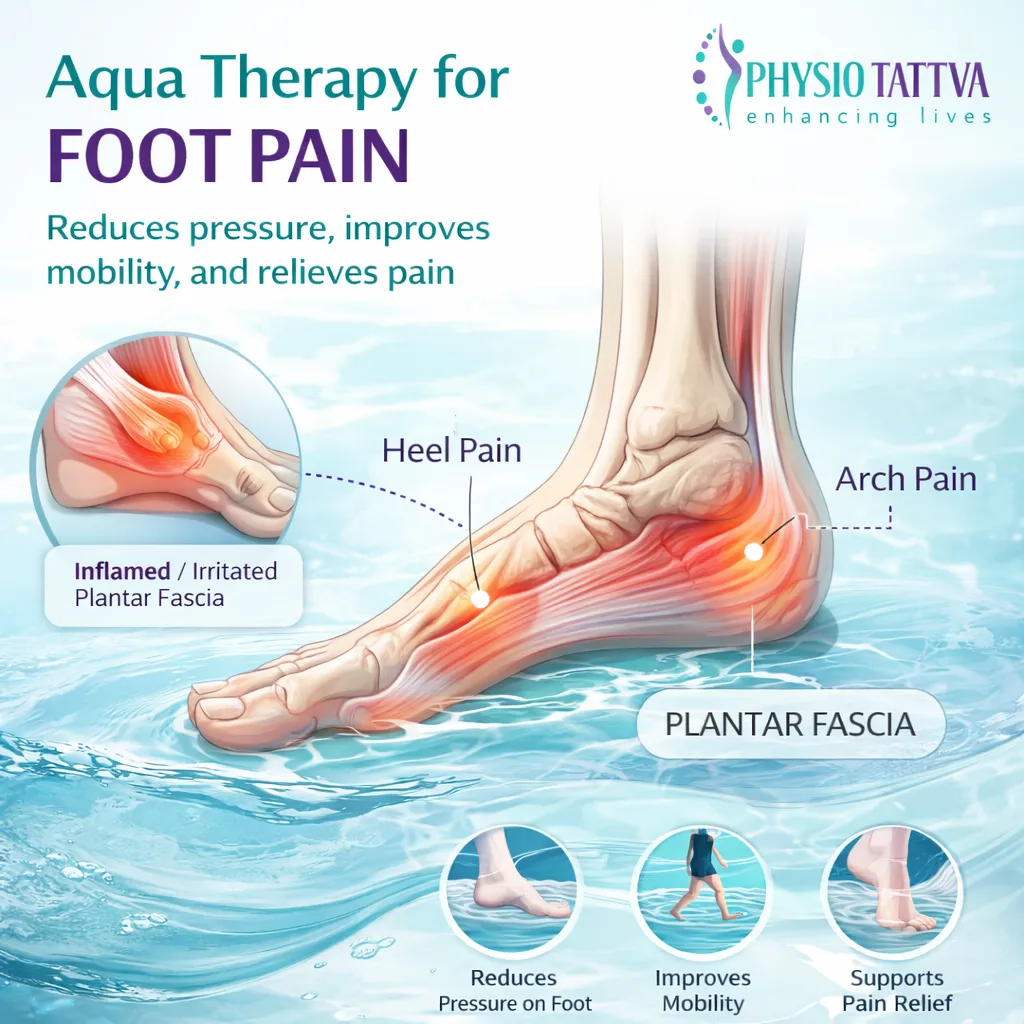
When you hear "aqua therapy," you might picture a standard swimming pool or a group water aerobics class. However, clinical aqua therapy, also known as hydrotherapy for foot pain, is a far more specialised and therapeutic practice. It is a form of physiotherapy conducted in a purpose-built, temperature-controlled pool under the expert guidance of a certified physiotherapist.
The entire principle is based on a simple yet profound idea: using the unique properties of water to facilitate exercises that would be too painful or difficult to perform on land. It’s a rehabilitative treatment designed to restore function, build strength, and reduce pain by creating a safe, supportive environment for your body to heal. It’s not about swimming laps; it's about targeted, therapeutic movement.
The "magic" of aqua therapy isn't magic at all, it's pure science. The physical properties of water work together to create the perfect environment for healing and strengthening injured feet. Four main principles are at play:
This is the star of the show. Water counteracts gravity, making you feel significantly lighter. When you're submerged up to your waist, your body bears only 50% of its weight. Submerged to your chest, it's just 25-35%. For aching feet, this is revolutionary. It offloads the pressure from painful structures like your heels, arches, and ankle joints, allowing you to move and exercise without the jarring impact and pain you feel on land.
Water exerts a gentle, constant pressure on your submerged body parts. This pressure acts like a full-body compression garment for your feet and ankles. It helps to push fluid away from the affected area, effectively reducing swelling (edema) and inflammation. This pressure also improves circulation and can even decrease your sensitivity to pain.
Unlike air, water provides natural resistance to any movement. Every step, kick, and ankle rotation you perform is met with this gentle challenge. This is fantastic for strengthening the small intrinsic muscles within your feet and the larger supporting muscles in your calves and legs, all without the need for heavy weights or high-impact stress.
Most hydrotherapy pools are heated to a comfortable, therapeutic temperature (typically 33-36°C). This warmth soothes and relaxes tight muscles and ligaments, such as the inflamed plantar fascia. The heat also increases blood flow to the injured area, delivering more oxygen and nutrients to promote faster healing and alleviate stiffness.
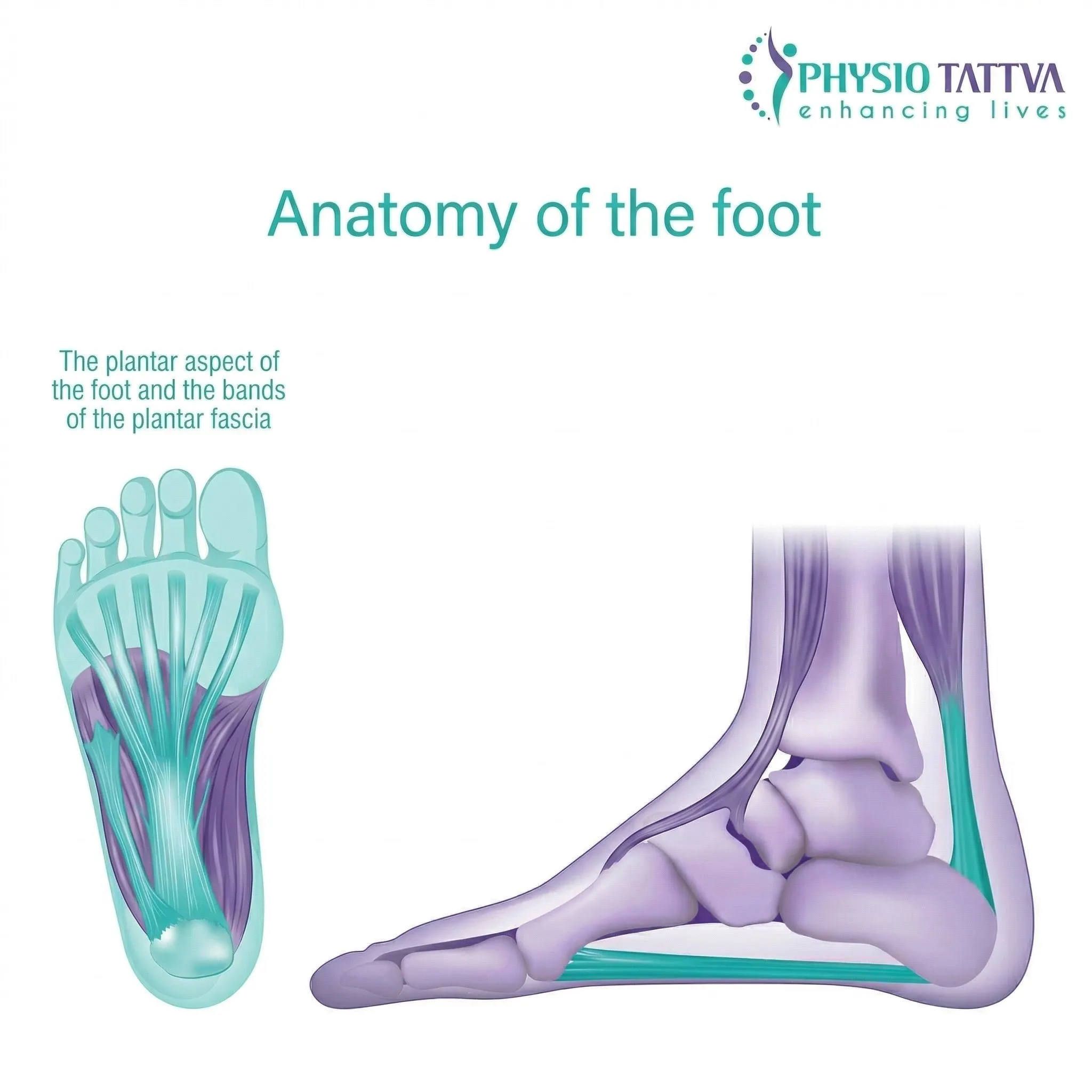
From the sharp, stabbing pain of plantar fasciitis to the dull, chronic ache of arthritis, aqua therapy for foot pain offers targeted relief for a wide range of foot and ankle ailments. Because it's a low-impact exercise for foot pain, it’s suitable for many conditions.
Stepping into your first aqua therapy session is a step towards relief, and our team at Physiotattva makes the process seamless and comfortable. Here’s a simple walkthrough of what your journey will look like with our expert physiotherapists in Bangalore and Hyderabad.
Aqua therapy is particularly beneficial for individuals who find land-based exercises too painful. It is an ideal treatment for:
While aqua therapy is very safe, it may not be suitable for everyone. You should avoid it if you have:
Aqua therapy is a transformative approach to treating foot pain, providing relief and healing in a supportive, low-impact environment. Whether you suffer from plantar fasciitis, arthritis, or general fatigue, this safe and effective therapy can help you regain strength and mobility.
At Physiotattva physiotherapy clinics in Bangalore and Hyderabad, you receive personalised care tailored to your specific needs, ensuring effective results and comfort throughout your journey to recovery.
Don’t wait to start your recovery! Get in touch with Physiotattva for more details! Contact us at +91 89510 47001.

At Physio Tattva, we are committed to bring access to quality physio care through ultra-modern clinics and high-skilled practitioners to all.
.webp)
At Physio Tattva, we are committed to bring access to quality physio care through ultra-modern clinics and high-skilled practitioners to all.
.webp)
At Physio Tattva, we are committed to bring access to quality physio care through ultra-modern clinics and high-skilled practitioners to all.

.jpeg)







%20(1)-p-3200.jpeg)


.jpg)
.webp)
.webp)
.webp)