
Interferential Therapy (IFT) for Foot Pain

Interferential Therapy (IFT) for Foot Pain

Foot pain can turn simple activities, standing at work, walking to the metro, or enjoying a morning run, into a daily challenge. While common, persistent foot pain should never be ignored. Modern physiotherapy offers more than stretches and strengthening exercises; it includes evidence-based modalities designed to deliver precise, deep-acting relief. One such option is Interferential Therapy IFT for Foot Pain, a safe, drug-free, and non-invasive technique used by expert clinicians. In this guide, we explain what IFT is, how it specifically helps foot conditions like plantar fasciitis and arthritis, and what you can expect from a session at Physiotattva’s Bangalore and Hyderabad clinics.

Unpacking the Problem: Common Causes of Persistent Foot Pain

Before exploring solutions, it helps to understand why foot pain occurs. The foot is a complex structure of 26 bones, 30 joints, and more than 100 muscles, tendons, and ligaments, meaning discomfort can stem from multiple sources. Common causes include:

  • Plantar Fasciitis: Sharp, stabbing heel pain that is often worst with the first steps in the morning or after periods of rest.
  • Achilles Tendonitis: Pain and stiffness along the back of the heel and calf, aggravated by walking, running, or climbing stairs.
  • Arthritis: Osteoarthritis and rheumatoid arthritis can both cause joint pain, stiffness, swelling, and reduced mobility in the foot and ankle.
  • Metatarsalgia: Pain and inflammation in the ball of the foot, often described as a burning or aching sensation.
  • Heel Spurs: Calcium deposits that form a bony protrusion on the heel, sometimes associated with plantar fasciitis.
  • Post-injury or Post-surgical Pain: Residual pain and swelling after sprains, fractures, ligament tears, or foot/ankle surgery.

By identifying the underlying cause, your physiotherapist can tailor a treatment plan that targets the true source of your symptoms.
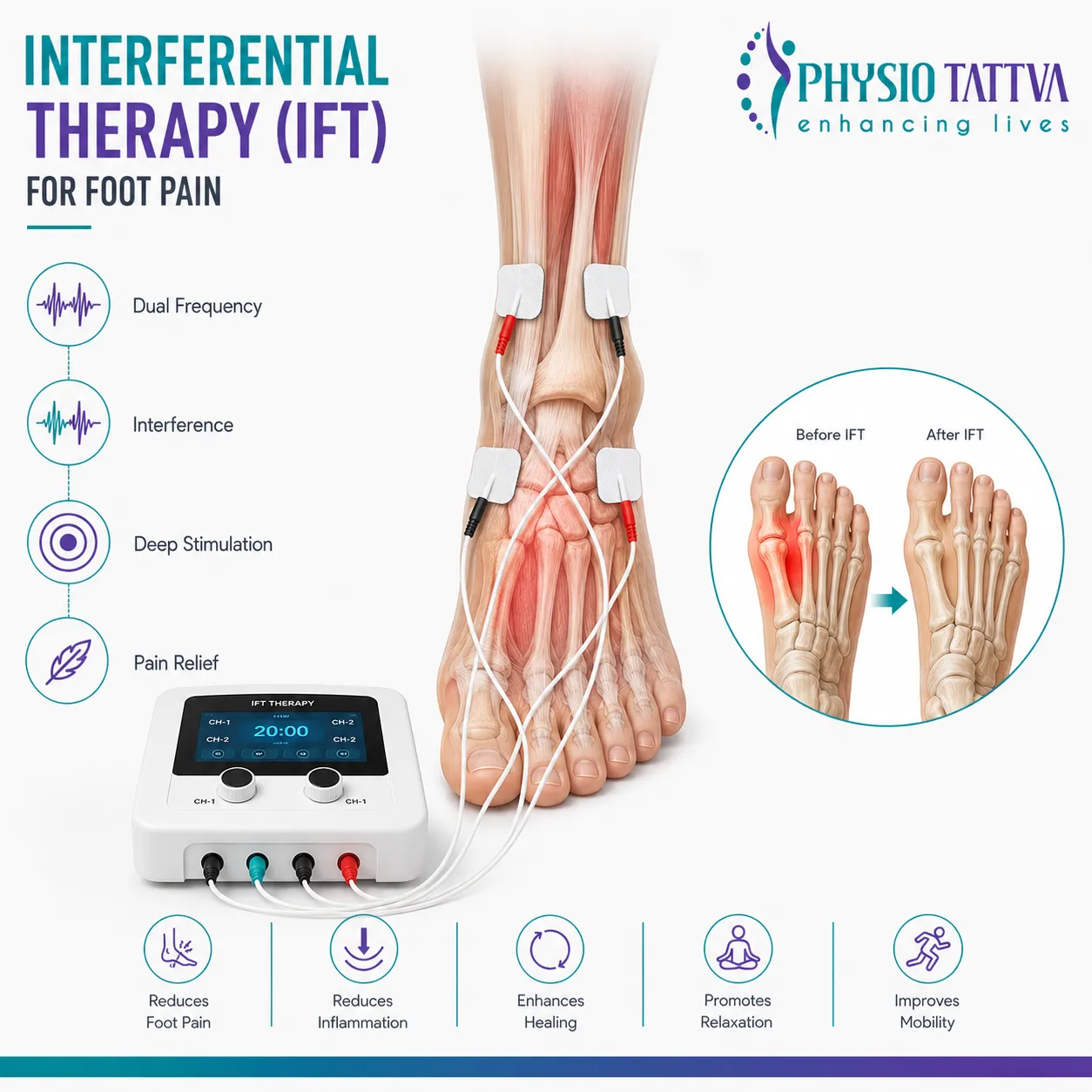
What is Interferential Therapy (IFT)? A Deeper Look

Interferential Therapy (IFT) is an advanced form of electrical stimulation used in physiotherapy for foot pain relief and recovery. Think of it as a more sophisticated cousin of TENS: while TENS uses a single low-frequency current, IFT employs two medium-frequency currents delivered through separate electrode pairs.

  1. The “Interference” Effect: These two currents are positioned to cross within the target tissues. Where they intersect, they create a comfortable, low-frequency therapeutic current that penetrates deeper than many surface-level modalities.
  2. Key Mechanisms: Before diving into how IFT works, let's understand the foundational theories behind its success: 
    1. Pain Gate Theory: By stimulating sensory nerves, IFT helps block pain signals before they reach the brain, offering rapid relief. 
    2. Endorphin Release: IFT encourages the body to release natural pain-relieving chemicals (endorphins), supporting sustained comfort beyond the session.

The result is advanced pain relief with minimal skin irritation and improved tolerance, making IFT a preferred choice for deep-seated foot pain.

How IFT Specifically Targets and Relieves Foot Pain

IFT connects the science of electrical stimulation with the real-world demands of walking, standing, and moving without pain. Here’s how it helps common foot conditions:

  • Deep Pain Relief: The interference pattern allows the therapeutic current to reach deeper tissues than many conventional options. Whether the discomfort originates in the plantar fascia, the small joints of the foot, or the Achilles tendon, IFT can deliver targeted relief at the source.
  • Reduces Inflammation and Swelling: The low-frequency effect can produce gentle, rhythmic muscle contractions that function like a natural “pump.” This promotes local blood flow and lymphatic drainage, helping flush inflammatory byproducts and reduce swelling—a major contributor to pain in conditions like plantar fasciitis and metatarsalgia.
  • Muscle Relaxation and Spasm Reduction: Foot muscles often tighten in response to pain or altered gait mechanics. IFT can calm these overactive muscles, relieving cramping and improving comfort with standing and walking.
  • Accelerates Healing: Better circulation means improved delivery of oxygen and nutrients to damaged tissues, supporting faster cellular repair. For plantar fasciitis, that translates to more efficient healing of micro-tears along the fascia. For tendonitis, it supports the recovery of the tendon and surrounding structures.
  • Enhanced Tolerance to Rehab: By easing pain and stiffness, IFT helps prepare tissues for manual therapy and exercises. Patients often move more freely and engage more confidently with their rehab program, accelerating overall progress.

For those with chronic, stubborn foot pain, this combination of deep-acting analgesia, anti-inflammatory effects, and improved tissue perfusion makes IFT a powerful ally.

Your IFT Session for Foot Pain: What to Expect at Physiotattva

Feeling unsure about a new treatment is normal. Here’s what a typical session looks like at our Bangalore and Hyderabad clinics:

  • Expert Assessment: A Physiotattva physiotherapist conducts a detailed evaluation to confirm your diagnosis, screen for contraindications, and set the right IFT parameters for your condition. 
  • Comfortable Positioning: You’ll be seated or lying down comfortably with your foot supported and exposed. 
  • Electrode Placement: After cleaning the skin, four self-adhesive electrodes are placed around the painful region—for example, around the heel and arch for plantar fasciitis or around the Achilles for tendonitis. 
  • The Sensation: As the device starts, you’ll feel a gentle tingling or “pins and needles” sensation. The intensity is carefully increased to a strong but comfortable level—never painful—and adjusted as needed throughout. 
  • Duration and Completion: A typical session lasts about 15–20 minutes. Once complete, electrodes are removed, and your therapist will guide you on next steps, which may include manual therapy, taping, and a customized home exercise plan.

Most patients describe IFT as soothing and relaxing, often noticing immediate lightness or reduced soreness after the session.

Step Towards Recovery with Physiotattva's Integrated Approach

IFT is most effective when combined with a comprehensive plan designed around your goals and lifestyle. At Physiotattva, we often use IFT first to calm pain and inflammation, then build on that momentum with:

  • Manual Therapy (soft tissue release, joint mobilization)
  • Chiropractic Adjustments (when indicated for alignment)
  • Customized Stretching and Strengthening Exercises
  • Taping techniques and orthotic guidance for arch support and load distribution

Step Towards Pain-Free Feet with IFT at Physiotattva

Foot pain can be a constant barrier to living your life freely, but it doesn’t have to be. Interferential Therapy (IFT) at Physiotattva offers a proven, non-invasive treatment that targets the root causes of foot pain, including conditions like plantar fasciitis and Achilles tendonitis. By reducing inflammation and promoting healing, IFT helps you recover faster and more comfortably. Whether you’re dealing with chronic pain or post-injury discomfort, our expert physiotherapists provide personalized care to ensure lasting relief. 

At Physiotattva physiotherapy clinics in Bangalore and Hyderabad, you receive personalised care tailored to your specific needs, ensuring effective results and comfort throughout your journey to recovery. 

Don’t wait to start your recovery! Get in touch with Physiotattva for more details! Contact us at +91 89510 47001.

Frequently Asked Questions

No items found.

Related Therapies

Related Symptoms

No items found.

Related Conditions

No items found.

Related Treatments

No items found.

Our Professionals

No items found.
No items found.
No items found.

Related Blogs

No posts published yet.

Get In Touch

Valid number
Thank you! Your submission has been received!
Oops! Something went wrong while submitting the form.