

Ultrasound Therapy
Ultrasound Therapy for Sprains and Strains
Recover faster from sprains and strains with Ultrasound Therapy for Sprains and Strains. This non-invasive treatment reduces pain, promotes tissue healing, and accelerates recovery. At Physiotattva, our expert physiotherapists in Bangalore and Hyderabad provide personalized ultrasound therapy to help you get back to your active life.
Treats Sprains and strains
One wrong step on the badminton court, a sudden lunge during your morning run, or just an awkward twist while lifting a heavy box; the sharp, sudden pain of a soft tissue injury is an all-too-common experience. Sprains and strains are among the most frequent reasons people seek medical care, leading to pain, swelling, and frustrating limitations on daily activities. While the classic R.I.C.E. protocol (Rest, Ice, Compression, Elevation) is a crucial first-aid step, modern physiotherapy offers advanced techniques to go beyond basic management. At Physiotattva, we use key, non-invasive modalities like therapeutic ultrasound to treat sprains and strains effectively, helping you get back to your routine faster.
Understanding the Injury: What’s the Difference Between Sprains and Strains?
Before diving into treatment, it's helpful to understand what’s happening inside your body. While often used interchangeably, sprains and strains are distinct injuries affecting different soft tissues.
Sprains
A sprain is an injury to a ligament, the tough, fibrous band of tissue that connects one bone to another. Sprains occur when a ligament is stretched or torn, typically when a joint is forced into an unnatural position. A classic example is a twisted ankle. Symptoms often include pain around the joint, bruising, swelling, and a feeling of instability.
Strains
A strain, on the other hand, is an injury to a muscle or a tendon (the tissue that connects muscle to bone). Also known as a "pulled muscle," a strain happens when muscle or tendon fibers are overstretched or torn, often from overuse, fatigue, or improper lifting. Common examples include a pulled hamstring or a lower back strain. Symptoms include muscle pain, weakness, spasms, and cramping.
Though different, both sprains and strains involve damage to soft tissues, triggering an inflammatory response that causes pain and swelling. This is precisely where targeted physiotherapy techniques like ultrasound therapy become essential for recovery.
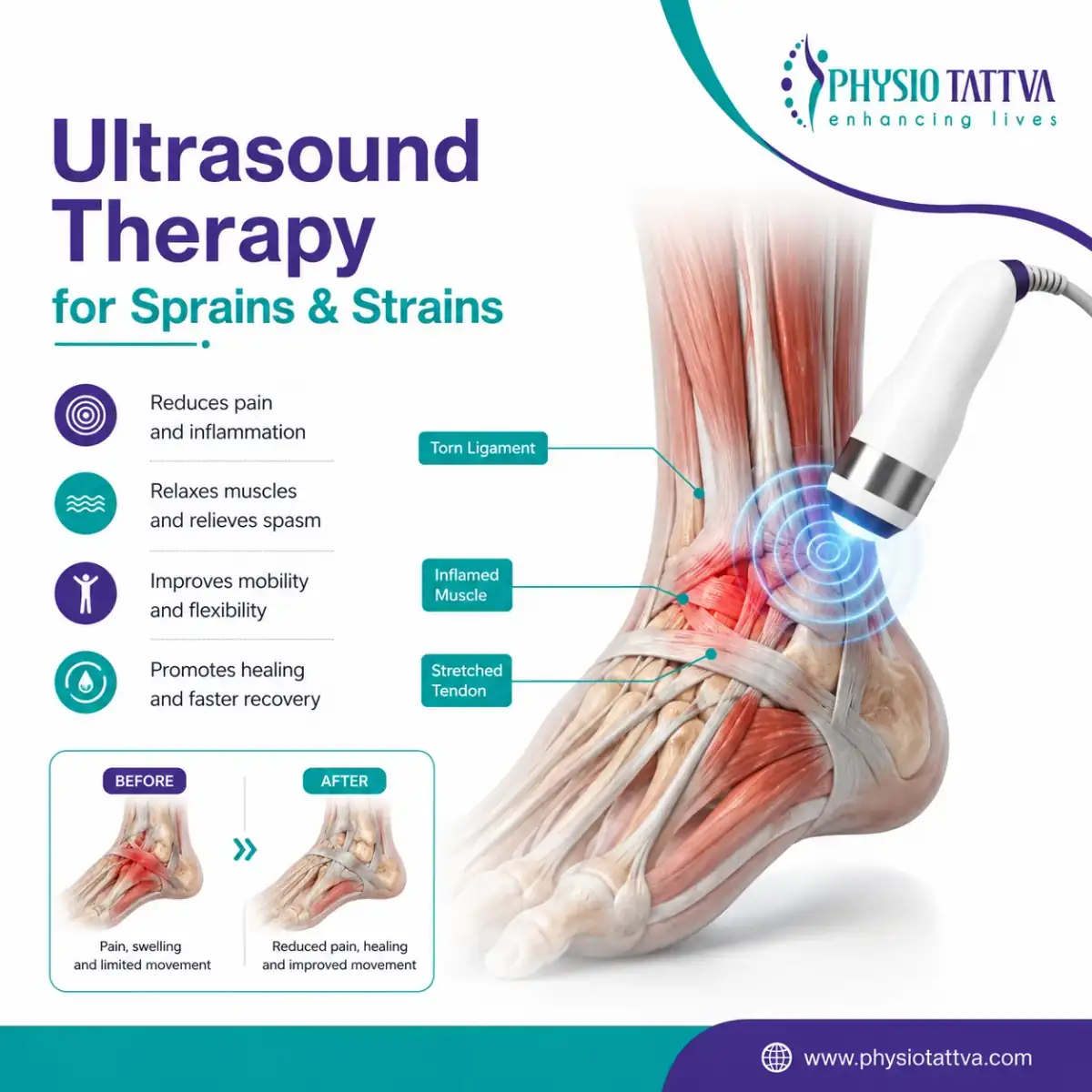
What is Therapeutic Ultrasound and How Does It Work?
When people hear "ultrasound," they often think of the diagnostic imaging used during pregnancy. However, therapeutic ultrasound is entirely different. Its purpose is not to create an image, but to deliver targeted treatment deep within injured tissues.
The science behind it is fascinating. A physiotherapist uses a device with a small, round head called a transducer. This transducer, when placed on your skin over a conductive gel, emits high-frequency sound waves that penetrate deep into the affected soft tissue. These sound waves create two primary effects that work together to promote healing:
Thermal Effect (Deep Heating)
The sound waves cause the molecules in your tissues to vibrate rapidly, generating a gentle, deep heat. This thermal effect increases blood flow to the area (a process called vasodilation). The enhanced circulation delivers more oxygen and essential nutrients to the injured cells, which accelerates the natural healing process, relaxes tight muscles, and reduces painful spasms.
Non-Thermal Effect (Mechanical)
At a lower intensity, the sound waves create a mechanical effect known as cavitation. This is when microscopic gas bubbles in your bodily fluids rapidly expand and contract. This process creates a "micro-massage" that helps reduce swelling (edema), decrease inflammation, stimulate cell repair, and break down scar tissue that can cause stiffness.
The Key Benefits of Ultrasound Therapy for Sprains and Strains
Incorporating ultrasound into your physiotherapy plan for a sprain or strain offers a range of significant benefits that traditional methods alone may not provide.
- Accelerated Healing Process: By stimulating cellular activity and boosting blood flow, ultrasound therapy directly supports the body's natural repair mechanisms. It helps speed up the inflammatory and proliferative phases of healing, meaning your tissues can mend faster.
- Effective Pain and Inflammation Reduction: Ultrasound directly targets pain and swelling at the source. The deep heat soothes nerve endings and relaxes muscles, while the mechanical effect helps flush out inflammatory fluids. This combination offers tangible relief, often felt within the first few sessions, and helps break the debilitating pain-spasm cycle.
- Increased Tissue Elasticity and Flexibility: After an injury, the body forms scar tissue. If this tissue is too dense or disorganized, it can lead to stiffness and reduced range of motion, increasing the risk of re-injury. The micro-massage effect of ultrasound helps produce more organized, flexible collagen, ensuring the newly healed tissue is strong yet pliable.
- Non-Invasive and Painless Treatment: One of the biggest advantages is that the procedure is comfortable and completely non-invasive. Patients typically feel only a mild, soothing warmth on their skin. This makes it a safe and appealing alternative or complement to pain medications and more invasive procedures.
- Phonophoresis Potential: In some cases, your therapist may use a technique called phonophoresis, where an anti-inflammatory medication (in gel form) is applied to the skin. The ultrasound waves then help drive this medication deeper into the injured tissue for more potent, localized relief.
What to Expect During Your Ultrasound Session at Physiotattva?
If your physiotherapist recommends ultrasound therapy, you can feel confident and prepared knowing the process is simple, comfortable, and professional. Here’s what a typical session at our Physiotattva clinics in Bangalore and Hyderabad looks like:
- Expert Assessment: Your journey begins with a thorough evaluation by a qualified Physiotattva physiotherapist. They will assess your sprain or strain, discuss your symptoms, and determine if ultrasound therapy is the most appropriate modality for your specific condition.
- Preparation: A clear, water-based gel will be applied to your skin over the injured area. This gel is essential as it removes any air between the transducer and your skin, allowing the sound waves to be transmitted efficiently and effectively.
- The Treatment: Your therapist will place the transducer head on the gel and move it in slow, continuous circles over the injury site. The parameters—intensity and frequency- will be precisely set based on the type and severity of your injury.
- Sensation and Duration: You will most likely feel a gentle and pleasant warmth as the transducer moves over your skin. The treatment is not painful. A typical ultrasound session for a sprain or strain is brief, usually lasting between 5 to 10 minutes.
A Holistic Approach: Is Ultrasound Therapy a Standalone Treatment?
While powerful, ultrasound therapy is rarely a standalone solution for sprains and strains. At Physiotattva, we believe in a holistic, patient-centered approach. The best and most lasting recovery comes from a comprehensive treatment plan tailored specifically to you.
Ultrasound therapy is a vital component of a broader strategy that may also include:
- Manual Therapy: Hands-on techniques like soft tissue massage and joint mobilization to restore mobility and release tension.
- Customised Exercise Programs: Specific stretching and strengthening exercises to rebuild stability, improve range of motion, and support the injured area.
- Kinesiology Taping or Bracing: To provide support and facilitate proper movement during the healing process.
- Chiropractic Adjustments: To ensure proper spinal and joint alignment, which can be affected by compensatory movements due to injury.
This integrated approach doesn't just heal the injury, it restores full function, corrects underlying imbalances, and empowers you with the knowledge to prevent future problems.
Speed Up Your Recovery Journey with Ultrasound Therapy at Physiotattva
Ultrasound therapy is a safe, scientifically backed, and effective method for accelerating your recovery from painful sprains and strains. By reducing pain, controlling inflammation, and promoting high-quality tissue repair, it helps get you back on your feet and back to the life you love.
At Physiotattva physiotherapy clinics in Bangalore and Hyderabad, you receive personalised care tailored to your specific needs, ensuring effective results and comfort throughout your journey to recovery.
Don’t wait to start your recovery! Get in touch with Physiotattva for more details! Contact us at +91 89510 47001.
Answers
Frequently asked questions
Conditions
Related conditions

Symptoms
Related symptoms

Treatments
Related treatments

Therapies
Related therapies
 22 May 2026
This article is your compass for navigating the intricacies of sprained ankle recovery, ensuring you receive the right care. From understanding the nuances of this common injury…
 Foot Pain30 October 2025
In this article, we examine the causes, symptoms, and diagnosis comprehensively related to a deltoid injury. By exploring these aspects, you gain valuable insights into…







At-home care
Home physiotherapists

Our team
Chiropractors

Book
Start with an assessment
We measure what you've lost, find the cause, and set out a plan with a target and a timeline.
- Call us+91 89510 47001
- Email usinfo@physiotattva.com
- Visit a clinic28 clinics across Bangalore, Hyderabad and Visakhapatnam
- Or stay homePhysiotherapy at home