


Laser Therapy
Laser Therapy for Shoulder Pain
Laser Therapy at Physiotattva offers a modern, non-invasive solution to shoulder pain. Reduce inflammation, accelerate healing, and restore mobility without surgery. Book your appointment now and start feeling better!
Laser therapy for shoulder pain is a non-surgical physiotherapy treatment that reduces inflammation and supports tissue healing using therapeutic light energy. It works through photobiomodulation to stimulate cellular repair and decrease inflammatory activity in shoulder tissues. The treatment is commonly used for rotator cuff tendinopathy, bursitis, frozen shoulder, and overuse injuries, and it helps reduce pain sensitivity so patients can participate more comfortably in rehabilitation exercises.
Sessions are typically short, lasting about 5 to 15 minutes, painless, and require no downtime. Improvement develops gradually over multiple sessions rather than instantly. Laser therapy is most effective when combined with strengthening exercises, mobility work, and posture correction. It is safe when performed by a trained physiotherapist following proper safety protocols and supports conservative shoulder rehabilitation, though it does not replace surgery for severe structural tears.
What Is Laser Therapy Treatment for Shoulder Pain?
Laser therapy treatment for shoulder pain is a non-invasive physiotherapy modality that uses focused therapeutic light energy to reduce inflammation and support natural tissue repair in the shoulder structures.
The light penetrates skin and soft tissues and may improve local circulation, cellular activity, and collagen response. This helps calm irritated tendons and muscles so movement becomes more comfortable during rehabilitation.
It is commonly recommended for conditions such as rotator cuff tendinopathy, shoulder impingement, frozen shoulder stiffness, bursitis, and repetitive strain injuries. The goal is not instant recovery, but improved pain tolerance and safer participation in guided exercises that restore mobility and strength over time.
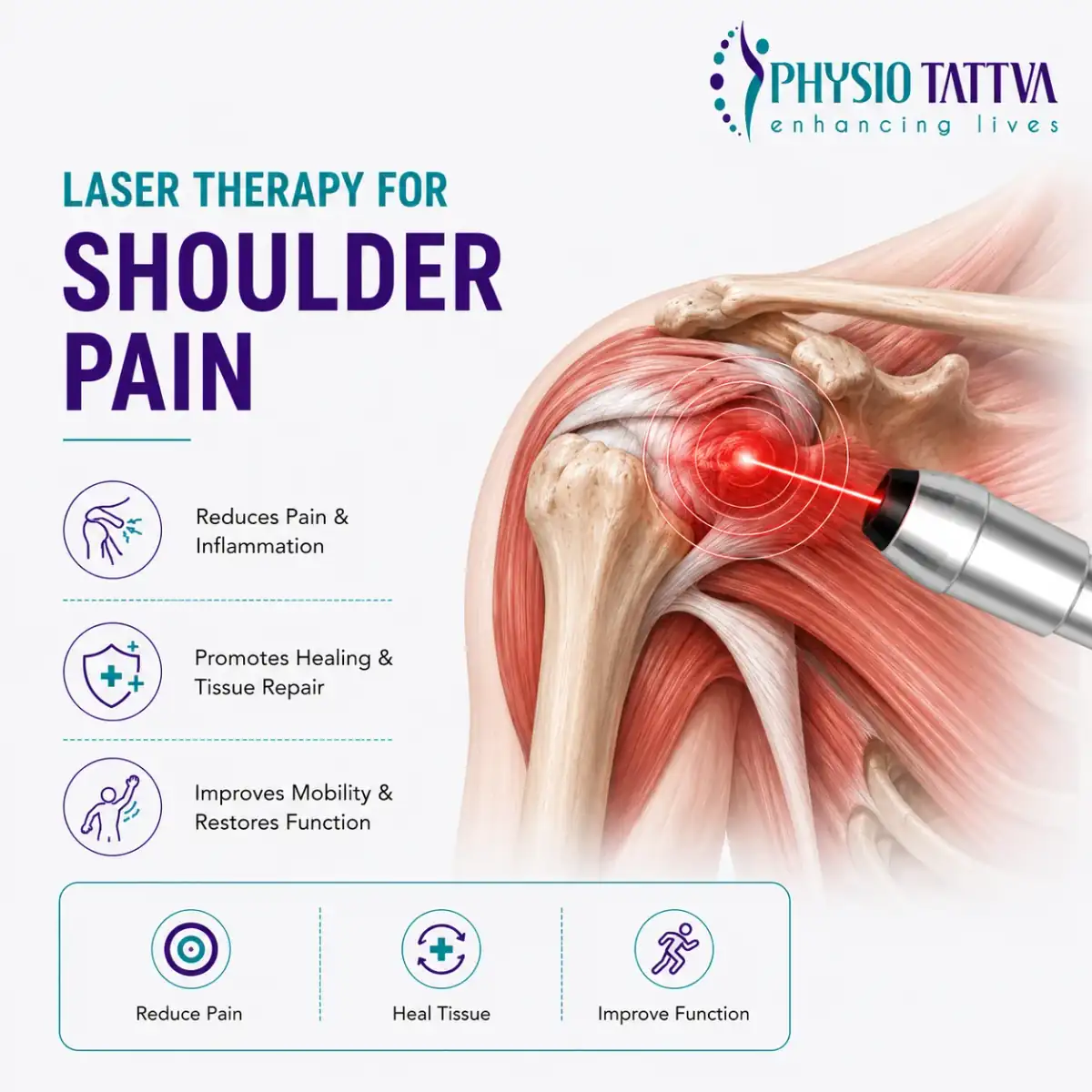
How Does Laser Therapy Work on Shoulder Pain?
Laser therapy works by delivering controlled light energy into painful shoulder tissues to stimulate cellular repair and reduce inflammation. The process, called photobiomodulation, improves how injured cells produce energy and recover during rehabilitation.
When the light reaches the cells, it interacts with mitochondria and increases ATP (cellular energy) production. This improves the tissue’s ability to repair and tolerate movement.
Key Biological Effects:
These cellular responses work together to reduce irritation and help the shoulder handle movement during guided physiotherapy:
- Reduces inflammation: Decreases inflammatory activity in tendons, bursa, and joint capsule, helping swelling and stiffness settle.
- Improves local circulation: Encourages better blood flow, bringing oxygen and nutrients needed for healing while clearing metabolic waste.
- Supports tissue repair: Stimulates collagen activity, assisting recovery of muscles, tendons, and ligaments affected by strain or overuse.
- Modulates pain signals: Temporarily reduces nerve sensitivity and improves comfort, allowing patients to perform physiotherapy exercises more easily.
What Are the Benefits of Laser Therapy for Shoulder Pain?
Laser therapy is chosen when patients need pain relief without injections or prolonged rest. The treatment supports rehabilitation by improving comfort and allowing earlier participation in movement-based recovery programs.
- Comfortable and Non-Invasive Treatment: The therapy is applied externally on the skin and does not involve needles or incisions. Most individuals feel only mild warmth during application, making it suitable even for painful shoulder conditions.
- No Recovery Downtime: Patients can usually continue daily activities after each session. This allows therapy to fit into routine schedules without requiring immobilisation or activity restriction in most cases.
- Supports Reduced Medication Dependence: By helping manage inflammation and pain sensitivity, laser therapy may reduce reliance on anti-inflammatory medication during rehabilitation under clinical guidance.
- Short Sessions With Progressive Improvement: Sessions are typically brief, and improvements often develop gradually across multiple visits as tissue irritation settles and shoulder movement improves.
- Helps Patients Participate in Physiotherapy Exercises: Reduced pain sensitivity allows better tolerance to strengthening and mobility exercises, which are essential for long-term recovery rather than passive treatment alone.
What Can You Expect During Laser Therapy for Shoulder Pain Recovery?
Laser therapy for shoulder pain is typically used alongside physiotherapy rather than as a standalone treatment. Improvements usually occur gradually as pain reduces and shoulder movement becomes easier during guided rehabilitation.
Early Phase (Initial Sessions)
- Reduced resting pain and tenderness
- Shoulder feels less sensitive during movement
- Improved comfort during daily activities
Middle Phase (Ongoing Sessions)
- Decrease in stiffness and inflammation
- Better tolerance to stretching and strengthening exercises
- Improved range of motion in lifting and reaching
Later Phase (Rehabilitation Progression)
- More controlled and confident shoulder movement
- Improved strength during functional tasks
- Sustainable improvement when combined with structured physiotherapy
Laser therapy supports recovery by improving comfort and enabling active rehabilitation rather than replacing exercise-based treatment.
Is Laser Therapy for Shoulder Pain Safe? Risks and Precautions
Laser therapy is generally considered safe when performed by a trained physiotherapist using appropriate treatment settings. The therapy is non-invasive and designed to support healing without damaging surrounding tissues.
Common Temporary Effects
Some mild reactions may occur after treatment and usually settle quickly:
- Gentle warmth in the treated area
- Temporary soreness after the session
- Mild skin redness for a short duration
Who Should Avoid Laser Therapy for Shoulder Pain?
Laser therapy is generally safe, but certain conditions require caution or prior medical advice. Always inform your physiotherapist about your medical history so treatment settings can be adjusted appropriately.
- Known or suspected cancer in the treatment area
- Pregnancy (avoid over the chest or upper trunk unless medically advised)
- Photosensitive disorders or light-reactive medications
- Reduced sensation or nerve-related conditions affecting the shoulder
- Open wounds or active skin infection over the treatment region
Precautions Before Starting Laser Therapy for Shoulder Pain
Certain situations do not always prevent treatment but may require adjusted settings or additional supervision. Sharing complete medical details helps ensure safe and effective rehabilitation.
- Inform the therapist about recent injections or surgeries in the shoulder
- Remove metal accessories around the treatment area before the session
- Protective eyewear must be worn during laser application
- Report unusual discomfort or excessive heat sensation immediately
- Follow the advised rest and exercise guidelines between sessions
Clinical note: Treatment intensity and frequency are modified based on tissue healing stage, pain level, and individual tolerance to ensure safe progression of rehabilitation.
Who May Benefit from Laser Therapy for Shoulder Pain?
Laser therapy may be suitable for individuals experiencing shoulder pain related to inflammatory or degenerative conditions. It is often considered as part of a broader physiotherapy plan aimed at reducing pain and improving functional movement.
You may benefit from laser therapy if you have:
- Rotator cuff inflammation or tendon irritation
- Shoulder bursitis is causing pain with movement
- Frozen shoulder (particularly during the early inflammatory stage)
- Degenerative shoulder arthritis or joint stiffness
- Chronic shoulder pain that has not responded fully to exercise therapy alone
A clinical assessment is recommended to determine whether laser therapy is appropriate based on your specific diagnosis and symptom severity.
How Does Laser Therapy Compare With Other Shoulder Pain Treatments?
Shoulder pain can be managed using multiple rehabilitation approaches depending on the cause, severity, and movement limitation. Laser therapy is often combined with therapeutic exercises, hot and cold therapy, manual therapy, ultrasound therapy, Kinesio taping, and electrical modalities such as TENS or PEMF to improve comfort, mobility, and participation in active rehabilitation during recovery.
Why Choose Physiotattva for Shoulder Pain Rehabilitation?
Effective shoulder pain management requires more than a single modality. At Physiotattva, laser therapy is used as part of a structured rehabilitation plan designed around the exact cause of your pain, movement limitations, and functional goals.
Your care begins with a clinical assessment to identify the source of shoulder pain. Based on this, physiotherapists design a personalised plan combining pain relief with functional recovery.
Treatment may include:
- Targeted laser therapy for pain and inflammation
- Manual therapy to improve mobility
- Strengthening and stability exercises
- Posture and movement correction
Our goal is to restore safe movement, strength, and confidence in daily activities.
At Physiotattva physiotherapy clinics in Bangalore, Hyderabad, and Visakhapatnam- our latest clinic- you receive personalised care tailored to your specific needs, ensuring effective results and comfort throughout your journey to recovery.
Don’t wait to start your recovery! Get in touch with Physiotattva for more details! Contact us at +91 89510 47001.
Key Takeaways
Laser therapy can be a valuable part of a structured shoulder rehabilitation program when selected after proper assessment.
- Laser therapy reduces shoulder pain by improving circulation, lowering inflammation, and supporting collagen repair in tendons and soft tissues.
- It is particularly helpful in inflammatory shoulder conditions and early-stage stiffness that restricts movement.
- The treatment is non-invasive and allows patients to continue daily activities during recovery.
- Meaningful improvement develops progressively as pain decreases and guided exercises restore strength and mobility.
- It works best when integrated with manual therapy and corrective exercise rather than used alone.
- Certain conditions, such as complete tendon tears, fractures, or severe instability, require medical evaluation before starting therapy.
- A clinical assessment is essential to confirm the diagnosis and tailor the rehabilitation plan appropriately.
Answers
Frequently asked questions
Conditions
Related conditions
Symptoms
Related symptoms

Treatments
Related treatments

Therapies
Related therapies
 Shoulder Pain31 October 2025
Find out how physiotherapy can alleviate shoulder pain after workouts. Learn prevention tips and effective treatments to keep your shoulders pain-free.
 Shoulder Pain31 October 2025
A shoulder pain diagnosis symptom diagnosis chart helps you to get a list of possible shoulder pain conditions with it's treatment option. Learn more.
 Shoulder Pain23 January 2026
Increase your range of motion, relieve shoulder pain & tightness with these simple yet effective exercises and improve mobility of your shoulder. Learn more.
 Shoulder Pain27 January 2026
Learn about physiotherapy methods for treating shoulder pain. Physiotherapy is an effective and non-invasive approach to treating many physiological conditions.








At-home care
Home physiotherapists

Our team
Chiropractors

Book
Start with an assessment
We measure what you've lost, find the cause, and set out a plan with a target and a timeline.
- Call us+91 89510 47001
- Email usinfo@physiotattva.com
- Visit a clinic28 clinics across Bangalore, Hyderabad and Visakhapatnam
- Or stay homePhysiotherapy at home