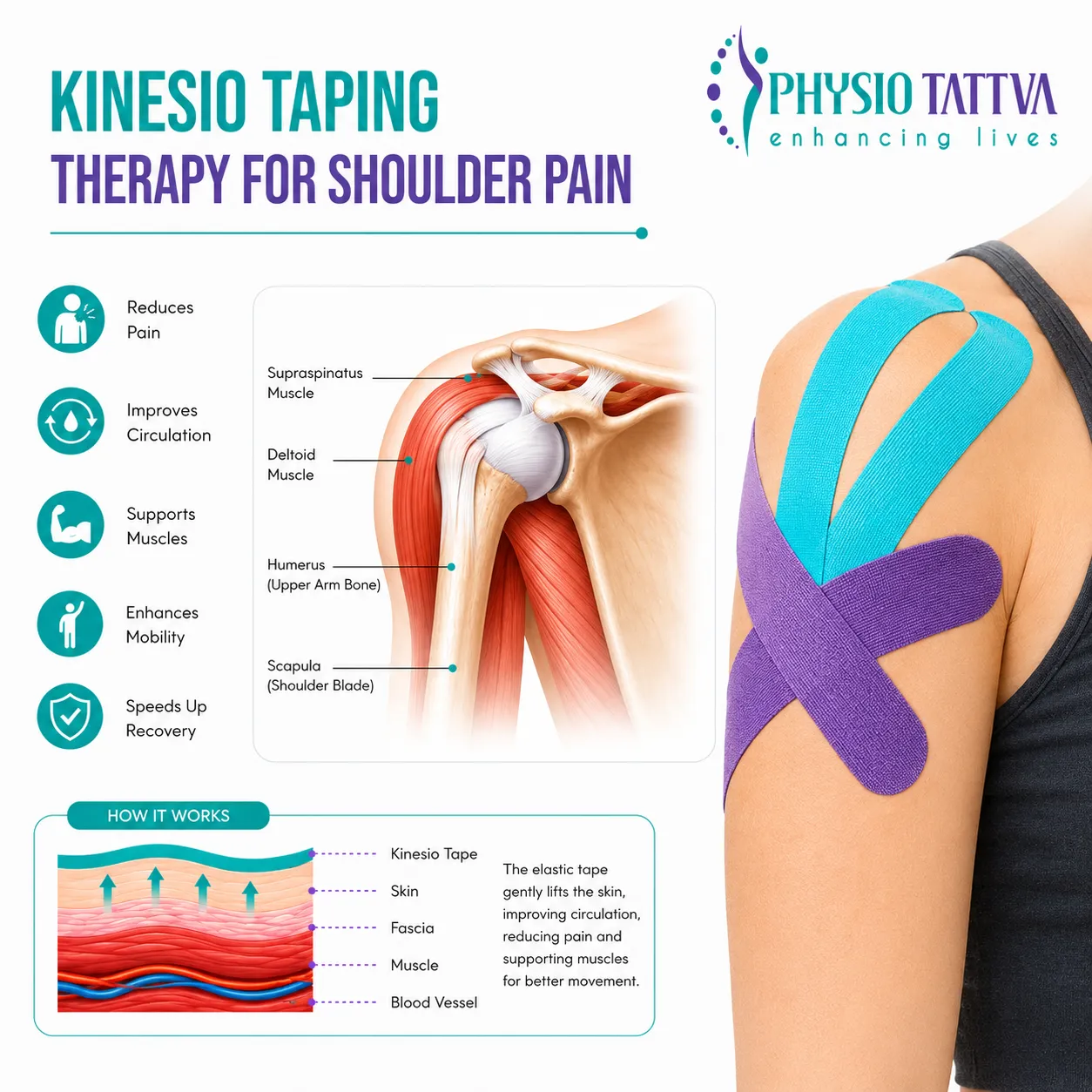
Kinesio taping therapy for shoulder pain effectively addresses pain, inflammation, and muscle tightness. Ideal for conditions like rotator cuff injuries or shoulder impingement, it enhances recovery by improving blood flow, supporting muscles, and reducing swelling. This non-invasive method is perfect for restoring function and flexibility in the shoulder.
Shoulder pain is one of the most common musculoskeletal complaints, affecting everything from lifting a bag of groceries to getting a good night's sleep. Whether it stems from a sports injury, poor posture, or overuse, finding effective relief is a top priority. While rest, ice, and physical therapy are staples of treatment, Kinesio taping therapy for shoulder pain has emerged as a powerful, non-invasive tool to accelerate healing and manage discomfort.
This article will walk you through what Kinesio tape is, how it works specifically for the shoulder, the conditions it can treat, and how it’s applied for maximum benefit.
What is Kinesio Taping?
Developed by Dr. Kenzo Kase in the 1970s, Kinesio tape (or Kinesiology tape) is not your average athletic tape. It’s a flexible, elastic cotton tape with a medical-grade acrylic adhesive. Its unique design allows it to mimic the elasticity of human skin, providing support and stability to muscles and joints without restricting the body's natural range of motion.
Key Properties of Kinesio Tape:
Kinesio tape is designed with several unique properties that make it highly effective and versatile for pain relief and muscle support. Here are the key features:
Elastic: Can be stretched up to 140% of its original length.
Breathable: The cotton fiber allows for comfort over long periods.
Water-Resistant: It can be worn during showers, swimming, and workouts.
Long-Lasting: A single application can last for 3-5 days.
How Does Kinesio Taping Therapy for Shoulder Pain Work?
When applied to the shoulder, Kinesio tape interacts with the body in several ways to promote healing and reduce pain.
Decompression and Pain Relief: When the tape is applied with a slight stretch, it gently lifts the skin. This microscopic lift creates space between the top layer of skin and the underlying muscle tissue. This decompression reduces pressure on pain receptors (nociceptors) located in that space, providing immediate pain relief.
Improved Circulation and Lymphatic Drainage: The space created by the tape also allows for better blood flow and lymphatic drainage. This helps to clear out inflammatory byproducts and reduce swelling, which are common culprits in shoulder pain conditions like tendonitis and bursitis.
Muscle Support and Re-education: Depending on how it's applied, the tape can either inhibit overused, tight muscles or facilitate weak, under-activated muscles. For the shoulder, this can help correct muscular imbalances that lead to poor joint mechanics and pain.
Proprioceptive Feedback: The tape on your skin provides constant sensory feedback to your brain about your shoulder's position in space (proprioception). This heightened awareness encourages you to maintain better posture and avoid movements that could cause further injury.
Common Shoulder Conditions Treated with Kinesio Tape
Kinesio taping is a versatile therapy that can be adapted to address numerous sources of shoulder pain.
Rotator Cuff Strain/Tendonitis: Tape can be applied to decompress the area over the rotator cuff tendons (like the supraspinatus) and provide support to the deltoid muscle, reducing the strain on the injured tissue.
Shoulder Impingement Syndrome: By lifting the skin and tissue over the acromion (the bony point of your shoulder), the tape can create more subacromial space, reducing the "pinching" of tendons that defines this condition.
Bicep Tendonitis: An application can help offload the long head of the bicep tendon as it runs through the front of the shoulder, alleviating pain during lifting and reaching.
Shoulder Instability: While it can't physically hold the joint in place, the tape provides powerful proprioceptive cues that help the surrounding muscles to fire correctly, improving dynamic stability.
Postural Strain (Rounded Shoulders): Tape applied across the upper back can gently cue you to retract your shoulder blades and open your chest, correcting the postural habits that often lead to chronic shoulder pain.
General Muscle Soreness or Overuse: For athletes or individuals with physically demanding jobs, Kinesio tape can help improve blood flow to sore muscles, speeding up recovery.
Common Taping Techniques for Shoulder Pain
For optimal results and to ensure proper application, it is strongly recommended that Kinesio taping therapy for shoulder pain be performed by a certified physical therapist, chiropractor, or athletic trainer. The following examples are provided for informational purposes and should not replace professional guidance.
Technique 1: Rotator Cuff Support
This technique helps support the rotator cuff muscles and alleviate discomfort. Follow these steps for effective application:
Position: Sit or stand, and let the arm of the painful shoulder hang down.
First Strip: Anchor one "I" strip of tape (without stretch) on the top of the shoulder. Apply it with a 25-50% stretch down and around the deltoid muscle (the large, rounded muscle of the shoulder). Lay down the end of the tape with no stretch.
Second Strip (Optional): Apply a second strip from the front of the shoulder, over the top, and down toward the shoulder blade to support the supraspinatus tendon.
Technique 2: Postural Correction
To help improve posture and shoulder alignment, follow these steps:
Position: Sit or stand tall, pinching your shoulder blades together.
Strips: Use two "I" strips. Anchor the first strip on the front of one shoulder. Pull it diagonally across your back toward the opposite lower ribs with a 50% stretch.
Repeat: Anchor the second strip on the front of the other shoulder and create an "X" pattern across your upper back. This provides a gentle, constant reminder to keep your shoulders back.
Best Practices for Using Kinesio Tape
To ensure the best results and avoid skin irritation, follow these best practices when applying Kinesio tape:
Clean Skin: Always apply tape to clean, dry skin that is free of oils, lotions, or sweat. This ensures proper adhesion and helps the tape stay in place longer.
Round the Corners: Snipping the corners of the tape into a rounded shape helps prevent the edges from catching on clothing and peeling off prematurely.
Anchor First: Always apply the first and last inch of the tape with zero stretch to prevent skin irritation and ensure the tape stays secure.
Activate the Adhesive: After applying the tape, rub it briskly for a few seconds. The heat from friction activates the adhesive, creating a stronger bond.
Monitor Your Skin: Keep an eye on your skin for any signs of irritation, such as itching, redness, or discomfort. If any occur, remove the tape immediately to prevent further irritation.
Proper Removal: To remove the tape, soak it in oil (such as baby oil or olive oil) or warm water, and gently peel it off in the direction of hair growth, pressing down on the skin as you go to avoid discomfort.
Unlock Faster Recovery with Kinesio Taping for Shoulder Pain
Kinesio taping therapy for shoulder pain is an excellent supplementary treatment that can provide significant pain relief, reduce swelling, and improve function. It works by decompressing painful tissues and enhancing your body's awareness of its own movement, empowering you to move more correctly.
While it is not a standalone cure, when used in conjunction with a comprehensive rehabilitation program that includes strengthening and mobility exercises, Kinesio tape can be the key to unlocking a faster, more comfortable recovery. If you are struggling with shoulder pain, speak to a qualified healthcare professional to see if this innovative therapy is right for you.
At Physiotattva physiotherapy clinics in Bangalore and Hyderabad, you receive personalised care tailored to your specific needs, ensuring effective results and comfort throughout your journey to recovery.
Typically, Kinesio tape can be worn for 3 to 5 days. The adhesive is water-resistant and durable enough to withstand daily activities, including showering and light exercise. After 5 days, the elasticity decreases, and it should be removed to maintain effectiveness.
What is the difference between Kinesio tape and regular athletic tape?
The primary difference is elasticity and function. Kinesio tape is elastic and designed to move with your body to facilitate movement, reduce pain, and improve circulation. Regular athletic tape is rigid and non-elastic, used to restrict motion and immobilize a joint, usually for short-term support after an acute injury.
Are there any side effects of Kinesio taping?
Side effects are rare and usually minor. The most common issue is skin irritation, redness, or an allergic reaction to the adhesive. It's recommended to test a small patch of tape on your skin for an hour before a full application if you have a history of skin sensitivities. Never apply tape to open wounds or irritated skin.
How does Kinesio taping therapy help with shoulder pain?
Kinesio taping therapy helps shoulder pain by providing support to the muscles and joints without restricting movement. It improves circulation, reduces inflammation, and alleviates muscle tension, all of which contribute to pain relief. The tape also provides proprioceptive feedback to encourage proper shoulder movement, helping to prevent further strain and discomfort.






.webp)
.webp)


.webp)






%20(1)-p-3200.jpeg)


.jpg)
.webp)
.webp)
.webp)