




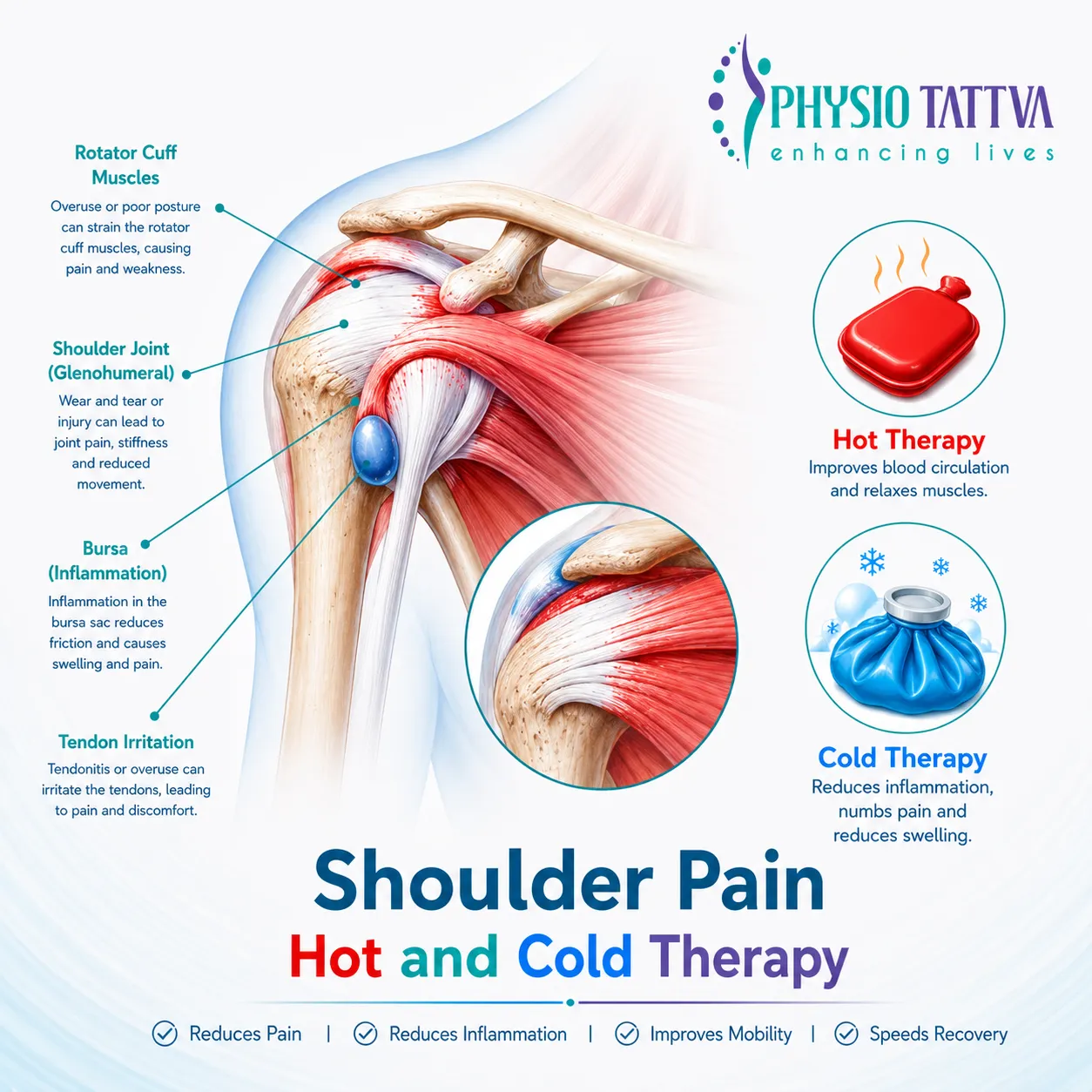
Shoulder pain, whether caused by overuse, injury, or chronic conditions, can significantly impact daily activities. Hot and cold therapy are two of the most accessible, affordable, and effective first-line treatments for managing shoulder pain and promoting healing at home. The key to success lies in understanding when to use ice for inflammation and heat for chronic stiffness. By applying the right therapy at the right time, you can reduce pain, improve mobility, and support your shoulder's recovery process.
Cold Therapy (Cryotherapy): For Acute Injury & Inflammation
Use ICE for Injury and Inflammation. Cold therapy is essential during the first 24-72 hours after a new injury to reduce swelling and numb the area.
How Cold Therapy Works?
Cold therapy is a powerful and effective treatment for reducing pain and inflammation in acute injuries. Here's how it works:
- Vasoconstriction: Cold causes blood vessels to narrow.
- Reduces Swelling: This narrowing effect limits blood flow to the injured area, which significantly reduces swelling and inflammation.
- Numbs Pain: Cold temporarily desensitizes nerve endings, providing immediate pain relief.
When to Use Cold Therapy?
Cold therapy is most effective for acute (new, sudden) conditions involving inflammation. It is best used for:
- Recent Injury (Sprain, Strain): If you've just tweaked your shoulder playing sports, lifting something heavy, or from a fall.
- Rotator Cuff Injury (Acute Phase): Immediately after the injury occurs.
- Bursitis or Tendinitis Flare-up: When the shoulder feels inflamed, sharp, and swollen.
- Post-Exercise Soreness: To reduce inflammation after a tough workout or physical therapy session.
- Post-Surgery: As directed by your surgeon to control pain and swelling.
How to Apply Cold Therapy?
Here’s how you can apply cold therapy effectively:
- Ice Packs / Gel Packs: A dedicated gel pack is ideal as it conforms to the shoulder.
- Bag of Frozen Vegetables: A bag of frozen peas or corn is a great, flexible alternative.
- Ice Massage: Freeze water in a paper cup, tear the top off, and massage the ice directly onto the sore spot in small circles.
Application Protocol
To ensure safe and effective use of cold therapy, follow these guidelines:
- Protect Your Skin: Always wrap the cold pack in a thin towel or cloth. Never apply ice directly to the skin to prevent ice burn.
- Apply for 15-20 Minutes: Apply the cold pack to the most painful area of the shoulder.
- Rest for at Least 1-2 Hours: Allow the skin to return to normal temperature before reapplying.
- Repeat: You can repeat this every 2-4 hours during the acute phase (first 1-3 days).
Heat Therapy (Thermotherapy): For Chronic Stiffness & Muscle Soreness
Applying HEAT can help heal and increase blood flow to stiff muscles. It’s especially beneficial for chronic conditions, muscle soreness, and stiffness once the initial inflammation has settled (typically after 72 hours).
How Heat Therapy Works
Heat therapy is particularly effective for relieving chronic shoulder pain, muscle soreness, and stiffness. After the initial inflammation phase has passed, heat therapy works by applying warmth to the affected area, which promotes healing and reduces discomfort. Here's how it works:
- Vasodilation: Heat causes blood vessels to widen.
- Increases Blood Flow: This brings more oxygen and nutrients to the area, which helps heal damaged tissue.
- Relaxes Muscles: Heat helps soothe tight, sore muscles and decreases joint stiffness, improving your range of motion.
When to Use Heat Therapy
Use heat for chronic (ongoing) pain and stiffness without significant swelling.
- Chronic Muscle Soreness or Aches: For a dull, persistent ache in the shoulder muscles.
- Arthritis: To soothe a stiff, arthritic shoulder joint (but not during an acute inflammatory flare-up).
- Muscle Knots (Trigger Points): To help relax tight knots in the shoulder and upper back.
- Before Stretching or Activity: Applying heat before stretching can warm up the muscles, making them more pliable and reducing the risk of injury.
Disclaimer: Do NOT use heat on a new injury. It will increase blood flow and make the inflammation and swelling worse.
How to Apply Heat Therapy
Heat therapy is easy to apply at home using various methods. Here are some effective ways to apply heat to your shoulder:
- Heating Pad: An electric heating pad provides consistent, controlled heat.
- Moist Heat Pack: Microwavable gel packs or grain bags often provide a deeper, more penetrating heat.
- Warm, Damp Towel: A simple and effective option. Place a wet towel in a plastic bag and microwave for 1-2 minutes (check temperature carefully).
- Warm Bath or Shower: Allowing warm water to run over your shoulder for 10-15 minutes is an excellent way to apply moist heat.
Application Protocol
To get the most out of heat therapy, follow these application guidelines:
- Protect Your Skin: Ensure the heat source is warm, not scalding. Use a towel as a barrier, especially with electric pads. Never fall asleep with a heating pad on.
- Apply for 15-20 Minutes: Let the heat penetrate the muscles to relieve stiffness.
- Use as Needed: Can be used several times a day, especially before physical activity.
Contrast Therapy (Alternating Hot and Cold)
Contrast therapy involves alternating between hot and cold treatments, creating a "pumping" action in the body. This process causes blood vessels to repeatedly constrict and dilate, which helps to reduce lingering swelling while simultaneously increasing blood flow to the area. It is especially effective a few days after an injury, once the initial inflammation has calmed down. Here's how to apply contrast therapy:
- Start with 3 minutes of heat: Apply heat first to help increase blood flow and relax muscles.
- Immediately follow with 1 minute of cold: Apply cold to reduce swelling and inflammation.
- Repeat the cycle 3-5 times, always ending with cold to ensure the reduction of swelling and to calm the area.
This method helps promote healing by flushing out inflammatory byproducts while improving circulation.
When to See a Doctor for Shoulder Pain
While hot and cold therapy are effective, they are not a cure-all. You should consult a doctor or physical therapist if:
- The pain is severe or you cannot move your arm.
- The pain resulted from a significant trauma or fall.
- Your shoulder looks deformed or there is extreme swelling.
- The pain does not improve after a week of self-care.
- You experience numbness, tingling, or weakness down your arm or in your hand.
- You have signs of an infection, such as fever, redness, and spreading warmth
Achieve Lasting Shoulder Pain Relief with Physiotattva
Hot and cold therapies are powerful tools for managing shoulder pain and promoting recovery. Cold therapy is best for reducing inflammation, swelling, and sharp pain immediately following an injury, while heat therapy helps relax muscles, improve circulation, and ease chronic pain and stiffness after the initial inflammation has subsided. Contrast therapy, which alternates between hot and cold, is an excellent method for reducing lingering swelling while improving blood flow to the area.
However, it's important to remember that while these therapies can be highly effective, they are not a substitute for professional medical care. If you experience severe pain, swelling, or any signs of infection, it’s crucial to consult a doctor or physical therapist to ensure proper treatment and prevent further damage. Stay consistent with your therapy, listen to your body, and seek professional guidance when necessary for optimal recovery.
At Physiotattva physiotherapy clinics in Bangalore and Hyderabad, you receive personalised care tailored to your specific needs, ensuring effective results and comfort throughout your journey to recovery.
Don’t wait to start your recovery! Get in touch with Physiotattva for more details! Contact us at +91 89510 47001.
Why Physiotattva?
22+
50,000+
95%
200+
25+
4.8
Cities We Serve

Bangalore
At Physio Tattva, we are committed to bring access to quality physio care through ultra-modern clinics and high-skilled practitioners to all.
.webp)
Hyderabad
At Physio Tattva, we are committed to bring access to quality physio care through ultra-modern clinics and high-skilled practitioners to all.
.webp)
Vishakhapatnam
At Physio Tattva, we are committed to bring access to quality physio care through ultra-modern clinics and high-skilled practitioners to all.
Core Treatments
Core Conditions
Core Symptoms
Frequently Asked Questions
When should I use cold therapy (ice) for shoulder pain?

When is hot therapy (heat) the right choice for my shoulder?
How long should I apply hot or cold packs to my shoulder?
Can I use heat on a new shoulder injury?
Is it okay to alternate between hot and cold therapy for my shoulder?






%20(1)-p-3200.jpeg)


.jpg)
.webp)
.webp)
.webp)