




Introduction: Unlocking Relief for Aching Shoulders
Shoulder pain is one of the most common musculoskeletal complaints, affecting millions of people worldwide. From a dull ache to sharp, debilitating pain, it can severely impact daily activities like reaching overhead, dressing, or even sleeping. While rest and medication have their place, a highly effective, hands-on approach is gaining recognition for its powerful results: manual therapy for shoulder pain.
Here, we will explore what manual therapy is, the specific conditions it can treat, the techniques involved, and what you can expect from a treatment session.
What is Manual Therapy?
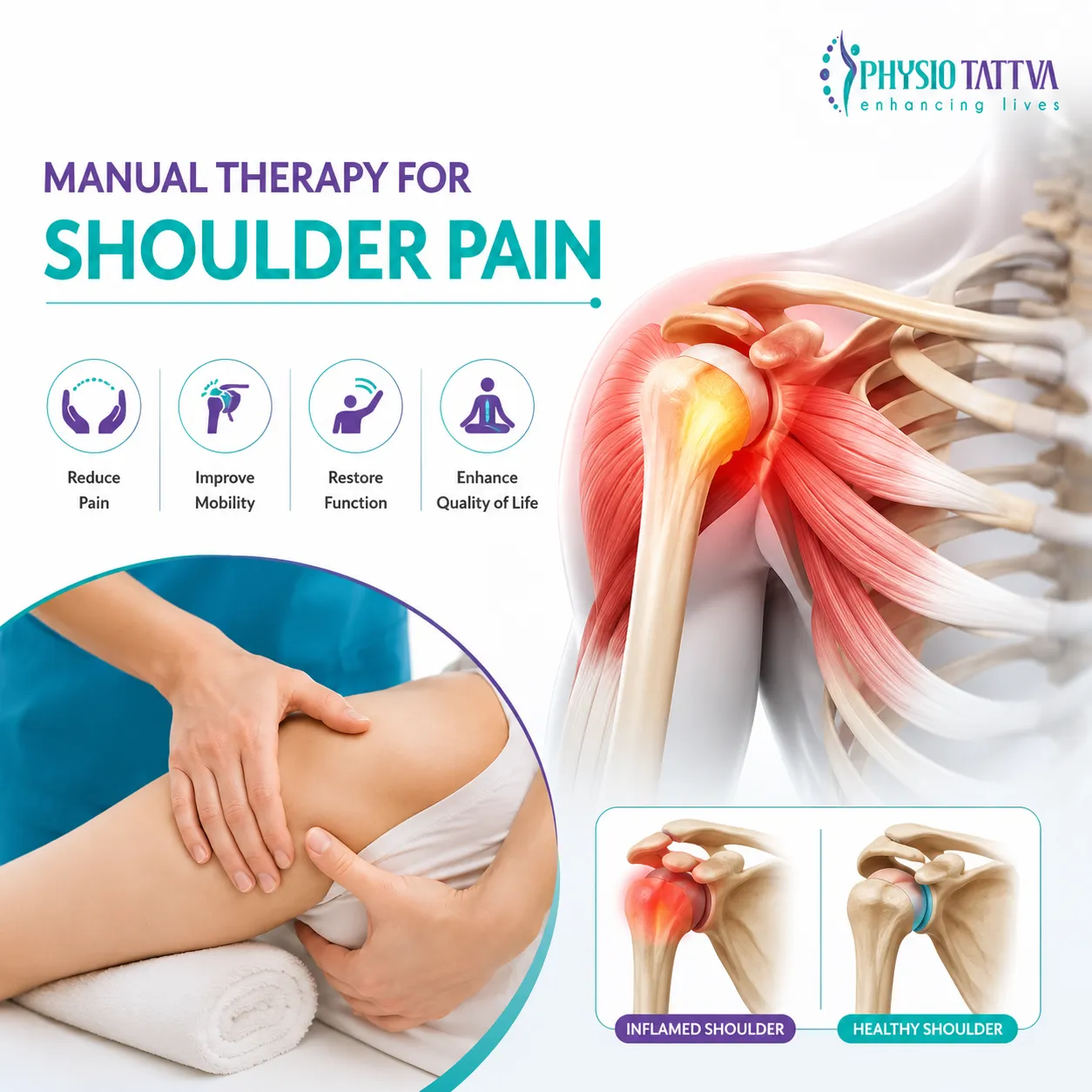
Manual therapy is a specialized form of physical therapy where clinicians use their hands to diagnose and treat musculoskeletal conditions. It is not a simple massage; it is a clinical practice grounded in biomechanics and anatomy.
The primary goals of manual therapy are to:
- Modulate and reduce pain.
- Increase range of motion (ROM).
- Reduce or eliminate soft tissue inflammation.
- Improve tissue repair, extensibility, and stability.
- Restore normal movement and function.
Common Shoulder Conditions Treated with Manual Therapy
Manual therapy is not a one-size-fits-all solution. A skilled physiotherapist will first perform a thorough assessment to diagnose the root cause of your shoulder pain. It is particularly effective for a range of conditions, including:
- Rotator Cuff Issues: Including tendinopathy, impingement, and small tears. Manual therapy can reduce stress on the tendons and improve the mechanics of the shoulder joint.
- Shoulder Impingement Syndrome: Where tendons or the bursa are pinched in the shoulder. Techniques can create more space within the joint to relieve this compression.
- Frozen Shoulder (Adhesive Capsulitis): A condition characterized by severe stiffness. Manual therapy is a cornerstone of treatment, using gentle, sustained stretches to break down adhesions in the joint capsule.
- Shoulder Osteoarthritis: While it cannot reverse arthritis, manual therapy can significantly reduce pain and improve mobility by mobilizing the stiff joint.
- Bursitis: By improving joint mechanics and releasing surrounding tight muscles, manual therapy can reduce irritation of the bursa (the fluid-filled sac that cushions the joint).
- Post-Surgical Rehabilitation: After surgeries like rotator cuff repair or shoulder replacement, manual therapy is crucial for managing scar tissue and safely restoring movement.
Key Manual Therapy Techniques for Shoulder Pain
A therapist will use a combination of techniques tailored to your specific diagnosis and needs. Here are the most common ones used for the shoulder.
Soft Tissue Mobilization
This involves hands-on techniques applied to muscles, ligaments, and fascia (the connective tissue surrounding muscles).
- Myofascial Release: A sustained, gentle pressure is applied to the fascia to release restrictions and "unstick" tissues. For the shoulder, this is often applied to the pecs, lats, and upper back muscles, which heavily influence shoulder position.
- Trigger Point Therapy / Ischemic Compression: The therapist applies direct, sustained pressure to a "trigger point" (a hyperirritable knot in a muscle) until it releases. This can instantly reduce referred pain and muscle tightness.
- Deep Tissue Massage: This technique targets deeper layers of muscle to break down adhesions (scar tissue) and restore normal muscle function.
Joint Mobilization
This is a core component of manual therapy for shoulder pain. It involves passive, skilled movements of the shoulder joint (glenohumeral joint), collarbone (clavicle), and shoulder blade (scapula).
- How it Works: The therapist performs slow, rhythmic oscillations or sustained stretches of the joint capsule and ligaments. These movements are graded (Grade I-V) based on their amplitude and where they are in the range of motion.
- Purpose: Gentle grades are used for pain relief, while more assertive grades are used to stretch a stiff capsule and improve range of motion, as seen in treating frozen shoulder.
Joint Manipulation (Thrust)
This is a high-velocity, low-amplitude (HVLA) thrust performed at the end of a joint's available range. It is often associated with a "popping" sound (cavitation).
- Application for Shoulder Pain: While less common for the primary shoulder joint itself, manipulations are very effective for the thoracic spine (upper back) and ribs. A stiff upper back forces the shoulder to work harder and move incorrectly, so releasing this area can dramatically unload the shoulder and reduce pain.
Muscle Energy Techniques (MET)
MET is an active technique where you, the patient, participate.
- How it Works: The therapist positions your shoulder in a specific way and asks you to gently contract a muscle against their resistance for a few seconds. When you relax, the therapist gently stretches the muscle into a new, greater range.
- Purpose: This is excellent for lengthening shortened muscles and realigning joints without aggressive force.
Strain-Counterstrain
This is a very gentle, passive technique. The therapist finds a tender point, then moves your body into a position of maximum comfort or ease to release the abnormal muscle contraction. The position is held for about 90 seconds, allowing the body's neurological system to "reset" the muscle to its normal, pain-free resting tone.
What to Expect During a Treatment Session?
When you go for a manual therapy session, here’s what you can expect throughout the process:
- Assessment: Your first session will be heavily focused on evaluation. The therapist will ask detailed questions about your pain, medical history, and goals. This is followed by a physical exam to assess your posture, range of motion, strength, and joint mobility.
- Treatment Plan: Based on the assessment, the therapist will explain their findings and propose a personalized treatment plan that combines specific manual therapy techniques with other modalities.
- The Hands-On Session: The therapist will use the techniques described above. Communication is key—you should always tell your therapist what you are feeling.
- Therapeutic Exercise: This is critical. Manual therapy provides a "window of opportunity" where your joint moves better and your pain is reduced. The therapist will give you specific exercises (stretches, strengthening, and motor control drills) to perform at home. These exercises are what make the improvements from manual therapy stick.
Who Is Qualified to Perform Manual Therapy?
It's essential to seek treatment from a licensed professional with advanced training in this specialty. Look for:
- Physical Therapists (PT, DPT): Especially those with certifications like Orthopaedic Clinical Specialist (OCS) or who are Fellows of the American Academy of Orthopaedic Manual Physical Therapists (FAAOMPT). These certifications ensure the therapist has advanced expertise in musculoskeletal issues.
- Chiropractors (DC): Many chiropractors are trained to use manual therapy techniques beyond spinal manipulation, including soft tissue work and joint mobilizations, to help with a variety of musculoskeletal conditions.
- Osteopathic Physicians (DO): These medical doctors are trained in osteopathic manipulative treatment (OMT), which involves hands-on techniques to diagnose, treat, and prevent illness and injury, particularly in the musculoskeletal system.
Find Relief and Restore Function at Physiotattva with Manual Therapy
Manual therapy for shoulder pain is a highly effective, evidence-based approach designed to go beyond temporary symptom relief. Unlike conventional treatments that may only mask the pain, manual therapy addresses the underlying mechanical and soft-tissue dysfunctions that contribute to discomfort. Through targeted techniques such as joint mobilizations, soft tissue release, and muscle re-education, manual therapy helps reduce pain, improve joint function, and restore mobility.
Our experienced manual therapists create personaliSed treatment plans that not only provide immediate relief but also focus on long-term recovery. In addition to hands-on techniques, we equip you with therapeutic exercises that strengthen the shoulder muscles, correct posture, and improve flexibility. This holistic approach ensures that you regain full function and prevent future pain.
At Physiotattva physiotherapy clinics in Bangalore and Hyderabad, you receive personalised care tailored to your specific needs, ensuring effective results and comfort throughout your journey to recovery.
Don’t wait to start your recovery! Get in touch with Physiotattva for more details! Contact us at +91 89510 47001.
Why Physiotattva?
22+
50,000+
95%
200+
25+
4.8
Cities We Serve

Bangalore
At Physio Tattva, we are committed to bring access to quality physio care through ultra-modern clinics and high-skilled practitioners to all.
.webp)
Hyderabad
At Physio Tattva, we are committed to bring access to quality physio care through ultra-modern clinics and high-skilled practitioners to all.
.webp)
Vishakhapatnam
At Physio Tattva, we are committed to bring access to quality physio care through ultra-modern clinics and high-skilled practitioners to all.
Core Treatments
Core Conditions
Core Symptoms
Frequently Asked Questions
What is manual therapy for shoulder pain?

What shoulder conditions can manual therapy treat?
How does manual therapy help relieve shoulder pain?
What can I expect during a manual therapy session for my shoulder?
Is manual therapy painful?






%20(1)-p-3200.jpeg)


.jpg)
.webp)
.webp)
.webp)