




Joint Pain Physiotherapy Treatment
Joint pain can manifest itself as mild pain and go on to severe pain sensation in one or multiple joints in the body.
Laser therapy for joint pain is a non-invasive physiotherapy treatment that reduces inflammation, improves mobility, and supports tissue healing using targeted light energy. It works through photobiomodulation, stimulating cellular repair and lowering inflammatory activity within painful joints. The therapy can provide early pain relief while encouraging gradual long-term healing and is commonly used for arthritis, tendon irritation, stiffness, and overuse injuries.
Sessions are typically short, lasting about 5 to 15 minutes, painless, and require no downtime. Most patients need around 6 to 12 sessions depending on the severity and chronicity of the condition. Laser therapy is often combined with rehabilitation exercises to improve joint stability and functional recovery. It is safe when performed by a trained physiotherapist with proper precautions and supports conservative joint care, though it does not replace surgery in advanced degeneration.
Laser therapy for joint pain is a physiotherapy treatment that uses controlled light energy to reduce inflammation and support tissue healing around painful joints. It is commonly used alongside rehabilitation exercises to improve movement and daily function without relying only on medication.
The treatment works through a process called photobiomodulation, where specific wavelengths of light penetrate the skin and interact with affected tissues. This helps regulate inflammatory activity and supports natural cellular repair processes.
Two main types of therapeutic lasers are used in physiotherapy. Low-level laser therapy targets superficial tissues, while high-intensity laser therapy reaches deeper joints, muscles, and ligaments. The choice depends on the location and depth of the joint condition.
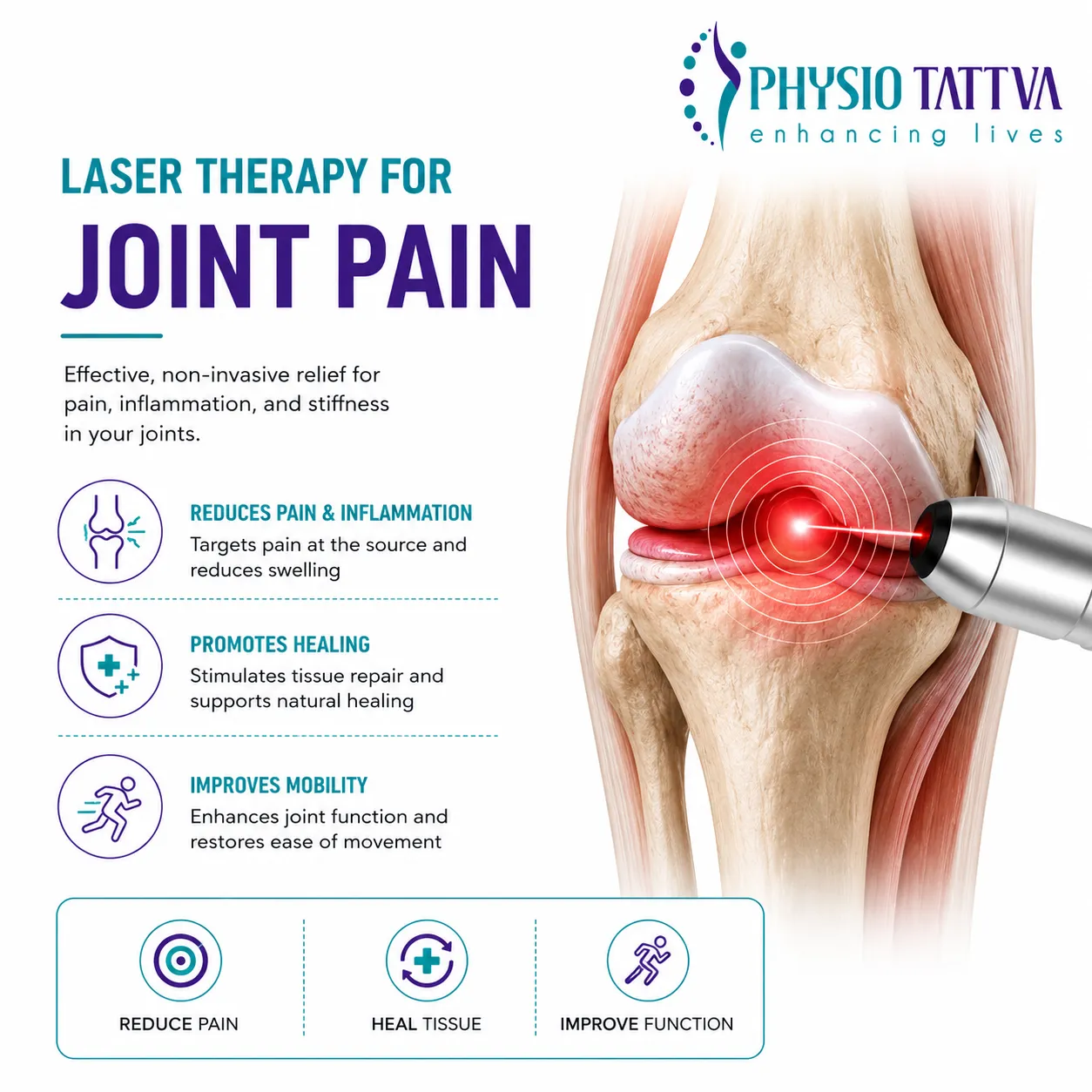
Laser therapy reduces joint pain by delivering focused light energy deep into the tissues, triggering biological repair processes at the cellular level. This produces both quick symptom relief and gradual healing.
Laser therapy is typically considered when joint pain interferes with movement, but surgery or invasive treatment is not immediately required. A physiotherapist evaluates the cause and severity before recommending it.
May Help In:
Laser therapy may support symptom relief in conditions such as:
May Not Be First-Line Treatment In:
Laser therapy may not be the primary option in certain medical situations:
Laser therapy is considered safe when performed by a qualified physiotherapist using correct dosage and protective protocols. The treatment is non-invasive and designed to stimulate healing without harming surrounding joint structures.
Before starting therapy, it is useful to understand which short-term reactions are normal after a session.
Laser therapy is generally well tolerated, but certain conditions require caution. Always share your medical history so treatment settings can be safely adjusted.
Laser therapy helps recovery, but joint protection during healing is essential to prevent aggravation.
Clinical caution: A proper assessment is necessary to identify the cause of joint pain and ensure laser therapy is integrated safely into a structured rehabilitation plan.
Laser therapy for joint pain improves symptoms progressively because it stimulates cellular repair, reduces inflammation, and restores movement over time. Recovery depends on diagnosis, tissue damage, activity level, and adherence to physiotherapy exercises.
Typical recovery timeline
Most patients need 6–12 sessions. Consistent therapy and rehabilitation exercises significantly improve long-term joint stability and reduce recurrence risk.
A laser therapy session for joint pain is quick, non-invasive, and guided by a physiotherapist. It focuses on reducing inflammation, improving movement, and supporting tissue healing. The treatment is painless, requires no downtime, and is usually combined with rehabilitation exercises for better recovery outcomes.
Joint pain doesn’t just limit your mobility—it affects every part of your daily life, from simple routines to the activities you enjoy most. High-Intensity Laser Therapy offers a powerful, science-backed solution that not only eases pain but promotes true healing deep within your tissues. By reducing inflammation, accelerating cellular repair, and restoring joint function, this advanced treatment provides a safe, non-invasive alternative to long-term medication or surgery. If persistent joint pain is holding you back, now is the time to take control of your recovery.
At Physiotattva physiotherapy clinics in Bangalore and Hyderabad, and Visakhapatnam, you receive personalised care tailored to your specific needs, ensuring effective results and comfort throughout your journey to recovery.
Don’t wait to start your recovery! Get in touch with Physiotattva for more details! Contact us at +91 89510 47001.
Laser therapy can be an effective part of a structured joint pain management plan when selected appropriately after assessment.

At Physio Tattva, we are committed to bring access to quality physio care through ultra-modern clinics and high-skilled practitioners to all.
.webp)
At Physio Tattva, we are committed to bring access to quality physio care through ultra-modern clinics and high-skilled practitioners to all.
.webp)
At Physio Tattva, we are committed to bring access to quality physio care through ultra-modern clinics and high-skilled practitioners to all.

.webp)





%20(1)-p-3200.jpeg)


.jpg)
.webp)
.webp)
.webp)


