




When joint pain strikes, your first instinct may be to reach for a painkiller. However, one of the simplest, most effective, and drug-free methods for relief is hot and cold therapy. This accessible treatment can significantly reduce pain, stiffness, and swelling associated with conditions like arthritis, sprains, and general wear and tear.
But the key is knowing when to use heat and when to use cold. Using the wrong one can worsen your symptoms. This guide will break down the science behind each method and help you choose the right therapy to get you moving comfortably again.
Cold Therapy (Cryotherapy) – For Acute Pain & Inflammation
Think of cold therapy as your emergency responder. Its main job is to reduce inflammation and numb pain.
How It Works?
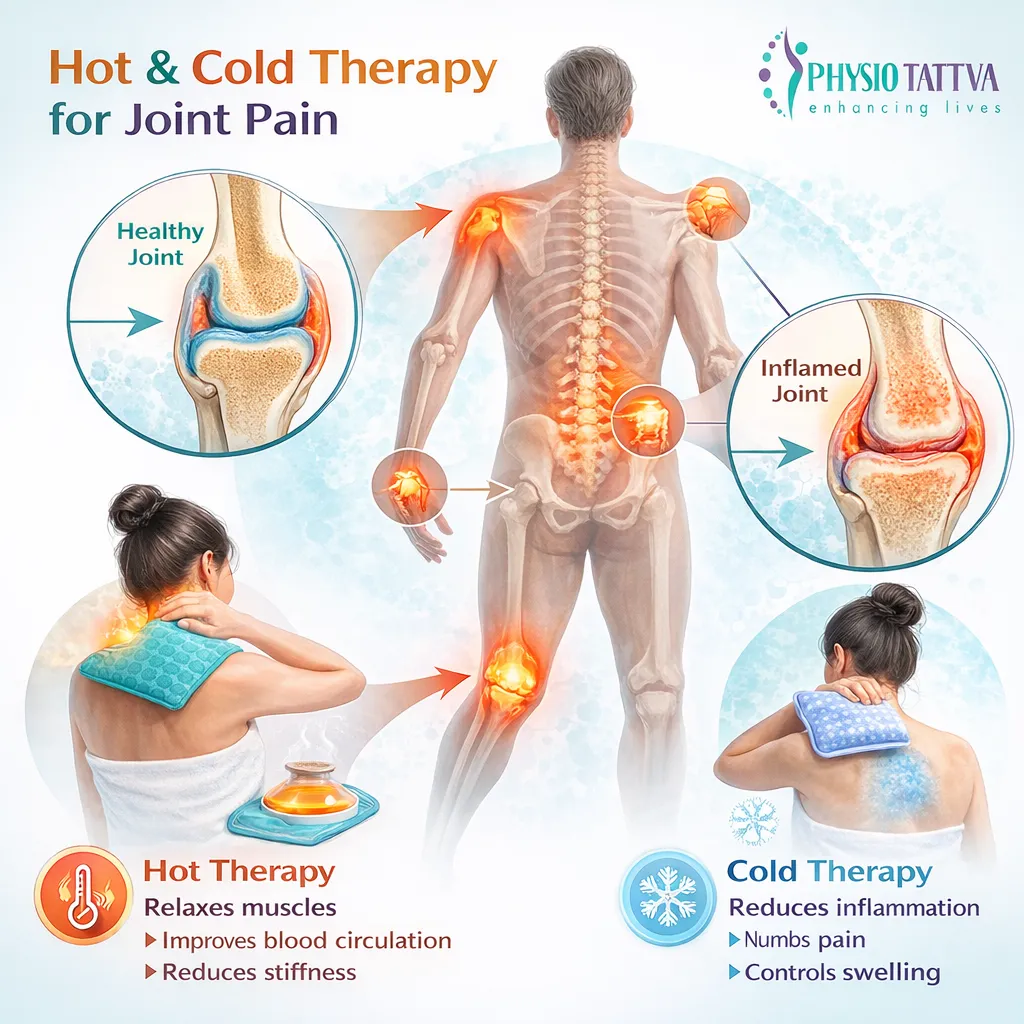
Cold causes vasoconstriction, which means it narrows your blood vessels. This process:
- Reduces blood flow to the affected area.
- Drastically slows down swelling and inflammation.
- Numbs nerve endings, providing immediate, localized pain relief.
When to Use Cold Therapy?
se cold for acute injuries or conditions—those that have occurred within the last 48 hours and involve swelling.
- Sudden Injuries: Sprains, strains, or a direct blow to a joint (e.g., a twisted ankle, banged knee).
- Inflammatory Flare-ups: During a flare-up of conditions like gout or rheumatoid arthritis when the joint is hot, red, and swollen.
- Post-Exercise: Immediately after a workout or activity that has aggravated a joint.
Mnemonic to Remember: Use COLD for Calm, Ouch, Limping, Damage (acute).
How to Apply Cold Therapy?
Cold therapy is an effective way to reduce inflammation and numb pain, especially for acute injuries. Here’s how to apply it safely:
- Methods: Gel packs, ice packs, a bag of frozen peas, or an ice bath.
- Protect Your Skin: Never apply ice directly to your skin. Always wrap the cold pack in a thin towel or cloth to prevent ice burn.
- Duration: Apply for 15-20 minutes at a time.
- Frequency: You can repeat every 2-3 hours during the initial 48-hour period after an injury.
Heat Therapy (Thermotherapy) – For Chronic Pain & Stiffness
Think of heat therapy as your tool for relaxation and mobility. Its main job is to soothe stiffness and promote healing.
How It Works?
Heat causes vasodilation, which means it widens your blood vessels. This process:
- Increases blood flow, delivering more oxygen and nutrients to the tissues.
- Helps relax tight muscles and reduce joint stiffness.
- Soothes the dull, persistent ache of chronic pain.
When to Use Heat Therapy?
Use heat for chronic conditions that do not involve significant swelling.
- Chronic Pain: Osteoarthritis, where joints are stiff but not typically inflamed and hot.
- Muscle Stiffness: Aching joints and muscles that feel tight and sore.
- Before Activity: Applying heat before stretching or light exercise can warm up stiff joints and improve flexibility.
Mnemonic to Remember: Use HEAT for Healing, Easing Aches and Tightness.
Disclaimer: Do NOT use heat on an acute injury with swelling. It will increase blood flow and make the inflammation and pain worse.
How to Apply Heat Therapy?
Heat therapy can be applied using a variety of methods to soothe stiffness, relax muscles, and alleviate chronic pain. Follow these guidelines for safe and effective use:
- Methods: Electric heating pads, microwavable gel packs, warm compresses (a towel soaked in hot water), a warm bath or shower, or paraffin wax baths.
- Protect Your Skin: Use a moderate temperature to avoid burns. Place a towel between the heating pad and your skin. Never fall asleep using an electric heating pad.
- Duration: Apply for 15-20 minutes at a time. For a warm bath, you can soak for up to 30 minutes.
Contrast Therapy (Alternating Hot and Cold)
For injuries that have passed the initial acute phase (48-72 hours), alternating between hot and cold therapy can be highly effective. This technique creates a “pumping” effect as blood vessels constrict and dilate, helping to reduce swelling, improve circulation, and promote faster healing.
How to do it:
- Start with 3-4 minutes of heat to warm up the area and relax muscles.
- Immediately follow with 1 minute of cold to reduce swelling and numb the area.
- Repeat this cycle 3-5 times, always ending with cold to ensure reduced inflammation.
Contrast therapy helps enhance circulation, flush out metabolic waste, and accelerate the healing process by alternating vasoconstriction (cold) and vasodilation (heat).
Safety Precautions & When to See a Doctor
While hot and cold therapy is generally safe, always be cautious.
- Protect your skin: Always use a barrier (like a towel) between the pack and your skin.
- Time limits: Stick to the 15-20 minute rule to avoid skin or nerve damage.
- Listen to your body: If a therapy increases your pain, stop immediately.
- Avoid certain areas: Do not use hot or cold therapy on areas with poor circulation or reduced sensation (such as from diabetic neuropathy), as you may not feel if damage is occurring.
Consult a doctor or physical therapist if:
- The pain is severe or doesn't improve after a few days.
- You can't put weight on the joint or it "gives way."
- The joint appears deformed.
- You experience fever, chills, or unexplained weight loss along with joint pain.
- The area is intensely red and hot, which could signal an infection.
Effective Hot and Cold Therapy for Joint Pain at Physiotattva
In conclusion, hot and cold therapy are simple yet effective treatments for managing joint pain, each serving a unique purpose. Cold therapy is ideal for reducing inflammation and numbing pain from acute injuries, while heat therapy helps alleviate chronic stiffness and muscle tightness by promoting blood flow. Alternating between the two can enhance circulation and accelerate healing. Always remember to follow safety precautions, such as using a barrier between the skin and therapy packs, and consult a healthcare provider if symptoms persist. With the right approach, you can experience significant relief and improved mobility.
At Physiotattva physiotherapy clinics in Bangalore and Hyderabad, you receive personalised care tailored to your specific needs, ensuring effective results and comfort throughout your journey to recovery.
Don’t wait to start your recovery! Get in touch with Physiotattva for more details! Contact us at +91 89510 47001.
Why Physiotattva?
22+
50,000+
95%
200+
25+
4.8
Cities We Serve

Bangalore
At Physio Tattva, we are committed to bring access to quality physio care through ultra-modern clinics and high-skilled practitioners to all.
.webp)
Hyderabad
At Physio Tattva, we are committed to bring access to quality physio care through ultra-modern clinics and high-skilled practitioners to all.
.webp)
Vishakhapatnam
At Physio Tattva, we are committed to bring access to quality physio care through ultra-modern clinics and high-skilled practitioners to all.
Core Treatments
Core Conditions
Core Symptoms
Frequently Asked Questions
When should I use hot vs. cold therapy for joint pain?

How long should I apply heat or cold to a painful joint?
Is heat or ice better for arthritis joint pain?
Can I alternate between hot and cold therapy?
Are there any situations where I should avoid hot or cold therapy?






%20(1)-p-3200.jpeg)


.jpg)
.webp)
.webp)
.webp)