
Interferential Therapy (IFT) for Inflammation

Interferential Therapy (IFT) for Inflammation

The debilitating cycle of inflammation, swelling, and persistent pain can severely hinder your daily life, turning simple activities into challenging tasks. While many people think of physiotherapy as just exercises and stretches, modern practices offer advanced, drug-free solutions that target pain and inflammation at their source. One of the most effective of these is Interferential Therapy (IFT) for inflammation. This cutting-edge modality is a cornerstone of treatment at Physiotattva, used by our expert physiotherapists to accelerate healing. This guide will explain exactly what IFT is, how it works, and what you can expect from your sessions at our clinics in Bangalore and Hyderabad.

Understanding Inflammation: The Body's Double-Edged Sword

Before we dive into the solution, it’s important to understand the problem. Inflammation itself isn't inherently bad; it's a double-edged sword.
  • Acute inflammation is your body's natural, protective response to an injury or infection. It’s the essential first step in the healing process, bringing immune cells to the area to clean up damage and begin repairs.
  • Chronic inflammation, however, is when this response doesn't switch off. It becomes a prolonged, low-grade fire that can lead to persistent pain, tissue damage, and loss of function. Managing this chronic state is crucial for true recovery and long-term musculoskeletal health.

What is Interferential Therapy (IFT) in Physiotherapy?

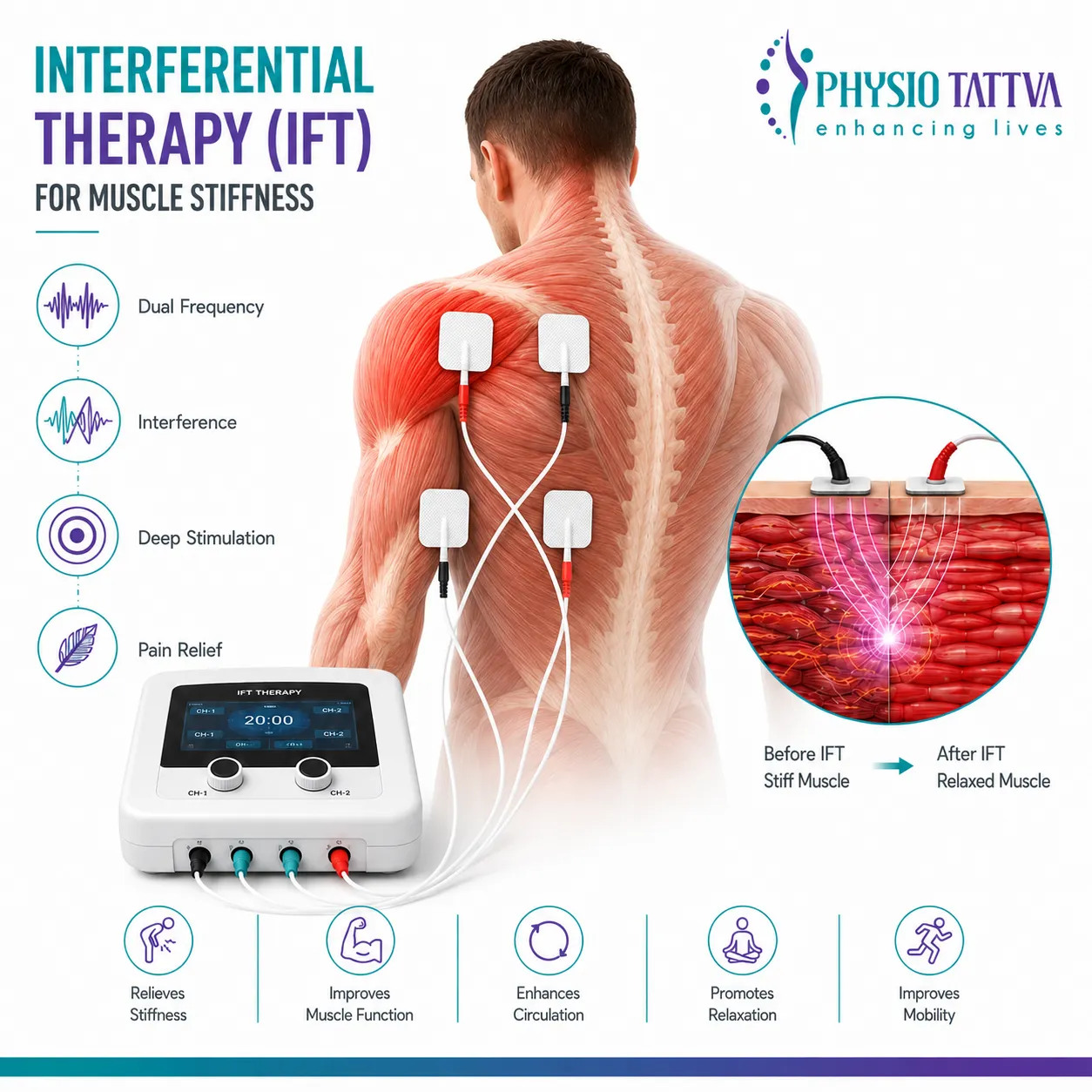
So, what is IFT, and how does it help? IFT in physiotherapy is a sophisticated form of electrotherapy that uses two medium-frequency electrical currents to treat deep-tissue conditions.

Imagine two sound waves crossing paths. Individually, they are gentle and barely noticeable. But at the precise point where they intersect, they create a new, powerful beat. IFT works similarly. Four electrode pads are placed on the skin in a crisscross pattern. Two separate, medium-frequency currents pass through the skin. These currents are very comfortable and can penetrate deeper into the tissue with minimal resistance. Where they "interfere" or cross, they produce a therapeutic, low-frequency current deep within the target area—right where the inflammation and pain are located.

This clever approach gives IFT two key interferential therapy benefits:

  1. Deep Penetration: It reaches tissues far deeper than other modalities, like a TENS machine.
  2. Patient Comfort: It bypasses skin sensation, making the treatment comfortable and non-invasive.

The Science: How IFT Specifically Reduces Inflammation and Swelling

The therapeutic current created by IFT triggers several physiological responses that directly combat inflammation and pain. It’s not magic; it’s targeted science. Using IFT for swelling and pain relies on these four key mechanisms:

  • Pain Gate Control: The current stimulates sensory nerve endings in the skin and muscles. This flood of gentle sensory information essentially "closes the gate" on pain signals trying to travel to the brain. Your brain pays attention to the tingling sensation from the IFT instead of the pain, providing immediate relief.
  • Vasodilation (Increased Blood Flow): The electrical stimulation causes the blood vessels in the area to widen (vasodilation). This improved circulation is vital for healing. It rushes oxygen-rich blood and nutrients to the injured tissue while efficiently flushing out inflammatory by-products and waste materials that contribute to pain.
  • Reduction of Edema (Swelling): The current produces gentle, rhythmic muscle contractions. This creates a "pumping" action that helps move excess fluid (edema) away from the inflamed area and back into the lymphatic system. This directly reduces swelling, which in turn alleviates stiffness and pressure on nerves.
  • Stimulation of Endorphins: Research suggests that low-frequency stimulation, like that produced by IFT, can trigger the body to release its own natural painkillers called endorphins. This provides a longer-lasting sense of pain relief even after the session is over.

Conditions We Treat with IFT for Inflammation

Because of its effectiveness in managing pain, swelling, and promoting circulation, IFT is a highly versatile tool in physiotherapy for inflammation. It is successfully used to treat a wide range of acute and chronic conditions, including:

  • Acute Sports Injuries (e.g., Ankle Sprains, Muscle Strains)
  • Osteoarthritis and Rheumatoid Arthritis
  • Post-Surgical Pain and Swelling
  • Chronic Back and Neck Pain
  • Tendonitis and Bursitis (e.g., Tennis Elbow, Shoulder Bursitis)
  • Repetitive Strain Injuries (RSI)

Your IFT Session at Physiotattva: What to Expect

Taking the step to get treatment can be daunting, so we believe in making the process clear and comfortable. When you visit a Physiotattva Bangalore or Hyderabad physiotherapy clinic, here’s what your IFT experience will look like:

  1. Expert Assessment: Your journey begins with a thorough evaluation by one of our highly qualified physiotherapists. They will diagnose the root cause of your inflammation and determine if IFT is the right modality for your specific condition.
  2. The Procedure: Your therapist will place four self-adhesive electrode pads on your skin, positioned to ensure the currents intersect at the target area. As the machine is turned on, you will feel a gentle, tingling "pins and needles" sensation. This is not painful, and the intensity is always adjusted to your personal comfort level.
  3. Session Duration: A typical IFT session lasts between 10 to 20 minutes. You can simply relax while the therapy works its magic.
  4. Integrated Care: At Physiotattva, IFT is never a standalone cure. It is a powerful component of a holistic treatment plan designed for you. Your recovery will likely also include hands-on manual therapy, targeted exercises, and lifestyle advice to ensure we not only relieve your symptoms but also address the underlying cause of your problem.

Achieve Long-Lasting Relief from Inflammation with IFT at Physiotattva

Interferential Therapy (IFT) provides a scientifically-backed, non-invasive solution to chronic inflammation and pain. With its ability to target deep tissues and promote natural healing through improved circulation and pain relief, IFT is a powerful tool in your recovery journey. Whether you're dealing with sports injuries, arthritis, or post-surgical pain, IFT can help alleviate swelling and discomfort, accelerating your return to normal function. We combine expert physiotherapy with IFT to deliver personalized, holistic care tailored to your needs.

At Physiotattva physiotherapy clinics in Bangalore and Hyderabad, you receive personalised care tailored to your specific needs, ensuring effective results and comfort throughout your journey to recovery. 

Don’t wait to start your recovery! Get in touch with Physiotattva for more details! Contact us at +91 89510 47001.

Frequently Asked Questions

Is IFT a painful treatment?

FAQ Icon
No, not at all. The sensation is a gentle, tingling 'pins and needles' feeling. The intensity is always adjusted to your personal comfort level, making it a very relaxing experience for most patients.

How many IFT sessions will I need?

FAQ Icon
The number of sessions varies depending on the severity and chronicity of your pain. After your initial assessment, your Physiotattva Bangalore or Hyderabad physiotherapist will devise a personalized plan. A typical course might involve 6-10 sessions, with many patients feeling significant relief after just a few treatments.

Are there any side effects of IFT?

FAQ Icon
IFT is extremely safe with very few side effects. In rare cases, some individuals may experience minor skin irritation under the electrode pads. Our therapists use hypoallergenic pads and ensure correct application to minimise any risk.

How is IFT different from a TENS machine?

FAQ Icon
While both are forms of electrotherapy for pain, they work differently. TENS (Transcutaneous Electrical Nerve Stimulation) primarily works on the surface nerves to block pain signals. IFT uses an interferential current that penetrates deeper into the tissue, making it more effective for issues within the muscle itself, like deep-seated stiffness, inflammation, and muscle spasm.

Related Therapies

Our Professionals

Dr. Anup Brahmbhatt (PT)

Chief Chiropractor and Physiotherapist

Read MoreBook an appointment

Dr Muralikrishna Chinnappagari (PT)

Chiropractor and Physiotherapist

Read MoreBook an appointment

Dr. Mohamed Muzammil (PT)

Chiropractor and Clinical Physiotherapist

Read MoreBook an appointment

Dr JUHI SANJAY RAMTEKE (PT)

Senior Clinical Physiotherapist

Read MoreBook an appointment

Dr CHAITHRA T (PT)

Senior Clinical Physiotherapist

Read MoreBook an appointment

Dr. Dharitri Brahmbhatt (PT)

Company Wellness Program - Head

Read MoreBook an appointment

ANJU BABU

Homecare Physiotherapist

Read MoreBook an appointment

ANIRUDH C

Homecare Physiotherapist

Read MoreBook an appointment

DARI KUPAR L THABAH

Homecare Physiotherapist

Read MoreBook an appointment

Get In Touch

Valid number
Thank you! Your submission has been received!
Oops! Something went wrong while submitting the form.