Cupping Therapy for Inflammation

Cupping Therapy for Inflammation

Whether it's the dull, persistent ache in your lower back, the stiffness in your joints that greets you each morning, or the sharp soreness after a new workout, inflammation is often the underlying culprit. While we reach for ice packs and anti-inflammatory pills, what if there were a time-tested, non-invasive technique that could address the root cause? Enter cupping therapy, an ancient practice gaining significant modern recognition for its powerful anti-inflammatory effects. This article will explore the science behind how cupping therapy works to combat inflammation, the conditions it can effectively treat, and what you can expect from an evidence-based session at Physiotattva.

Understanding Inflammation: Your Body's Double-Edged Sword

Before we dive into the solution, it's crucial to understand the problem. At its core, inflammation is your body's natural and necessary response to injury, illness, or threat. It’s the physiological equivalent of sending emergency services to the scene of an accident.

  • Acute inflammation is the "good" kind. When you get a cut or sprain your ankle, the body rushes blood and immune cells to the area, causing temporary redness, swelling, and warmth. This process is essential for healing.
  • Chronic inflammation, however, is the "bad" kind. This occurs when the inflammatory response doesn't switch off. It becomes a slow-burning, persistent fire that can damage healthy tissues over time, leading to conditions characterised by chronic pain, constant stiffness, swelling, and fatigue. It’s this chronic inflammation that is often behind your persistent joint pain and muscle stiffness.

What is Cupping Therapy? More Than Just Marks

You’ve likely seen the distinctive circular marks on athletes and celebrities, but what is cupping therapy exactly? Far more than a passing trend, it’s a therapeutic technique with roots in Ancient Chinese, Egyptian, and Middle Eastern cultures, trusted for thousands of years to alleviate pain and restore function.

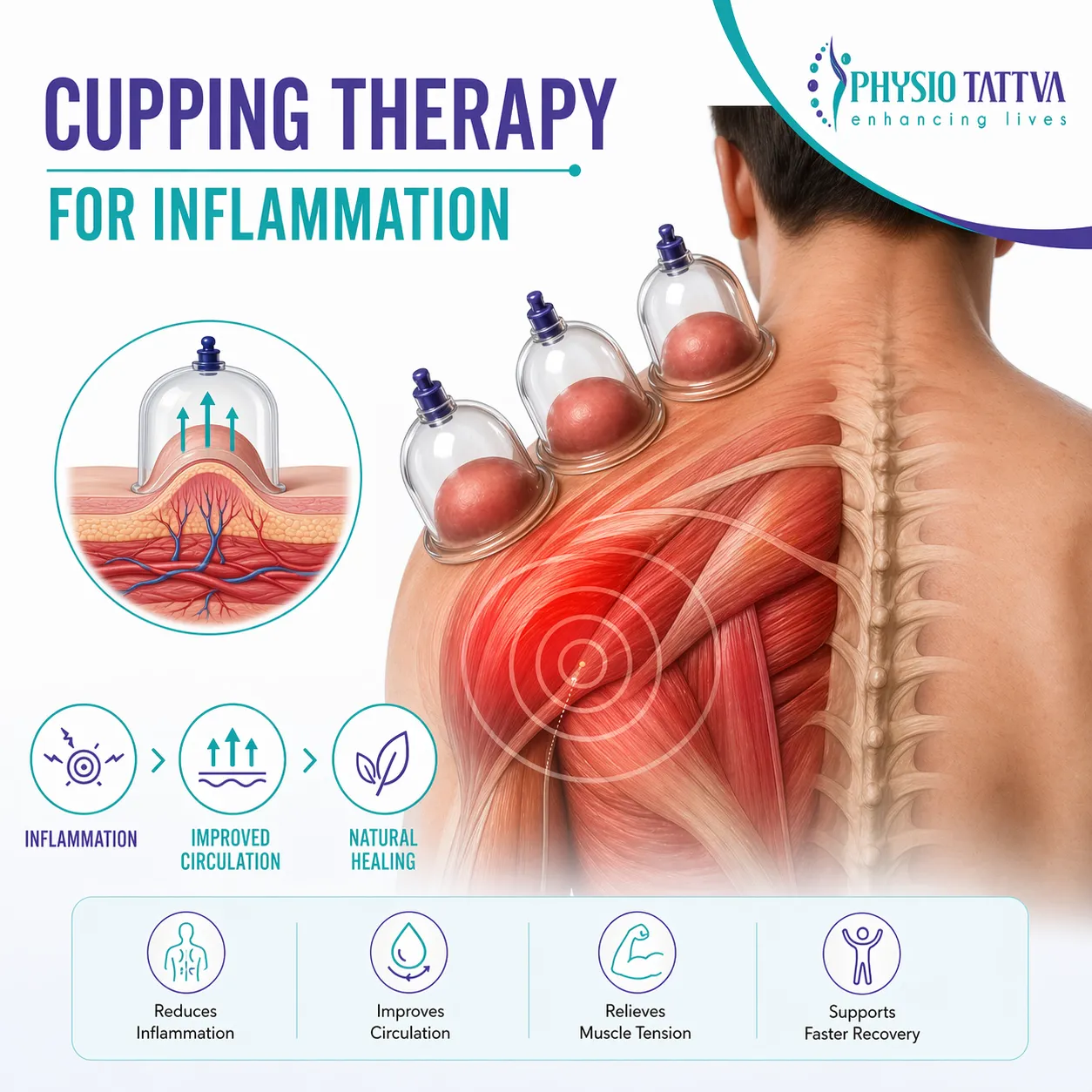
The principle is simple yet profound: small cups are placed on the skin, and a vacuum is created to generate suction. This creates a negative pressure that gently lifts the skin, fascia (the connective tissue surrounding your muscles), and muscle layers upward.

This process is known as myofascial decompression. It stands in stark contrast to treatments like deep tissue massage, which use positive pressure to compress tissues. By lifting and separating these layers, cupping creates space, reduces pressure, and kickstarts a cascade of healing effects. At Physiotattva, our certified physiotherapists primarily use safe and effective dry cupping techniques to target your specific areas of pain and dysfunction.

How Cupping Directly Combats Inflammation

This is where ancient practice meets modern science. The simple act of creating suction on the skin triggers a series of powerful physiological responses that directly target and reduce inflammation. Here’s how cupping therapy for inflammation works:

  • Dramatically Increases Blood Circulation: The negative pressure forces blood vessels in the underlying tissues to expand. This action draws a surge of fresh, oxygenated blood to the targeted area while simultaneously flushing out stagnant blood, inflammatory byproducts, and metabolic waste that contribute to pain and stiffness.
  • Promotes Myofascial Release: Chronic inflammation can cause layers of muscles and fascia to become "stuck" together, creating painful adhesions and trigger points. The lifting action of cupping separates these layers, releasing tension, improving tissue mobility, and relieving pressure on compressed nerves.
  • Stimulates a Targeted Healing Response: The suction creates a controlled, therapeutic micro-trauma under the skin (which is what causes the signature marks). This is a positive signal to your body, triggering a localized immune response. The body sends platelets, white blood cells, and other anti-inflammatory chemicals to the area, accelerating the natural repair and healing process.
  • Enhances Lymphatic Drainage: The lymphatic system is your body's waste-disposal network. Cupping therapy for inflammation helps stimulate the flow of lymph fluid, aiding the efficient removal of toxins and excess fluid (swelling) from inflamed or injured areas.

Conditions We Treat: Who Can Benefit from Cupping Therapy?

Because of its powerful anti-inflammatory and pain-relieving mechanisms, cupping therapy is a highly effective treatment for a wide range of musculoskeletal conditions. Patients seeking cupping for back pain or general cupping for muscle soreness often find significant relief. Some of the common inflammatory issues that respond exceptionally well include:

  • Chronic Back and Neck Pain
  • Shoulder Pain and Frozen Shoulder
  • Sciatica and Piriformis Syndrome
  • Muscle Soreness and DOMS (Delayed Onset Muscle Soreness) in athletes
  • Fibromyalgia
  • Arthritic Joint Pain (especially in the knees and shoulders)
  • Plantar Fasciitis
  • IT Band Syndrome

The Physiotattva Advantage: Integrating Physiotherapy and Cupping

At Physiotattva, cupping isn't just a standalone service; it’s a powerful tool integrated into a comprehensive, physiotherapist-led treatment plan. We believe the combination of physiotherapy and cupping yields superior, longer-lasting results.

  • Expert Physiotherapist Assessment: Your journey begins with a thorough assessment by one of our certified physiotherapists. We diagnose the root cause of your pain and determine if cupping is the appropriate modality for your specific condition.
  • Integrated Care for Better Results: We use cupping strategically. For example, a cupping session can be used to release tight muscles and fascia before performing manual therapy or therapeutic exercises. This prepares the tissue, making subsequent treatments more effective and less painful.
  • Certified and Trained Professionals: Your health and safety are our top priority. Our therapists offering cupping therapy for inflammation in Bangalore and Hyderabad are highly trained and certified in the correct and hygienic application of cupping to ensure optimal outcomes.
  • A Plan Tailored for You: There is no one-size-fits-all approach. The duration of cupping, the amount of pressure used, and the precise placement of the cups are all customised based on your diagnosis, goals, and comfort level.

Experience Holistic, Long-Term Pain Relief with Physiotattva by Your Side

Lingering inflammation can turn everyday movements into small battles, but the right intervention can change that story. Cupping therapy works by improving circulation, easing muscle tension, and encouraging your body’s natural repair responses. At Physiotattva, this traditional method is blended with evidence-based physiotherapy, so you receive care that is both safe and clinically grounded. Every session is tailored to your specific pain patterns, recovery goals, and comfort. If you’ve been searching for a non-invasive, effective approach to chronic pain or stiffness, this may be your moment to reclaim ease and mobility.

At Physiotattva physiotherapy clinics in Bangalore and Hyderabad, you receive personalised care tailored to your specific needs, ensuring effective results and comfort throughout your journey to recovery. 

Don’t wait to start your recovery! Get in touch with Physiotattva for more details! Contact us at +91 89510 47001.

Frequently Asked Questions

Does cupping therapy hurt?

FAQ Icon
It should not be painful. The sensation is best described as a strong pull or tightness. Your physiotherapist will adjust the suction to your comfort level, ensuring the experience is therapeutic, not uncomfortable.

Are the circular marks from cupping permanent?

FAQ Icon
Absolutely not. The marks, which look like bruises, are a normal result of the suction drawing stagnant blood to the surface. They are a sign that the therapy is working to improve circulation. These marks are typically not painful to the touch and fade completely on their own within 3 to 10 days.

How long does a cupping therapy session last?

FAQ Icon
The cups themselves are usually left in place for 5 to 15 minutes, depending on your condition and skin sensitivity. The cupping portion is part of your broader, customised physiotherapy session.

Who should not get cupping therapy?

FAQ Icon
Cupping is not suitable for everyone. Individuals with certain skin conditions (like eczema or psoriasis), bleeding disorders, or those taking blood-thinning medications should consult their doctor first. Our physiotherapists conduct a thorough screening for all contraindications before beginning treatment.

How will I feel after a cupping session?

FAQ Icon
Many patients report an immediate sense of relief, a feeling of "lightness," and an increased range of motion in the treated area. It’s important to drink plenty of water after your session to help your body continue flushing out toxins.

Related Therapies

Our Professionals

Dr. Anup Brahmbhatt (PT)

Chief Chiropractor and Physiotherapist

Read MoreBook an appointment

Dr Muralikrishna Chinnappagari (PT)

Chiropractor and Physiotherapist

Read MoreBook an appointment

Dr. Mohamed Muzammil (PT)

Chiropractor and Clinical Physiotherapist

Read MoreBook an appointment

Dr ARCHANA N (PT)

Clinical Physiotherapist

Read MoreBook an appointment

Dr SHUBHAM MENARIA (PT)

Senior Clinical Physiotherapist

Read MoreBook an appointment

DR. ARUN RAJ R (PT)

Clinical coordinator

Read MoreBook an appointment

Dr. Ambika K B (PT)

Home Physiotherapist

Read MoreBook an appointment

Dr Sridhar K (PT)

Home Physiotherapist

Read MoreBook an appointment

DR. ALTHAF T K (PT)

Home Care Physiotherapist

Read MoreBook an appointment

Get In Touch

Valid number
Thank you! Your submission has been received!
Oops! Something went wrong while submitting the form.