




When you sprain an ankle, pull a muscle, or wake up with a stiff neck, your first instinct might be to reach for an ice pack or a heating pad. But which one is right? The debate between hot and cold therapy for inflammation is common, and using the wrong one at the wrong time can delay healing or even make things worse.
This article will break down the science behind hot and cold therapy, explaining exactly when to use ice, when to use heat, and how to apply them safely and effectively for powerful inflammation relief.
The 'Cold' Hard Facts: Cryotherapy for Acute Inflammation
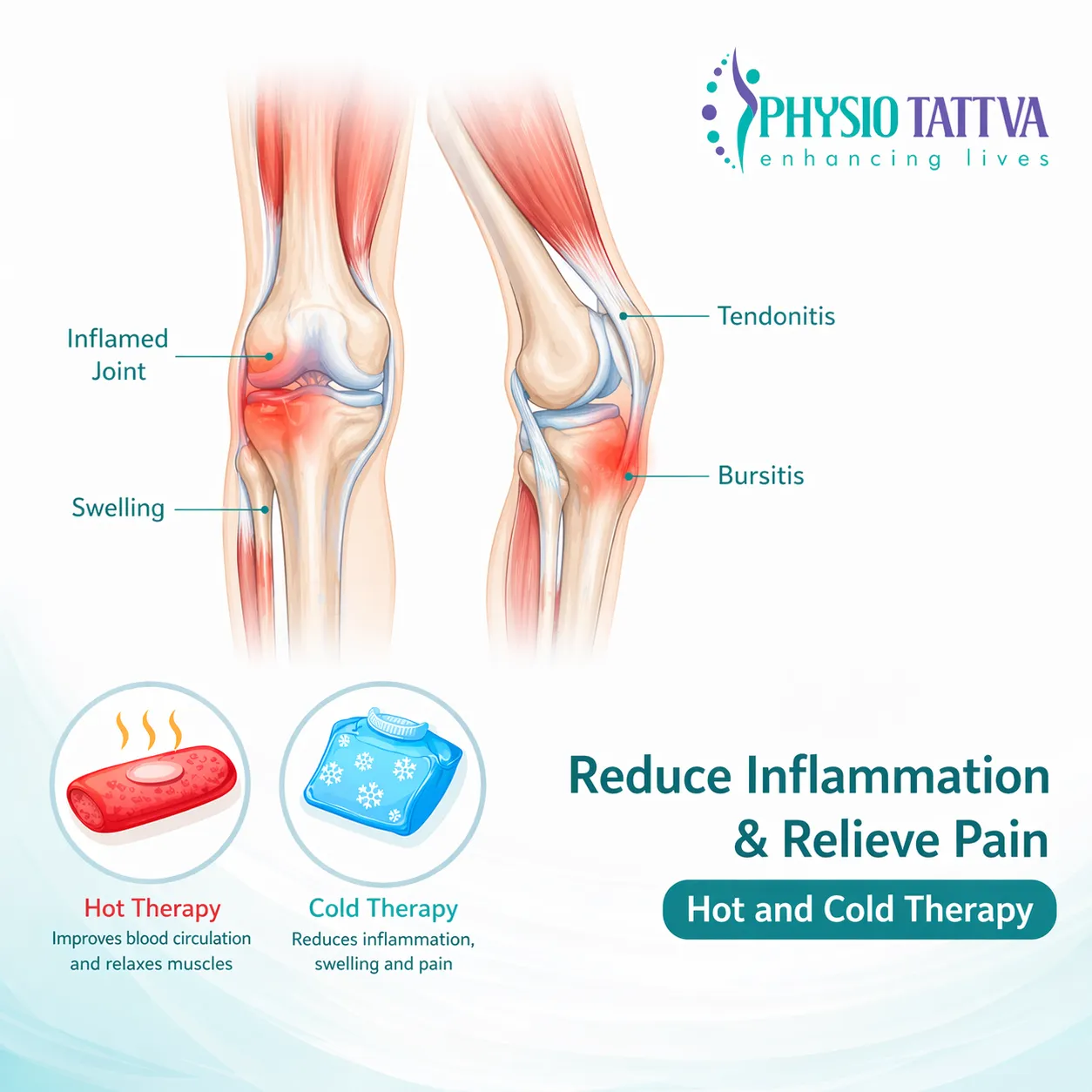
Cold therapy, also known as cryotherapy, is your first line of defense against a new injury. Think of it as the emergency brake for inflammation.
How Does Cold Therapy Work?
When you apply cold to an injured area, it causes vasoconstriction, the tightening of your blood vessels. This process has several key benefits:
- Reduces Swelling: By narrowing the blood vessels, cold therapy limits the amount of blood and fluid that can rush to the area, minimizing swelling (edema).
- Numbs Pain: Cold temporarily reduces nerve activity, which provides a numbing sensation and acts as a natural analgesic for immediate pain relief.
- Slows Inflammation: It decreases the metabolic rate of the cells, slowing down the inflammatory process and reducing secondary tissue damage.
When to Use Cold Therapy for Inflammation?
Use cold for acute injuries, which are sudden and new. The rule of thumb is to apply cold within the first 24 to 72 hours of an injury.
Ideal for:
- Sprains (e.g., rolled ankle)
- Strains (e.g., pulled hamstring)
- Bruises (contusions)
- Post-workout soreness and muscle damage
- Flare-ups of inflammatory conditions like gout or tendonitis
- Immediately after surgery to control post-operative swelling
The best way to remember this is with the classic R.I.C.E. method:
- Rest: Avoid using the injured area.
- Ice: Apply cold therapy.
- Compression: Use a bandage to help reduce swelling.
- Elevation: Raise the injured limb above heart level.
Turning Up the 'Heat': Thermotherapy for Chronic Pain and Stiffness
Heat therapy, or thermotherapy, does the exact opposite of cold. It’s the tool you use to soothe, relax, and mobilize tissues once the initial, acute inflammation has subsided.
How Does Heat Therapy Work?
Applying heat causes vasodilation, the expansion of your blood vessels.
- Increases Blood Flow: Widened blood vessels allow more oxygen- and nutrient-rich blood to reach the area, which is essential for healing and tissue repair.
- Relaxes Muscles: Heat helps decrease muscle tension, soothe spasms, and reduce stiffness. This makes it excellent for chronic tightness.
- Promotes Flexibility: By relaxing the muscles and connective tissues, heat can increase your range of motion before an activity.
When to Use Heat Therapy for Inflammation?
Use heat for chronic conditions, muscle soreness, and stiffness, typically after the initial 72-hour period of an acute injury has passed, and swelling has gone down. Never apply heat to a new, swollen injury.
Ideal for:
- Chronic muscle pain and soreness (e.g., persistent lower back tightness)
- Joint stiffness from conditions like osteoarthritis (when not in an acute flare-up)
- Muscle spasms and trigger points
- Before stretching or exercise to warm up tight, chronically sore muscles
- Menstrual cramps
The Best of Both Worlds: Contrast Therapy
Contrast therapy involves alternating between hot and cold treatments. This creates a "pumping" effect as blood vessels constrict and then dilate rapidly. This process helps to flush out swelling and metabolic waste while simultaneously increasing the flow of oxygen-rich blood to the affected area, promoting faster healing.
When to Use It: Often used by athletes for recovery, contrast therapy is effective 3-7 days after an injury, once the initial inflammation has subsided. A common protocol is to apply heat for 3 minutes followed by cold for 1 minute, repeated 3-5 times. This method is particularly helpful for reducing swelling, alleviating pain, and improving circulation in injured areas.
How to Apply Hot and Cold Therapy Safely?
Whether you're using hot or cold therapy, safety is critical to avoid skin damage, burns, or frostbite. Here are essential guidelines and methods for effective and safe use:
General Safety Rules
Before applying hot or cold therapy, remember these essential precautions:
- Use a Barrier: Always place a towel or cloth between the pack and your skin.
- Keep it Short: Limit applications to 15-20 minutes at a time.
- Take Breaks: Allow your skin to return to its normal temperature for at least 45-60 minutes between sessions.
- Listen to Your Body: If you feel extreme discomfort, burning, or numbness that feels "wrong," stop immediately.
Methods for Cold Therapy
Cold therapy is best used to reduce swelling and numb pain. Here are some common methods:
- Ice Packs/Gel Packs: Flexible, reusable, and conform to the body.
- Bag of Frozen Peas: A classic, simple solution that molds well to joints.
- Ice Bath: Immersing the affected area in cold water (50-59°F or 10-15°C) for 10-15 minutes. Best for larger areas like legs.
Methods for Heat Therapy
Heat therapy can help relax muscles and soothe stiffness. Use the following methods for maximum benefit:
- Electric Heating Pads: Provide consistent, dry heat. Use on a low or medium setting. Never fall asleep with one on.
- Microwavable Moist Heat Packs: Offer a deep, penetrating heat that many people find more soothing than dry heat.
- Warm Bath/Shower: Excellent for generalized stiffness and relaxation.
- Hot Water Bottle: A traditional and effective method.
By following these guidelines, you can use hot and cold therapy safely and effectively to relieve pain and promote healing.
When to See a Doctor for Inflammation?
While hot and cold therapy are excellent for treating mild to moderate inflammation and pain at home, there are instances where professional medical intervention is necessary. If any of the following symptoms occur, it is important to consult a doctor immediately to ensure that the condition does not worsen and to receive the appropriate treatment:
- Severe pain, swelling, or numbness.
- Inability to bear weight on a limb.
- A visible deformity in a joint or bone.
- Signs of infection, such as fever, red streaks, or pus.
- Pain that doesn't improve after a few days of self-care.
By understanding the difference between hot and cold, you can confidently and effectively manage pain and inflammation, speeding up your recovery and getting you back to feeling your best.
Manage Inflammation Effectively with Hot and Cold Therapy at Physiotattva
Understanding the right application of hot and cold therapy can significantly improve inflammation management and provide relief from pain. However, if symptoms persist or worsen despite home treatments, it’s essential to consult a healthcare provider for proper diagnosis and care. Hot and cold therapy can be a powerful tool, but seeking professional advice ensures your inflammation is addressed effectively and safely for long-term recovery.
At Physiotattva physiotherapy clinics in Bangalore and Hyderabad, you receive personalised care tailored to your specific needs, ensuring effective results and comfort throughout your journey to recovery.
Don’t wait to start your recovery! Get in touch with Physiotattva for more details! Contact us at +91 89510 47001.
Why Physiotattva?
22+
50,000+
95%
200+
25+
4.8
Cities We Serve

Bangalore
At Physio Tattva, we are committed to bring access to quality physio care through ultra-modern clinics and high-skilled practitioners to all.
.webp)
Hyderabad
At Physio Tattva, we are committed to bring access to quality physio care through ultra-modern clinics and high-skilled practitioners to all.
.webp)
Vishakhapatnam
At Physio Tattva, we are committed to bring access to quality physio care through ultra-modern clinics and high-skilled practitioners to all.
Core Treatments
Core Conditions
Core Symptoms
Frequently Asked Questions
Which is better for inflammation, hot or cold therapy?

How long should I apply ice or heat for inflammation?
Can I use heat on a new injury like a sprained ankle?
When should I avoid using hot or cold therapy?






%20(1)-p-3200.jpeg)


.jpg)
.webp)
.webp)
.webp)