

Physiotherapy for Numbness and Tingling
Temporary numbness and tingling can occur after you spend a lot of time sitting cross-legged or with your head .
That persistent, distracting sensation of pins and needles in your hands. The worrying numbness that creeps into your feet. This feeling, known as paresthesia, can range from a minor annoyance to a debilitating condition that impacts your every move. While it's easy to try and "shake it off," these signals are your body's way of telling you something isn't right. Modern physiotherapy offers powerful solutions that address the root cause, and at the forefront of this is a remarkable, non-invasive treatment: Interferential Therapy (IFT). This article will guide you through what IFT is, how Interferential Therapy (IFT) for numbness and tingling works, and what you can expect during a physiotherapy session at Physiotattva.
Before we dive into the solution, it's helpful to understand why you might be experiencing these sensations. Numbness and tingling are symptoms of a nerve issue. Your nerves are like the body's electrical wiring, and when their signals are disrupted, you feel these strange sensations. The disruption can happen for several common reasons:
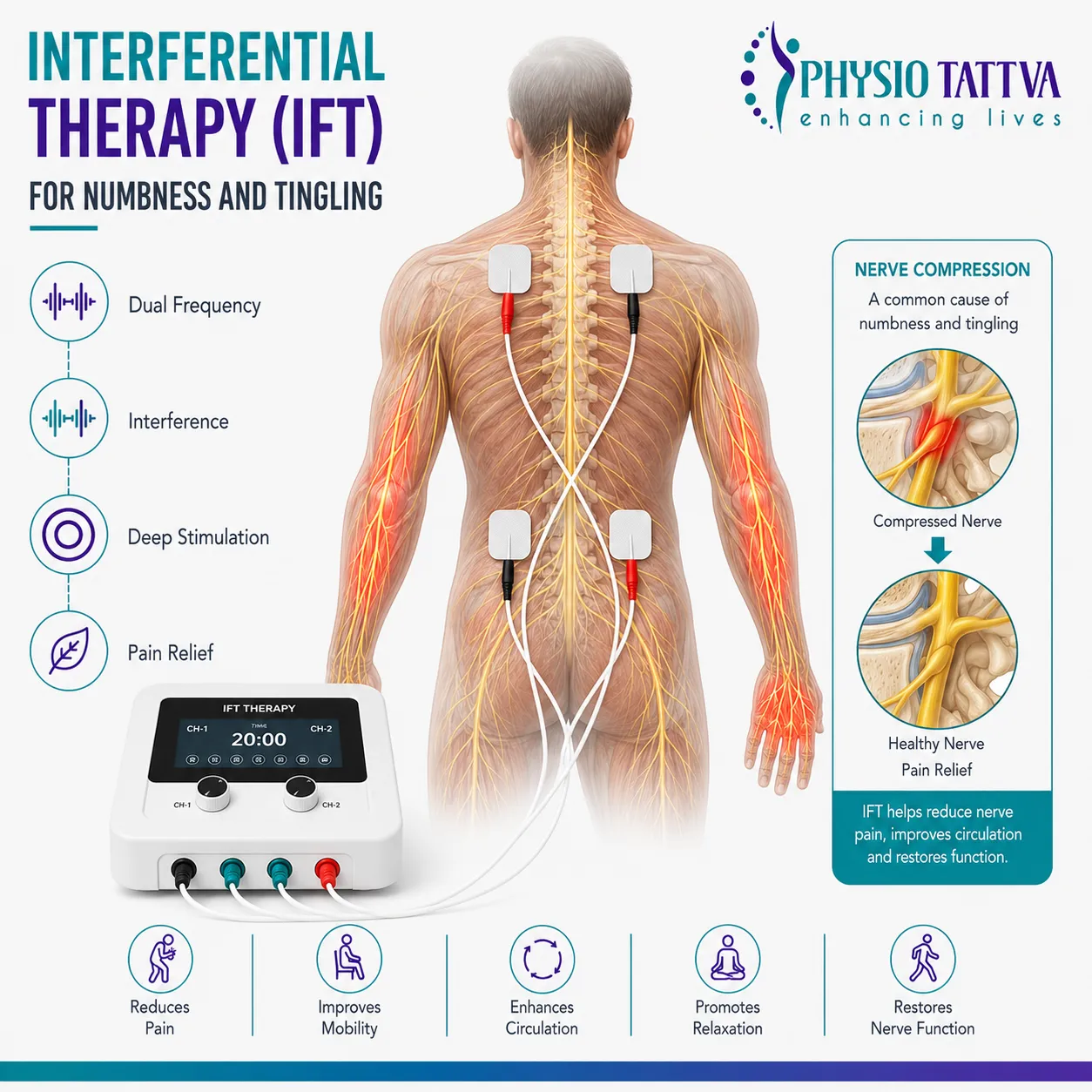
Interferential Therapy (IFT) might sound complex, but it's a very straightforward and gentle form of electrotherapy for tingling and nerve pain. Think of it as a smarter, deeper-reaching electrical treatment. Here’s how it works in simple terms:
So, how does a gentle electrical current actually stop numbness and tingling? The effectiveness of IFT for nerve pain lies in its ability to influence the body's own healing and signaling mechanisms. The IFT treatment benefits are multifaceted and address the symptoms at their core.
Pain Gate Theory & Sensory Modulation
IFT stimulates the larger sensory nerve fibres. According to the "Pain Gate Control Theory," stimulating these nerves helps to "close the gate" on the smaller nerve fibres that transmit pain, numbness, and tingling signals to the brain. Essentially, the comfortable buzzing sensation from the IFT overrides the uncomfortable pins-and-needles feeling.
Improved Blood Circulation (The "Pump" Effect)
The low-frequency current causes muscles in the area to contract and relax very gently. This rhythmic muscle pumping action significantly boosts blood flow and lymphatic drainage. This is crucial because it delivers fresh, oxygenated blood to the damaged nerve and helps flush away the inflammatory substances that cause swelling and irritation.
Direct Nerve Stimulation
For nerves that are misfiring and causing spontaneous tingling, the therapeutic current can help to "re-educate" them. It helps normalize the nerve's electrical activity, reducing the faulty signals that your brain interprets as numbness. This process is important for restoring proper nerve function and reducing discomfort caused by chronic nerve issues.
Reduction of Edema (Swelling)
As mentioned, IFT is excellent at reducing swelling. By decreasing the fluid buildup in an inflamed area, it directly relieves the physical pressure on compressed nerves, which is often the primary cause of paresthesia in a specific region. This reduction in swelling allows for better circulation and faster healing of the affected tissues.
Your first experience with a new therapy shouldn't be intimidating. At Physiotattva, we ensure you are comfortable and informed every step of the way. Here is what a typical session of Physiotattva IFT looks like:
IFT is a versatile and highly effective treatment, but it's not suitable for everyone. A professional consultation is essential to ensure it's the right and safest choice for you.
Numbness and tingling are more than just annoyances; they are signals from your body that shouldn't be ignored. These sensations often point to an underlying nerve or circulation issue that can be effectively managed. Interferential Therapy (IFT) stands out as a safe, non-invasive, and scientifically-backed physiotherapy treatment that targets the root causes of your symptoms by modulating nerve signals, reducing swelling, and improving blood flow. You don’t have to let these sensations limit your daily life.
At Physiotattva physiotherapy clinics in Bangalore and Hyderabad, you receive personalised care tailored to your specific needs, ensuring effective results and comfort throughout your journey to recovery.
Don’t wait to start your recovery! Get in touch with Physiotattva for more details! Contact us at +91 89510 47001.

At Physio Tattva, we are committed to bring access to quality physio care through ultra-modern clinics and high-skilled practitioners to all.
.webp)
At Physio Tattva, we are committed to bring access to quality physio care through ultra-modern clinics and high-skilled practitioners to all.
.webp)
At Physio Tattva, we are committed to bring access to quality physio care through ultra-modern clinics and high-skilled practitioners to all.


.webp)






%20(1)-p-3200.jpeg)


.jpg)
.webp)
.webp)
.webp)