


Manual Therapy
Manual Therapy for Foot Pain
Manual therapy for foot pain targets the root causes of discomfort, offering relief from conditions like plantar fasciitis, Achilles tendinopathy, and more. Through skilled techniques, this hands-on approach improves mobility, reduces tension, and accelerates recovery. Consult with a qualified therapist to start your journey towards lasting foot pain relief today.
Foot pain can be debilitating, affecting everything from your morning jog to simply walking around the house. While rest and ice are common first steps, many people find lasting relief by addressing the underlying mechanical issues. This is where manual therapy for foot pain comes in, a hands-on, evidence-based approach used by skilled clinicians to restore function and eliminate pain.
This article will explore how manual therapy works, the conditions it treats, and what you can expect during a session.
What is Manual Therapy?
Manual therapy is a specialized form of physical therapy where practitioners use their hands to diagnose and treat musculoskeletal problems. Unlike generalized massage, manual therapy involves highly specific techniques aimed at:
- Mobilsing stiff joints.
- Releasing tense muscles and fascia.
- Improving circulation.
- Reducing pain signals.
Practitioners like physical therapists, chiropractors, and osteopaths are trained in these precise, hands-on methods.
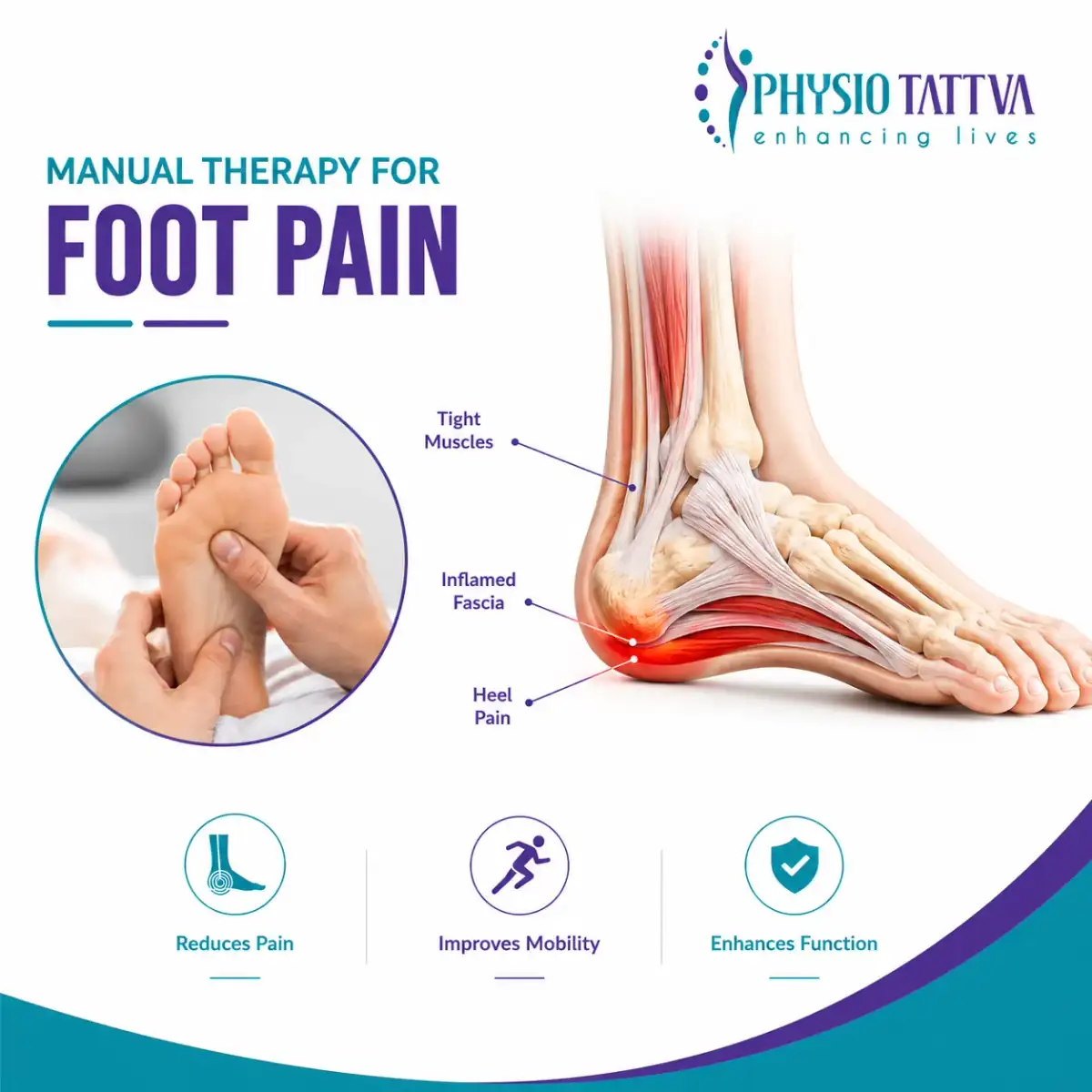
How Does Manual Therapy Help Foot Pain?
The foot is a complex structure with 26 bones, 33 joints, and over 100 muscles, tendons, and ligaments. When one part isn't working correctly, it creates a chain reaction of compensation and stress, leading to pain.
Manual therapy helps by targeting the root cause of the dysfunction. The primary benefits include:
- Pain Reduction: Gentle joint movements and soft tissue techniques can help modulate pain signals sent to the brain.
- Improved Joint Mobility: Foot joint mobilization restores the natural glide and slide between the small bones of the foot and ankle, which often become stiff from injury, arthritis, or improper footwear.
- Decreased Muscle & Fascial Tension: Techniques like myofascial release for the foot directly target the tight connective tissues (fascia) and muscles that contribute to conditions like plantar fasciitis.
- Enhanced Blood Flow: Hands-on techniques increase circulation, bringing oxygen and nutrients to injured tissues and flushing out inflammatory byproducts, which accelerates healing.
- Correcting Biomechanics: By restoring normal joint and tissue mobility, manual therapy helps the foot function more efficiently during standing, walking, and running.
Common Foot Conditions Treated with Manual Therapy
Manual therapy is not a one-size-fits-all solution; it is tailored to your specific diagnosis. Here are some common foot conditions where it is highly effective.
Plantar Fasciitis
This is the most common cause of heel pain. Plantar fasciitis manual therapy focuses on releasing tension in the plantar fascia itself, as well as the calf muscles (gastrocnemius and soleus), which are often the primary drivers of the problem. Techniques include deep soft tissue massage, cross-friction massage, and myofascial release.
Achilles Tendinopathy
Pain and stiffness in the Achilles tendon can be addressed with specific soft tissue therapy for the feet and ankle. This includes techniques to release the calf muscles, cross-friction massage on the tendon to break down scar tissue, and instrument-assisted soft tissue mobilization (IASTM).
Metatarsalgia (Pain in the Ball of the Foot)
Pain in the ball of the foot is often caused by stiff joints and pressure on the metatarsal heads. A therapist can use foot manipulation techniques to gently mobilise the metatarsal and midfoot joints, creating more space and reducing pressure on sensitive structures.
Morton's Neuroma
This condition involves the thickening of tissue around a nerve between the toes. Manual therapy, specifically joint mobilization of the metatarsals, can help separate the bones to decompress the irritated nerve.
Tarsal Tunnel Syndrome
Similar to carpal tunnel in the wrist, this involves compression of the tibial nerve as it passes through the ankle. Manual therapy can be used to release the tight structures surrounding the nerve, combined with specific nerve-gliding techniques to improve its mobility.
Arthritis and General Stiffness
For feet affected by osteoarthritis or general stiffness, gentle foot joint mobilization can improve range of motion, decrease pain, and lubricate the joints, making walking more comfortable.
Key Manual Therapy Techniques Used for Foot Pain
Manual therapy incorporates various techniques that target specific issues in the foot, such as muscle tension, joint stiffness, and nerve compression. The following techniques are commonly used to treat foot pain:
- Soft Tissue Mobilization: A broad term for techniques that target muscles, ligaments, and fascia. This includes sustained pressure, kneading, and rhythmic strokes to release tension and improve blood flow.
- Myofascial Release: This technique applies gentle, sustained pressure to the fascial connective tissue. For the foot, this is incredibly effective for the plantar fascia and the fascial compartments of the lower leg.
- Joint Mobilization: The therapist applies graded forces to move a joint in specfic directions to restore its normal mechanics. This is a gentle technique, not the "popping" or "cracking" associated with manipulation.
- Joint Manipulation: A high-velocity, low-amplitude thrust is applied to a joint to restore motion. This is used less frequently in the foot but can be effective for certain ankle or midfoot joint restrictions.
- Trigger Point Therapy: Involves applying direct pressure to hyper-irritable spots ("knots") in the muscle to release tension and alleviate referred pain.
- Nerve Mobilization (Nerve Gliding): A set of gentle movements designed to free up entrapped or adherent nerves, common in conditions like tarsal tunnel syndrome.
What to Expect During a Session?
When you seek physical therapy for foot pain, you can expect a comprehensive approach to your treatment. Here’s what typically happens during your first session:
- A Thorough Assessment: Your therapist will ask about your pain, medical history, and daily activities. They will observe how you stand and walk and perform a physical exam of your foot and leg.
- Hands-On Treatment: Based on the assessment, the therapist will perform the specific manual therapy techniques suited to your condition. This should feel targeted and specific, and while some techniques can cause temporary discomfort, it should not be excruciating.
- Education and Home Exercise: Manual therapy is most effective when combined with an active approach. Your therapist will teach you specific stretches and strengthening exercises to maintain the gains made during the session and prevent recurrence.
Finding a Qualified Practitioner
For effective and safe treatment, it’s essential to consult a licensed professional with specialized training in manual therapy and lower limb biomechanics. Consider seeking the following professionals:
- Physical Therapists (PT, DPT): Especially those with advanced certifications like Orthopedic Certified Specialist (OCS) or fellowship training in manual therapy.
- Chiropractors (DC): Experts in spinal health and manual techniques, ideal for addressing musculoskeletal issues.
- Osteopathic Physicians (DO): Licensed medical doctors with additional training in Osteopathic Manipulative Treatment (OMT) for musculoskeletal concerns.
Ensure that the practitioner has the appropriate qualifications and experience to meet your specific needs.
A Hands-On Path to Foot Pain Relief with Manual Therapy
Manual therapy for foot pain is a powerful, conservative treatment that addresses the mechanical root causes of your discomfort. By moving beyond just symptom management, these hands-on techniques restore mobility, reduce tension, and create a lasting foundation for recovery. If you are struggling with persistent foot pain, consulting a qualified manual therapist can be a crucial step toward getting back on your feet, pain-free.
At Physiotattva physiotherapy clinics in Bangalore and Hyderabad, you receive personalised care tailored to your specific needs, ensuring effective results and comfort throughout your journey to recovery.
Don’t wait to start your recovery! Get in touch with Physiotattva for more details! Contact us at +91 89510 47001.
Answers
Frequently asked questions
Start with an assessment
We measure what you've lost, find the cause, and set out a plan with a target and a timeline.
- Call us+91 89510 47001
- Email usinfo@physiotattva.com
- Visit a clinic25 clinics across Bangalore, Hyderabad and Visakhapatnam
- Or stay homePhysiotherapy at home