Aqua Therapy for Sprains and Strains: Safe Soft Tissue Injury Rehabilitation
Experience the benefits of Aqua Therapy for Sprains and Strains. This effective, low-impact treatment helps reduce swelling, pain, and accelerates healing. At Physiotattva, we use a holistic approach to ensure a faster, more complete recovery. Our expert physiotherapists in Bangalore and Hyderabad will tailor each session to meet your unique needs.
Aqua therapy, or hydrotherapy, is a form of physiotherapy conducted in a specialized, temperature-controlled pool to accelerate healing. It uses the physical properties of water to provide a low-impact environment for rehabilitating soft tissue injuries like sprains (ligament damage) and strains (muscle/tendon damage). For anyone suffering from the pain, swelling, and limited mobility of these common injuries, aqua therapy supports a safer and often faster recovery.
What Are Sprains and Strains? Causes, Symptoms and Severity Levels
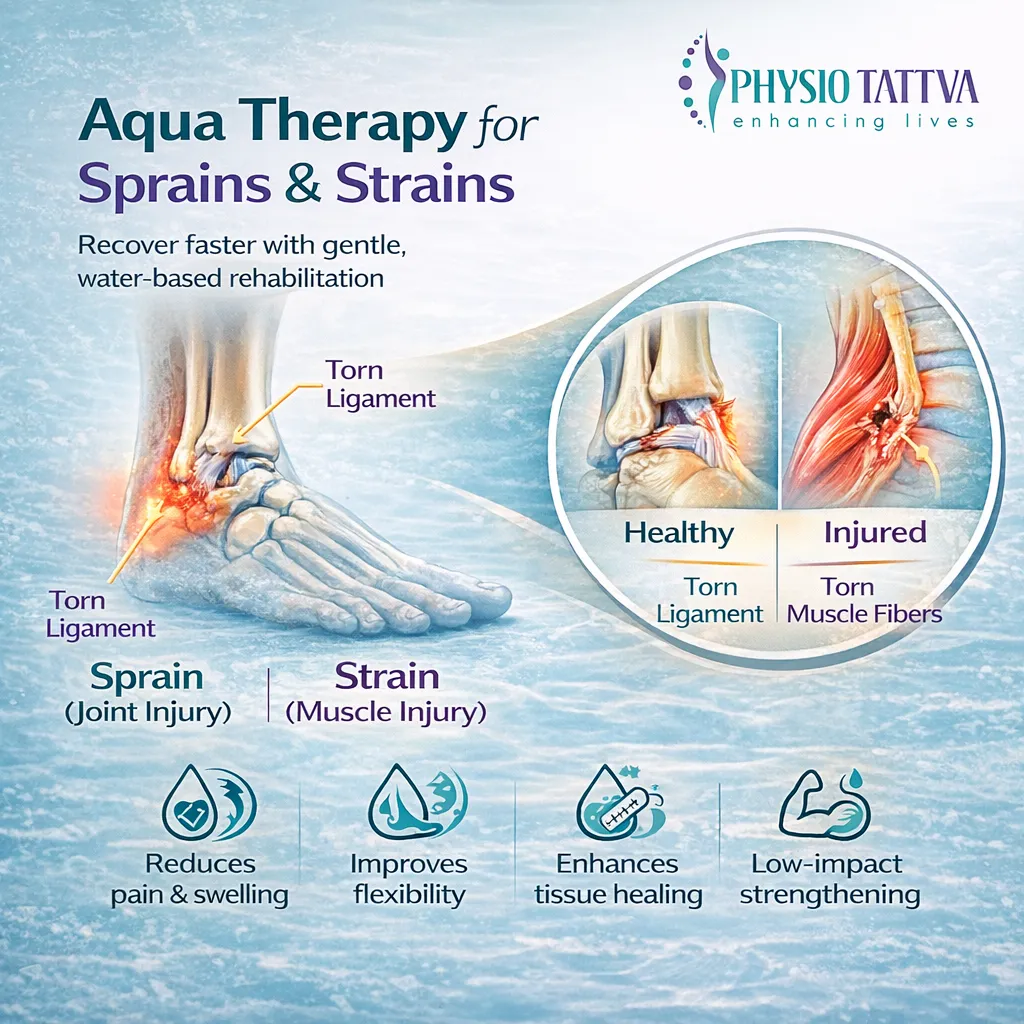
A sprain is an injury to a ligament, while a strain affects a muscle or tendon. They are among the most common soft tissue injuries and can range from mild to severe.
Common Causes: Sudden twists or falls, sports injuries, overuse, and improper lifting techniques.
Key Symptoms: Pain, swelling, bruising, and limited joint or muscle function.
Severity: Graded from mild (stretched tissue) to severe (complete tears).
How Sprains and Strains Affect Mobility and Daily Activities?
To appreciate the solution, it’s important to understand the problem. Though often used interchangeably, sprains and strains are distinct injuries that demand specialized care for proper healing.
Sprains: A sprain is an injury to a ligament, the tough, fibrous tissue that connects one bone to another. The most common example is a sprained ankle, where the ligaments supporting the ankle joint are stretched or torn.
Strains: A strain, on the other hand, is an injury to a muscle or tendon (the tissue that connects muscle to bone). This is what people often call a "pulled muscle," such as a hamstring strain or a lower back strain.
The initial RICE protocol (Rest, Ice, Compression, Elevation) is a crucial first line of defense. However, for a complete and resilient recovery that prevents future injuries, professional low-impact rehabilitation is key.
What is Aqua Therapy? Clinical Hydrotherapy for Soft Tissue Rehabilitation
Aqua therapy, also known as hydrotherapy, is much more than just swimming laps. It is a specialised form of aquatic physical therapy where therapeutic exercises are performed in a purpose-built, temperature-controlled pool under the supervision of a trained physiotherapist. Unlike a general fitness class, every movement is prescribed to achieve specific therapeutic goals, whether it’s reducing pain, increasing range of motion, or rebuilding strength. The use of warm water (typically 33-36°C) further enhances the treatment by relaxing sore muscles and promoting blood flow, creating the perfect environment for healing.
How Aqua Therapy Reduces Pain, Swelling and Tissue Stress?
The magic of hydrotherapy for injury lies in the unique physical properties of water. These principles work together to create an ideal healing environment that is impossible to replicate on land.
Buoyancy: Water’s natural buoyancy counteracts gravity, supporting your body and significantly reducing the weight and stress on injured joints and tissues. For instance, when you stand in waist-deep water, you are only supporting about 50% of your body weight! This allows you to begin moving and performing gentle exercises far earlier in your recovery, without pain or fear of re-injury.
Hydrostatic Pressure: The water exerts a gentle, uniform pressure on your submerged body parts. This hydrostatic pressure acts like a full-body compression wrap, helping to push swelling (edema) out of the injured area, reduce inflammation, improve circulation, and even dull the perception of pain.
Viscosity and Resistance: Moving through water provides 360-degree resistance. This natural resistance allows you to strengthen the muscles surrounding your sprain or strain safely and effectively. You can build strength for your muscle strain recovery without the need for heavy, joint-stressing weights. By simply changing the speed of your movement, your physiotherapist can adjust the level of resistance.
Warmth: The therapeutic warmth of the pool helps to relax tight and spasming muscles, increase blood flow to the injured site (bringing vital oxygen and nutrients), and provide an immediate soothing sensation that makes therapy a more comfortable experience.
Clinical Benefits of Aqua Therapy for Soft Tissue Injuries
For anyone dealing with a painful injury, the benefits of aqua therapy for sprains and strains are immediate and profound.
Immediate Pain Relief: The combination of warm water and buoyancy creates a soothing, comforting environment that can provide instant relief from the sharp, persistent pain of a sprain or strain.
Early Mobilization: You can start moving the injured limb far sooner in water than on land. This early movement is critical for preventing joint stiffness, muscle shortening, and loss of function.
Reduced Swelling and Inflammation: The hydrostatic pressure naturally and gently squeezes excess fluid away from the injury site, effectively reducing the swelling that causes pain and limits movement.
Improved Range of Motion and Flexibility: The support of the water allows you to stretch and move your injured joint through a greater range of motion with less pain, gently restoring flexibility.
Safe Strength and Balance Training: Water provides a safe, fall-proof environment to retrain your strength and balance (proprioception), which is often compromised after an injury like a water therapy for sprained ankle protocol.
Evidence Based Aqua Therapy Exercises for Sprains and Strains
Under the guidance of a physiotherapist, your program will be tailored to you. Here are some examples of exercises you might perform:
Disclaimer: These exercises are for informational purposes only and should be performed under the guidance of a qualified physiotherapist who can ensure they are appropriate for your specific condition.
Shallow Water Walking/Jogging: Moving forwards, backwards, and sideways in waist-deep water helps retrain your normal walking pattern (gait) and strengthens leg muscles with minimal impact.
Ankle Alphabet (for ankle sprains): While sitting on a pool step or floating with a noodle, you use your foot to trace the letters of the alphabet in the water. This simple movement improves the ankle’s range of motion in all directions.
Gentle Leg Swings (for hip/hamstring strains): Holding onto the side of the pool, you slowly swing the affected leg forward and backward, and then side to side, using the water's resistance to build strength gently.
Knee-to-Chest Stretches: While holding the pool wall for support, gently bring one knee towards your chest to stretch the lower back, glutes, and hamstring muscles.
What Happens During an Aqua Therapy Session at Physiotattva?
At Physiotattva, we are committed to providing a comprehensive and personalized approach to your recovery. Our aqua therapy program is designed to guide you through every stage of healing, ensuring a smooth and effective recovery process. Here's what you can expect as part of your journey:
Personalised One-on-One Assessment: Your recovery begins with a thorough assessment by one of our expert physiotherapists, where we evaluate your specific injury and needs.
Customised Treatment Plan: Based on your assessment, we design a fully personalised, advanced aqua therapy plan tailored to your recovery goals.
State-of-the-Art Facilities: Experience therapy in our modern, hygienic, and cutting-edge aquatic facilities, designed for maximum comfort and healing.
Expertly Guided Sessions: Each session is led by our experienced physiotherapists, ensuring you receive the right techniques and support for optimal recovery.
Advanced Physiotherapy for Fast Recovery: Whether you’re recovering from an injury or need rehabilitation, our physiotherapists in Bangalore and Hyderabad offer expert care that accelerates healing.
Holistic Approach to Healing: Our therapy program integrates multiple techniques, from strengthening exercises to mobility drills, ensuring a well-rounded recovery.
Who is an Ideal Candidate for Aqua Therapy for Sprains and Strains?
Aqua therapy is highly beneficial for individuals with:
Mild to moderate ankle, knee, or wrist sprains.
Muscle strains in the back, hamstring, or shoulder.
Post-surgical recovery where weight-bearing is limited.
Chronic pain or stiffness following a previous injury.
Who Should Avoid Aqua Therapy? Safety and Contraindications
While generally safe, aqua therapy may not be suitable for everyone. You should avoid it if you have:
Open wounds, cuts, or skin infections.
Fever or a contagious illness.
Certain cardiovascular conditions (consult your doctor).
An unstable fracture that has not been medically cleared.
Why Choose Physiotattva for Sprain and Strain Rehabilitation?
A sprain or strain doesn’t have to mean weeks of painful, frustrating immobility. Aqua therapy offers a scientifically-backed path to healing that is effective, safe, and significantly more comfortable than land-based rehabilitation alone. It reduces pain, decreases swelling, and restores your strength and mobility faster.
At Physiotattva physiotherapy clinics in Bangalore and Hyderabad, you receive personalised care tailored to your specific needs, ensuring effective results and comfort throughout your journey to recovery.
Absolutely not. The pool is shallow (usually chest-deep), and you will be supervised one-on-one by a trained physiotherapist at all times. The focus is on controlled exercises, not swimming.
How soon after an injury can I start aqua therapy?
This depends on the severity and type of your injury. Your physiotherapist will conduct a thorough assessment to determine the safest time to begin. In many cases, aqua therapy can be started much sooner than traditional land-based exercises because the water protects the joints.
Retrieving data. Wait a few seconds and try to cut or copy again.
Quite the opposite. Aqua therapy is specifically designed to be gentle and is often much less painful than equivalent land-based exercises. The primary goal is to work within your comfort level to reduce pain and improve function, not cause more of it.
How many aqua therapy sessions will I need?
The number of sessions is unique to each individual's condition and goals. After your initial assessment, your physiotherapist will recommend a personalised treatment plan and duration. Typically, patients see significant improvement within 6 to 12 sessions, with a plan for ongoing management.





.webp)
.webp)

.jpeg)










%20(1)-p-3200.jpeg)


.jpg)
.webp)
.webp)
.webp)
