




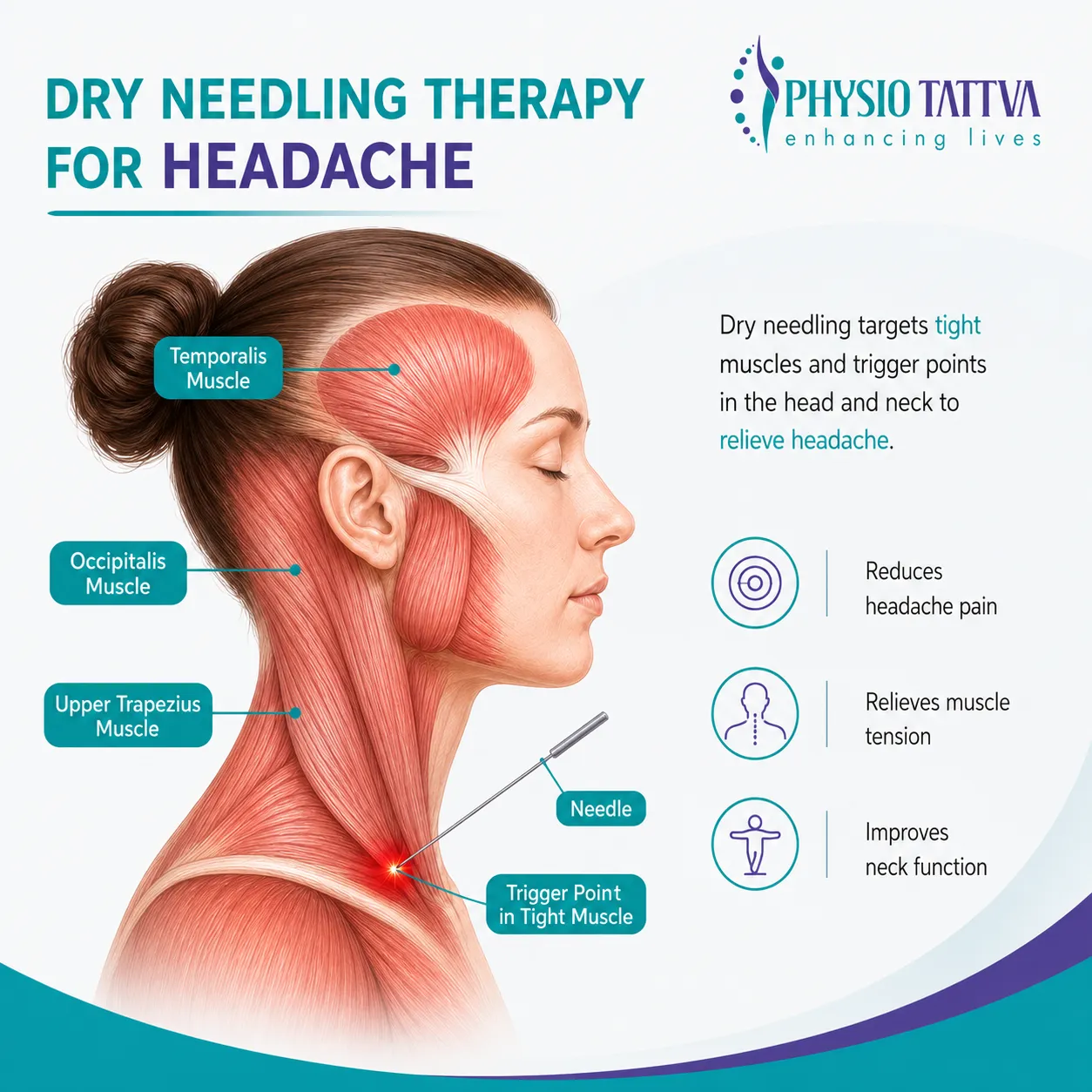
Dry needling therapy for headache is a physiotherapy technique used to release tight muscles and trigger points in the neck, shoulders, and jaw that may contribute to head pain. It is often considered for tension headaches, cervicogenic headaches, and some migraine patterns linked to muscle tension. By inserting very thin sterile needles into specific muscle points, the treatment helps reduce muscle tightness, improve neck movement, and ease referred pain. Dry needling is typically combined with physiotherapy exercises, posture correction, and rehabilitation strategies, and its suitability is determined after a professional clinical assessment.
What Is Dry Needling Therapy for Headache?
Dry needling therapy for headache is a physiotherapy technique used to treat tight and painful muscles that may be contributing to head pain, especially when the headache has a musculoskeletal component. It involves placing very fine sterile needles into specific muscle points to address trigger points, muscle tension, and referred pain patterns linked to the head, neck, and upper shoulder region.
Some key characteristics of this treatment include:
- Muscle-focused approach: It is used to target tight and sensitive muscles that may be referring pain into the head.
- Uses fine sterile needles: The needles are very thin, single-use, and no medicine is injected through them.
- Targets trigger points: It is often used on trigger points in the neck, shoulder, jaw, or upper-back muscles that may be linked to headache symptoms.
- Used in physiotherapy care: It is usually part of a broader treatment plan rather than a standalone solution.
Difference between dry needling and acupuncture for head pain
Although both techniques use thin needles, they are based on different treatment methods and are used for different clinical purposes. In head pain care, the difference is mainly seen in the treatment approach, target area, and how the needling points are chosen.
- The treatment approach is different: Dry needling is based on a musculoskeletal and physiotherapy approach, while acupuncture follows a different treatment framework rooted in Traditional Chinese Medicine.
- The target area is different: Dry needling usually focuses on tight muscles and trigger points in the neck, shoulders, jaw, or scalp-related muscles, while acupuncture uses selected points within its own system.
- The assessment method is different: Dry needling is guided by pain pattern, muscle tightness, posture, and movement findings, while acupuncture follows a different diagnostic model.
- The needle placement is different: In dry needling, the needle is usually placed into specific tight or painful muscle points, while acupuncture points may not always be directly over the painful area.
How Does Dry Needling Therapy for Headache Work?
Many headaches are linked to muscle tension and trigger points in the neck, shoulders, jaw, and upper back. Dry needling for headaches is used to target those tight muscles so the treatment focuses on the muscular part of the pain pattern rather than only the head pain itself.
Here is how the process usually works:
- The pain pattern is assessed first: The physiotherapist checks headache location, neck movement, posture, muscle tightness, and tender points before planning treatment.
- Trigger points are identified: The focus is usually on tight muscle points in areas such as the upper trapezius, suboccipitals, sternocleidomastoid, or temporalis.
- A fine needle is placed into the selected muscle: Very thin sterile needles are inserted into the target muscle points.
- The muscle may give a local response: In some cases, the muscle may briefly twitch or feel sore when the trigger point is reached.
- The area is then allowed to settle: Once the needle is removed, the muscle may gradually feel less tense or less sensitive.
- The treatment is usually followed by rehab work: Dry needling treatment for headache is often combined with posture work, movement correction, and physiotherapy care.
What Types of Headaches Can Dry Needling Therapy Be Used For?
Dry needling is not used for every kind of headache. It is usually considered when the headache has a clear musculoskeletal component and when tight muscles or trigger points appear to be contributing to pain.
It may be considered for headache patterns such as:
- Tension-type headaches: Often linked to tight muscles in the neck, scalp, and shoulders.
- Cervicogenic headaches: Headaches that are associated with the neck and often worsen with neck stiffness or movement restriction.
- Some migraine-related patterns: In some patients, neck and shoulder muscle tension may act as a trigger or aggravating factor.
- Headaches linked to posture or muscle overuse: This may include patterns related to prolonged desk work, upper-back tension, or jaw and neck strain.
Benefits of Dry Needling Therapy for Headache
When tight muscles around the neck, shoulders, and jaw are adding to headache pain, dry needling is often used to address that muscular tension as part of a wider treatment plan. The main benefits are usually linked to pain relief, muscle release, and improved comfort in daily activities.
- Helps ease muscle-related head pain: It is often used when trigger points and tight muscles are contributing to headache symptoms.
- Reduces muscle tension: It helps release tightness in the neck, upper shoulders, and related areas that may be feeding into the pain pattern.
- Improves movement comfort: Many patients find that neck movement and daily activities feel easier after treatment.
- Supports rehab progress: It is often used to make posture work, stretching, and physiotherapy exercises more comfortable.
- Useful in recurring cases: It is often considered when headaches keep returning, and muscle tension remains a clear aggravating factor.
When Dry Needling Therapy for Headache May Not Be Suitable
Dry needling is not suitable for every headache case, so a physiotherapist should always decide this after proper assessment. The treatment may need to be avoided or used with extra caution when certain medical or safety concerns are present.
Dry needling may not be suitable in cases such as:
- Severe needle fear or anxiety: Patients who are extremely uncomfortable with needles may not tolerate the treatment well.
- Skin infection, irritation, or open wound near the area: Treatment is usually avoided if the tissue around the target area is not healthy.
- Bleeding disorders or blood thinner use: Extra caution is needed when there is a higher risk of bleeding or bruising.
- Active neurological or medical concerns needing review first: A headache should be properly assessed before treatment, especially if it does not appear to be muscle-related.
- Other safety concerns identified during assessment: The physiotherapist may delay or avoid treatment if there are clinical reasons to review the case further first.
Experience Lasting Headache Relief with Dry Needling at Physiotattva
If your headaches are caused by neck pain, muscle tightness, or triggered by stress and poor posture, dry needling therapy could offer a transformative solution. This non-pharmacological treatment targets the root causes of your pain, rather than simply masking symptoms, providing lasting relief. By addressing the underlying mechanical issues contributing to your headaches, dry needling can significantly improve your quality of life and reduce headache frequency and intensity. Consider consulting with a trained professional to explore how dry needling can help you manage your headaches effectively.
At Physiotattva physiotherapy clinics in Bangalore and Hyderabad, you receive personalised care tailored to your specific needs, ensuring effective results and comfort throughout your journey to recovery.
Don’t wait to start your recovery! Get in touch with Physiotattva for more details! Contact us at +91 89510 47001.
Key Takeaways:
- Dry needling therapy for headache is used to target tight and painful muscles that may be contributing to head pain.
- It helps reduce muscle tension, improve movement comfort, and support broader headache rehabilitation.
- The treatment is usually brief and may cause mild temporary soreness after the session.
- It is generally used along with posture work, movement correction, and other physiotherapy care.
- Suitability should always be decided after assessment, as dry needling may not be right for every headache type.
Why Physiotattva?
22+
50,000+
95%
200+
25+
4.8
Cities We Serve

Bangalore
At Physio Tattva, we are committed to bring access to quality physio care through ultra-modern clinics and high-skilled practitioners to all.
.webp)
Hyderabad
At Physio Tattva, we are committed to bring access to quality physio care through ultra-modern clinics and high-skilled practitioners to all.
.webp)
Vishakhapatnam
At Physio Tattva, we are committed to bring access to quality physio care through ultra-modern clinics and high-skilled practitioners to all.
Core Treatments
Core Conditions
Core Symptoms
Frequently Asked Questions
Is dry needling therapy painful?

How many dry needling sessions will I need?
How quickly will I see results from dry needling?
Who is qualified to perform dry needling?
Can dry needling relieve headaches?
How effective is dry needling therapy for chronic headache management?
Is dry needling better than acupuncture for migraines?
What is the average cost of a dry needling session for headaches in India?






%20(1)-p-3200.jpeg)


.jpg)
.webp)
.webp)
.webp)