Aqua Therapy for Lumbar Spondylosis: Safe Relief for Degenerative Back Pain

Aqua therapy for lumbar spondylosis provides a gentle, low-impact way to reduce back pain, relax tight muscles, and improve flexibility. By using warm water to support your body weight, aqua therapy reduces stress on the spine while strengthening core and back muscles. At Physiotattva, expert physiotherapists guide each session to ensure safe, personalized progress. Experience relief and regain comfortable movement with water-based rehabilitation.

Aqua therapy is a specialized form of physiotherapy performed in a controlled aquatic environment to treat pain and improve function. For individuals with lumbar spondylosis—an age-related degeneration of the spinal discs and joints in the lower back—it offers a gentle yet effective way to manage symptoms like stiffness, chronic pain, and nerve irritation. This low-impact approach uses water's natural properties to support the spine, making it an ideal method for spinal rehabilitation.

What is Lumbar Spondylosis? Causes, Symptoms and Risk Factors Explained

Before we dive into the solution, it's essential to understand the condition. This section breaks down what lumbar spondylosis is, its causes, and why it leads to chronic discomfort.

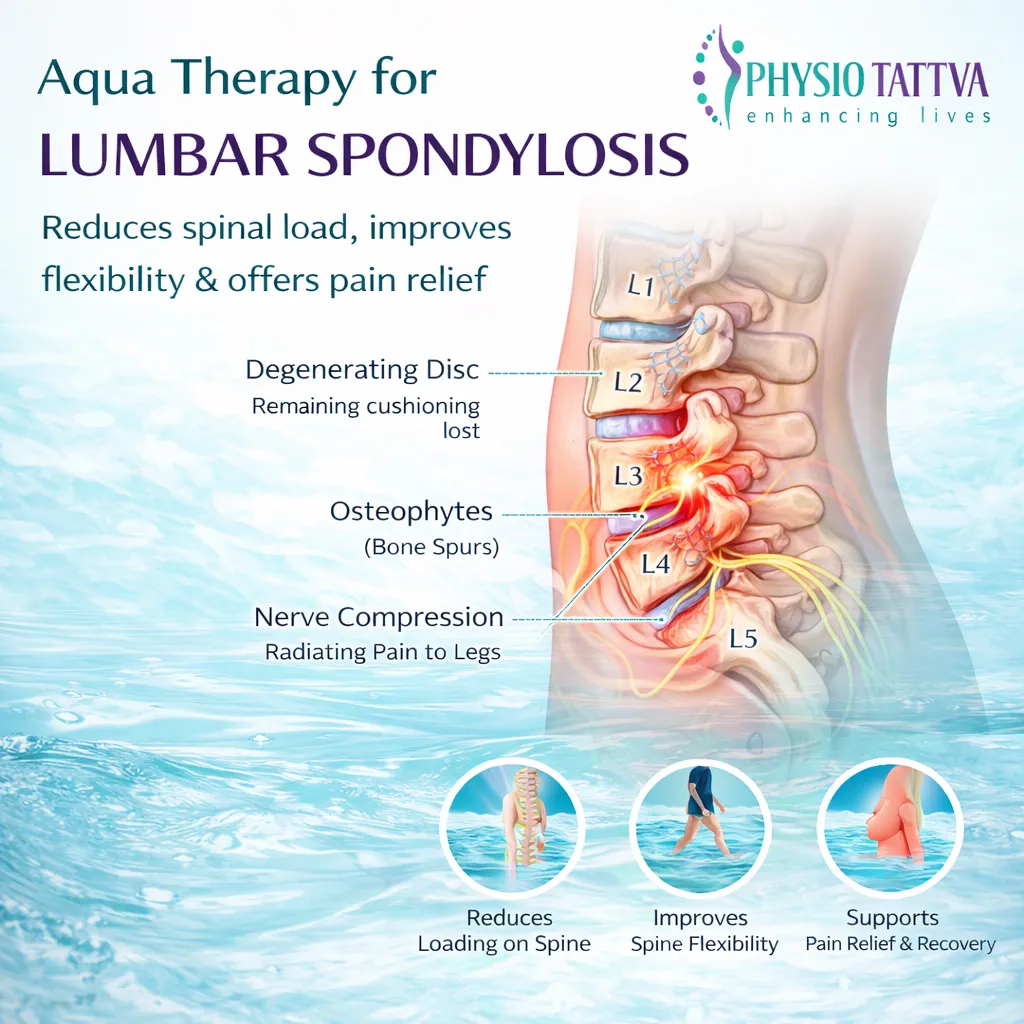
Lumbar spondylosis is an age-related, degenerative "wear and tear" of the vertebrae and discs in the lower back. As we age, these spinal structures can lose their cushioning, leading to friction and pressure. The most common symptoms include localised pain in the lower back, stiffness that is often worse in the morning, and reduced flexibility. In some cases, this degeneration can narrow the spinal canal, leading to nerve compression (stenosis) that causes pain, numbness, or weakness to radiate down the legs. While it's a degenerative condition, its symptoms can be effectively managed with the right physiotherapy.
How Lumbar Spondylosis Affects Mobility and Daily Activities

The chronic pain and stiffness from lumbar spondylosis can significantly limit your ability to perform everyday tasks.

  •  Difficulty bending forward, lifting objects, or twisting your torso.
  • Increased pain when standing or walking for extended periods.
  • Trouble rising from a chair or getting out of bed.
  • Reduced overall mobility and flexibility in the lower back.

What is Aqua Therapy? Clinical Hydrotherapy for Spinal Rehabilitation

This section introduces the concept of aqua therapy, explaining how this specialised form of physiotherapy uses the unique properties of water for healing and rehabilitation.

Aqua therapy, also known as hydrotherapy, is a form of physiotherapy performed in a specialised, temperature-controlled pool. It’s important to understand that this is not simply swimming or water aerobics. Aqua therapy involves specific, prescribed exercises designed by a trained physiotherapist to meet your individual therapeutic goals. The magic of this treatment lies in harnessing the three core principles of water to create a healing environment: buoyancy, hydrostatic pressure, and viscosity (resistance). These properties work together to make movement easier, safer, and more effective for those with back pain.

How Aqua Therapy Reduces Spinal Load and Relieves Back Pain

Explore the science behind why water is the perfect environment for a spine affected by spondylosis. Learn how its natural properties work in synergy to reduce pain and promote healing.

How Buoyancy Reduces Lumbar Spine Compression

The most immediate benefit of aqua therapy is buoyancy. When you’re in chest-deep water, it counteracts gravity and supports up to 90% of your body weight. For a spine compressed by spondylosis, this is a game-changer. This "unloading" effect takes the pressure off your lumbar vertebrae and intervertebral discs. The result is a significant, often immediate, reduction in pain. This newfound freedom allows you to perform gentle movements and exercises that would be too painful to attempt on land, kickstarting your journey to improved mobility and function without fear of agitating your condition.

How Hydrostatic Pressure Improves Circulation and Reduces Inflammation

Hydrostatic pressure is the gentle, consistent pressure that water exerts on your body. Imagine it as a full-body compression sock. This natural pressure helps reduce inflammation and swelling (edema) around the affected spinal joints, which is a common source of pain in spondylosis. Furthermore, this pressure aids in improving blood circulation. Enhanced circulation brings more oxygen and vital nutrients to the damaged tissues in your lower back, accelerating the body's natural healing process and helping to clear away waste products that contribute to pain.

How Warm Water and Resistance Relieve Pain and Build Stability

At Physiotattva, our hydrotherapy pools are heated to a therapeutic temperature. This warm water works wonders on tight, spasming back muscles, encouraging them to relax and release tension. This soothing effect not only feels good but also increases flexibility and further boosts blood flow. At the same time, water’s viscosity provides 360-degree resistance to your movements. Every step, stretch, and twist is met with gentle opposition, allowing you to strengthen the deep core and back muscles that support your spine. This is achieved without the jarring impact of weights or land-based exercises, making it the ideal way to build a stronger, more resilient back.

Evidence Based Aqua Therapy Exercises for Lumbar Spondylosis

Get a glimpse into a typical aqua therapy session. Here are some foundational exercises prescribed by our physiotherapists to target lumbar spondylosis safely and effectively.

  • Important Caveat: These exercises should always be performed under the guidance of a qualified physiotherapist who can tailor them to your specific condition and ability. Never perform an exercise that causes sharp pain.
  • Water Walking/Marching: Simple yet highly effective. Walking forwards, backward, and sideways in chest-deep water engages your core muscles, improves balance, and gently mobilises your hips and lower back without any impact.
  • Knee-to-Chest Stretch: While holding onto the side of the pool for support, gently bring one knee towards your chest until you feel a comfortable stretch in your lower back and glutes. The water's buoyancy makes it easier to lift your leg, allowing for a deeper, pain-free stretch.
  • Pelvic Tilts: Stand with your back against the pool wall, feet shoulder-width apart. Gently tilt your pelvis to press the small of your back flat against the wall, engaging your deep abdominal muscles. Hold for a few seconds and release. This helps stabilise the lumbar spine.
  • Gentle Trunk Twists: Stand in the centre of the pool with your feet firmly planted. With your arms outstretched in the water, slowly twist your upper body from side to side. The water's resistance will help you control the movement and engage your oblique muscles for better core support.

What to Expect During an Aqua Therapy Session at Physiotattva

Wondering what to expect? This section outlines the patient-centric journey at Physiotattva, from your initial comprehensive assessment to your personalized one-on-one aqua therapy program.

  • Step 1: The Assessment: Your journey begins with a comprehensive consultation. A senior physiotherapist will conduct a thorough physical evaluation, review your MRI/X-ray reports, and listen carefully to understand your pain points, limitations, and personal recovery goals.
  • Step 2: The Personalised Plan: Based on this detailed assessment, we design a completely customised aqua therapy program. This plan targets your specific areas of weakness, stiffness, and pain, ensuring every exercise serves a purpose in your rehabilitation.
  • Step 3: The Guided Sessions: You’ll receive one-on-one sessions with your physiotherapist in our state-of-the-art pools in Bangalore or Hyderabad. This dedicated guidance ensures you maintain proper form, stay safe, and are progressively challenged as you get stronger.

Who is an Ideal Candidate for Aqua Therapy for Lumbar Spondylosis?

  •  Individuals with chronic low back pain who find land-based exercises too painful.
  • Patients with degenerative disc disease, spinal stenosis, or facet joint arthritis.
  • Those recovering from spinal surgery (once medically cleared).
  •  Anyone seeking a low-impact option for improving core strength and flexibility.

Who Should Avoid Aqua Therapy? Safety and Contraindications

While generally safe, aqua therapy may not be suitable for everyone. You should consult a doctor if you have:

  • Open wounds, rashes, or skin infections
  • Fever, flu, or any contagious disease.
  • Uncontrolled cardiac conditions or severe respiratory disease.
  • Incontinence of the bowel or bladder.

Why Choose Physiotattva for Lumbar Spondylosis Rehabilitation?

Living with lumbar spondylosis can limit your movement and quality of life, but the right treatment can change everything. Aqua therapy combines pain relief, spinal unloading, and core strengthening in a safe, low-impact environment, making it ideal for chronic back conditions.

At Physiotattva physiotherapy clinics in Bangalore and Hyderabad, you receive personalised care tailored to your specific needs, ensuring effective results and comfort throughout your journey to recovery. 

Don’t wait to start your recovery! Get in touch with Physiotattva for more details! Contact us at +91 89510 47001.

Our Professionals

Dr. Anup Brahmbhatt (PT)

Chief Chiropractor and Physiotherapist

Experience:
15 Years
Read MoreBook an appointment

Dr JUHI SANJAY RAMTEKE (PT)

Senior Clinical Physiotherapist

Experience:
3 Year
Read MoreBook an appointment

Dr BINDUSHREE C (PT)

Clinical Physiotherapist

Experience:
2+ Years
Read MoreBook an appointment

Dr LAVANYA C (PT)

Clinical Physiotherapist

Experience:
2 Years
Read MoreBook an appointment

ANIRUDH C

Homecare Physiotherapist

Experience:
2 YEARS
Read MoreBook an appointment

AISHAH TASNEEMA

Homecare Physiotherapist

Experience:
2 YEARS
Read MoreBook an appointment

Why Physiotattva?

22+

Clinics Across Cities

50,000+

Patients Treated

95%

Recovery Success Rate

200+

Expert Physiotherapies

25+

Advanced Therapies

4.8

Average Patient Rating

Cities We Serve

Therapy Location Image

Bangalore

At Physio Tattva, we are committed to bring access to quality physio care through ultra-modern clinics and high-skilled practitioners to all.

Therapy Location Image

Hyderabad

At Physio Tattva, we are committed to bring access to quality physio care through ultra-modern clinics and high-skilled practitioners to all.

Therapy Location Image

Vishakhapatnam

At Physio Tattva, we are committed to bring access to quality physio care through ultra-modern clinics and high-skilled practitioners to all.

Frequently Asked Questions

Do I need to know how to swim?

FAQ Icon
Absolutely not. The pool is shallow (usually chest-deep), and you will be supervised one-on-one by a trained physiotherapist at all times. The focus is on controlled exercises, not swimming.

Is Aqua Therapy Safe for Severe Back Pain?

FAQ Icon
Yes. In fact, aqua therapy is one of the safest and most recommended forms of exercise for severe pain. The water's buoyancy removes the stress and impact from your joints, allowing for gentle movement that promotes healing.

How Many Sessions Are Required for Improvement?

FAQ Icon
This varies for every individual based on the severity of their condition and their progress. After your initial assessment, your physiotherapist will recommend a treatment schedule, and your progress will be reassessed regularly.

What Should I Wear and Bring to My Aqua Therapy Session?

FAQ Icon
All you need is a comfortable swimsuit, a towel, and a water bottle to stay hydrated. We provide a clean, safe, and private environment for all your sessions.

Get In Touch

Valid number
Thank you! Your submission has been received!
Oops! Something went wrong while submitting the form.