




That sudden twist of an ankle or a pulled muscle during exercise can be incredibly painful and disruptive. Sprains and strains are among the most common soft tissue injuries, often leading to weeks of rest, pain, and limited mobility. While the traditional R.I.C.E. (Rest, Ice, Compression, Elevation) method is a crucial first step, many are now turning to advanced technologies to speed up the healing process. One of the most promising is pulsed electromagnetic fields (PEMF) therapy for sprains and strains, a non-invasive treatment that works at a cellular level to reduce inflammation and accelerate recovery.
Understanding the Difference Between Sprains and Strains
Before exploring treatment options, it’s essential to understand what type of injury has occurred. Although people often use the terms interchangeably, sprains and strains affect different tissues and respond differently to care.
- Sprain: A sprain happens when a ligament is stretched or torn. Ligaments are strong bands of tissue that connect one bone to another at a joint. Ankle sprains are especially common, but sprains can also affect the wrist, knee, and other joints that experience sudden twisting.
- Strain: A strain occurs when a muscle or tendon is overstretched or torn. Tendons connect muscles to bones, allowing movement. Hamstring strains, calf strains, and lower back strains are frequent examples, usually caused by overuse, poor technique, or sudden heavy load.
Both injuries set off an inflammatory response, leading to pain, swelling, bruising, and limited movement. Knowing which structure is involved helps guide the right recovery plan and ensures more effective healing.
What is Pulsed Electromagnetic Field (PEMF) Therapy?
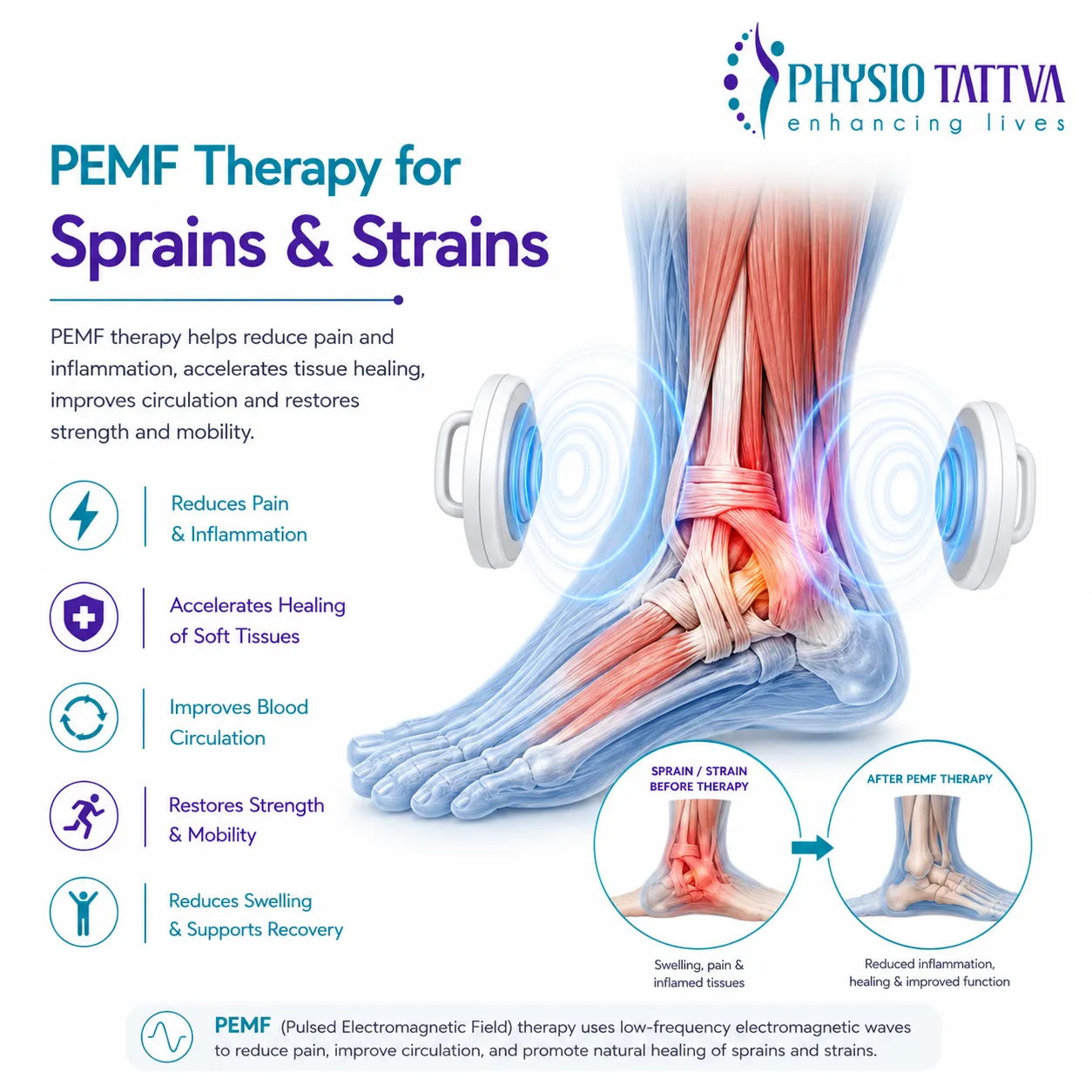
Pulsed Electromagnetic Field (PEMF) therapy is a safe, non-invasive treatment that uses low-frequency electromagnetic fields to stimulate and "recharge" your body's cells. Think of it like a battery charger for your cells. When a cell is damaged by injury, it loses some of its electrical charge, impairing its ability to function and heal. PEMF therapy delivers targeted energy pulses to the injured area, restoring this charge and optimizing the cell's ability to repair itself.
How Does PEMF Therapy Work for Sprains and Strains?
When you apply PEMF therapy to a sprained ankle or a strained muscle, it initiates several biological processes that directly combat the effects of the injury.
- Reduces Pain and Inflammation: PEMF has a powerful anti-inflammatory effect. The electromagnetic pulses help regulate the inflammatory mediators at the injury site, leading to a significant reduction in swelling and pain. This provides natural pain relief without the need for excessive medication.
- Enhances Blood Circulation: The therapy improves vasodilation (the widening of blood vessels), which increases blood flow to the injured tissues. This enhanced circulation delivers more oxygen and essential nutrients needed for repair while more efficiently removing metabolic waste products.
- Accelerates Cellular Repair and Regeneration: PEMF stimulates the production of Adenosine Triphosphate (ATP), the primary energy source for all cellular functions. With more ATP, cells can work more effectively to repair damaged tissue, produce collagen for ligament and tendon repair, and regenerate faster.
- Reduces Muscle Spasms: For strains, PEMF can help relax tense muscles and reduce the painful spasms that often accompany the injury, leading to increased comfort and better mobility.
Key Benefits of Using PEMF for Soft Tissue Injuries
Integrating pulsed electromagnetic fields therapy for sprains and strains into your recovery plan offers several compelling advantages:
- Faster Recovery Time: By enhancing the body’s natural healing mechanisms, PEMF helps reduce inflammation and boosts tissue repair. Many athletes and individuals report noticeably shorter downtime and quicker return to activity.
- Non-Invasive and Drug-Free: PEMF is an external therapy that requires no needles, medication, or surgical intervention. It provides a natural, comfortable alternative for people seeking pain relief without relying on pharmaceuticals.
- Safe with Minimal Side Effects: PEMF therapy is F.D.A. approved for multiple clinical uses and has an excellent safety profile. Most users tolerate it well, making it suitable for a wide range of soft tissue injuries.
- Targets the Source of Injury: Unlike pain medication that only masks symptoms, PEMF works at the cellular level. It helps restore energy to damaged cells, allowing tissues to repair more efficiently and reducing the likelihood of lingering issues.
- Can Be Used at Home: Portable PEMF devices make it easy to continue treatment outside a clinic. With consistent home sessions, individuals can support ongoing healing, maintain progress, and manage symptoms throughout the day.
- Enhances Overall Mobility: By reducing stiffness, easing discomfort, and improving circulation, PEMF supports smoother movement and helps restore functional mobility during recovery.
- Supports Long-Term Tissue Health: Regular use during rehabilitation can promote better tissue resilience, helping reduce the risk of future injuries and supporting sustained physical performance.
Is PEMF Therapy Safe for Sprains and Strains?
Yes, PEMF therapy is widely regarded as safe. The frequencies used are extremely low and designed to work in harmony with your body’s natural biological processes. Most people tolerate the therapy very well, and it is commonly used in clinical settings for various musculoskeletal conditions.
However, there are a few important contraindications. Individuals who are pregnant, have a pacemaker or other implanted electronic device, or have a history of epilepsy should consult their doctor before using PEMF therapy. A brief medical assessment can help ensure the treatment is appropriate and tailored to your specific needs.
Combining PEMF with Traditional Treatments like R.I.C.E.
PEMF is not a replacement for standard medical advice, but it serves as a powerful complement to it. For the best results, PEMF should be paired with the R.I.C.E. protocol, especially during the first 48 hours after an injury, when inflammation and swelling are at their peak.
- Rest: Avoid activities that cause pain or put stress on the injured area.
- Ice: Apply cold packs at regular intervals to help control swelling and discomfort.
- Compression: Use a supportive bandage or wrap to limit excessive swelling and provide mild stability.
- Elevation: Keep the injured limb raised above heart level to improve fluid drainage and reduce inflammation.
After this initial phase, PEMF therapy can play a significant role in speeding up the repair and remodeling stages of healing. Its cellular-level effects help tissues recover more efficiently, allowing you to regain strength, mobility, and overall function with greater ease. When used consistently, PEMF supports a smoother transition from early recovery to full return to daily activities or sports.
Supporting Better Healing for Sprains and Strains at Physiotattva
If you're struggling with a lingering sprain or a stubborn muscle strain, it's time to look beyond traditional methods alone. Pulsed electromagnetic fields (PEMF) therapy for sprains and strains offers a scientifically-backed, safe, and effective way to reduce pain, fight inflammation, and supercharge your body's natural healing capabilities.
To determine whether PEMF is the right fit for your condition, speak with a healthcare professional or a physical therapist. With the right guidance, you can take a proactive step toward faster healing, restored mobility, and a more complete recovery.
At Physiotattva physiotherapy clinics in Bangalore and Hyderabad, you receive personalised care tailored to your specific needs, ensuring effective results and comfort throughout your journey to recovery.
Don’t wait to start your recovery! Get in touch with Physiotattva for more details! Contact us at +91 89510 47001.
Why Physiotattva?
22+
50,000+
95%
200+
25+
4.8
Cities We Serve

Bangalore
At Physio Tattva, we are committed to bring access to quality physio care through ultra-modern clinics and high-skilled practitioners to all.
.webp)
Hyderabad
At Physio Tattva, we are committed to bring access to quality physio care through ultra-modern clinics and high-skilled practitioners to all.
.webp)
Vishakhapatnam
At Physio Tattva, we are committed to bring access to quality physio care through ultra-modern clinics and high-skilled practitioners to all.
Core Treatments
Core Conditions
Core Symptoms
Frequently Asked Questions
How does PEMF therapy help with sprains and strains?

How soon can I expect results from PEMF therapy for a sprain or strain?
Is PEMF therapy safe and does it hurt?
Is PEMF a scientifically proven treatment for soft tissue injuries?
How does PEMF compare to traditional treatments like ice and rest (RICE method)?






%20(1)-p-3200.jpeg)


.jpg)
.webp)
.webp)
.webp)