




Muscle stiffness, that feeling of tightness, soreness, and reduced mobility—can range from a minor annoyance to a debilitating condition. While stretching and over-the-counter pain relievers can help, many people find lasting relief through a hands-on approach: manual therapy.
This guide explores what manual therapy is, how it works to alleviate muscle stiffness, and what you can expect from treatment.
What is Manual Therapy?
Manual therapy is a specialized form of physical treatment delivered by a trained practitioner who uses their hands to diagnose, treat, and manage musculoskeletal conditions. The goal is to reduce pain, decrease muscle tension, improve joint mobility, and restore normal function.
Practitioners who perform manual therapy include:
- Physical Therapists (PTs)
- Chiropractors (DCs)
- Osteopathic Physicians (DOs)
- Licensed/Registered Massage Therapists (LMTs/RMTs)
Common Causes of Muscle Stiffness
Understanding the root cause of your stiffness is the first step toward effective treatment. Common culprits include:
- Overexertion: Intense workouts or new physical activities lead to delayed onset muscle soreness (DOMS).
- Poor Posture: Sitting at a desk, slouching, or "text neck" puts chronic strain on muscles in the neck, shoulders, and back.
- Stress and Anxiety: Mental and emotional stress cause the body to tense up, leading to chronic muscle contraction, especially in the neck and shoulders.
- Dehydration: Lack of water can impair muscle function and lead to cramping and stiffness.
- Inactivity: A sedentary lifestyle can cause muscles and fascia to tighten and lose their flexibility.
- Underlying Medical Conditions: Arthritis, fibromyalgia, or pinched nerves can cause persistent muscle stiffness.
How Manual Therapy Relieves Muscle Stiffness: The Mechanisms?
Manual therapy isn't just a "feel-good" treatment; it triggers specific physiological responses that directly combat stiffness.
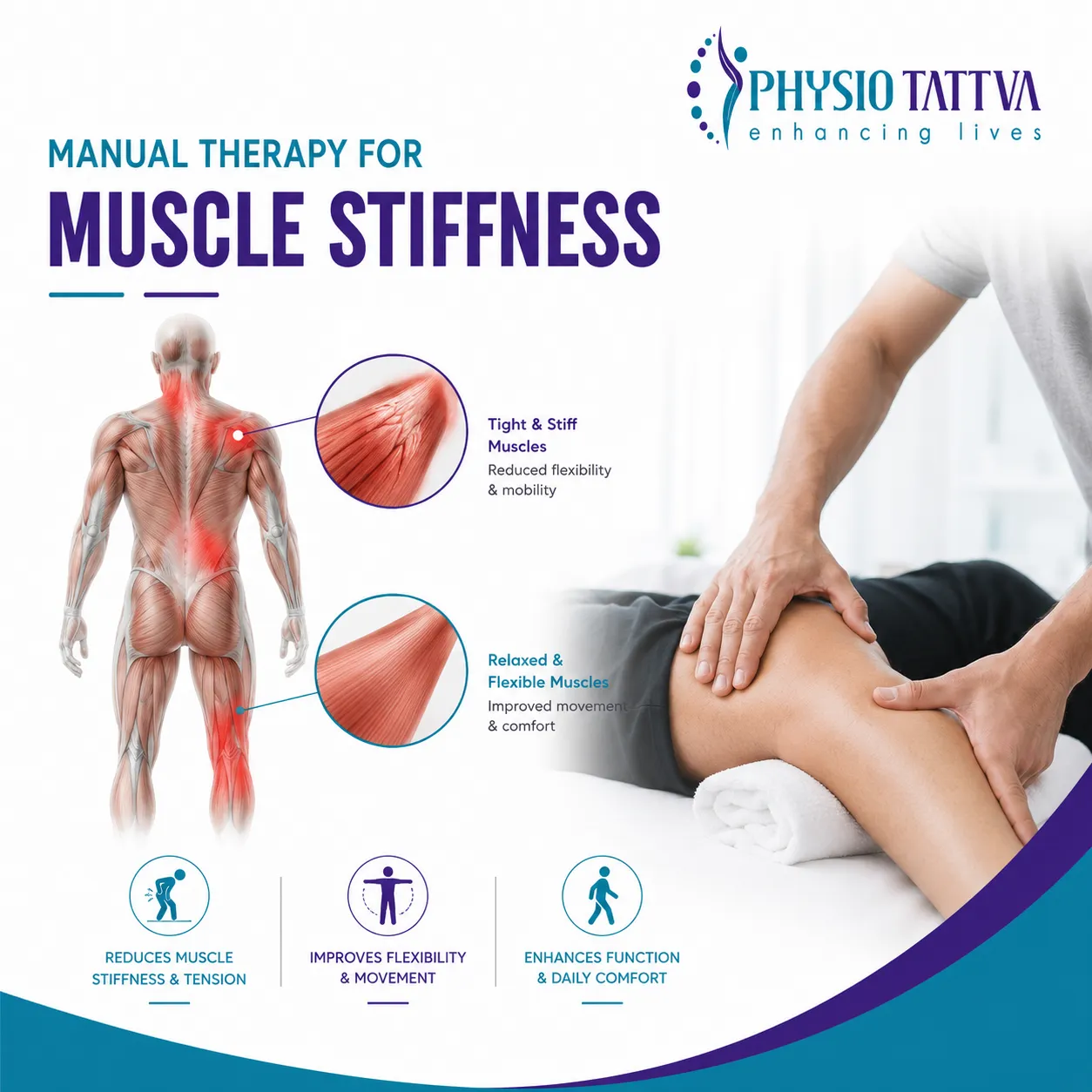
- Improves Circulation: Applying pressure and movement to stiff muscles increases blood flow. This delivers oxygen-rich blood and essential nutrients to the tissues while helping to flush out metabolic waste products (like lactic acid) that contribute to soreness.
- Breaks Down Adhesions: Chronic tension or injury can cause small knots and adhesions (bands of painful, rigid tissue) to form in muscles and fascia. Manual techniques physically break down these adhesions, allowing muscle fibers to move freely again.
- Reduces Muscle Spasms: Gentle, sustained pressure can help calm overactive nerve signals that cause muscles to spasm or guard, allowing them to relax.
- Stimulates the Nervous System: Skilled touch can stimulate sensory receptors in the skin and muscles. This can override pain signals being sent to the brain (known as the "Gate Control Theory of Pain") and activate the parasympathetic nervous system, promoting a state of overall relaxation.
- Restores Mobility: By releasing tight muscles and mobilizing stiff joints, manual therapy directly improves range of motion and flexibility.
Key Types of Manual Therapy for Muscle Stiffness
A practitioner will often use a combination of techniques tailored to your specific condition. Here are some of the most effective types:
1. Massage Therapy The most widely known form of manual therapy, used to manipulate soft tissues.
- Deep Tissue Massage: Involves slow, firm pressure to target deeper layers of muscle and connective tissue. Highly effective for chronic stiffness and "knots."
- Sports Massage: Geared toward athletes, it can prepare muscles for activity or aid in recovery by addressing specific muscle groups and reducing soreness.
2. Myofascial Release This technique focuses on the fascia—the thin web of connective tissue that wraps around every muscle and organ. When fascia becomes tight and restricted, it can cause widespread stiffness. Myofascial release applies gentle, sustained pressure to "unstick" the fascia and restore its mobility.
3. Trigger Point Therapy (or Neuromuscular Therapy) A trigger point is a hyperirritable "knot" in a muscle that can cause pain both at the site and in other parts of the body (referred pain). This therapy involves applying direct, isolated pressure to the trigger point to deactivate it and release the tension.
4. Muscle Energy Techniques (MET) This is an active technique where you, the patient, participate. The therapist will position a muscle in a stretched position, and you will be asked to gently contract that muscle against the therapist's resistance for a few seconds. When you relax, the therapist can stretch the muscle further. This "contract-relax" cycle helps reset the muscle's tone and improve flexibility.
5. Joint Mobilization If muscle stiffness is related to a restricted joint, a therapist may use joint mobilization. This involves slow, passive movements of the joint through its normal range of motion to reduce stiffness in the joint capsule and surrounding muscles.
6. Strain-Counterstrain (Positional Release) This is a very gentle technique. The therapist finds a tender point and moves your body into a position of maximum comfort or ease. This position is held for about 90 seconds, which helps to "reset" the nerve signals that are keeping the muscle in a state of spasm.
What to Expect During a Manual Therapy Session?
During a manual therapy session, you can expect a structured approach designed to address your muscle stiffness and discomfort effectively. The process typically involves three stages: assessment, treatment, and post-treatment care. Here's what you can expect:
- Assessment: Your first session will begin with a thorough evaluation, including questions about your health history, symptoms, and lifestyle, followed by a physical assessment of your posture, movement, and muscle tone.
- Treatment: The practitioner will explain the techniques they plan to use. You will typically lie on a treatment table, and the therapist will use their hands, forearms, or elbows to apply the chosen techniques. Communication is key—let your therapist know if any pressure is too intense.
- Post-Treatment: It's common to feel a little sore for 24-48 hours after a deep session, similar to how you’d feel after a workout. Your therapist will likely recommend drinking plenty of water, applying heat or ice, and performing specific stretches at home.
Is Manual Therapy Right for You?
Manual therapy is a safe and effective treatment for most people struggling with muscle stiffness from overuse, posture, or stress.
However, you should consult your doctor before seeking treatment if you have:
- An acute injury (like a tear or fracture)
- An active infection or open wound
- Severe osteoporosis
- Blood clotting disorders
- Certain types of cancer
Finding Lasting Relief with Manual Therapy at Physiotattva
Manual therapy is a powerful, non-invasive tool for combating muscle stiffness at its source. By addressing tight muscles, restricted fascia, and dysfunctional movement patterns, it provides significant pain relief, restores mobility, and improves overall quality of life. At Physiotattva, our skilled therapists use tailored techniques to help you overcome stiffness and discomfort, enabling you to move freely again. If you are struggling with persistent muscle stiffness that doesn’t resolve on its own, consulting a qualified manual therapist could be the key to finding lasting relief.
At Physiotattva physiotherapy clinics in Bangalore and Hyderabad, you receive personalised care tailored to your specific needs, ensuring effective results and comfort throughout your journey to recovery.
Don’t wait to start your recovery! Get in touch with Physiotattva for more details! Contact us at +91 89510 47001.
Why Physiotattva?
22+
50,000+
95%
200+
25+
4.8
Cities We Serve

Bangalore
At Physio Tattva, we are committed to bring access to quality physio care through ultra-modern clinics and high-skilled practitioners to all.
.webp)
Hyderabad
At Physio Tattva, we are committed to bring access to quality physio care through ultra-modern clinics and high-skilled practitioners to all.
.webp)
Vishakhapatnam
At Physio Tattva, we are committed to bring access to quality physio care through ultra-modern clinics and high-skilled practitioners to all.
Core Treatments
Core Conditions
Core Symptoms
Frequently Asked Questions
What is manual therapy for muscle stiffness?

How does manual therapy help relieve stiff muscles?
What specific techniques are used in manual therapy for stiffness?
Is manual therapy painful?
How many manual therapy sessions will I need for my muscle stiffness?




%20(1)-p-3200.jpeg)


.jpg)
.webp)
.webp)
.webp)