




Headaches are one of the most common health complaints, affecting millions of people and disrupting daily life. While medication can offer temporary relief, it often masks the symptoms without addressing the underlying cause. For many, the root of the problem lies in the neck and upper back. This is where manual therapy for headache offers a powerful, non-pharmacological solution.
This article will walk you through what manual therapy is, which types of headaches it treats most effectively, and what you can expect from treatment.
What Is Manual Therapy?
Manual therapy is a specialised, hands-on physical treatment used by trained healthcare professionals like physical therapists, chiropractors, and osteopaths. The goal is to diagnose and treat musculoskeletal issues by improving tissue extensibility, increasing range of motion, reducing pain, and decreasing soft-tissue inflammation.
Essentially, it's a targeted approach to:
- Mobilize stiff joints in the neck and upper back (cervical and thoracic spine).
- Release tight muscles and trigger points.
- Improve overall posture and movement patterns that contribute to headaches.
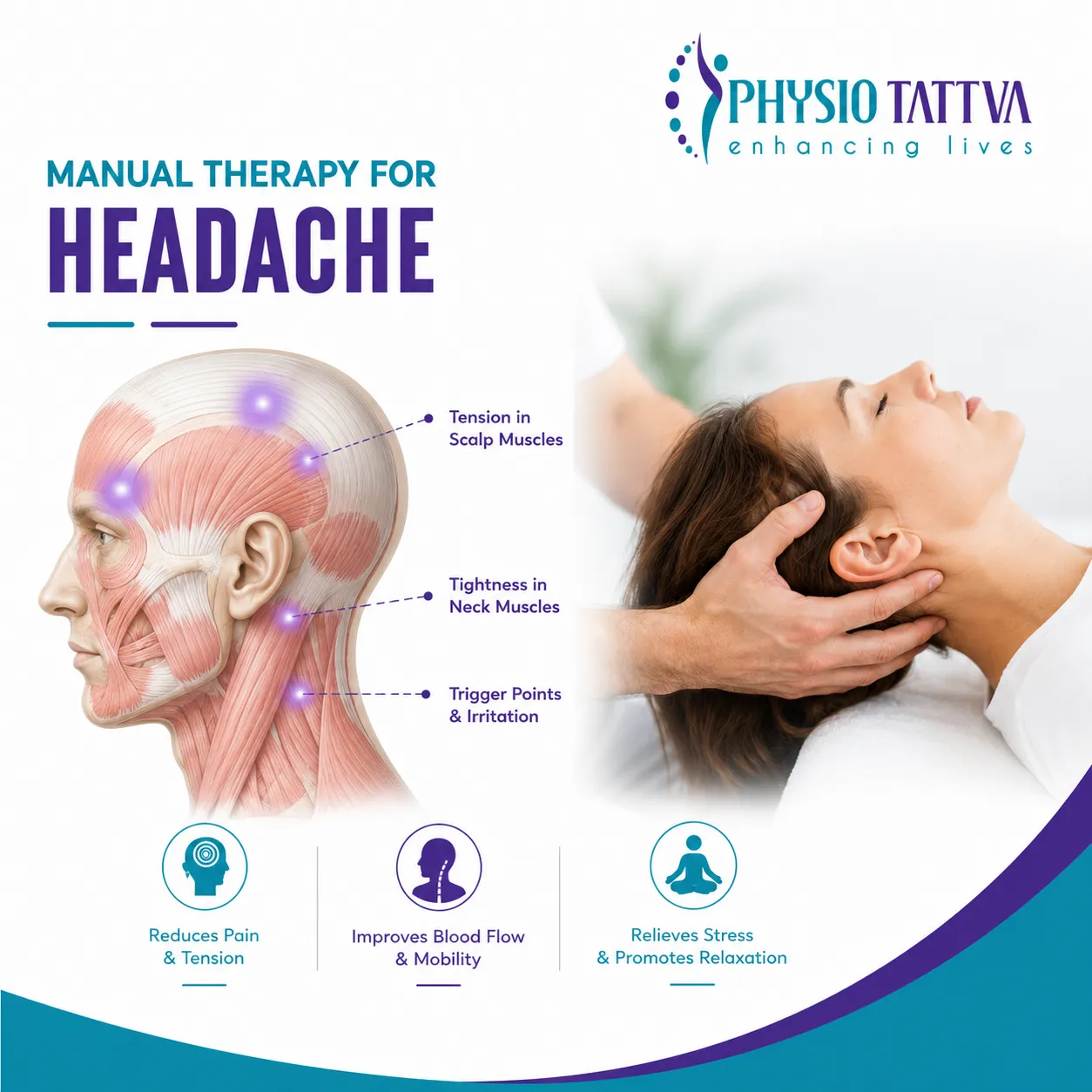
Which Headaches Respond Best to Manual Therapy?
While not a cure-all, manual therapy has strong evidence supporting its effectiveness for specific headache types, particularly those with a mechanical or musculoskeletal origin.
Cervicogenic Headaches
This is the "star player" for manual therapy. A cervicogenic headache is a referred pain, meaning the pain is felt in the head, but the problem originates in the joints, discs, or muscles of the neck.
- Symptoms: One-sided head pain, often starting at the back of the head and moving forward, triggered by neck movements or sustained postures (like sitting at a computer).
- How Manual Therapy Helps: By directly addressing the stiff joints and tight muscles in the cervical spine, manual therapy can significantly reduce or even eliminate cervicogenic headaches.
Tension-Type Headaches
The most common type of headache, often described as a dull, aching "band" around the head. While stress is a major trigger, sustained muscle contraction in the neck, scalp, and jaw is a primary physical driver.
- Symptoms: Bilateral (both sides) pressure or tightness, often with tenderness in the neck and shoulder muscles.
- How Manual Therapy Helps: Techniques like soft tissue mobilization and trigger point therapy can release the chronic muscle tension in the suboccipital muscles (at the base of theskull), upper trapezius, and other neck muscles that contribute to these headaches.
Migraines
Migraines are complex neurological events, but manual therapy can play a crucial supportive role. For many migraine sufferers, neck pain and stiffness can be both a trigger for a migraine attack and a symptom of one.
- Symptoms: Throbbing pain, often one-sided, with sensitivity to light and sound, nausea.
- How Manual Therapy Helps: Manual therapy doesn't "cure" migraines, but it can:
- Decrease the frequency and intensity of attacks by treating associated neck dysfunction (a common migraine trigger).
- Provide relief from the neck pain and stiffness that often accompany a migraine.
Common Manual Therapy Techniques for Headaches
A practitioner will use a combination of techniques based on your specific assessment. These techniques aim to reduce pain, improve mobility, and address the root causes of headaches. Here are some of the most common methods used:
- Soft Tissue Mobilization & Massage: This includes various massage techniques and myofascial release to reduce muscle tension, break up adhesions, and release painful trigger points in the neck, shoulders, and base of the skull.
- Joint Mobilization: Gentle, passive, and repetitive movements applied to a specific spinal joint to restore its natural gliding motion, reduce stiffness, and decrease pain signals.
- Joint Manipulation / Thrust: A high-velocity, low-amplitude (HVLA) thrust applied to a specific joint to provide a rapid stretch, restore motion, and reset nerve signaling. This is often associated with a "popping" sound and is commonly performed by chiropractors and specially trained physical therapists.
- Muscle Energy Techniques (MET): A technique where the patient actively contracts a muscle against the practitioner's resistance. This helps to gently lengthen tight muscles and improve joint mobility.
- Postural Education & Therapeutic Exercise: A crucial component. The therapist will teach you exercises to strengthen weak muscles and stretch tight ones, as well as provide advice on ergonomic setups to prevent recurrence.
These techniques, when combined, can offer effective relief from headache symptoms and improve overall well-being.
Finding a Qualified Practitioner
To ensure effective treatment, it's essential to seek a licensed professional with specific training and experience in treating headaches and spinal conditions. The right practitioner will assess your individual needs and use tailored techniques to address your pain. Here are some options to consider:
- Physical Therapists (PTs): Especially those with advanced certifications like OCS (Orthopaedic Clinical Specialist) or FAAOMPT (Fellow of the American Academy of Orthopaedic Manual Physical Therapists). These professionals are skilled in diagnosing and treating musculoskeletal disorders that contribute to headaches.
- Chiropractors (DCs): Experts in spinal manipulation. Look for one who uses an evidence-based, holistic approach that includes soft tissue work, joint mobilization, and exercise therapy to treat headaches from a structural perspective.
- Osteopathic Physicians (DOs): Trained as medical doctors with additional expertise in the musculoskeletal system and hands-on osteopathic manipulative treatment (OMT). They provide a comprehensive, whole-body approach to pain management, with a focus on restoring balance to the spine and tissues.
Choosing a qualified professional with the right expertise ensures that you receive the most appropriate and effective treatment for your headache.
Find Effective Headache Relief with Personalised Treatment at Physiotattva
If you suffer from persistent headaches, especially with accompanying neck pain or stiffness, manual therapy can provide a highly effective, evidence-based treatment option. By targeting the mechanical root causes in your neck and upper back, it offers long-term relief and equips you with the tools to manage your symptoms independently. Consulting with a qualified physical therapist or chiropractor will ensure a proper diagnosis and help determine if manual therapy is the right approach for you.
At Physiotattva physiotherapy clinics in Bangalore and Hyderabad, you receive personalised care tailored to your specific needs, ensuring effective results and comfort throughout your journey to recovery.
Don’t wait to start your recovery! Get in touch with Physiotattva for more details! Contact us at +91 89510 47001.
Why Physiotattva?
22+
50,000+
95%
200+
25+
4.8
Cities We Serve

Bangalore
At Physio Tattva, we are committed to bring access to quality physio care through ultra-modern clinics and high-skilled practitioners to all.
.webp)
Hyderabad
At Physio Tattva, we are committed to bring access to quality physio care through ultra-modern clinics and high-skilled practitioners to all.
.webp)
Vishakhapatnam
At Physio Tattva, we are committed to bring access to quality physio care through ultra-modern clinics and high-skilled practitioners to all.
Core Treatments
Core Conditions
Core Symptoms
Frequently Asked Questions
Is manual therapy painful?

How many manual therapy sessions will I need?
Is manual therapy for headaches safe?
Can I get manual therapy while I have a headache?



%20(1)-p-3200.jpeg)


.jpg)
.webp)
.webp)
.webp)