


Kinesio Taping Therapy
Kinesio Taping Therapy for Foot Pain
Kinesio taping therapy provides targeted support and pain relief for foot conditions such as plantar fasciitis and Achilles tendonitis. By promoting circulation and reducing muscle tension, this non-invasive technique accelerates healing. Get back on your feet with Kinesio taping’s powerful benefits for foot pain relief.
Foot pain can be debilitating, affecting everything from your daily walk to your athletic performance. While rest, proper footwear, and stretching are crucial, Kinesio taping therapy for foot pain offers a powerful, non-invasive method to manage discomfort, support injured tissues, and accelerate recovery.
Whether you're dealing with plantar fasciitis, Achilles tendonitis, or general foot fatigue, understanding how to properly apply Kinesio tape (often called KT tape) can provide significant relief. This article will walk you through the science, benefits, and specific taping techniques for common foot ailments.
How Does Kinesio Taping Work for Foot Pain?
Unlike rigid athletic tape that immobilizes a joint, Kinesio tape is elastic and designed to mimic the skin's flexibility. When applied correctly, it works in several ways:
- Decompression and Pain Relief: The tape gently lifts the skin, creating a microscopic space between the skin and the underlying tissues. This reduces pressure on pain receptors, nerves, and blood vessels, providing immediate pain relief.
- Increased Circulation and Reduced Swelling: By creating this space, the tape improves blood flow and lymphatic drainage. This helps flush out inflammatory byproducts and reduces swelling (edema).
- Structural and Muscular Support: Kinesio tape provides light support to weak or injured muscles and joints without restricting their range of motion. It can help offload stress from overused structures like the plantar fascia or Achilles tendon.
- Improved Proprioception: The tape provides continuous sensory feedback to your brain about your foot's position. This enhanced body awareness (proprioception) can help you unconsciously correct your posture and movement patterns, preventing further injury.
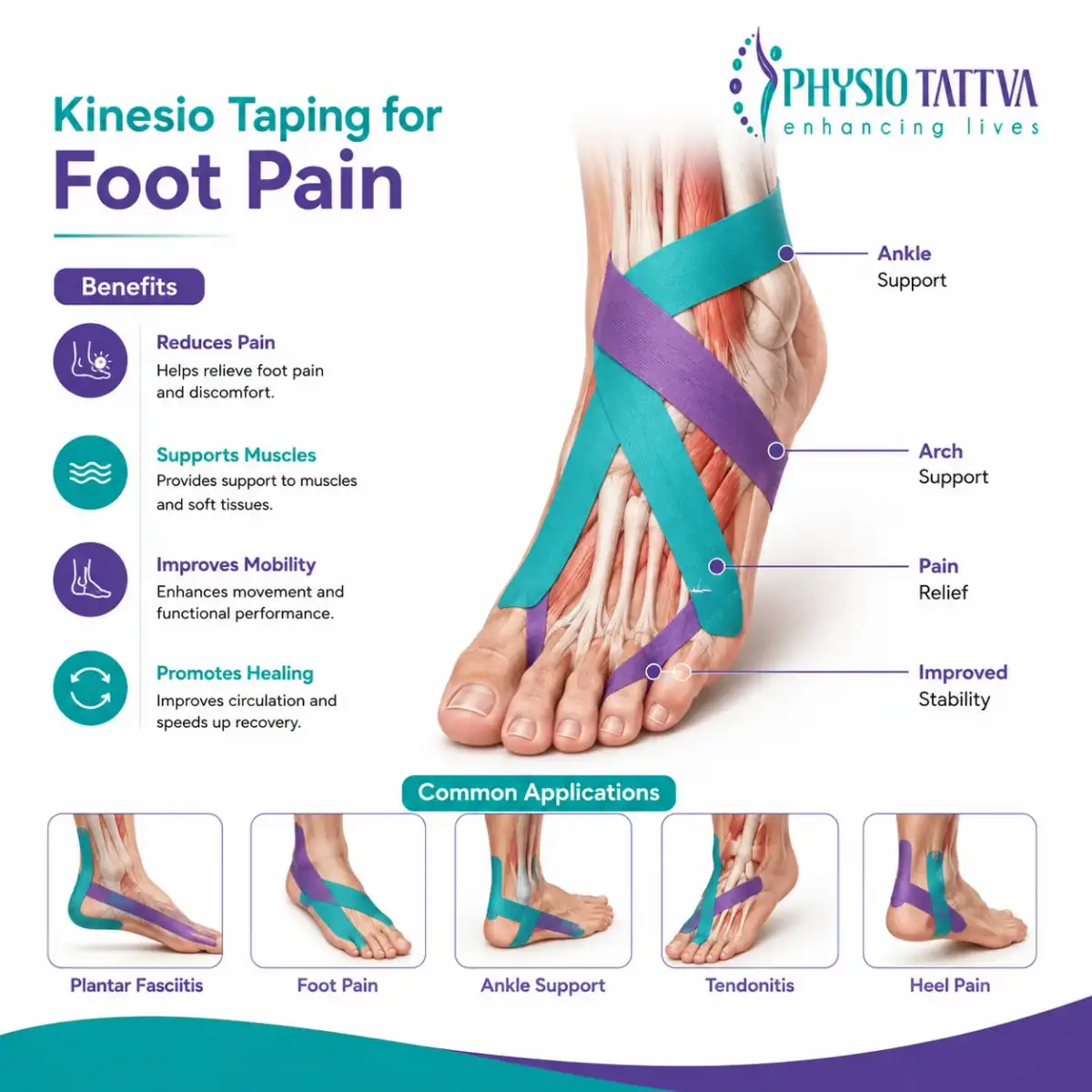
Specific Taping Applications for Common Foot Conditions
Before applying Kinesio tape to address foot conditions, it’s crucial to ensure proper preparation. Follow these essential steps to achieve the best results and ensure the tape adheres effectively:
- Clean and Dry: The skin must be free of oils, lotions, and sweat. Use rubbing alcohol to clean the area.
- Trim Hair: For best adhesion, trim any dense hair in the application area.
- Round the Corners: After cutting your tape strips, round the edges with scissors. This prevents the corners from catching on clothing and peeling off prematurely.
- Create Anchors: The first and last inch of any tape strip should be applied with zero stretch. This is called the anchor.
- Activate the Adhesive: After applying the tape, rub it briskly for several seconds to activate the heat-sensitive adhesive.
This preparation ensures the tape is applied correctly, offering optimal support for foot conditions like plantar fasciitis, tendonitis, and other common foot issues.
Taping for Plantar Fasciitis (Heel and Arch Pain)
This is one of the most effective uses of Kinesio taping therapy for foot pain. This technique helps lift the arch and offload the plantar fascia. You will need two I-strips of Kinesio tape for the application.
Step 1 (Support Strip)
Begin by positioning yourself comfortably for the taping application. Sit with your affected foot resting on your opposite knee, gently pulling your toes back to stretch the bottom of your foot. This stretch will help you apply the tape more effectively along the arch.
- Sit with your affected foot resting on your opposite knee, gently pulling your toes back to stretch the bottom of your foot.
- Measure a strip from the ball of your foot to your heel. Cut and round the corners.
- Anchor the tape without stretch on the ball of your foot, just behind the toes.
- Apply the rest of the strip with a 25-50% stretch along the arch, ending by laying the final anchor on your heel with no stretch.
Step 2 (Decompression Strip)
For this step, you'll focus on relieving pressure from the most painful part of your arch. By applying a decompression strip, you can help reduce tension in the area that’s causing discomfort.
- Measure a second strip to go across the most painful part of your arch.
- Tear the paper backing in the middle of the strip.
- Apply the center of the tape directly over the point of maximum pain with a 50-75% stretch.
- Lay the two ends down (like wings) across the top of your foot with zero stretch.
Taping for Achilles Tendonitis
This taping technique helps reduce strain on the Achilles tendon, which connects the calf muscle to the heel bone. By providing support and alleviating pressure, it can help manage symptoms of Achilles tendonitis and promote recovery.
Step 1 (Y-Strip)
In this step, you'll apply a Y-shaped tape strip to provide support and stability to your Achilles tendon.
- Measure the tape: Measure the tape from the bottom of your heel to the middle of your calf muscle. Cut the tape lengthwise, leaving a 2-inch base to create the "Y" shape.
- Anchor the base: Point your foot downward slightly (plantarflexion) and anchor the base of the "Y" on the bottom of your heel with no stretch.
- Stretch the calf: Gently flex your foot upward (dorsiflexion) to stretch the calf muscle.
- Apply the tails: Apply the two "tails" of the Y-strip around either side of your calf muscle with a 15-25% stretch, ensuring that you lay the ends down with no stretch.
This application helps support the Achilles tendon while allowing for proper muscle movement.
Step 2 (Decompression I-Strip)
This step targets the most painful area of the Achilles tendon to provide direct decompression and relief.
- Cut and prepare the I-strip: Cut a short I-strip, and tear the backing in the center to prepare for application.
- Position the strip: Apply the I-strip horizontally across the most painful point of the Achilles tendon with a 50-75% stretch.
- Lay the ends down: Lay the ends of the I-strip down with no stretch to complete the application.
By decompressing the Achilles tendon, this step aims to alleviate pain and reduce inflammation in the affected area.
Taping for General Arch Support and Foot Fatigue
This taping technique is designed to provide gentle support and a "lift" to the arch, making it ideal for individuals with flat feet or those who spend extended periods standing. It helps alleviate discomfort by promoting a natural arch position.
You will need: One I-strip.
To begin, you'll measure and apply the tape to support the arch of your foot.
Measure a strip long enough to wrap from the outside of your midfoot, under the arch, to the inside of your midfoot.
- Sit with your foot flat on the floor in a neutral position.
- Tear the paper backing in the center of the strip.
- Anchor the tape on the top/outside of your foot.
- Apply a 50% stretch as you pull the tape under your arch, providing a lifting sensation.
- Anchor the final end on the top/inside of the foot with no stretch.
Taping for Ankle Stability (Post-Sprain Support)
This taping technique is designed to provide proprioceptive feedback, which helps prevent re-injury and offers a sense of security after a minor ankle sprain. Stabilizing the ankle, it promotes a safe return to activity.
You will need: Two I-strips.
Step 1 (Stirrup)
The stirrup technique provides lateral support, helping to stabilize the ankle and reduce strain during movement.
- Measure the strip: Measure a strip of tape long enough to go from just above your inner ankle bone, under your heel, to just above your outer ankle bone.
- Anchor the tape: Anchor the tape on the inside of your ankle.
- Apply the stretch: Pull the tape down with a 50% stretch under the heel and up the outside of your ankle.
- Finish with the anchor: Lay the final anchor down with no stretch to provide lateral support.
This first step helps secure the ankle, reducing the risk of further injury during movement.
Step 2 (Heel Lock)
The heel lock adds extra stability by reinforcing the support around the heel and ankle joint.
- Prepare the second strip: Use a second, longer strip of tape.
- Anchor the tape: Anchor the tape on the front of your ankle.
- Wrap and lock the tape: Wrap the tape around the back of your heel and across the front again, creating a "figure 8" pattern.
- Apply the stretch: Apply the tape with a 25-50% stretch to ensure proper tension and stability.
This second step provides enhanced stability around the ankle, especially during activities that involve foot rotation or pivoting.
Important Precautions and Disclaimer for Kinesio Taping
While Kinesio taping therapy for foot pain is a safe and effective tool for many, it is not a cure-all. Always exercise caution and follow the precautions outlined below to ensure your safety and the best possible results.
- Do Not Use If: You have an open wound, an active infection, a known allergy to adhesives, deep vein thrombosis (DVT), or active cancer in the area.
- Remove Immediately: If you experience itching, rash, increased pain, or numbness, remove the tape.
- Seek Professional Advice: This guide is for informational purposes only. Severe pain, inability to bear weight, visible deformity, or pain that doesn't improve should be evaluated by a healthcare professional, such as a physical therapist, chiropodist, or physician. A professional can provide a proper diagnosis and ensure your taping technique is correct for your specific condition.
By integrating Kinesio taping into your recovery plan, you can effectively manage foot pain, support healing tissues, and get back on your feet faster.
Effective Foot Pain Relief with Kinesio Taping at Physiotattva
Kinesio taping offers a powerful, non-invasive solution for managing foot pain and supporting recovery from common foot conditions like plantar fasciitis, Achilles tendonitis, and general foot fatigue. By applying the tape correctly, you can reduce pain, enhance circulation, support weak or injured tissues, and prevent further injury. This technique provides a versatile, drug-free option for anyone looking to manage foot pain while maintaining mobility. However, it's essential to follow proper application guidelines and seek professional advice for severe conditions. Integrating Kinesio taping into your recovery plan can help accelerate healing and get you back on your feet faster, allowing you to stay active and comfortable.
At Physiotattva physiotherapy clinics in Bangalore and Hyderabad, you receive personalised care tailored to your specific needs, ensuring effective results and comfort throughout your journey to recovery.
Don’t wait to start your recovery! Get in touch with Physiotattva for more details! Contact us at +91 89510 47001.
Answers
Frequently asked questions
Start with an assessment
We measure what you've lost, find the cause, and set out a plan with a target and a timeline.
- Call us+91 89510 47001
- Email usinfo@physiotattva.com
- Visit a clinic25 clinics across Bangalore, Hyderabad and Visakhapatnam
- Or stay homePhysiotherapy at home