


Dry Needling Therapy
Dry Needling Therapy for Neck Pain
Dry needling therapy for neck pain targets tight trigger points to release muscle tension, ease stiffness, and restore natural movement. By reducing inflammation and improving blood flow, this technique offers fast, effective relief for chronic tightness, tech neck, headaches, and postural strain. Experience smoother mobility and long-lasting comfort with expert dry needling treatment tailored to your needs.
Dry needling therapy for neck pain is a physiotherapy treatment that uses thin sterile needles to release trigger points in tight neck muscles. By relaxing these muscle knots, the therapy helps reduce pain, improve blood circulation, and restore normal neck movement.
It is commonly used for neck pain caused by poor posture, prolonged screen use (tech neck), muscle strain, or tension headaches. Dry needling is usually combined with stretching, posture correction, and strengthening exercises to support long-term relief and improve neck mobility.
What Is Dry Needling Therapy for Neck Pain?
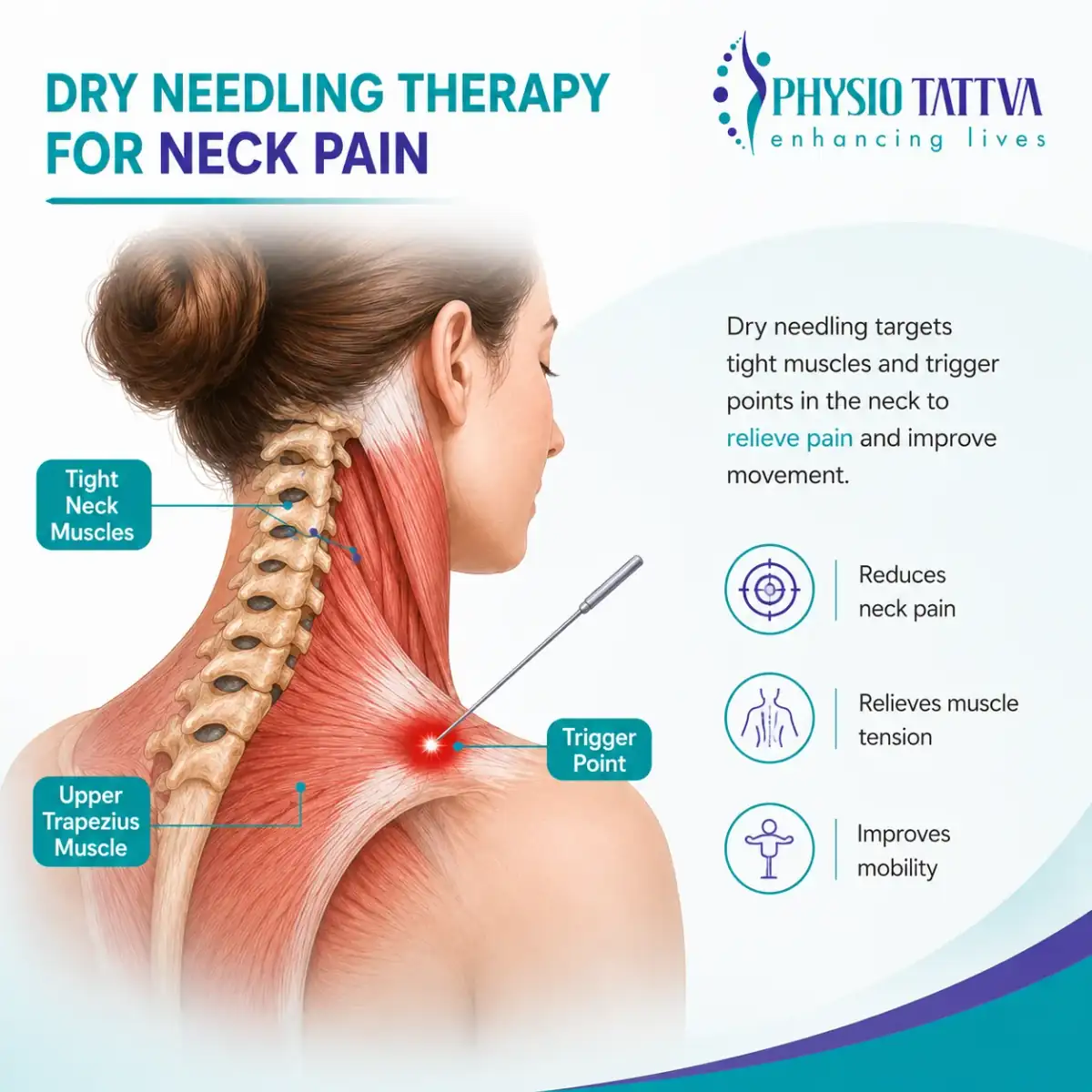
Dry needling therapy for neck pain is a physiotherapy treatment that uses thin, sterile needles inserted into tight muscle knots, called trigger points, in the neck. This technique helps release muscle tension, reduce pain, improve blood flow, and restore normal neck movement.
Trigger points commonly develop due to prolonged screen use, poor posture, stress, or muscle strain. When the needle stimulates the trigger point, the muscle may produce a brief twitch response, which helps the tight muscle fibres relax.
By releasing these trigger points, dry needling therapy can reduce neck stiffness, improve mobility, and relieve tension-related neck pain. Physiotherapists often combine it with stretching, posture correction, and strengthening exercises for better recovery.
How Effective Is Dry Needling Therapy for Neck Pain?
Dry needling therapy for neck pain can be effective in relieving muscle tightness and trigger points in the neck muscles. By inserting thin sterile needles into these tight muscle knots, the therapy helps reduce pain, improve blood circulation, decrease inflammation, and restore normal neck movement.
Dry needling therapy for neck pain provides several therapeutic benefits:
- Provides Quick Pain Relief: When the needle stimulates a trigger point, the tight muscle fibres release, helping reduce localised neck pain and discomfort.
- Improves Neck Mobility: As muscle tension decreases, it becomes easier to turn, bend, and tilt the neck without stiffness.
- Reduces Muscle Spasms: Dry needling helps interrupt the pain–spasm cycle in overactive neck muscles, allowing them to relax.
- Improves Blood Circulation: Needle stimulation increases blood flow to the treated muscles, delivering oxygen and nutrients that support healing.
- Helps Reduce Inflammation: Releasing trigger points may help decrease inflammatory chemicals within the muscle tissue.
- Enhances Physiotherapy Outcomes: When combined with stretching, manual therapy, and strengthening exercises, dry needling therapy can improve overall rehabilitation results.
When Is Dry Needling Therapy Recommended for Neck Pain?
Dry needling therapy is recommended for neck pain when the discomfort is caused by muscle tightness, trigger points, or postural strain. Physiotherapists may suggest this treatment to release tight muscles, reduce pain, and improve neck mobility when conservative treatments alone are not enough.
Dry needling therapy may be recommended in the following situations:
- Persistent neck pain: When neck pain continues despite rest, stretching, or basic physiotherapy.
- Muscle trigger points: When tight muscle knots in the neck cause localised or referred pain.
- Postural neck pain (tech neck): When prolonged screen use or poor posture leads to muscle tension.
- Tension headaches: When headaches originate from tight neck muscles.
- Muscle spasms or stiffness: When neck muscles remain tight and restrict normal movement.
- After minor injuries or strain: When muscle tightness develops following overuse or mild trauma.
- Limited neck mobility: When stiffness makes it difficult to turn or tilt the head comfortably.
Dry needling therapy helps address these conditions by releasing trigger points, relaxing tight muscles, and improving overall neck function.
What Happens During a Dry Needling Session for Neck Pain?
A dry needling session for neck pain involves inserting thin, sterile needles into tight muscle knots called trigger points in the neck. This helps release muscle tension, reduce pain, improve blood circulation, and restore normal neck movement.
A typical session usually includes:
- Assessment: The physiotherapist checks posture, neck movement, and muscle tightness to identify trigger points.
- Trigger Point Identification: Tight muscles in areas such as the trapezius or levator scapulae are located.
- Needle Insertion: Thin sterile needles are gently inserted into the trigger points.
- Muscle Twitch Response: A brief twitch may occur as the tight muscle releases.
- Needle Retention: The needles remain for a short time to allow the muscle to relax.
- Post-Treatment Care: Mild soreness may occur, and the therapist may recommend stretching or exercises.
A dry needling session for neck pain usually takes 15–30 minutes.
Is Dry Needling Safe for Neck Pain?
Dry needling therapy for neck pain is generally safe when performed by a trained and qualified physiotherapist. The treatment uses thin, sterile needles to target trigger points in neck muscles, helping relieve tension and pain while minimising risks when proper clinical techniques are followed.
Safety considerations for dry needling therapy include:
- Performed by trained professionals – Dry needling should be carried out by physiotherapists trained in musculoskeletal anatomy and trigger point therapy.
- Use of sterile, single-use needles – Practitioners use sterile disposable needles to minimise the risk of infection.
- Targeted muscle treatment – The technique focuses on specific muscle trigger points rather than joints or nerves.
- Quick recovery time – Mild soreness or reactions usually resolve within 24–48 hours.
What Precautions Should One Follow After Dry Needling Therapy for Neck Pain?
Dry needling helps release muscle tension, but proper care after treatment supports faster recovery and prevents irritation of the neck muscles.
- Avoid intense neck movements or heavy lifting for a few hours after treatment
- Perform gentle stretching only if recommended by your physiotherapist
- Apply a warm compress if mild soreness occurs
- Stay hydrated to support muscle recovery
- Follow prescribed posture correction and strengthening exercises
Clinical caution: A proper physiotherapy assessment is essential to identify the cause of neck pain and ensure dry needling therapy is safely integrated into a structured rehabilitation plan.
Are There Any Side Effects of Dry Needling for Neck Pain?
Dry needling therapy for neck pain is generally safe, but some individuals may experience mild and temporary side effects after treatment. These effects usually occur as the muscles respond to trigger point release and typically resolve within 24–48 hours.
Common side effects of dry needling therapy for neck pain include:
- Muscle soreness – Mild soreness in the treated muscles, similar to the feeling after a deep tissue massage.
- Minor bruising – Small bruises may appear around the needle insertion site.
- Temporary fatigue – Some individuals may feel slightly tired after the treatment session.
- Local tenderness – The treated area may feel sensitive or tender for a short period.
These side effects are usually mild and short-lived. If symptoms persist or worsen, patients should consult their physiotherapist for guidance.
Am I a Good Candidate for Dry Needling Therapy for Neck Pain?
You may be a good candidate for dry needling therapy for neck pain if your symptoms are caused by muscle tightness, trigger points, or postural strain. A physiotherapist usually evaluates your condition to determine whether this treatment is appropriate for your neck pain.
Dry needling therapy may be suitable for people who:
- Experience chronic neck pain or stiffness caused by tight neck muscles.
- Have trigger points or muscle knots in the neck, shoulders, or upper back.
- Develop neck pain from poor posture or prolonged screen use, often called “tech neck.”
- Suffer from tension headaches linked to neck muscle tightness.
- Have neck pain after minor injuries or muscle strain.
- Feel limited neck mobility, making it difficult to turn or tilt the head comfortably.
- Have not achieved sufficient relief from stretching, medication, or basic physiotherapy alone.
A qualified physiotherapist will assess your medical history, symptoms, and muscle condition to determine whether dry needling therapy for neck pain is the right treatment option for you.
Who Should Avoid Dry Needling Therapy for Neck Pain?
Dry needling therapy for neck pain may not be suitable for everyone. People with certain medical conditions, infections, or medication risks may need to avoid this treatment. A physiotherapist will review your medical history to determine whether dry needling therapy for neck pain is safe and appropriate.
Dry needling therapy for neck pain may be avoided in the following cases:
- People with bleeding disorders – Conditions that affect blood clotting may increase the risk of bleeding or bruising after the procedure.
- People taking blood-thinning medications – Blood thinners may raise the likelihood of prolonged bleeding at the needle site.
- People with skin infections or open wounds – Dry needling should not be performed on areas with infection, inflammation, or damaged skin.
- Individuals with severe needle phobia – Fear of needles may make the treatment stressful or difficult to tolerate.
- People with certain medical conditions – Conditions such as uncontrolled diabetes, severe neuropathy, immune system disorders, or advanced vascular disease may require alternative physiotherapy treatments instead of dry needling.
How Long Does It Take to Recover After Dry Needling Therapy for Neck Pain?
Recovery after dry needling therapy for neck pain is usually quick. Most people experience mild soreness in the treated muscles, which typically resolves within 24–48 hours as the muscles relax and begin to heal.
Recovery experiences may include:
- Mild muscle soreness – The treated neck muscles may feel slightly sore, similar to post-exercise discomfort.
- Improved neck movement – Many people notice better neck mobility once the muscle tension begins to release.
- Gradual pain relief – Neck pain may reduce over the next one to two days as the muscles recover.
- Faster recovery with physiotherapy exercises – Stretching and strengthening exercises recommended by a physiotherapist can support quicker recovery and long-term relief.
If soreness lasts longer than expected or unusual symptoms occur, it is advisable to consult your physiotherapist for guidance.
How to Choose the Right Dry Needling Therapist for Neck Pain?
Choosing the right dry needling therapist for neck pain helps ensure the treatment is safe, precise, and effective for relieving muscle tension and trigger points.
When selecting a dry needling therapist, consider the following:
- Professional qualifications – Choose a licensed physiotherapist trained in dry needling and musculoskeletal therapy.
- Experience treating neck pain – Therapists with experience in cervical muscle conditions can better target trigger points.
- Comprehensive clinical assessment – A good therapist evaluates posture, movement, and muscle tightness before starting treatment.
- Integrated treatment approach – Dry needling should be combined with exercises, posture correction, and physiotherapy techniques.
- Proper hygiene and safety protocols – Ensure the therapist uses sterile, single-use needles and follows clinical safety practices.
Reviving Neck Comfort and Strength with Dry Needling at Physiotattva
Dry needling therapy for neck pain can help relieve persistent muscle tension and improve neck mobility by targeting trigger points in tight muscles. This evidence-based physiotherapy technique focuses on addressing the root cause of pain rather than only managing symptoms.
At Physiotattva, dry needling therapy is often integrated into a comprehensive neck pain treatment plan that may include manual therapy, posture correction, and customised physiotherapy exercises. This combined approach helps reduce pain, restore muscle balance, and support long-term neck function so you can return to daily activities with greater comfort and confidence.
At Physiotattva physiotherapy clinics in Bangalore, Hyderabad, and Visakhapatnam, you receive personalised care tailored to your specific needs, ensuring effective results and comfort throughout your journey to recovery.
Don’t wait to start your recovery! Get in touch with Physiotattva for more details! Contact us at +91 89510 47001.
Key Takeaways:
- Dry needling therapy for neck pain targets trigger points in tight neck muscles to help reduce pain and tension.
- The treatment may help improve neck mobility and make turning or tilting the head more comfortable.
- It is commonly used for neck pain caused by poor posture, muscle strain, or prolonged screen use.
- Dry needling can improve blood circulation and help relax overactive neck muscles.
- The therapy is usually combined with stretching, posture correction, and strengthening exercises.
- A physiotherapy assessment helps determine whether dry needling is suitable for your neck pain condition.
Answers
Frequently asked questions
Start with an assessment
We measure what you've lost, find the cause, and set out a plan with a target and a timeline.
- Call us+91 89510 47001
- Email usinfo@physiotattva.com
- Visit a clinic24 clinics across Bangalore, Hyderabad and Visakhapatnam
- Or stay homePhysiotherapy at home