


Aqua Therapy
Aqua Therapy for Neck Pain: Gentle Cervical Rehabilitation in Water
Discover the power of aqua therapy for neck pain at Physiotattva. Our expert physiotherapists use specialised water-based exercises to help reduce pain, increase flexibility, and promote faster recovery. Whether you’re suffering from chronic neck pain or stiffness, aqua therapy offers a gentle, effective solution.
Aqua therapy, or hydrotherapy, is a specialised form of physiotherapy conducted in a warm water pool to treat pain and musculoskeletal conditions. For individuals with neck pain caused by muscle strain, cervical spondylosis, poor posture, or disc issues, it offers a gentle yet effective path to recovery. This low-impact cervical rehabilitation uses the unique properties of water to reduce stiffness, alleviate pain, and restore mobility without stressing the sensitive neck joints.
What Causes Neck Pain? Symptoms and Risk Factors Explained
Neck pain is a common complaint often resulting from strain on the cervical spine. Key contributing factors include:
- Poor posture, especially "text neck" from phone and computer use
- Degenerative conditions like cervical spondylosis or arthritis
- Muscle tension from stress or awkward sleeping positions
- Injuries such as whiplash from accidents or sports
What is Aqua Therapy? Clinical Hydrotherapy for Cervical Spine Care
Aqua therapy, often called hydrotherapy, is a specialised form of physical therapy performed in a purpose-built, temperature-controlled pool. It should not be confused with recreational swimming. This is a clinical, goal-oriented treatment prescribed and supervised by a trained physiotherapist. Your therapist guides you through specific movements and exercises designed to address your unique condition. The water's natural warmth and buoyancy create an exceptionally safe and supportive environment for rehabilitation, which is ideal for treating sensitive areas like the neck and promoting healing without strain.
How Aqua Therapy Reduces Cervical Spine Stress and Pain
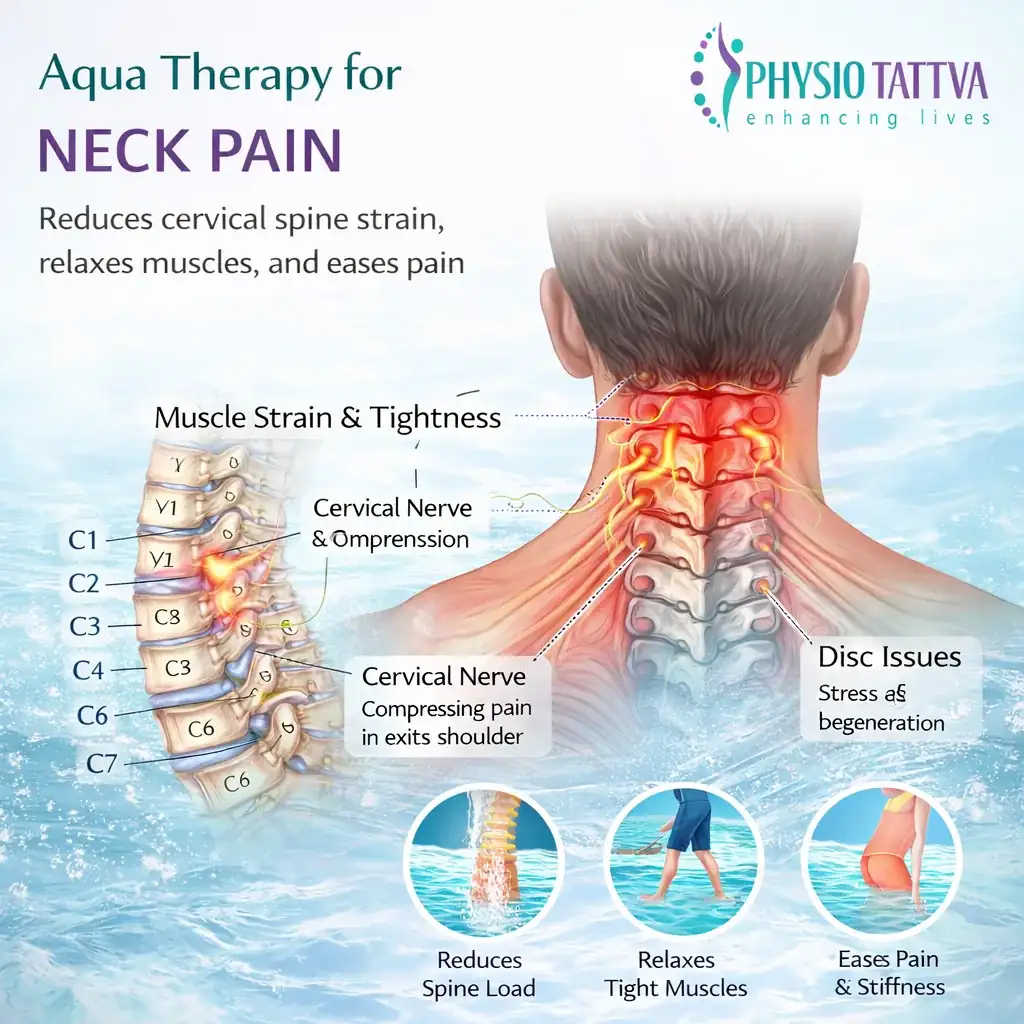
The science behind aquatic physical therapy is what makes it so effective for cervical pain. Water provides a therapeutic medium that is impossible to replicate on land, thanks to four key properties working in harmony.
How Buoyancy Reduces Cervical Joint Compression?
- Water provides natural support, reducing the effective weight of your head and upper body.
- This offloading effect decreases compression on the cervical vertebrae and intervertebral discs.
- It allows you to move your neck more freely with significantly less pain.
How Warm Water Relaxes Tight Neck Muscles?
- The therapeutic pool's warm temperature increases blood flow to tense neck and shoulder muscles.
- This enhanced circulation helps reduce muscle spasms, alleviate stiffness, and promote relaxation.
- It prepares the muscles for gentle stretching and strengthening exercises.
How Water Resistance Builds Neck and Shoulder Strength?
- Water provides gentle, consistent resistance from all directions.
- This allows for controlled strengthening of the deep neck stabilisers and supporting shoulder muscles.
- Strength is built gradually without the need for weights, protecting the joints from strain.
Clinical Benefits of Aqua Therapy for Neck Pain
Patients undergoing hydrotherapy for neck pain can expect a range of positive outcomes that address both the symptoms and the root cause of their discomfort.
Reduces Neck Pain and Muscle Tension
The powerful combination of warmth and buoyancy helps to break the persistent pain-spasm cycle common in chronic neck conditions like physiotherapy for stiff neck. As muscles relax in the warm water and the spine is off-loaded, pain signals to the brain are reduced, offering profound relief.
Improves Cervical Range of Motion Safely
The supportive, buoyant environment allows you to perform gentle movements—such as flexion (chin to chest), extension, and rotation—that may be too painful or difficult to attempt on land. This progressive movement helps restore your neck's natural mobility safely.
Enables Gentle Strengthening of Cervical Stabilisers
Aqua therapy enables you to build strength in the weak postural muscles that support your neck and upper back. Strengthening these muscles is crucial for long-term health and preventing future flare-ups, and water allows you to do so without compressing the spine.
Reduces Stress on Cervical Joints During Movement
For individuals with conditions like cervical spondylosis (neck arthritis) or degenerative disc disease, aquatic therapy is an ideal treatment. All exercises are performed in a non-weight-bearing setting, which protects the joints from impact and stress while still promoting strength and mobility.
Evidence Based Aqua Therapy Exercises for Neck Pain
A typical hydrotherapy for neck session will involve a series of prescribed movements tailored to your needs. Here are a few examples of what you might do.
Disclaimer: Please note that these exercises should only be performed under the direct supervision of a qualified physiotherapist who can tailor them to your specific condition. Do not attempt them without professional guidance.
- Neck Range of Motion: While standing shoulder-deep in water, you may be guided to gently nod your head ("yes"), slowly shake your head ("no"), and carefully tilt your ear towards your shoulder. The water’s resistance makes the movement both gentle and effective.
- Shoulder Shrugs & Rolls: Stand comfortably and slowly shrug your shoulders up towards your ears, hold for a moment, and then release. Follow this by rolling your shoulders gently backward and down to release tension in the upper trapezius muscles, which are often tight in people with neck pain.
- Scapular Retraction: With your arms relaxed at your sides, gently squeeze your shoulder blades together as if you're trying to hold a pencil between them. The water’s resistance will challenge your postural muscles.
- Walking in Water: Simple forward and backward walking in chest-deep water is a foundational exercise. It encourages an upright posture and engages the core muscles, which are essential for supporting the spine and maintaining good neck health.
Who is an Ideal Candidate for Aqua Therapy for Neck Pain?
Aqua therapy is particularly beneficial for individuals with:
- Chronic neck pain or stiffness
- Cervical spondylosis or osteoarthritis
- Pain related to poor posture
- Post-surgical or post-injury neck rehabilitation
Who Should Avoid Aqua Therapy? Safety and Contraindications
While generally safe, aqua therapy may not be suitable for everyone. You should avoid it if you have:
- Open wounds, skin infections, or rashes
- Fever or infectious diseases
- Severe cardiac or respiratory conditions
- Bowel or bladder incontinence
Why Choose Physiotattva for Neck Pain Rehabilitation?
At Physiotattva, we are proud to offer advanced aqua therapy for neck pain as a core component of our personalised treatment plans. Our certified physiotherapists are experts in using our state-of-the-art therapeutic pools to create a healing, restorative environment for you. We focus on a holistic approach, aiming not just to treat your symptoms but to identify and address the root cause of your neck pain for lasting relief.
At Physiotattva physiotherapy clinics in Bangalore and Hyderabad, you receive personalised care tailored to your specific needs, ensuring effective results and comfort throughout your journey to recovery.
Don’t wait to start your recovery! Get in touch with Physiotattva for more details! Contact us at +91 89510 47001.
Answers
Frequently asked questions
Conditions
Related conditions

Symptoms
Related symptoms

Treatments
Related treatments

Therapies
Related therapies
 Health16 June 2026
Learn about the benefits, treatments, and research studies related to aquatic therapy and hydrotherapy.
 Neck Pain26 January 2026
Neck pains are one of the most common types of injury or discomfort in the lower portion of the head, at the beginning of the spinal cord, and can spread to the shoulder and neck. It can happen for a variety of causes. Here we talk about some excellent physiotherapy treatments for neck pain that can help relieve pain, relax muscles, and hasten the recovery.
 Neck Pain31 October 2025
Don't let neck pain hold you back. These 10 simple exercises can be done anytime, anywhere to improve neck strength. Give them a try, and feel better today!
 Health2 January 2025
Pregnancy and childbirth is a joyful time however this is also a period during which there are many rapid physical and hormonal changes in the mother’s body. It is a process that puts a huge strain on the mother’s body. Additionally, postpartum, her body once again changes in a much shorter span of time. If you are not mindful, you might harm your health in the long-run. You might even develop medical issues such as shoulder pain, lower back pain, etc. Physiotherapy can help you deal with your body’s changes during pregnancy.
Start with an assessment
We measure what you've lost, find the cause, and set out a plan with a target and a timeline.
- Call us+91 89510 47001
- Email usinfo@physiotattva.com
- Visit a clinic24 clinics across Bangalore, Hyderabad and Visakhapatnam
- Or stay homePhysiotherapy at home