




The intense pain, debilitating stiffness, and frustrating loss of motion from a frozen shoulder can bring your life to a standstill. Simple tasks like reaching for a cup, combing your hair, or getting dressed become monumental challenges. While traditional treatments like physical therapy and injections are common, many are now turning to a promising, non-invasive technology for relief: Pulsed Electromagnetic Fields (PEMF) therapy.
If you're looking for an alternative or complementary treatment to accelerate your recovery from frozen shoulder, this guide will explore how PEMF therapy works, the science behind its effectiveness, and what you can expect from the treatment.
What is Frozen Shoulder (Adhesive Capsulitis)?
Frozen shoulder, medically known as adhesive capsulitis, is a condition characterised by significant pain and stiffness in the shoulder joint. It occurs when the strong connective tissue surrounding the joint, called the shoulder capsule, becomes thick, stiff, and inflamed. This process leads to the formation of scar tissue (adhesions), which severely restricts the shoulder's range of motion.
The condition typically progresses through three stages:
- Freezing Stage: A gradual onset of pain. As the pain worsens, the shoulder loses range of motion.
- Frozen Stage: Pain may begin to diminish during this stage, but the shoulder becomes increasingly stiff, and using it becomes more difficult.
- Thawing Stage: The range of motion begins to improve. This can take anywhere from 6 months to 2 years to resolve fully.
What is Pulsed Electromagnetic Fields (PEMF) Therapy?
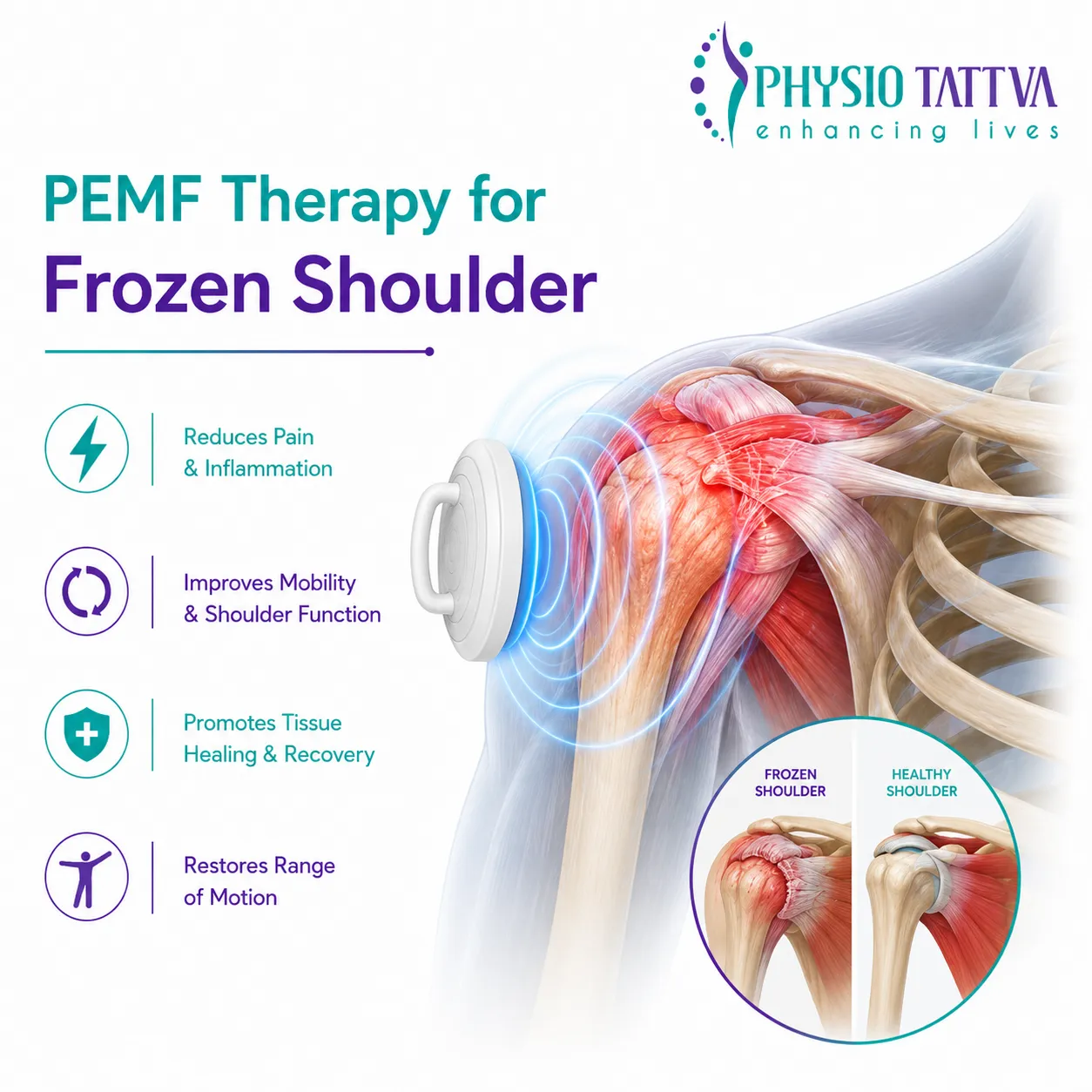
PEMF therapy is a non-invasive treatment that uses low-frequency electromagnetic fields pulsed through the body. Think of it as a "battery charger for your cells." Unlike static magnets, PEMF devices emit gentle, therapeutic energy fields that penetrate deep into tissues, stimulating cells and promoting the body's natural healing processes.
This technology is FDA-approved for several applications, including healing non-union bone fractures, and is widely used by physical therapists, chiropractors, and integrative health practitioners for pain management and tissue regeneration.
How Can PEMF Therapy Help with Frozen Shoulder? The Core Mechanisms
PEMF therapy addresses the root causes of frozen shoulder, inflammation and cellular dysfunction, without medication or invasive procedures. Here’s how it works at a cellular level to provide relief.
Reduces Pain and Inflammation
Inflammation is a primary driver of pain in the "freezing" stage of frozen shoulder. PEMF therapy has been shown to modulate the inflammatory response by influencing the production of inflammatory markers (cytokines). By reducing inflammation in the shoulder capsule, PEMF can significantly decrease pain levels, making daily activities and physical therapy more tolerable.
Enhances Blood Circulation
Proper blood flow is essential for healing. It delivers oxygen and vital nutrients to damaged tissues while carrying away metabolic waste. PEMF therapy improves microcirculation around the shoulder joint. This enhanced blood flow helps:
- Nourish the inflamed shoulder capsule.
- Reduce swelling and fluid buildup.
- Accelerate the removal of waste products that contribute to pain.
Stimulates Cellular Repair and Regeneration
At its core, frozen shoulder involves dysfunctional tissue. PEMF therapy energizes the cells by stimulating the production of Adenosine Triphosphate (ATP), the primary energy currency of the cell. With more energy, cells in the shoulder capsule can repair themselves more efficiently. This can help break down the fibrous adhesions and scar tissue that cause stiffness, promoting flexibility and regeneration of healthy tissue.
Improves Range of Motion
By tackling pain, inflammation, and stiffness simultaneously, PEMF therapy creates an ideal environment for restoring movement. When pain is reduced, you are better able to engage in the crucial physical therapy and stretching exercises needed to break up adhesions and regain your shoulder's range of motion. Many patients find that using PEMF before a physical therapy session makes the exercises more effective and less painful.
How PEMF Therapy Helps You Recover from Frozen Shoulder
While large-scale studies specifically on PEMF for frozen shoulder are still emerging, a growing body of research supports its use for related conditions like rotator cuff injuries, osteoarthritis, and general shoulder pain.
A study in the Journal of Orthopaedic Research and Therapy found that patients with shoulder impingement syndrome who received PEMF therapy in addition to standard physical therapy reported a faster reduction in pain and a greater improvement in function compared to the group receiving physical therapy alone.
Because the core mechanisms behind frozen shoulder, inflammation, fibrosis, stiffness, and persistent pain, are the very issues PEMF therapy targets at a cellular level, it is considered a logical, safe, and highly effective complementary treatment. When combined with physical therapy and guided mobility exercises, PEMF can help accelerate recovery and support a smoother return to pain-free movement.
Integrating PEMF with Traditional Treatments
PEMF therapy is not a “magic bullet,” but it is a powerful adjunctive therapy that delivers the best results when used as part of a broader, well-structured treatment plan. When combined with physical therapy, medication support, and consistent stretching routines, PEMF can enhance the overall recovery process and help patients progress more comfortably through each stage of frozen shoulder healing.
Physical Therapy
Using PEMF before physical therapy sessions helps reduce pain, relax stiff tissues, and improve blood flow around the joint. This creates an ideal environment for deeper, more effective stretching and strengthening exercises. Many patients find that PEMF sessions act like a gentle "warm-up" for the shoulder, enabling better mobility and reducing discomfort during manual therapy or joint mobilisations.
Medication
While medications like NSAIDs and cortisone injections are often prescribed to control inflammation and pain, PEMF therapy can naturally reduce these symptoms at a cellular level. Over time, this may lessen the dependency on painkillers and anti-inflammatory drugs. For patients who cannot tolerate medication due to side effects, PEMF offers a valuable non-pharmacological option for symptom relief.
Stretching
Daily stretching is essential for breaking up adhesions and restoring movement to a frozen shoulder. However, these exercises can feel difficult or painful, especially during the early phases. Using a home PEMF device before stretching helps ease stiffness, reduce resistance in the joint capsule, and make movements feel more achievable. This improved comfort often encourages better consistency, which is critical for long-term recovery.
By integrating PEMF therapy into a balanced treatment plan, patients can support tissue healing, manage pain more effectively, and accelerate their return to normal shoulder function.
What to Expect During a PEMF Session for Frozen Shoulder
A typical PEMF session is simple, painless, and designed to help you feel at ease throughout the process. Most people find the experience calming, making it an excellent addition to both in-clinic rehabilitation and at-home recovery routines. Here’s what usually happens during a session:
- Application: You will sit or lie down comfortably. A specialised applicator coil or pad will be placed over your affected shoulder.
- Sensation: Most people feel nothing at all. Some report a gentle warmth or a subtle tingling in the area.
- Duration: Sessions typically last between 20 to 60 minutes.
- Frequency: A treatment plan might involve several sessions per week for a few weeks, depending on the severity of your condition.
Move Toward Pain-Free Mobility with Expert Care at Physiotattva
Frozen shoulder can be a long and painful journey, but you don’t have to move through it passively or alone. Pulsed Electromagnetic Fields (PEMF) therapy offers a safe, non-invasive, and scientifically backed approach that actively supports your body’s natural healing process. By reducing inflammation, easing persistent pain, and stimulating deeper cellular repair, PEMF can help you loosen the stiffness, restore mobility, and regain confidence in your daily movements. When combined with guided physiotherapy and consistent stretching, PEMF therapy becomes a powerful tool in speeding up recovery and helping you return to a more comfortable, active life.
At Physiotattva physiotherapy clinics in Bangalore and Hyderabad, you receive personalised care tailored to your specific needs, ensuring effective results and comfort throughout your journey to recovery.
Don’t wait to start your recovery! Get in touch with Physiotattva for more details! Contact us at +91 89510 47001.
Why Physiotattva?
22+
50,000+
95%
200+
25+
4.8
Cities We Serve

Bangalore
At Physio Tattva, we are committed to bring access to quality physio care through ultra-modern clinics and high-skilled practitioners to all.
.webp)
Hyderabad
At Physio Tattva, we are committed to bring access to quality physio care through ultra-modern clinics and high-skilled practitioners to all.
.webp)
Vishakhapatnam
At Physio Tattva, we are committed to bring access to quality physio care through ultra-modern clinics and high-skilled practitioners to all.
Core Treatments
Core Conditions
Core Symptoms
Frequently Asked Questions
Is PEMF therapy safe for frozen shoulder?

How long does it take to see results with PEMF for frozen shoulder?
Can I use a PEMF mat at home for my shoulder?
Is PEMF therapy the same as TENS?






%20(1)-p-3200.jpeg)


.jpg)
.webp)
.webp)
.webp)