




When you suffer a sprain or a strain, your first instinct is often to reach for an ice pack and rest. While the R.I.C.E. (Rest, Ice, Compression, Elevation) protocol is a critical first step, it's only part of the recovery puzzle. To truly restore function, reduce pain, and prevent future injuries, a targeted, hands-on approach is needed. This is where manual therapy for sprains and strains comes in, offering a powerful, effective, and non-invasive way to guide your body's healing process.
This article will explain what manual therapy is, how it works, and which techniques are most effective for treating these common injuries.
Understanding the Difference Between Sprains and Strains
Understanding these two injuries makes it easier to identify the right treatment path. Here’s a quick breakdown:
Sprain
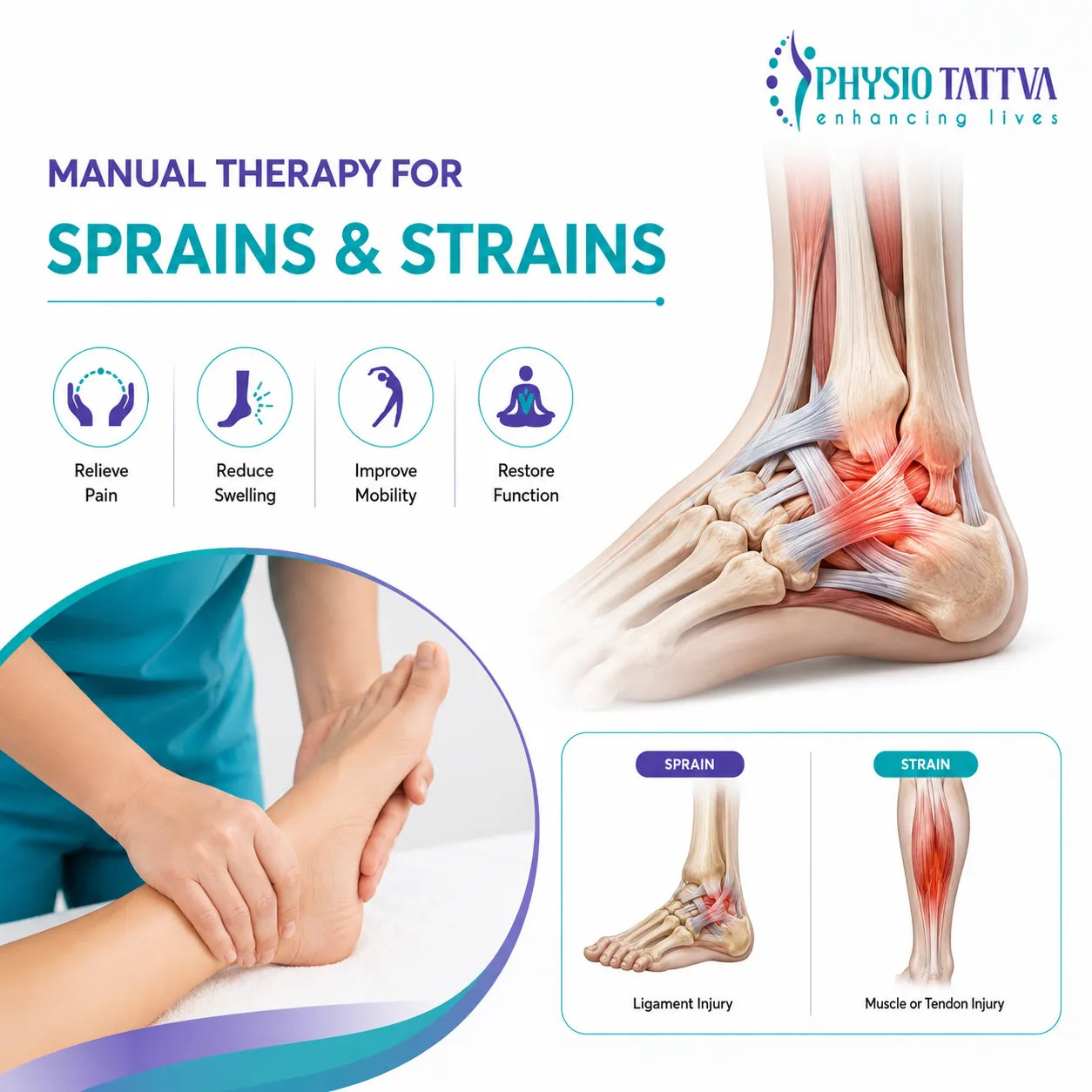
A sprain happens when the stabilising tissues around a joint are injured. Key points include:
- Involves overstretching or tearing of a ligament
- Ligaments connect bone to bone at a joint
- Common examples include ankle sprains, wrist sprains, and knee ligament injuries such as ACL or MCL sprains
Strain
A strain affects the tissues that help your muscles move the body. It typically involves:
- Overstretching or tearing of a muscle or tendon
- Tendons connect muscles to bones
- Common examples include hamstring strains, lower back strains, and rotator cuff strains
Shared Characteristics
Although different structures are involved, both injuries share similar patterns:
- Both affect soft tissues
- Both may range from mild (Grade I) to severe (Grade III)
- Manual therapy can be adapted for all grades, with techniques adjusted to match injury severity and healing stage
What is Manual Therapy?
Manual therapy is a specialized, hands-on clinical approach used by physical therapists, chiropractors, osteopathic physicians, and other trained healthcare professionals. It involves using skilled hand movements to diagnose and treat soft tissues and joint structures for the purpose of:
- Reducing pain
- Increasing range of motion (ROM)
- Reducing or eliminating soft tissue inflammation
- Improving tissue repair and stability
- Restoring normal function
The Key Benefits of Manual Therapy for Sprains and Strains
Why choose a hands-on approach? Manual therapy directly addresses the physiological changes that occur after an injury.
- Pain and Swelling Reduction: Gentle techniques can help move excess fluid and inflammatory byproducts away from the injury site (improving lymphatic drainage), which reduces swelling and alleviates pain.
- Restoration of Normal Motion: After an injury, joints can become stiff and muscles can "guard" the area, leading to a loss of mobility. Joint mobilization techniques restore the natural glide and roll of the joint, while soft tissue work releases muscle tightness.
- Breakdown of Scar Tissue (Adhesions): As tissues heal, the body lays down collagen fibers. Without proper guidance, these fibers can form a disorganized, restrictive patch known as scar tissue or an adhesion. Manual therapy helps break down these adhesions and encourages the new fibers to align correctly, creating strong, flexible, and functional tissue.
- Improved Circulation: By physically manipulating the soft tissues, manual therapy increases blood flow to the injured area. This delivers essential oxygen and nutrients needed for cellular repair, accelerating the healing process.
- Neuromuscular Re-education: Manual techniques can help "reset" the communication between your nerves and muscles, reducing painful muscle spasms and restoring proper muscle activation patterns.
Common Manual Therapy Techniques Used for Sprains and Strains
A therapist may combine several hands-on techniques depending on your injury, its severity, and the stage of healing.
Soft Tissue Mobilisation / Therapeutic Massage
What it is: A broad set of techniques involving controlled pressure and movement applied to muscles, fascia, tendons, and ligaments. This can include gentle effleurage to reduce swelling or deeper transverse friction massage to address scar tissue in a healing ligament.
Best for: Reducing muscle spasms, improving circulation, and managing scar tissue in both muscle strains and ligament sprains.
Myofascial Release
What it is: A method that uses slow, sustained pressure to release tension within the fascia, the connective tissue network surrounding muscles and organs. Injury often causes this tissue to become tight and restricted.
Best for: Easing widespread tightness around an injury, such as a hamstring strain where the entire back of the leg may feel stiff or “locked up.”
Joint Mobilisation
What it is: Gentle, controlled, passive movements of a joint performed at different speeds and depths. The therapist guides the joint through motions the patient may not be able to achieve on their own. This differs from high-velocity manipulations or “adjustments.”
Best for: Restoring comfortable, pain-free movement in joints that have become stiff after an injury, such as the ankle following a sprain.
Strain-Counterstrain
What it is: A very gentle technique in which the therapist positions the body for maximum comfort to release a tender point or muscle spasm. Holding this position helps “reset” the abnormal nerve-muscle feedback loop contributing to pain.
Best for: Highly sensitive or acute injuries where more direct techniques may be too uncomfortable.
Instrument-Assisted Soft Tissue Mobilisation (IASTM)
What it is: A treatment approach that uses specially designed stainless steel tools (such as Graston® or Astym® instruments) to identify and break down scar tissue and fascial restrictions.
Best for: Chronic issues or deeper, stubborn adhesions that are difficult to address using hands alone.
When Should You Get Manual Therapy for Sprain & Strain?
Manual therapy can be integrated at almost any stage of healing, but the approach changes.
Acute Phase (First 2–4 days):
- Very gentle, pain-free techniques
- Aimed at reducing swelling and inflammation
- Helps prevent early stiffness
Sub-acute Phase (Day 4 to 3 weeks):
- Introduction of targeted soft tissue and joint mobilisation
- Focus on restoring motion and flexibility
- Begins addressing early scar tissue formation
Chronic Phase (3+ weeks):
- More intensive, specific manual therapy techniques
- Targets mature scar tissue and lingering tightness
- Supports full strength, mobility, and return to activity
Finding a Qualified Expert for Manual Therapy
While a general massage can offer short-term relaxation, effective manual therapy for sprains and strains requires clinical skill and a deep understanding of how soft tissues heal. This is why it’s important to work with a licensed professional who can assess your injury, identify the root cause of pain, and design a structured treatment plan tailored to your stage of recovery. Qualified experts include:
- Physical Therapists (PTs): Trained to evaluate movement, restore function, and apply evidence-based manual techniques.
- Chiropractors (DCs): Skilled in joint and soft tissue mobilisation to improve alignment and reduce discomfort.
- Osteopathic Physicians (DOs): Medical doctors with specialised training in hands-on musculoskeletal treatment.
- Certified Athletic Trainers (ATCs): Experienced in managing sports-related injuries and guiding rehabilitation through manual therapy.
Working with the right professional ensures your treatment is safe, targeted, and optimised for long-term recovery.
Return to Pain-Free Movement with Physiotattva
Sprains and strains can disrupt daily life, and relying solely on rest may slow your progress, increase stiffness, and raise the risk of future injury. Integrating manual therapy into your recovery helps support your body’s natural healing process, easing pain, improving mobility, and restoring strength. With the guidance of a qualified therapist, you can return to your routine with greater confidence and long-term resilience.
At Physiotattva physiotherapy clinics in Bangalore and Hyderabad, you receive personalised care tailored to your specific needs, ensuring effective results and comfort throughout your journey to recovery.
Don’t wait to start your recovery! Get in touch with Physiotattva for more details! Contact us at +91 89510 47001.
Why Physiotattva?
22+
50,000+
95%
200+
25+
4.8
Cities We Serve

Bangalore
At Physio Tattva, we are committed to bring access to quality physio care through ultra-modern clinics and high-skilled practitioners to all.
.webp)
Hyderabad
At Physio Tattva, we are committed to bring access to quality physio care through ultra-modern clinics and high-skilled practitioners to all.
.webp)
Vishakhapatnam
At Physio Tattva, we are committed to bring access to quality physio care through ultra-modern clinics and high-skilled practitioners to all.
Core Treatments
Core Conditions
Core Symptoms
Frequently Asked Questions
What exactly is manual therapy for sprains and strains?

How soon after an injury can I start manual therapy?
What are the main benefits of manual therapy for sprains and strains?
Is manual therapy for an acute injury painful?
How is manual therapy different from just getting a regular massage?




%20(1)-p-3200.jpeg)


.jpg)
.webp)
.webp)
.webp)