




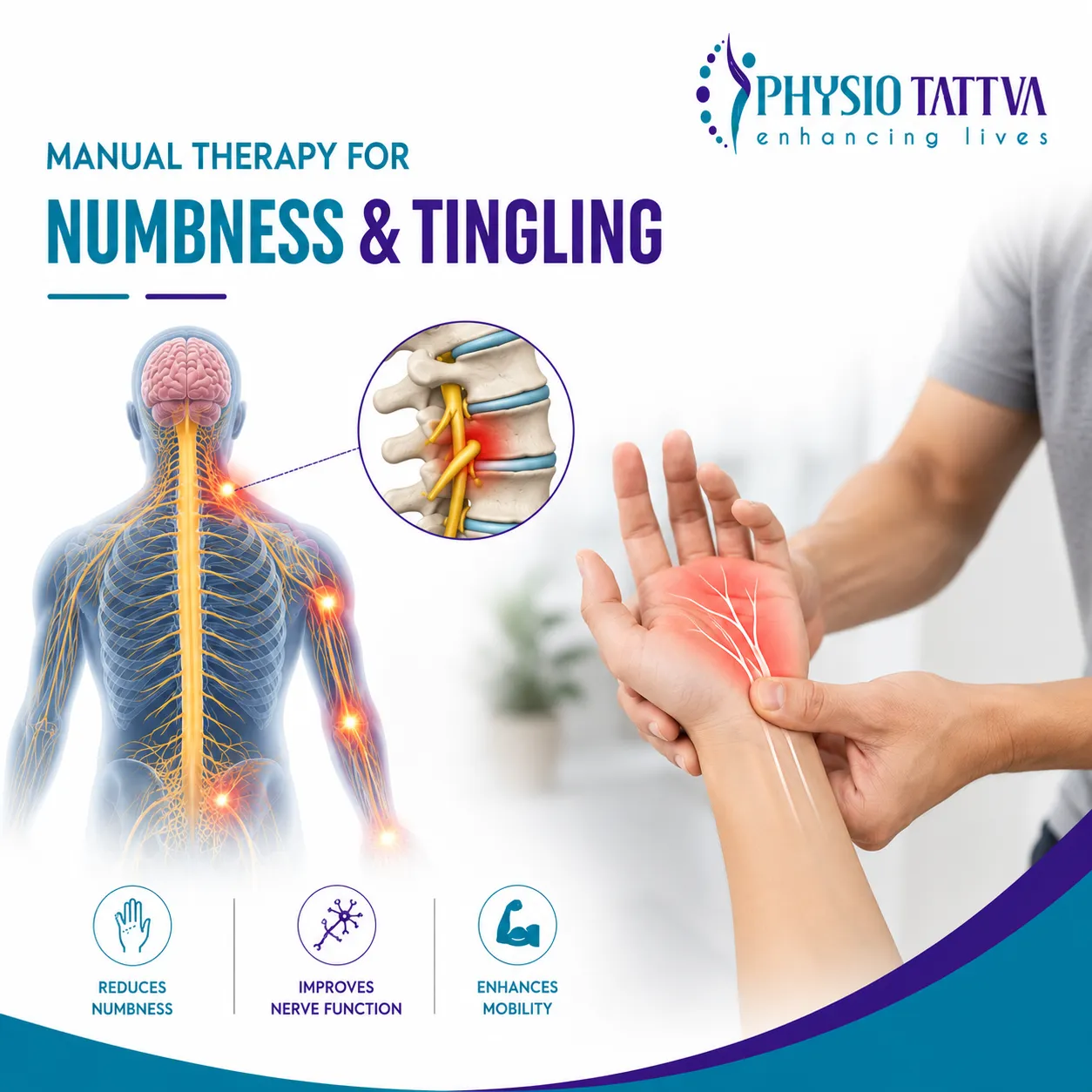
Numbness and tingling, medically known as paresthesia, are unsettling sensations that can range from mildly annoying to debilitating. While they can be symptoms of serious medical conditions, they are very often caused by musculoskeletal issues—specifically, the compression or irritation of nerves. This is where manual therapy can be a highly effective, non-invasive treatment solution.
What is Manual Therapy?
Manual therapy is a specialized, hands-on approach used by clinicians like physical therapists, chiropractors, and osteopaths to diagnose and treat musculoskeletal pain and dysfunction. It involves a variety of techniques that work directly on muscles, fascia, joints, and nerves to restore normal function and relieve symptoms.
How Does Manual Therapy Relieve Numbness and Tingling?
The primary goal of manual therapy for paresthesia is to take pressure off the affected nerve and restore its normal function. This is achieved through several mechanisms:
- Decompressing Nerves: Tight muscles, inflamed tendons, or restricted fascia can physically press on a nerve, disrupting its signal. Manual therapy techniques physically release this tension, creating space around the nerve.
- Improving Blood Flow: Nerves require a robust blood supply to function properly. Manual techniques like massage and mobilization increase local circulation, delivering vital oxygen and nutrients to the nerve and helping to flush out inflammatory byproducts.
- Restoring Joint Mobility: A stiff or misaligned joint (especially in the spine) can narrow the space where a nerve exits (the foramen). Joint mobilization and manipulation can restore proper movement, effectively "opening the window" for the nerve.
- Releasing Myofascial Restrictions: The fascial system is a web of connective tissue that surrounds every muscle and organ. When it becomes tight or "stuck," it can entrap nerves. Myofascial release techniques are designed to free these entrapped nerves.
- Improving Neurodynamics (Nerve Mobility): Nerves are not static; they need to be able to slide and glide as you move. Inflammation or compression can cause a nerve to become "stuck" in its pathway. Specific techniques, often called nerve flossing or neurodynamics, gently move the nerve through its tract to restore this mobility.
Common Manual Therapy Techniques Used for Numbness and Tingling
A therapist will use a combination of techniques based on a thorough assessment of your specific condition.
- Soft Tissue Mobilization/Massage: The foundational technique used to relax hypertonic (overly tight) muscles that may be compressing a nerve. It also improves circulation and prepares the area for more specific work.
- Myofascial Release: A slow, sustained pressure technique applied to fascial restrictions. The therapist feels for "barriers" in the tissue and holds pressure until a release is felt, freeing up underlying nerves and muscles.
- Trigger Point Therapy: This involves applying direct pressure to "knots" or irritable spots in a muscle band (trigger points). These points can not only cause local pain but also refer sensations, including tingling and numbness, to other parts of the body.
- Joint Mobilization: Gentle, passive movements applied to a joint to improve its range of motion. This is especially useful for spinal joints in the neck or low back to decompress nerve roots.
- Joint Manipulation (or Adjustment): A high-velocity, low-amplitude (HVLA) thrust applied to a specific joint, often resulting in an audible "pop." This is used to rapidly restore motion to a restricted joint and can provide immediate relief from nerve pressure.
- Nerve Gliding/Flossing (Neurodynamics): A series of specific, gentle movements designed to mobilize an irritated nerve along its pathway. For example, a carpal tunnel treatment might involve specific sequences of wrist, elbow, and neck movements to "floss" the median nerve.
- Active Release Techniques (ART®): A patented technique where the therapist applies tension to a muscle while the patient actively moves the corresponding body part from a shortened to a lengthened position. This is highly effective at breaking up scar tissue and releasing entrapped nerves.
Common Conditions That Cause Numbness and Tingling
Numbness and tingling sensations, often referred to as "pins and needles," can be caused by several conditions affecting the nerves or muscles. Manual therapy techniques can help alleviate these symptoms by targeting the underlying causes, such as muscle tension, joint restrictions, and nerve impingements. Here are some common conditions that respond well to manual therapy:
- Sciatica: Sciatica is characterized by tingling, numbness, or pain that radiates from the lower back and down the leg. Manual therapy helps by releasing the piriformis muscle, mobilizing the lumbar spine, and using nerve flossing for the sciatic nerve.
- Cervical Radiculopathy ("Pinched Nerve" in Neck): This condition causes numbness, tingling, or weakness in the shoulder, arm, or hand. Manual therapy focuses on mobilizing the cervical vertebrae, releasing tight neck and shoulder muscles, and performing nerve glides for the brachial plexus.
- Carpal Tunnel Syndrome: Carpal tunnel syndrome causes numbness and tingling in the thumb, index, middle, and ring fingers, often worse at night. Manual therapy releases tight forearm flexor muscles, mobilizes the wrist bones, and performs nerve gliding for the median nerve.
- Thoracic Outlet Syndrome (TOS): TOS results in numbness and tingling in the arm and hand, particularly the ring and pinky fingers. Manual therapy works by releasing tight muscles in the neck and chest, mobilizing the first rib and clavicle, and correcting posture.
- Meralgia Paresthetica: This condition causes numbness and tingling on the outer thigh. Manual therapy helps by releasing tension in the hip flexors and the inguinal ligament, where the lateral femoral cutaneous nerve can become compressed.
When to See a Professional for Numbness and Tingling?
Numbness and tingling are common symptoms, but self-diagnosing the cause can lead to unnecessary confusion or delay in proper treatment. It is essential to seek an accurate diagnosis from a qualified healthcare professional who can assess the condition and recommend the best course of action. A therapist will perform a comprehensive evaluation to determine the source of the issue and guide you toward the most effective treatment. Here’s what a healthcare professional will do:
Thorough Evaluation
A qualified therapist will conduct a detailed assessment, which typically includes the following:
- Identifying the exact source of nerve compression: Through physical examination and patient history, the therapist will pinpoint the underlying cause of numbness and tingling.
- Performing neurological tests: These tests, including reflexes, sensation, and muscle strength, help assess nerve function and rule out other conditions.
- Ruling out "red flags": The therapist will check for other potential causes of numbness that are not musculoskeletal, ensuring a thorough diagnosis.
Seek Immediate Medical Attention
In certain situations, numbness and tingling could indicate a serious medical condition that requires urgent care. It’s important to seek immediate medical attention if:
- Sudden onset, especially if it affects one side of the face or body: This could be a sign of a stroke, which requires immediate intervention.
- Accompanied by loss of bladder or bowel control: This could indicate cauda equina syndrome, a serious condition that requires prompt treatment.
- Associated with sudden, severe weakness or paralysis: This could signal nerve damage or a serious neurological issue.
- Follows a significant head or neck injury: In the event of trauma, numbness or tingling can indicate nerve damage or other serious complications.
Find Effective Treatment for Numbness and Tingling at Physiotattva
Manual therapy offers a highly effective, non-invasive solution for relieving numbness and tingling caused by nerve compression or irritation. By targeting the root mechanical causes such as tight muscles, joint restrictions, and nerve impingements, manual therapy can restore proper function, reduce pain, and improve overall mobility. Techniques like joint mobilization, soft tissue release, and nerve gliding can help decompress nerves, enhance blood flow, and improve neurodynamics, offering lasting relief without the need for medication or surgery. However, it’s important to seek professional evaluation for an accurate diagnosis and personalized treatment plan. With the right manual therapy approach, many individuals experience significant improvement in their symptoms and quality of life.
At Physiotattva physiotherapy clinics in Bangalore and Hyderabad, you receive personalised care tailored to your specific needs, ensuring effective results and comfort throughout your journey to recovery.
Don’t wait to start your recovery! Get in touch with Physiotattva for more details! Contact us at +91 89510 47001.
Why Physiotattva?
22+
50,000+
95%
200+
25+
4.8
Cities We Serve

Bangalore
At Physio Tattva, we are committed to bring access to quality physio care through ultra-modern clinics and high-skilled practitioners to all.
.webp)
Hyderabad
At Physio Tattva, we are committed to bring access to quality physio care through ultra-modern clinics and high-skilled practitioners to all.
.webp)
Vishakhapatnam
At Physio Tattva, we are committed to bring access to quality physio care through ultra-modern clinics and high-skilled practitioners to all.
Core Treatments
Core Conditions
Core Symptoms
Frequently Asked Questions
What is manual therapy and how can it help numbness and tingling?

What causes numbness and tingling that manual therapy can treat?
What should I expect during my first manual therapy session?
Is manual therapy for numbness and tingling painful?
How long does it take to see results from manual therapy?






%20(1)-p-3200.jpeg)


.jpg)
.webp)
.webp)
.webp)