


Manual Therapy
Manual Therapy for Neck Pain
Manual therapy for neck pain targets stiff joints, tense muscles, and irritated nerves through precise, hands-on mobilisation and soft tissue techniques. This approach improves cervical mobility, reduces inflammation, and restores proper alignment.
Manual therapy for neck pain is a highly effective, hands-on treatment used to reduce stiffness, ease muscle tension, and restore mobility, without medication or surgery. It’s commonly performed by physiotherapists, chiropractors, or osteopaths to address the root causes of musculoskeletal pain.
In this article, we’ll explore how manual therapy works, its key techniques, the conditions it treats, and why it may be the right solution for your neck pain.
What is Manual Therapy?
Manual therapy is a specialised, hands-on form of physical therapy where a trained clinician (like a physical therapist, chiropractor, or osteopath) uses their hands to diagnose and treat musculoskeletal issues. Unlike passive modalities that use machines, manual therapy involves skilled hand movements to manipulate joints, muscles, and soft tissues.
The primary goals of manual therapy are to:
- Reduce pain and inflammation.
- Improve range of motion in the neck (cervical spine).
- Restore normal joint mechanics.
- Decrease muscle tension and spasms.
- Improve overall function and quality of life.
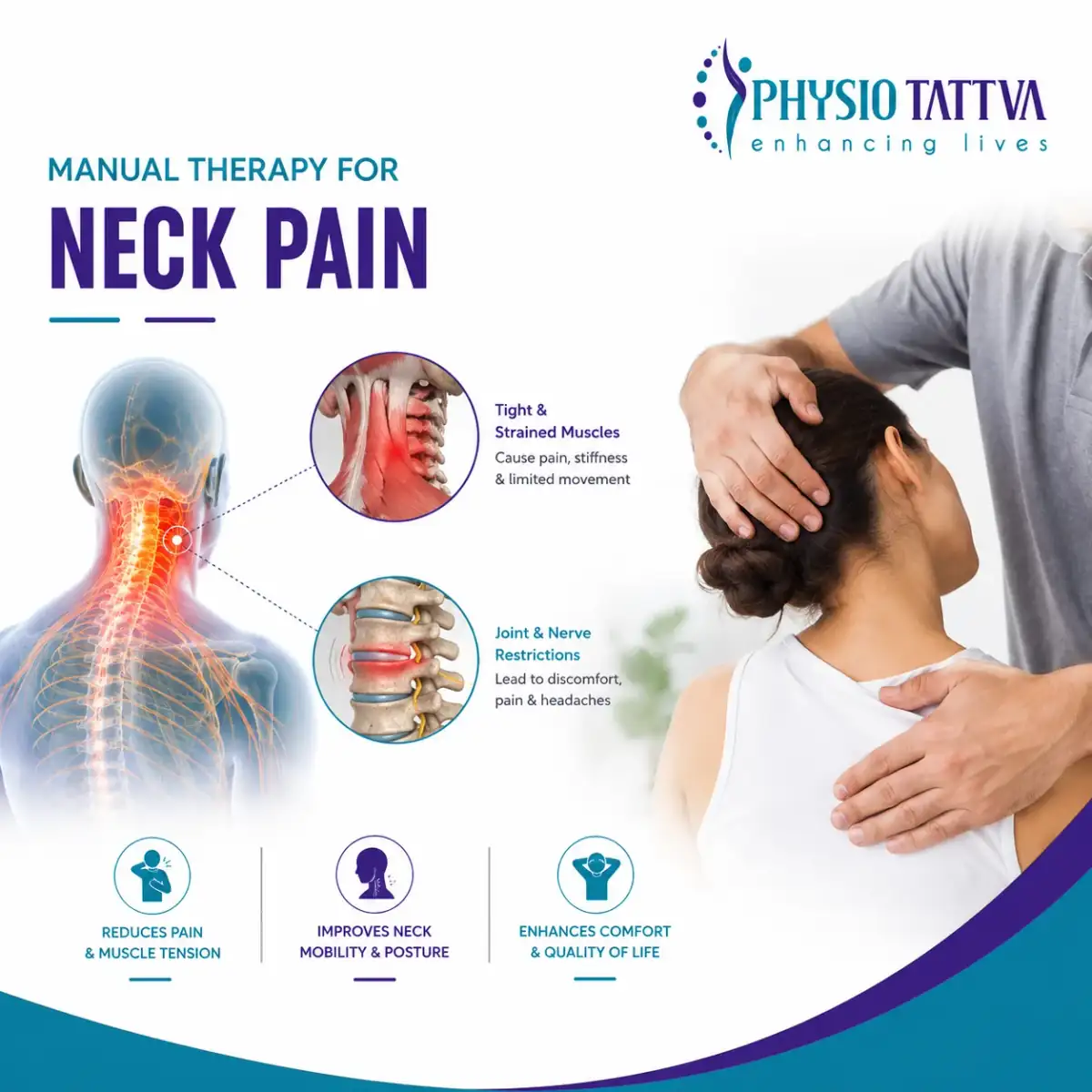
How Does Manual Therapy Help Neck Pain?
When applied to the neck, manual therapy works by directly addressing the mechanical and physiological sources of pain.
- For Stiff Joints: Gentle mobilisation techniques restore the small, gliding movements between the vertebrae in your neck, reducing stiffness and "unlocking" a restricted area.
- For Tight Muscles: Techniques like soft tissue mobilisation and myofascial release break down painful adhesions (knots) and release tension in overworked muscles like the trapezius and levator scapulae.
- For Nerve Irritation: By improving joint mobility and reducing muscle tightness, manual therapy can alleviate pressure on nerves that may be causing radiating pain, tingling, or numbness into the shoulder or arm.
- For Pain Signals: Hands-on treatment can help modulate the nervous system, essentially "calming down" the pain signals being sent from the neck to the brain.
Common Types of Manual Therapy for Neck Pain
Manual therapy offers various hands-on techniques designed to relieve pain, improve mobility, and restore proper function to the cervical spine. A therapist will use a combination of techniques based on your specific diagnosis.
Here are the most common types used for neck pain:
Soft Tissue Mobilisation
This is a broad category that targets muscles, ligaments, and fascia.
- Myofascial Release: Involves applying sustained pressure to the connective tissue (fascia) that surrounds muscles, helping to release tightness and restore mobility. This is excellent for "tech neck" and postural strain.
- Trigger Point Therapy: Focuses on applying direct pressure to hyper-irritable spots in the muscle, known as trigger points or "knots," which can refer pain to other areas, such as causing tension headaches.
- Medical or Therapeutic Massage: Uses various strokes and depths to reduce muscle tension, improve circulation, and promote relaxation in the neck and upper back.
Joint Mobilisation
This technique involves slow, passive movements of the spinal joints in the neck. The therapist gently moves the joint through its available range of motion to improve mobility and reduce pain. It is graded from gentle (Grade I) to more forceful (Grade IV) but always stays within the patient's comfort. This is a very common and safe technique for general neck stiffness and arthritis.
Joint Manipulation (or Thrust Manipulation)
Also known as a "spinal adjustment," this technique involves a high-velocity, low-amplitude (HVLA) thrust applied to a specific joint. It is designed to quickly restore motion to a locked or "stuck" joint. Patients often hear a "pop" or "crack," which is simply the release of gas from the joint space (cavitation). This technique is highly effective but requires specialised training and careful screening of the patient.
What Conditions Can Manual Therapy for Neck Pain Treat?
Manual therapy can be beneficial for many common and complex causes of neck pain. It addresses both soft tissue dysfunction and joint-related issues, making it suitable for the following conditions:
- Cervicogenic Headaches: Headaches that originate from a problem in the neck.
- Muscle Strains and Spasms: Often caused by poor posture ("tech neck") or overuse.
- Neck Stiffness: General loss of range of motion.
- Cervical Disc Herniation: Can help to decompress the area and reduce muscle guarding.
- Whiplash-Associated Disorders: From car accidents or other trauma.
- Cervical Spondylosis (Arthritis): Helps manage stiffness and pain associated with age-related changes.
- Facet Joint Syndrome: Pain and dysfunction in the small joints that connect your vertebrae.
Who Provides Manual Therapy for Neck Pain?
Receiving manual therapy from a properly trained and licensed healthcare provider is essential for safety and effectiveness. These professionals have specialised knowledge in musculoskeletal assessment and hands-on treatment techniques:
- Physical Therapists (PTs): Many PTs, especially those with advanced certifications like an OCS (Orthopaedic Clinical Specialist) or FAAOMPT (Fellow of the American Academy of Orthopaedic Manual Physical Therapists), are highly skilled in all forms of manual therapy.
- Chiropractors (DCs): Chiropractors are well-known for performing joint manipulations (adjustments) as a core part of their treatment approach.
- Osteopathic Physicians (DOs): DOs are fully licensed physicians who receive additional training in a system of hands-on diagnosis and treatment called Osteopathic Manipulative Treatment (OMT).
Take the First Step Towards a Pain-Free Neck with Physiotattva
If you're tired of dealing with constant neck discomfort, manual therapy for neck pain could be the solution you've been looking for. This hands-on approach doesn’t just mask the pain; it targets the root causes, such as stiff joints and tight muscles, to restore proper mobility and function. By improving alignment and reducing tension, manual therapy helps you move freely, sleep better, and live pain-free. Don’t let neck pain hold you back — take the first step towards long-lasting relief today.
At Physiotattva physiotherapy clinics in Bangalore and Hyderabad, you receive personalised care tailored to your specific needs, ensuring effective results and comfort throughout your journey to recovery.
Don’t wait to start your recovery! Get in touch with Physiotattva for more details! Contact us at +91 89510 47001.
Answers
Frequently asked questions
Start with an assessment
We measure what you've lost, find the cause, and set out a plan with a target and a timeline.
- Call us+91 89510 47001
- Email usinfo@physiotattva.com
- Visit a clinic24 clinics across Bangalore, Hyderabad and Visakhapatnam
- Or stay homePhysiotherapy at home