




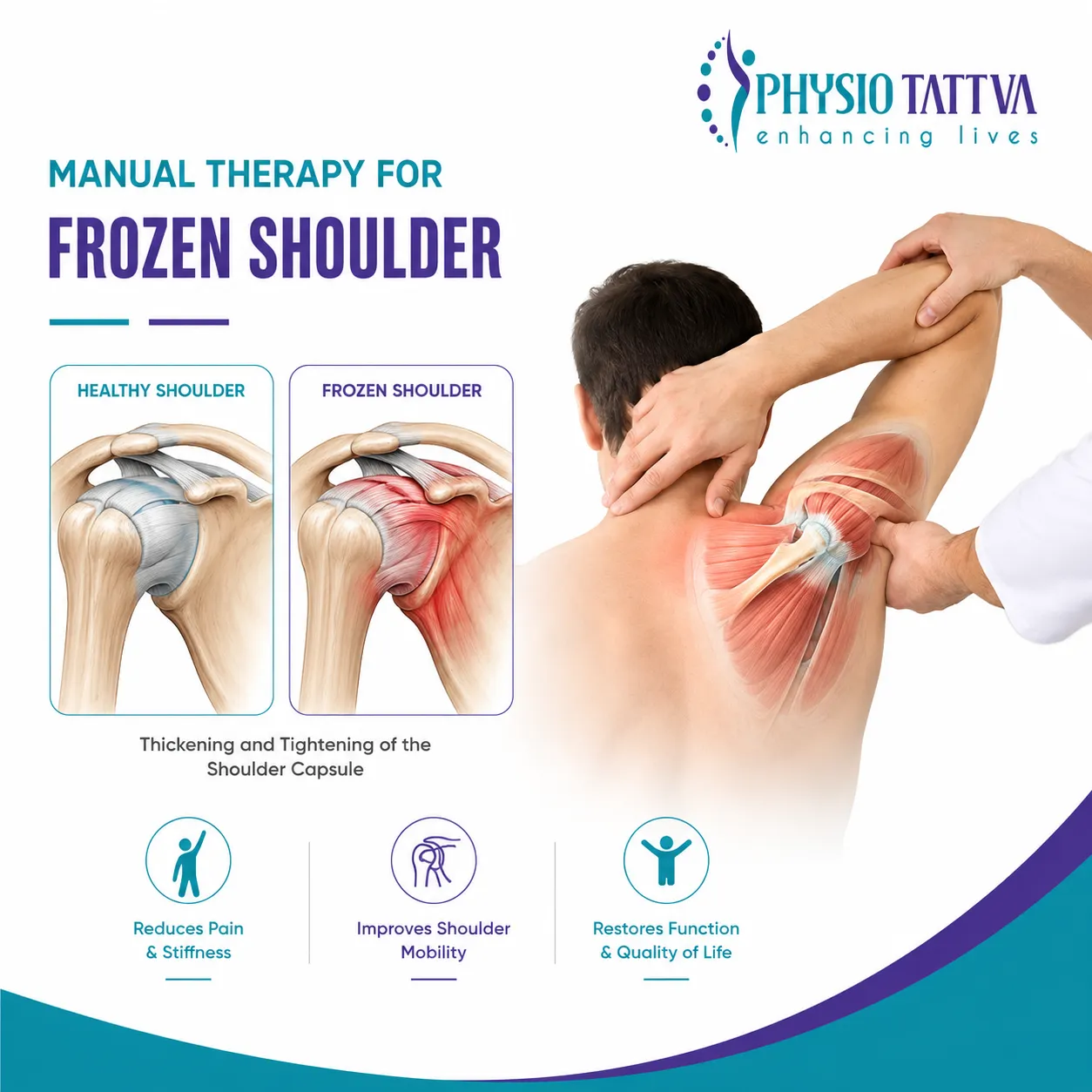
Manual therapy for frozen shoulder is a highly effective, hands-on treatment approach that helps reduce pain, improve mobility, and restore normal shoulder function. By targeting the tight joint capsule and surrounding muscles, these techniques address inflammation, stiffness, and restricted movement. When combined with tailored exercises, manual therapy speeds up recovery and supports long-term shoulder health, making it a key treatment option for adhesive capsulitis.
Understanding Frozen Shoulder (Adhesive Capsulitis)
To understand why manual therapy is so effective, it's essential to understand the condition itself. Frozen shoulder involves the inflammation, thickening, and contraction of the connective tissue capsule surrounding the glenohumeral (shoulder) joint, leading to the formation of scar tissue (adhesions).
The Three Stages of Frozen Shoulder: Frozen shoulder follows a predictable pattern, moving through three phases that influence pain, stiffness, and treatment effectiveness. Here’s how each stage unfolds:
- Freezing Stage (Painful): Intense, often worsening pain, especially at night. A gradual loss of motion begins. Manual therapy focuses on pain modulation and gentle mobilisation.
- Frozen Stage (Stiff): Pain may decrease, but stiffness becomes the primary complaint. Range of motion is severely limited, impacting daily activities. Manual therapy becomes more aggressive to stretch the capsule.
- Thawing Stage (Recovery): Stiffness and pain gradually subside, and range of motion slowly returns. Manual therapy and exercise help restore full, functional movement.
The Role of Manual Therapy in Treating Frozen Shoulder
Manual therapy directly addresses the underlying pathology of a contracted joint capsule by targeting both the stiffened tissues and the surrounding musculature. When applied correctly, it helps restore normal shoulder mechanics and accelerates healing. The primary goals of manual therapy include:
- Modulate Pain: By stimulating nerve receptors that inhibit pain signals.
- Break Down Adhesions: By applying specific forces to stretch and tear the fibrotic scar tissue within the joint capsule.
- Improve Joint Kinematics: By restoring the normal glide and roll of the humeral head within the socket.
- Increase Range of Motion (ROM): By physically stretching the tight capsule, particularly in directions of greatest restriction (typically external rotation and abduction).
- Reduce Muscle Guarding: By relaxing the protective, painful spasms in the surrounding shoulder muscles.
Key Manual Therapy Techniques Used for Frozen Shoulder
Manual therapy for frozen shoulder involves a combination of techniques carefully selected based on the patient’s stage of recovery, pain levels, and tolerance. Each technique plays a specific role in restoring mobility, reducing pain, and addressing capsular tightness.
Joint Mobilisations
Low-velocity, graded oscillatory movements are applied to the humeral head to gently stretch the joint capsule and improve mobility. The therapist glides the joint in specific directions, such as anterior, posterior, and inferior, based on the restriction pattern. Techniques like Maitland Mobilisations (Grades I–II for pain relief, Grades III–IV for stiffness) and Kaltenborn Sustained Glides are commonly used. Posterior glides are especially important for improving flexion and internal rotation, while inferior glides help restore abduction.
Mobilisation with Movement (MWM – Mulligan Concept)
This pain-free technique involves the therapist applying a sustained glide to the shoulder joint while the patient actively moves the arm through a restricted range. The combination of passive glide with active movement helps “reprogram” the joint, allowing it to move more freely and without pain. This approach is widely used to restore smooth, functional shoulder movement.
High-Velocity, Low-Amplitude (HVLA) Thrust Manipulation
A quick, precise thrust is applied to the shoulder or the adjacent thoracic spine at the end of the available range. This technique helps break up stubborn adhesions and can immediately improve joint motion. It is often accompanied by a popping sound (cavitation). Because HVLA is an advanced technique, it is used cautiously and typically only during the freezing or thawing stage.
Soft Tissue Mobilisation
Soft tissue mobilisation targets the muscles, fascia, and tendons surrounding the shoulder joint. Techniques such as deep tissue massage, trigger point therapy, and cross-friction massage help reduce muscle tightness, relieve pain, and improve circulation. Key muscles treated include the subscapularis, infraspinatus, pectoralis muscles, and upper trapezius — all of which commonly develop tightness and trigger points in frozen shoulder.
Muscle Energy Techniques (MET)
In MET, the patient performs a controlled muscle contraction against a counterforce provided by the therapist. After the contraction, the muscle relaxes, allowing it to be stretched further into a new range. This technique is effective for reducing neuromuscular guarding and increasing joint mobility without causing pain.
Passive Stretching
The therapist gently moves the patient’s arm to the end of its available range and applies a sustained stretch to the joint capsule. Passive stretching is a fundamental technique for improving flexibility and gradually increasing shoulder mobility as the capsule becomes more pliable.
Why Manual Therapy Must Be Paired with Exercise for Frozen Shoulder?
Manual therapy is most effective when combined with a prescribed exercise program tailored to each stage of recovery. The hands-on treatment “opens a window of opportunity” by creating new motion and reducing stiffness. Still, it is the exercises that help maintain, reinforce, and gradually expand this newly gained range of motion. Without regular exercise, the improvements achieved during therapy sessions can quickly diminish.
- Pendulum (Codman’s) exercises: Gentle, gravity-assisted motions that help decompress the joint, improve circulation, and reduce early-stage pain and guarding.
- Range-of-Motion exercises: Activities such as finger walking up a wall, pulley work, and towel-assisted stretches for internal rotation help progressively restore movement and address capsular tightness.
- Strengthening exercises: Introduced in the late-thawing stage, these exercises rebuild rotator cuff and scapular muscle function, enhance joint stability, and reduce the risk of re-injury as mobility returns.
What to Expect During a Manual Therapy Session?
A manual therapy session for frozen shoulder is structured to improve mobility gradually while keeping you as comfortable as possible. Here’s what typically happens during your visit:
- Assessment: The therapist will begin by assessing your pain levels, active and passive range of motion, and any functional limitations. This helps determine the stage of your frozen shoulder and the most suitable techniques.
- Treatment: Your session will usually last 30–60 minutes and include a tailored combination of manual techniques such as mobilisations, soft tissue work, and stretching to address tightness and pain.
- Discomfort: Some discomfort may occur, especially during deeper mobilisations in the later stages, but it should never feel sharp or intolerable. Ongoing communication with your therapist ensures the treatment stays within your comfort zone.
- Post-Treatment: It is normal to feel mild soreness or aching for 24–48 hours after a session, much like post-exercise fatigue. Gentle movement or heat may help ease this.
- Homework: You will be given simple, specific exercises to practice at home. These help maintain the range gained during the session and support long-term improvement.
Restoring Shoulder Function Through Skilled Manual Therapy at Physiotattva
Recovering from a frozen shoulder takes time, but manual therapy offers a powerful way to make that journey easier and more effective. Through targeted techniques that address pain, stiffness, and restricted movement, you can steadily regain shoulder function. When paired with guided exercises and consistent care, manual therapy helps you move with confidence again.
At Physiotattva physiotherapy clinics in Bangalore and Hyderabad, you receive personalised care tailored to your specific needs, ensuring effective results and comfort throughout your journey to recovery.
Don’t wait to start your recovery! Get in touch with Physiotattva for more details! Contact us at +91 89510 47001.
Why Physiotattva?
22+
50,000+
95%
200+
25+
4.8
Cities We Serve

Bangalore
At Physio Tattva, we are committed to bring access to quality physio care through ultra-modern clinics and high-skilled practitioners to all.
.webp)
Hyderabad
At Physio Tattva, we are committed to bring access to quality physio care through ultra-modern clinics and high-skilled practitioners to all.
.webp)
Vishakhapatnam
At Physio Tattva, we are committed to bring access to quality physio care through ultra-modern clinics and high-skilled practitioners to all.
Core Treatments
Core Conditions
Core Symptoms
Frequently Asked Questions
What is manual therapy for a frozen shoulder?

How effective is manual therapy for treating frozen shoulder?
What specific techniques are used in a manual therapy session?
Is a manual therapy session for a frozen shoulder painful?
How long does it take to see results from manual therapy?






%20(1)-p-3200.jpeg)


.jpg)
.webp)
.webp)
.webp)