




Numbness and tingling—that unnerving "pins and needles" sensation known medically as paresthesia—can be a frustrating and sometimes debilitating symptom. It often signals an issue with nerve function, where a nerve is being compressed, irritated, or is not receiving adequate blood flow. While it's crucial to get a proper medical diagnosis to understand the root cause, Kinesio taping therapy for numbness and tingling has emerged as a powerful, non-invasive tool to help manage these symptoms and support recovery.
This article will explore how Kinesiology tape (or K-Tape) works, the conditions it can help, and why professional guidance is essential.
What is Kinesio Taping?
Kinesio tape is a flexible, elastic therapeutic tape designed to mimic the properties of human skin. Unlike rigid athletic tape that restricts motion, K-Tape is applied with a specific stretch to move with your body. This unique quality allows it to provide support and relief without limiting your range of motion.
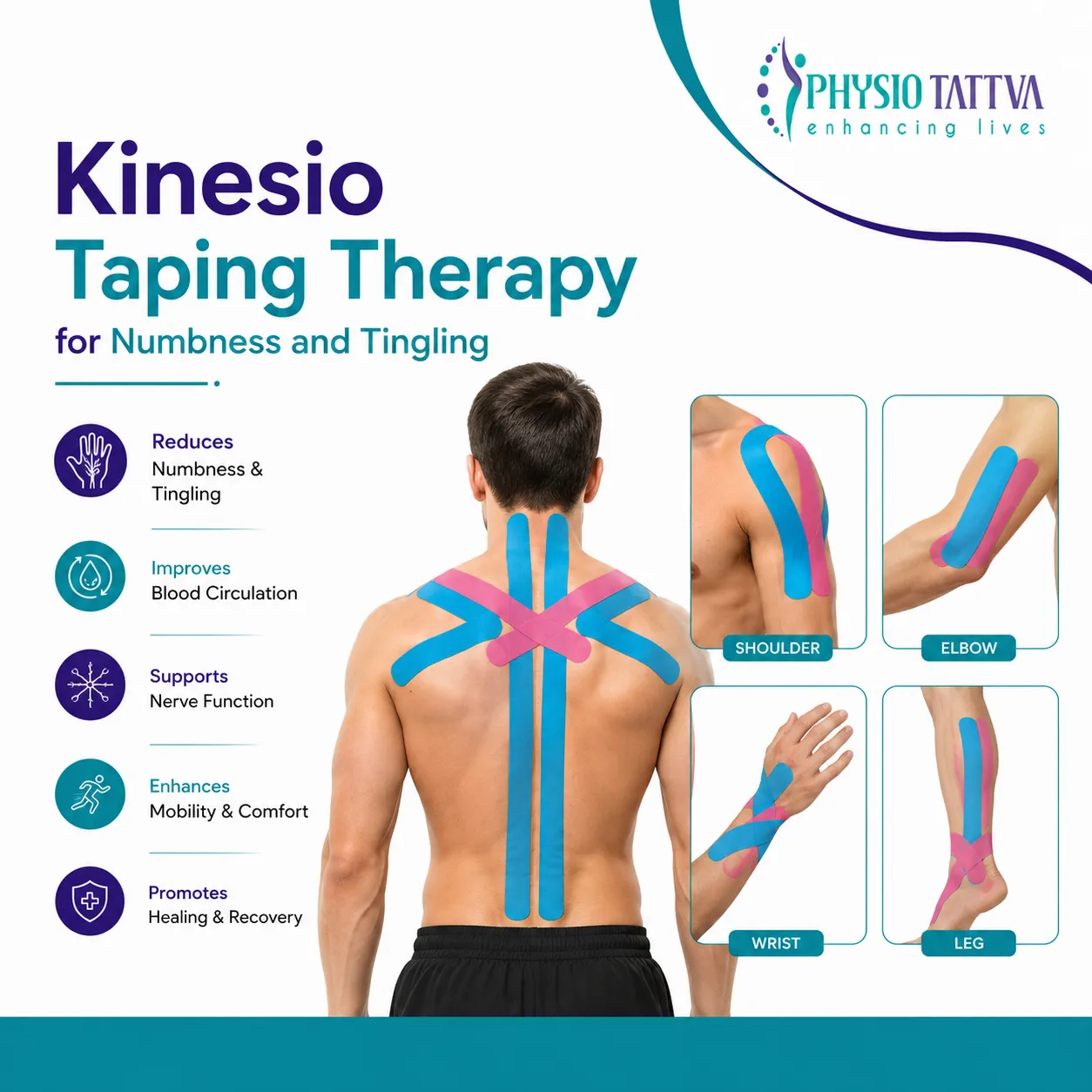
How Does Kinesio Taping Help with Numbness and Tingling?
The primary cause of numbness and tingling is often nerve impingement (a pinched nerve) or reduced circulation. Kinesio tape addresses these issues through several key mechanisms:
Decompression and Space Creation (The "Lifting" Effect)
This is the most important mechanism for nerve-related symptoms. When applied correctly, the tape’s elasticity gently recoils, lifting the skin and the superficial layers of fascia. This creates a microscopic space between the skin and the underlying tissues.
This subtle lift reduces pressure on compressed nerves, blood vessels, and lymphatic channels. By "making space," it can immediately alleviate the impingement causing numbness and tingling.
Improved Circulation and Lymphatic Drainage
By decompressing the area, Kinesio tape allows for better flow.
- Blood Flow: Improved blood circulation delivers more oxygen and essential nutrients to the irritated nerve and surrounding tissues, promoting healing.
- Lymphatic Drainage: Enhanced lymphatic flow helps clear out inflammatory byproducts and fluid buildup, reducing swelling that may be contributing to nerve compression.
Neurological Sensory Input (Pain Gating)
The tape's contact with the skin provides continuous sensory stimulation to the brain. According to the Gate Control Theory of Pain, this non-painful sensory input can override or "distract" the brain from the pain, numbness, or tingling signals being sent by the irritated nerve. It essentially helps "reset" the neural feedback loop.
Postural and Proprioceptive Support
Often, poor posture or dysfunctional movement patterns lead to nerve compression. The tape provides gentle cues to your body, improving your awareness of joint position (proprioception). This can help you subconsciously correct a slouched posture or movement that is causing the problem.
Common Conditions That Cause Numbness and Tingling (And How Taping Helps)
Kinesio taping can be a highly effective component of a comprehensive treatment plan for various conditions causing numbness and tingling. It offers a non-invasive method to alleviate symptoms by reducing pressure on affected nerves, improving circulation, and supporting proper posture and alignment. Below are some common conditions where kinesio taping can provide relief:
Carpal Tunnel Syndrome
Carpal tunnel syndrome is often characterized by numbness and tingling, particularly in the thumb, index, middle, and ring fingers. This happens when the median nerve becomes compressed within the carpal tunnel of the wrist.
- Symptom: Numbness and tingling in the thumb, index, middle, and ring fingers.
- How Tape Helps: A specific application over the wrist can help "open up" the carpal tunnel, decompressing the median nerve. Other strips can be used to inhibit overworked forearm muscles.
Sciatica / Lumbar Radiculopathy
Sciatica occurs when nerve roots in the lower back become compressed, causing pain, numbness, or tingling down the back of the leg.
- Symptom: Numbness, tingling, or shooting pain down the back of the leg.
- How Tape Helps: Decompression strips (often a "fan" or "web" cut) are applied over the lower back where the sciatic nerve roots exit the spine. This lifts the tissue, reducing pressure on the nerve roots and providing immediate relief for some individuals.
Cervical Radiculopathy (Pinched Nerve in the Neck)
Cervical radiculopathy happens when a nerve in the neck is compressed, causing pain, numbness, and tingling that radiates down the arm.
- Symptom: Numbness and tingling running down the arm and into the hand. a pinched nerve in the cervical spine.
- How Tape Helps: Taping applications can be used to support neck posture (e.g., reminding you not to slouch forward) and decompress the tissues around the cervical spine, giving the irritated nerve root more space.
Thoracic Outlet Syndrome (TOS)
TOS occurs when nerves and blood vessels are compressed between the collarbone and the first rib, causing numbness in the arm and hand.
- Symptom: Numbness in the arm and hand, often caused by compression of nerves and blood vessels between the collarbone and first rib.
- How Tape Helps: Taping is excellent for correcting the rounded shoulders and forward head posture that often cause TOS. Applications can gently pull the shoulders back and open up the chest, relieving compression in the thoracic outlet.
Peripheral Neuropathy
Peripheral neuropathy, often seen in diabetics, causes numbness and tingling, especially in the feet and hands.
- Symptom: Numbness and tingling, often in the feet and hands, are common in diabetics.
- How Tape Helps: While it can't cure neuropathy, the tape's sensory input can help stimulate nerve endings and improve local circulation in the feet, sometimes reducing the intensity of the symptoms.
Taping Techniques for Nerve Decompression
A therapist will use specific techniques based on your diagnosis. The most common for numbness is the "Space Correction" technique.
- The Fan Cut: A strip of Kinesio tape is cut into several smaller "tentacles" or "fingers," with a solid base at one end.
- Application: The base (or "anchor") is applied without stretch near the affected area. The tentacles are then spread out like a fan and laid down with a light stretch (15-25%) directly over the path of the nerve or the area of symptoms. This creates a broad area of decompression.
The Importance of Professional Expertise in Kinesio Taping for Numbness and Tingling
While you can buy Kinesio tape anywhere, self-diagnosing and self-taping for numbness and tingling can be ineffective and potentially risky.
- Diagnosis is Paramount: Numbness and tingling can be a sign of a serious underlying medical condition (e.g., stroke, multiple sclerosis, severe disc herniation). Always see a doctor or physical therapist for an accurate diagnosis first.
- Expert Application: The effectiveness of K-Tape depends entirely on the correct application, the direction, amount of stretch, and specific placement are critical. A trained professional, such as a Physical Therapist, Chiropractor, or Certified Athletic Trainer, knows anatomy and can apply the tape to achieve the desired therapeutic effect.
- Comprehensive Treatment: Kinesio taping is not a standalone cure. A professional will integrate it into a complete rehabilitation program that includes targeted exercises, manual therapy, and postural education to address the root cause of your symptoms.
Start Your Recovery Today with Physiotattva’s Personalised Care
If you're struggling with numbness and tingling, finding an effective, non-invasive solution is crucial for relief. Kinesio taping can be a powerful tool in addressing these symptoms by decompressing nerves, improving circulation, and supporting proper posture. However, it is important to remember that numbness and tingling can sometimes indicate serious underlying conditions, so seeking a professional diagnosis should always be the first step. With the expertise of a trained therapist, Kinesio taping can be incorporated into a broader treatment plan to target the root causes of your symptoms. By working with a professional physiotherapist, you can ensure a safe and effective recovery path, ultimately finding lasting relief and restoring your quality of life.
At Physiotattva physiotherapy clinics in Bangalore and Hyderabad, you receive personalised care tailored to your specific needs, ensuring effective results and comfort throughout your journey to recovery.
Don’t wait to start your recovery! Get in touch with Physiotattva for more details! Contact us at +91 89510 47001.
Why Physiotattva?
22+
50,000+
95%
200+
25+
4.8
Cities We Serve

Bangalore
At Physio Tattva, we are committed to bring access to quality physio care through ultra-modern clinics and high-skilled practitioners to all.
.webp)
Hyderabad
At Physio Tattva, we are committed to bring access to quality physio care through ultra-modern clinics and high-skilled practitioners to all.
.webp)
Vishakhapatnam
At Physio Tattva, we are committed to bring access to quality physio care through ultra-modern clinics and high-skilled practitioners to all.
Core Treatments
Core Conditions
Core Symptoms
Frequently Asked Questions
How long can you leave Kinesio tape on?

When will I feel relief?
Can I apply the tape myself for numbness?
Are there any side effects of Kinesio taping?






%20(1)-p-3200.jpeg)


.jpg)
.webp)
.webp)
.webp)