


Kinesio Taping Therapy
Kinesio Taping Therapy for Neck Pain
Kinesio taping therapy for neck pain gently lifts the skin to reduce pressure, improve circulation, and ease muscle tension. It supports weak or tight neck muscles, enhances posture, and provides continuous relief without restricting movement. When combined with physiotherapy, it promotes faster healing and more comfortable, natural mobility.
Neck pain is a debilitating condition that affects millions, stemming from poor posture, muscle strain, injury, or underlying medical issues. While many treatments exist, Kinesio taping therapy for neck pain has emerged as a popular, complementary approach used by physiotherapists and chiropractors worldwide. This article will explore exactly what Kinesio taping is, how it works for the cervical spine, its benefits, and common application techniques.
What Is Kinesio Taping?
Kinesio tape (or Kinesiology tape) is not your average athletic tape. Developed by Dr. Kenzo Kase in the 1970s, it's a flexible, elastic cotton tape with an acrylic adhesive. Its unique design allows it to mimic the elasticity of human skin, providing support and stability to muscles and joints without restricting the body's range of motion.
The tape is latex-free, wearable for days at a time, and can withstand sweat and showering, making it a practical tool for continuous therapeutic benefit.
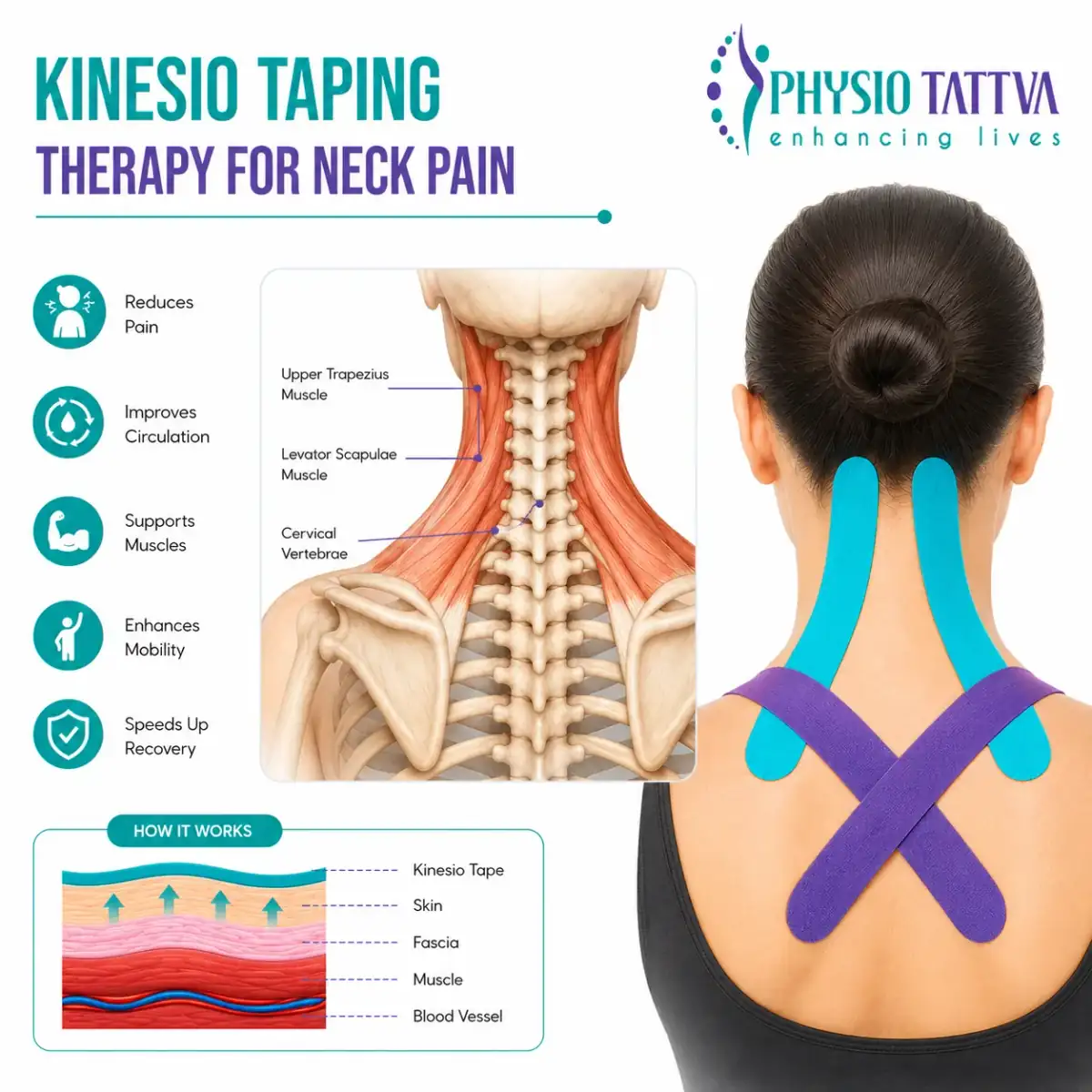
How Does Kinesio Taping Therapy for Neck Pain Work?
Kinesio taping therapy doesn’t just stick tape to skin, it works on multiple physiological levels to support healing, relieve pain, and improve posture. When applied correctly to the neck, it can produce the following therapeutic effects:
- Decompresses Tissue and Improves Circulation: The tape gently lifts the skin, creating a microscopic space between the skin and the underlying tissues. This decompression effect reduces pressure on pain receptors and allows for improved blood and lymphatic fluid flow, which helps reduce inflammation and swelling.
- Modulates Pain Signals (Pain Gate Theory): The light sensory input from the tape on the skin stimulates nerves that can override or "gate" the pain signals being sent to the brain. This provides immediate, noticeable pain relief for many individuals.
- Enhances Proprioception and Postural Feedback: For neck pain related to posture (like "text neck"), Kinesio tape provides constant neuro-sensory feedback. You become more aware of your neck and shoulder position, gently reminding your body to maintain better alignment and avoid slouching.
- Supports Weak or Injured Muscles: Depending on the application technique, the tape can be used to either inhibit overused, tight muscles (like the upper trapezius) or facilitate weak, underused muscles to improve cervical stability.
Common Neck Conditions Treated with Kinesio Tape
Kinesio taping therapy for neck pain is highly adaptable, making it useful for a wide range of cervical issues—from everyday muscle tension to injury-related instability. When applied correctly, it can support the healing process and reduce symptoms in conditions such as:
- General Muscle Strain and Stiffness: Relieves tension in the upper trapezius and levator scapulae muscles.
- Postural Dysfunction ("Text Neck"): Provides postural cues to correct forward head posture.
- Whiplash-Associated Disorders: Helps stabilise the neck, reduce muscle spasms, and manage pain after an injury.
- Cervicogenic Headaches: By releasing tension in the suboccipital and upper neck muscles, it can help reduce the frequency and intensity of headaches originating from the neck.
- Cervical Facet Joint Sprain: Provides support and reduces painful movements.
Step-by-Step: Common Application Techniques for Neck Pain
For best results and to avoid injury, your first application should be done by a qualified physiotherapist, chiropractor, or athletic trainer. The following are for educational purposes only.
General Tips Before You Start
Before applying Kinesio tape, it's essential to prepare both your skin and materials properly to ensure effectiveness and avoid early peeling:
- Skin must be clean, dry, and free of oils or lotions.
- Round the corners of the tape strips to prevent peeling.
- Activate the adhesive by rubbing the tape firmly after application.
- The "anchor" (the first inch of tape) and the "end" (the last inch) are always applied with zero stretch.
Technique 1: Upper Trapezius Inhibition
This method is used to relax tight, overactive trapezius muscles that often contribute to neck and shoulder pain.
- Objective: To reduce tension in the upper trapezius muscle and support better muscle recovery.
- Preparation: Cut one “I” strip long enough to run from the top of your shoulder to the base of your skull.
- Positioning: Sit upright and tilt your head forward and to the opposite side of the pain (e.g., for right-side taping, tilt your head forward and to the left).
- Application: Follow these steps carefully to ensure proper placement and effectiveness of the tape:
- Anchor the tape on the top of the shoulder (acromion) with no stretch.
- Apply the tape upward with a light 15–25% stretch along the side of your neck toward the base of the skull.
- Lay down the final inch of tape (behind the ear) without any stretch.
- Repeat on the other side if needed.
Technique 2: Cervical Postural Support (“X” or “Y” Method)
This technique helps correct forward head posture by providing sensory feedback to encourage better alignment.
- Objective: To cue the body into proper neck posture and reduce strain from "text neck."
- Preparation: Cut a “Y” strip approximately 6–8 inches long.
- Positioning: Sit upright and gently flex your neck forward (look down toward your chest).
- Application: Use the following steps to correctly apply the Kinesio tape strip:
- Anchor the base of the Y-strip between your shoulder blades (mid-thoracic spine) with no stretch.
- With the neck still flexed, apply both tails of the Y-strip upward with a 25% stretch, running along each side of the cervical spine.
- End each tail at the base of the skull and apply the last inch without stretch.
When you return to a neutral posture, you should feel the tape gently cueing you to keep your shoulders back and your head upright
Support, Relief, and Recovery with Kinesio Taping Therapy at Physiotattva
Kinesio taping therapy for neck pain is a safe, non-invasive technique that offers real benefits, whether you're managing tension from poor posture, recovering from an injury, or seeking extra support during daily activities. By gently lifting the skin and enhancing circulation, it helps reduce discomfort, promote healing, and improve body awareness for better posture.
While it’s not a standalone cure, Kinesio taping works best when combined with physiotherapy, targeted exercises, and ergonomic corrections. If you’re dealing with persistent neck pain or postural issues, speak to a qualified physiotherapist to see if Kinesio taping is a suitable part of your recovery plan.
At Physiotattva physiotherapy clinics in Bangalore and Hyderabad, you receive personalised care tailored to your specific needs, ensuring effective results and comfort throughout your journey to recovery.
Don’t wait to start your recovery! Get in touch with Physiotattva for more details! Contact us at +91 89510 47001.
Answers
Frequently asked questions
Start with an assessment
We measure what you've lost, find the cause, and set out a plan with a target and a timeline.
- Call us+91 89510 47001
- Email usinfo@physiotattva.com
- Visit a clinic24 clinics across Bangalore, Hyderabad and Visakhapatnam
- Or stay homePhysiotherapy at home