




Loss of balance can be a distressing and debilitating condition, increasing the risk of falls and limiting daily activities. It stems from a variety of causes, including neurological conditions, inner ear problems, musculoskeletal injuries, and the natural aging process. While traditional physical therapy is the cornerstone of treatment, Kinesio taping has emerged as a valuable adjunctive therapy to help improve stability and confidence.
This article explores how Kinesio taping therapy is used to address loss of balance, how it works, and who might benefit.
What is Kinesio Taping?
Kinesio taping (or Kinesiology tape) is a therapeutic technique using a flexible, elastic, adhesive tape. Unlike rigid athletic tape that immobilizes a joint, Kinesio tape is designed to mimic the skin's elasticity, allowing for a full range of motion. When applied correctly by a trained professional, it provides support and stability, helping to reduce pain and inflammation without restricting natural movement. This non-invasive therapy promotes healing, improves circulation, and enhances proprioception, making it highly effective for managing musculoskeletal issues like muscle strains, joint instability, and postural imbalances.
How Does Kinesio Taping Help with Loss of Balance? The Science Explained
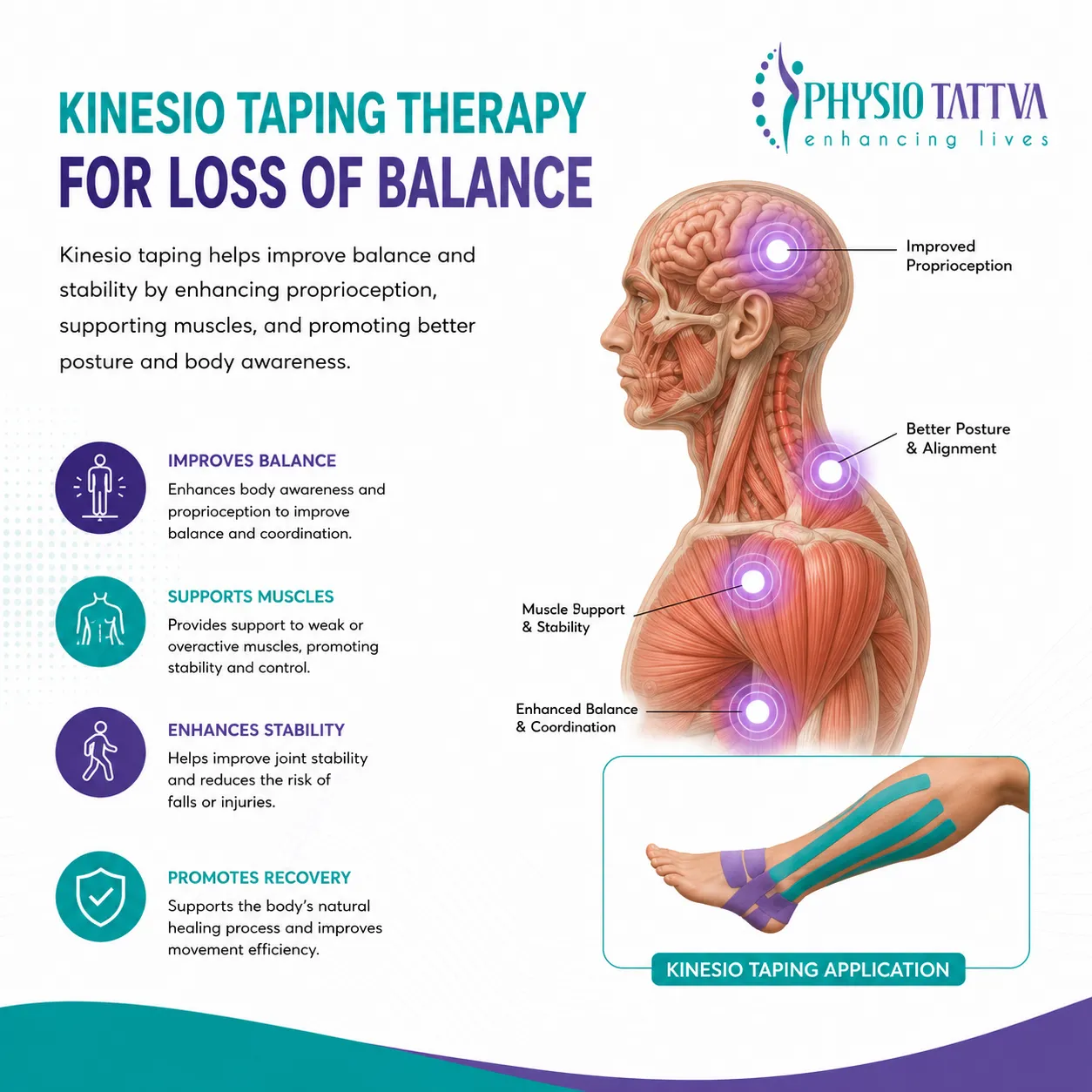
The primary mechanism behind Kinesio taping for balance is not mechanical bracing, but neurological feedback. Our sense of balance relies on a complex system called the somatosensory system, which includes:
- Vision: What we see.
- Vestibular System: The inner ear, which detects head position and movement.
- Proprioception: The body's "sixth sense"—its ability to perceive its own position, movement, and orientation in space.
Loss of balance often occurs when one or more of these systems are compromised. Kinesio taping primarily works by enhancing proprioception.
Here’s how kinesio taping improves balance:
- Sensory Input: The tape gently lifts the skin, creating a small space between the skin and the underlying tissues.
- Receptor Stimulation: This lifting action stimulates sensory receptors in the skin called mechanoreceptors.
- Increased Body Awareness: The constant, gentle stimulation from the tape acts as a subtle cue, sending continuous information to the brain about that body part's position. It's like turning up the volume on your body's positional awareness.
- Improved Motor Response: With more accurate and abundant sensory information, the brain can make better, faster decisions to adjust muscle tone and posture, resulting in improved stability and balance.
Essentially, the tape reminds your body where it is in space, helping it react more effectively to shifts in your center of gravity.
Who Can Benefit from Kinesio Taping for Balance?
Kinesio taping can be a valuable tool for individuals dealing with balance challenges due to various conditions, including:
- Neurological Conditions: Patients with stroke, Multiple Sclerosis (MS), Parkinson's disease, or peripheral neuropathy often have impaired proprioception, and the tape can help "re-awaken" sensory pathways.
- Older Adults: Age-related decline in sensory function makes seniors more prone to falls. Taping can provide the extra feedback needed to improve postural stability.
- Post-Surgical Rehabilitation: After procedures like an ACL reconstruction or ankle surgery, taping can help re-establish proprioceptive function around the joint.
- Chronic Ankle Instability: For those with weak or recurring "rolling" ankles, the tape provides sensory cues that help prevent injury and improve stability during walking.
- Vestibular or Cervicogenic Dizziness: When balance issues stem from the neck (cervicogenic), taping the cervical muscles can help improve head and neck awareness, reducing dizziness and improving balance.
Common Kinesio Taping Techniques for Loss of Balance
Application is key to success and should be performed by a trained professional like a physical therapist, occupational therapist, or chiropractor. They will assess the root cause of the balance deficit to determine the correct placement.
Common application areas include:
Ankle and Foot
To enhance balance and prevent falls, it’s essential to improve awareness of foot positioning. Kinesio taping provides valuable sensory feedback that helps individuals adjust their stance and posture when walking.
- Goal: To improve awareness of foot position on the ground.
- Technique: A common method is the "ankle stirrup" or "figure-eight" application, which provides sensory feedback around the ankle joint, crucial for stability when walking on uneven surfaces.
Core and Lower Back
Postural stability is key to maintaining a balanced and upright stance. Kinesio taping on the core and lower back helps activate key muscles, improving posture and reducing the tendency to slouch.
- Goal: To cue postural muscles and promote an upright stance.
- Technique: Strips of tape are often applied along the erector spinae muscles of the lower back or the abdominal obliques. This provides feedback to reduce slouching and maintain a more stable core.
Cervical Spine (Neck)
For individuals suffering from cervicogenic dizziness, improving neck position is essential to alleviate symptoms. Kinesio taping offers crucial feedback that encourages a proper head position, enhancing overall balance.
- Goal: For individuals with cervicogenic dizziness, this technique improves neck position awareness.
- Technique: Tape is applied to the upper trapezius and other neck muscles to provide feedback that encourages a neutral head position, which is vital for the vestibular system to function correctly.
Evidence and Research
The scientific evidence for Kinesio taping is evolving. While some large-scale reviews show mixed results, an increasing number of studies have demonstrated positive outcomes for balance in specific populations:
- Stroke: Studies have shown that Kinesio taping on the ankle can improve gait parameters and balance scores in post-stroke patients.
- Multiple Sclerosis (MS): Research suggests taping can lead to short-term improvements in balance and walking confidence for individuals with MS.
- Older Adults: Some studies indicate that lower leg taping can reduce postural sway and improve functional reach, potentially lowering fall risk.
It's important to view Kinesio taping as a complementary tool used alongside a comprehensive rehabilitation program, not as a standalone cure.
Important Considerations and Disclaimers
While kinesiology tape can be highly effective, there are a few important considerations to keep in mind to ensure safety and maximize its benefits:
- Professional Application is Crucial: To be effective, the tape must be applied with the correct tension, direction, and placement. Incorrect application can be ineffective and may cause skin irritation.
- Not a Permanent Fix: Kinesiology tape provides temporary support and feedback while it’s on (typically 3-5 days). The goal is to use this feedback to help retrain muscles and the brain through prescribed exercises.
- Skin Sensitivity: The tape is generally hypoallergenic, but skin irritation can still occur. Always test a small patch of skin first and remove the tape if you experience itching, redness, or a rash.
- Contraindications: Do not apply the tape over open wounds, active infections, cancer sites, or areas with deep vein thrombosis (DVT).
Enhance Your Recovery with Kinesiology Tape at Physiotattva
Kinesio taping therapy for loss of balance is a safe, non-invasive, and drug-free method for enhancing body awareness and improving stability. By stimulating the body’s proprioceptive system, the tape provides crucial sensory feedback that helps the brain make better postural adjustments.
When used as part of a structured program designed by a healthcare professional, Kinesio taping can be an effective tool to increase confidence, improve function, and reduce the risk of falls for a wide range of individuals struggling with balance.
If you are experiencing loss of balance, consult with a physical or occupational therapist to see if Kinesio taping could be a beneficial part of your treatment plan.
At Physiotattva physiotherapy clinics in Bangalore and Hyderabad, you receive personalised care tailored to your specific needs, ensuring effective results and comfort throughout your journey to recovery.
Don’t wait to start your recovery! Get in touch with Physiotattva for more details! Contact us at +91 89510 47001
Why Physiotattva?
22+
50,000+
95%
200+
25+
4.8
Cities We Serve

Bangalore
At Physio Tattva, we are committed to bring access to quality physio care through ultra-modern clinics and high-skilled practitioners to all.
.webp)
Hyderabad
At Physio Tattva, we are committed to bring access to quality physio care through ultra-modern clinics and high-skilled practitioners to all.
.webp)
Vishakhapatnam
At Physio Tattva, we are committed to bring access to quality physio care through ultra-modern clinics and high-skilled practitioners to all.
Core Treatments
Core Conditions
Core Symptoms
Frequently Asked Questions
How does Kinesio taping help with a loss of balance?

What conditions causing balance issues can Kinesio taping help treat?
Is Kinesio taping a standalone treatment for balance problems?
How long do I wear the tape and how soon will I see results?
Is Kinesio taping safe and should it be professionally applied?






%20(1)-p-3200.jpeg)


.jpg)
.webp)
.webp)
.webp)