





Kinesio taping (also known as KT, Kinesiology taping, or therapeutic taping) is a popular, non-invasive treatment method used to alleviate pain and improve function in various musculoskeletal conditions. When applied to the knee, it can offer support and pain relief for everything from chronic overuse injuries to acute swelling.
This article will cover how Kinesio tape works, the conditions it's used for, step-by-step application techniques, and its benefits and limitations.
How Does Kinesio Taping Work for Knee Pain? (The Theory)
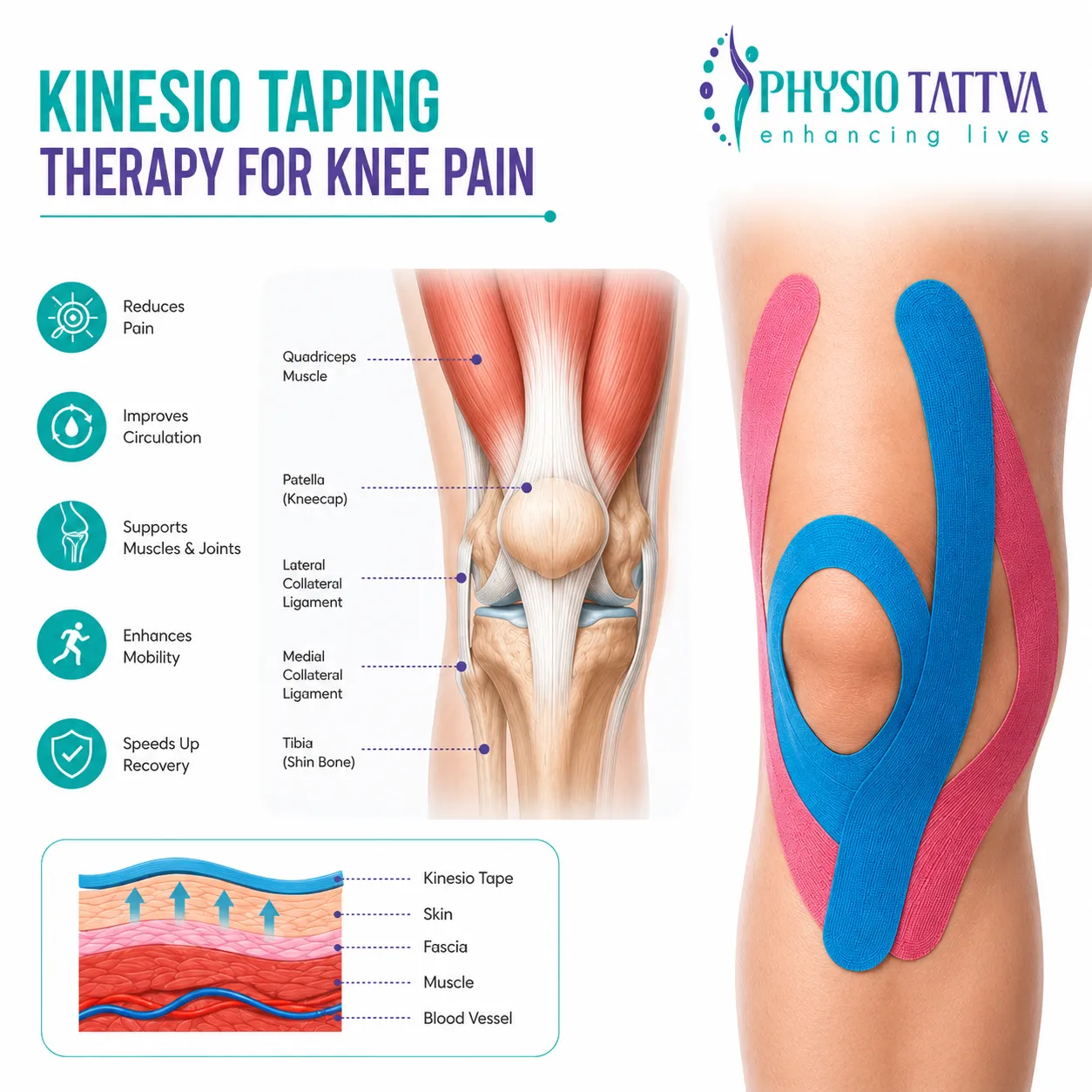
Unlike rigid athletic tape that immobilizes a joint, Kinesio tape is elastic and designed to mimic the skin's flexibility. It is thought to work through several mechanisms:
- Decompression and Space Correction: When applied, the tape gently lifts the skin. This lifting effect creates a microscopic space between the skin and the underlying tissues. This is believed to reduce pressure on pain receptors, blood vessels, and lymphatic channels, thereby decreasing pain and swelling.
- Sensory Input (Neurosensory Feedback): The tape on your skin provides continuous sensory input to your brain. This can help "distract" the brain from pain signals (Gate Control Theory of Pain) and, more importantly, enhances your proprioception—your sense of where your knee is in space—which can improve stability and movement patterns.
- Mechanical Support: While flexible, the tape provides gentle support to muscles and ligaments around the knee. It can help guide the patella (kneecap) to track correctly or provide stability to a weakened area without restricting your range of motion.
- Fluid Dynamics: By creating space and promoting movement, the tape can help enhance the flow of lymphatic fluid and blood, which is crucial for reducing swelling (edema) and accelerating the healing process.
Common Knee Conditions Treated with Kinesio Tape
Kinesio tape can be beneficial as part of a larger treatment plan for numerous knee issues:
- Patellofemoral Pain Syndrome (PFPS) / Runner's Knee: Helps to correct patellar tracking and reduce pressure on the cartilage behind the kneecap.
- Patellar Tendinitis / Jumper's Knee: Reduces strain on the patellar tendon.
- Iliotibial (IT) Band Syndrome: Offloads the tense IT band on the outer side of the knee.
- Osteoarthritis (OA) of the Knee: Provides pain relief and support, potentially improving function and allowing for more comfortable movement.
- General Knee Instability: Improves proprioception, making the joint feel more stable.
- Swelling and Edema: The decompression effect helps with lymphatic drainage to reduce swelling.
- Meniscus or Ligament Support: Provides light support and pain relief during the rehabilitation phases of mild sprains (note: it does not replace a brace for significant instability).
Practical Application Guide: How to Tape Your Knee
To ensure your taping is effective, it’s important to follow the right steps from preparation to application. Proper technique helps the tape stay secure and provide the support your knee needs.
A. Essential Preparation
Before applying Kinesio tape, proper preparation ensures better adhesion, longer wear time, and more effective support.
- Clean and Dry Skin: Wash the area with soap and water and dry it completely. Avoid using lotions, oils, or creams, as they will prevent a strong adhesion.
- Trim Hair: For best results, trim or shave any significant hair in the area.
- Round the Corners: Cut the corners of each tape strip into a rounded shape. This prevents the edges from catching on clothing and peeling off prematurely.
- Create "Anchors": The first inch and last inch of any tape strip are laid down with NO STRETCH. This is crucial for keeping the tape in place.
- Activate the Adhesive: After applying the tape, rub it vigorously for several seconds. The heat from the friction activates the heat-sensitive adhesive.
B. Taping Techniques for Common Conditions
Kinesio taping can be adapted for various knee problems, and each technique targets a specific structure or symptom. Use these guided methods to apply tape safely and effectively.
(Note: "Stretch" is measured in percentage. 0% is no stretch, 100% is pulled to its maximum. Most knee applications use 25-50% stretch.)
General Knee Support & Pain Relief (Full Knee Application)
This method is excellent for general anterior knee pain, mild arthritis, or instability.
- Goal: To support the patella and surrounding structures.
- Strips Needed: Two "I" strips, about 6-8 inches long each (or one "Y" strip and one "I" strip).
- Position: Sit on a chair with your knee bent at a 90-degree angle.
- First Strip (Medial/Inner Support): Take one strip. Anchor it without stretch about 3-4 inches below the inner side of your kneecap. Apply the tape with a 25-50% stretch in a curve around the inner border of your kneecap, ending on the thigh above the kneecap. Lay the last inch down with no stretch.
- Second Strip (Lateral/Outer Support): Take the second strip. Anchor it below the outer side of your kneecap. Apply with 25-50% stretch in a curve around the outer border of your kneecap, crossing over the end of the first strip. Lay the last inch down with no stretch.
- (Optional) Decompression Strip: Take a third, shorter strip (4-5 inches). Tear the paper backing in the middle. With the knee still bent, apply 50-75% stretch to the center of the tape and place it horizontally directly over the most painful spot (often just below the kneecap). Lay the ends down with no stretch.
- Rub all strips to activate the adhesive.
For Patellar Tendinitis (Jumper's Knee)
Use this taping method when your goal is to relieve pressure on the patellar tendon and support the knee during movement.
- Goal: To lift and reduce pressure on the patellar tendon.
- Strips Needed: One short "I" strip (4-5 inches).
- Position: Sit with your knee bent at 90 degrees.
- Application: Tear the paper backing in the middle. Hold the ends of the tape and apply a powerful 75-80% stretch to the center portion.
- Place the stretched center directly over the patellar tendon (the tender spot just below your kneecap).
- Lay down the two ends on either side with NO STRETCH.
- Rub to activate.
For IT Band Syndrome
This taping method helps reduce tension along the IT band and ease friction on the outside of the knee, especially during walking or running.
- Goal: To inhibit (relax) the tense IT band and reduce friction on the outside of the knee.
- Strips Needed: One long "I" strip, running from the outside of your hip to just below your knee.
- Position: Stand or lie on your opposite side. 2ide.
- Application (Inhibition): You will apply the tape from the insertion point (knee) towards the origin (hip). Anchor the tape without stretch just below a painful bony spot on the outer side of the knee.
- Run the tape straight up the outer side of your thigh toward your hip with very light, 15-25% stretch (paper-off tension). 4ax. Anchor the last inch near your hip with no stretch.
- Rub to activate.
Benefits and Limitations of Kinesio Taping Therapy for Knee Pain
Before using Kinesio tape as part of your knee pain management plan, it’s important to understand both the advantages it offers and the limitations you should keep in mind.
Benefits of Kinesio Taping Therapy
Kinesio taping offers several helpful advantages that make it a supportive tool for managing knee pain and enhancing daily movement.
- Pain Relief: Often provides immediate, noticeable pain reduction.
- Non-Restrictive: Allows for a full range of motion.
- Reduces Swelling: Can effectively assist with lymphatic drainage.
- Wearable and Durable: Can be worn for 3-5 days, even through showers and exercise.
- Drug-Free: A safe, non-medicinal option for pain management.
Risks and Considerations for Kinesio Taping Therapy
While Kinesio taping is generally safe, it’s important to be aware of its limitations and potential issues before using it.
- Not a Cure: Kinesio tape supports the area and relieves symptoms, but it does not fix the underlying cause of the pain (e.g., muscle weakness, biomechanical flaws). It should be used alongside physical therapy and corrective exercises.
- Skin Irritation: Some individuals may have an allergic reaction to the adhesive or experience skin irritation. Remove the tape immediately if you develop a rash, itching, or blistering.
- Technique Matters: Incorrect application can be ineffective or, in rare cases, worsen a condition.
- Not for Major Injuries: It is not a substitute for medical evaluation and is not suitable for fractures, complete ligament tears, or open wounds.
The Evidence: What Does Research Say?
The scientific evidence for Kinesio taping is mixed. Some studies show significant benefits in pain reduction and improved function, while others conclude it is no more effective than a placebo. However, many clinicians and patients report positive anecdotal results. Its effectiveness is likely a combination of mechanical, neurological, and placebo effects. The consensus is that it is a low-risk, helpful aid when used as part of a comprehensive rehabilitation program prescribed by a professional.
What This Means for Your Knee Pain Treatment
Because the research varies, Kinesio taping should be viewed as a supportive tool rather than a standalone cure. It can help reduce discomfort, improve movement, and enhance stability, but it works best when paired with exercises, strengthening, and a personalised therapy plan.
Final Recommendation
For the best results, it is highly recommended to have your knee assessed and taped for the first time by a qualified professional, such as a Physical Therapist, Chiropractor, or Athletic Trainer. They can diagnose the root cause of your knee pain and teach you the most effective taping technique for your specific condition.
Disclaimer: This article is for informational purposes only and is not a substitute for professional medical advice, diagnosis, or treatment. Always seek the advice of your physician or other qualified health provider with any questions you may have regarding a medical condition.
Moving Forward Safely with Kinesio Taping Therapy for Knee Pain
Kinesio Taping Therapy for Knee Pain offers a supportive, flexible, and low-risk option for managing discomfort, improving stability, and reducing swelling. Whether used for patellar issues, IT band tension, tendinitis, or general knee strain, correct taping can enhance movement and provide meaningful relief. While research on its effectiveness is mixed, many people experience noticeable benefits when taping is combined with proper exercise, physiotherapy, and a personalised recovery plan. For best results, seek guidance from a trained professional to ensure correct application and safe use. Always consult a healthcare provider if pain persists or worsens.
At Physiotattva physiotherapy clinics in Bangalore and Hyderabad, you receive personalised care tailored to your specific needs, ensuring effective results and comfort throughout your journey to recovery.
Don’t wait to start your recovery! Get in touch with Physiotattva for more details! Contact us at +91 89510 47001.
Why Physiotattva?
22+
50,000+
95%
200+
25+
4.8
Cities We Serve

Bangalore
At Physio Tattva, we are committed to bring access to quality physio care through ultra-modern clinics and high-skilled practitioners to all.
.webp)
Hyderabad
At Physio Tattva, we are committed to bring access to quality physio care through ultra-modern clinics and high-skilled practitioners to all.
.webp)
Vishakhapatnam
At Physio Tattva, we are committed to bring access to quality physio care through ultra-modern clinics and high-skilled practitioners to all.
Core Treatments
Core Conditions
Core Symptoms
Frequently Asked Questions
How does Kinesio taping help with knee pain?

What types of knee pain can Kinesio taping be used for?
Can I apply Kinesio tape to my own knee?
How long can you leave Kinesio tape on?
Is Kinesio taping a permanent fix for knee pain?






%20(1)-p-3200.jpeg)


.jpg)
.webp)
.webp)
.webp)