




Kinesio taping, often seen as colorful strips of tape on athletes, has become a popular, non-invasive tool in physical therapy for managing various musculoskeletal issues, including one of the most common ailments: back pain.
This article will break down what Kinesio taping is, how it's theorized to work for back pain, its effectiveness, and how it's applied.
What is Kinesio Taping?
Kinesio Tape (or Kinesiology Tape) is an elastic therapeutic tape made of a cotton-spandex blend. Developed by Japanese chiropractor Dr. Kenzo Kase in the 1970s, it's designed to mimic the elasticity of human skin.
Unlike rigid, traditional athletic tape, which immobilizes a joint, Kinesio tape is flexible and allows for a full range of motion. Its primary goals are to provide support, reduce pain and swelling, and improve the body's natural healing process without restricting movement.
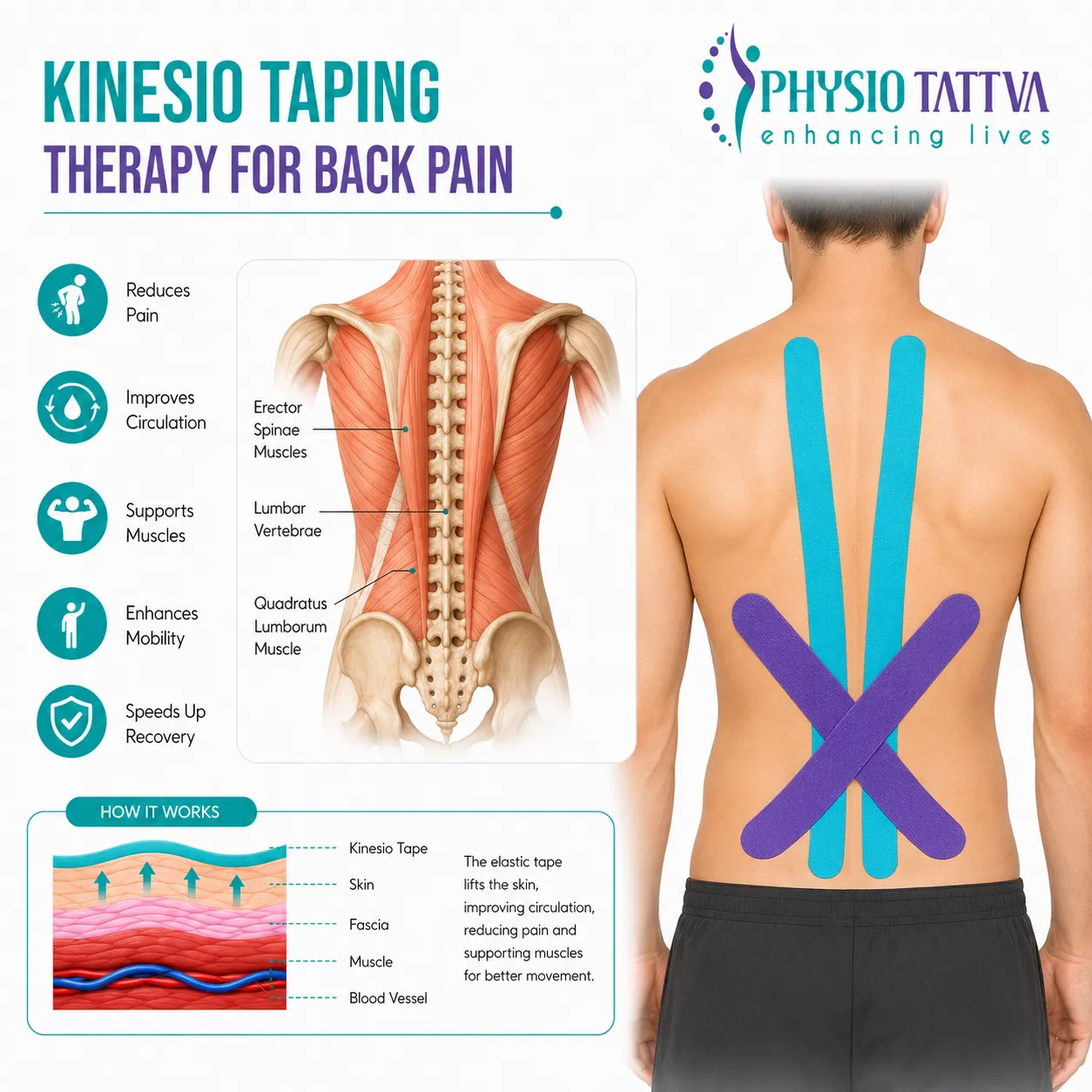
How Does Kinesio Taping Work for Back Pain? (The Theory)
When applied correctly to the back, Kinesio tape is believed to work through several mechanisms:
Pain Gating & Decompression
The tape's elasticity gently lifts the skin. This microscopic lift is thought to create space between the skin and the underlying tissues. This decompression reduces pressure on pain receptors (nociceptors), which can immediately lessen the sensation of pain. This process aligns with the "Gate Control Theory of Pain," where a non-painful stimulus (the tape) can "close the gate" to painful signals.
Improved Circulation and Lymphatic Drainage
By lifting the skin, the tape facilitates better flow of blood and lymphatic fluid. For an injured or inflamed back, this means faster delivery of oxygenated blood to recovering muscles and a more efficient removal of waste products and inflammatory substances, which can reduce swelling and bruising.
Proprioceptive Feedback (Body Awareness)
The tape on your skin provides continuous sensory input to your brain. This heightens your awareness of your posture and how you move your back. For someone with chronic back pain, this can act as a gentle reminder to engage core muscles, avoid slouching, or correct poor movement patterns that contribute to their pain.
Muscle Support and Re-education
Depending on the direction and amount of stretch applied, the tape can either:
- Facilitate (support): Help weak, underactive back or core muscles engage more effectively, improving stability and function.
- Inhibit (relax): Reduce tension in tight, overactive, and spasming muscles (like the low back extensors), promoting relaxation and flexibility.
Is Kinesio Taping Effective for Back Pain? The Evidence
The scientific evidence for Kinesio taping is mixed but generally points towards it being a useful adjunctive therapy.
- Short-Term Pain Relief: Many studies and a wealth of anecdotal evidence show that Kinesio taping can provide significant short-term pain relief and improve function for people with acute and chronic low back pain.
- Part of a Comprehensive Plan: Research consistently shows that Kinesio tape is most effective when used in combination with other proven treatments, such as therapeutic exercise, manual therapy, and patient education. It is not a standalone "cure."
- Placebo Effect: It's important to acknowledge that the psychological comfort and sensory feedback of the tape can contribute a strong placebo effect, which is a real and valid component of pain relief.
Conclusion on Efficacy: Think of Kinesio tape as a tool that helps create a "window of opportunity." By reducing pain and improving body awareness, it can make it easier and less painful for you to perform the crucial exercises and movements that lead to long-term recovery.
Practical Application: Common Taping Techniques for Back Pain
Warning: The best results come from an application by a trained professional (Physical Therapist, Chiropractor, Athletic Trainer) who can first diagnose the root cause of your pain. However, here are two common techniques for general understanding.
Required: Kinesio tape, sharp scissors.
Preparation:
Before applying the tape, make sure to follow these steps for optimal results:
- The skin must be clean, dry, and free of oils or lotions.
- Trim or shave excessive hair in the area for better adhesion and painless removal.
- Round the corners of your tape strips to prevent them from peeling up.
Technique 1: General Lower Back Pain Support (Two "I" Strips + Decompression Strip)
This is the most common application for general lumbar strain or fatigue.
- Patient Position: Have the person bend forward at the waist as if trying to touch their toes. This stretches the skin and muscles of the lower back.
- Measure: Measure a strip of tape from the top of the hip bone (PSIS) up to the bottom of the rib cage. Cut two identical strips.
- First Strip:
- Tear the paper backing about 2 inches from one end to create an anchor.
- Apply the anchor with no stretch just above the tailbone, to one side of the spine.
- Peel the rest of the paper off and apply the tape upwards along the thick back muscle (erector spinae) with a light stretch (25%).
- Lay down the final 2 inches with no stretch.
- Second Strip: Repeat on the other side of the spine, creating two parallel columns.
- Decompression Strip (Optional but Recommended):
- Cut a shorter strip that can span the distance between the two vertical tapes.
- Tear the paper backing in the middle.
- Apply a moderate to high stretch (50-75%) only in the center of the tape, placing it horizontally over the most painful spot.
- Lay the ends down with no stretch.
- Activate: Rub all the tape strips vigorously for a few seconds to activate the heat-sensitive adhesive.
Technique 2: SI (Sacroiliac) Joint Pain (The "Star" or "Asterisk")
This technique targets a specific point of pain, common with SI joint dysfunction.
- Patient Position: Standing or lying on their stomach.
- Identify the Spot: Have the person point to the exact spot of pain, which is usually over the "dimple" of the low back (the SI joint).
- Cut Strips: Cut three short strips, about 4-6 inches long.
- Apply Strips:
- Tear the paper backing in the center of the first strip.
- Apply a moderate stretch (50%) to the center and place it directly over the point of pain. Lay the ends down with no stretch.
- Repeat this process with the other two strips, placing them diagonally over the first strip to form a star or asterisk pattern, always centered on the painful spot.
- Activate: Rub the tape to secure its adhesion.
Kinesio Taping for Back Pain Relief at Physiotattva
Kinesio taping can be a valuable tool in managing back pain, offering short-term relief and improving body awareness. While the scientific evidence is mixed, many find Kinesio taping beneficial, especially when integrated into a comprehensive rehabilitation plan that includes corrective exercises and manual therapy. Its ability to support weak muscles, reduce tension in overactive muscles, and improve circulation makes it a helpful adjunct to your recovery. However, it's essential to consult with a healthcare professional before starting any treatment, as proper application and diagnosis are key to achieving the best results. If you're dealing with back pain, Kinesio taping may provide the relief and support you need to get back to your daily activities more comfortably.
At Physiotattva physiotherapy clinics in Bangalore and Hyderabad, you receive personalised care tailored to your specific needs, ensuring effective results and comfort throughout your journey to recovery.
Don’t wait to start your recovery! Get in touch with Physiotattva for more details! Contact us at +91 89510 47001.
Why Physiotattva?
22+
50,000+
95%
200+
25+
4.8
Cities We Serve

Bangalore
At Physio Tattva, we are committed to bring access to quality physio care through ultra-modern clinics and high-skilled practitioners to all.
.webp)
Hyderabad
At Physio Tattva, we are committed to bring access to quality physio care through ultra-modern clinics and high-skilled practitioners to all.
.webp)
Vishakhapatnam
At Physio Tattva, we are committed to bring access to quality physio care through ultra-modern clinics and high-skilled practitioners to all.
Core Treatments
Core Conditions
Core Symptoms
Frequently Asked Questions
How long can you leave Kinesio tape on?

Does the color of the tape matter?
Can I apply the tape myself?
Are there any risks of kinesio taping?
How do I remove the tape?






%20(1)-p-3200.jpeg)


.jpg)
.webp)
.webp)
.webp)