




Chronic joint pain is more than just a physical ailment; it's a daily obstacle that can limit your mobility, affect your mood, and keep you from doing the things you love. While many treatments exist, from medication to invasive procedures, a simple yet powerful tool has become a mainstay in physical therapy clinics and athletic training rooms worldwide: Kinesio taping therapy for joint pain.
You’ve likely seen it on Olympic athletes and weekend warriors, brightly colored strips of tape artfully applied to shoulders, knees, and backs. But it's not just for elite sports. This elastic therapeutic tape is a versatile solution for managing everyday joint pain.
In this comprehensive article, we'll demystify Kinesio taping. We will explore the science behind how it works, what conditions it can help, and the fundamental principles for a safe and effective application.
What is Kinesio Taping?
First, it’s crucial to understand that Kinesio tape is fundamentally different from the rigid, white athletic tape used to immobilize joints. Developed by Japanese chiropractor Dr. Kenzo Kase in the 1970s, Kinesio tape is an elastic therapeutic tape designed to mimic the weight and elasticity of human skin.
It’s typically made from a blend of cotton and nylon with a medical-grade, heat-activated acrylic adhesive. This unique construction allows it to be worn for several days without restricting the body's range of motion. Instead of bracing a joint, Kinesio tape is designed to work with your body to facilitate its natural healing process.
The Science: How Does Kinesio Tape Relieve Joint Pain?
The magic of Kinesio taping lies in its interaction with the skin and the underlying tissues. When applied correctly by a physiotherapist or trained individual, it provides relief through several mechanisms.
Decompression and Fluid Dynamics
When Kinesio tape is applied to the skin with a slight stretch, its elastic properties cause it to gently lift the skin. This creates a microscopic space between the skin and the tissues beneath it. This has two major effects:
- Reduces Pressure: The lifting action decreases pressure on nociceptors—sensory receptors that detect pain. Less pressure means fewer pain signals sent to the brain.
- Improves Circulation: The newly created space allows for better blood circulation and lymphatic drainage. This is critical for reducing inflammation and swelling around a painful joint, accelerating the healing process.
Pain Gating and Neurological Relief
Kinesio taping leverages the "pain gate theory." Your nervous system can only process so much information at once. The sensation of the tape on your skin sends constant, non-painful sensory signals to your brain. These signals travel along larger, faster nerve pathways than pain signals do. By arriving at the brain first, they effectively "close the gate" on many of the pain signals coming from the injured joint, providing immediate and noticeable pain relief.
Proprioceptive Feedback
Proprioception is your body's awareness of its position in space. When a joint is injured or inflamed, this feedback system can be impaired. The tape’s constant contact with the skin enhances your awareness of the joint. This subtle reminder helps your brain make better micro-adjustments in muscle control and movement patterns, leading to improved joint stability and reducing the risk of further injury.
Structural Support
While it’s not as rigid as a brace, KT tape for joint support provides light, dynamic assistance to weak or injured muscles and joints. Depending on the application technique, it can help inhibit overused muscles or facilitate underused ones, re-educating the neuromuscular system to function more efficiently and taking the load off of painful joint structures.
Common Joint Pains Treated with Kinesio Tape
Kinesiology tape is incredibly versatile and can be applied to almost any joint. It is a common component of a physical therapy treatment plan for:
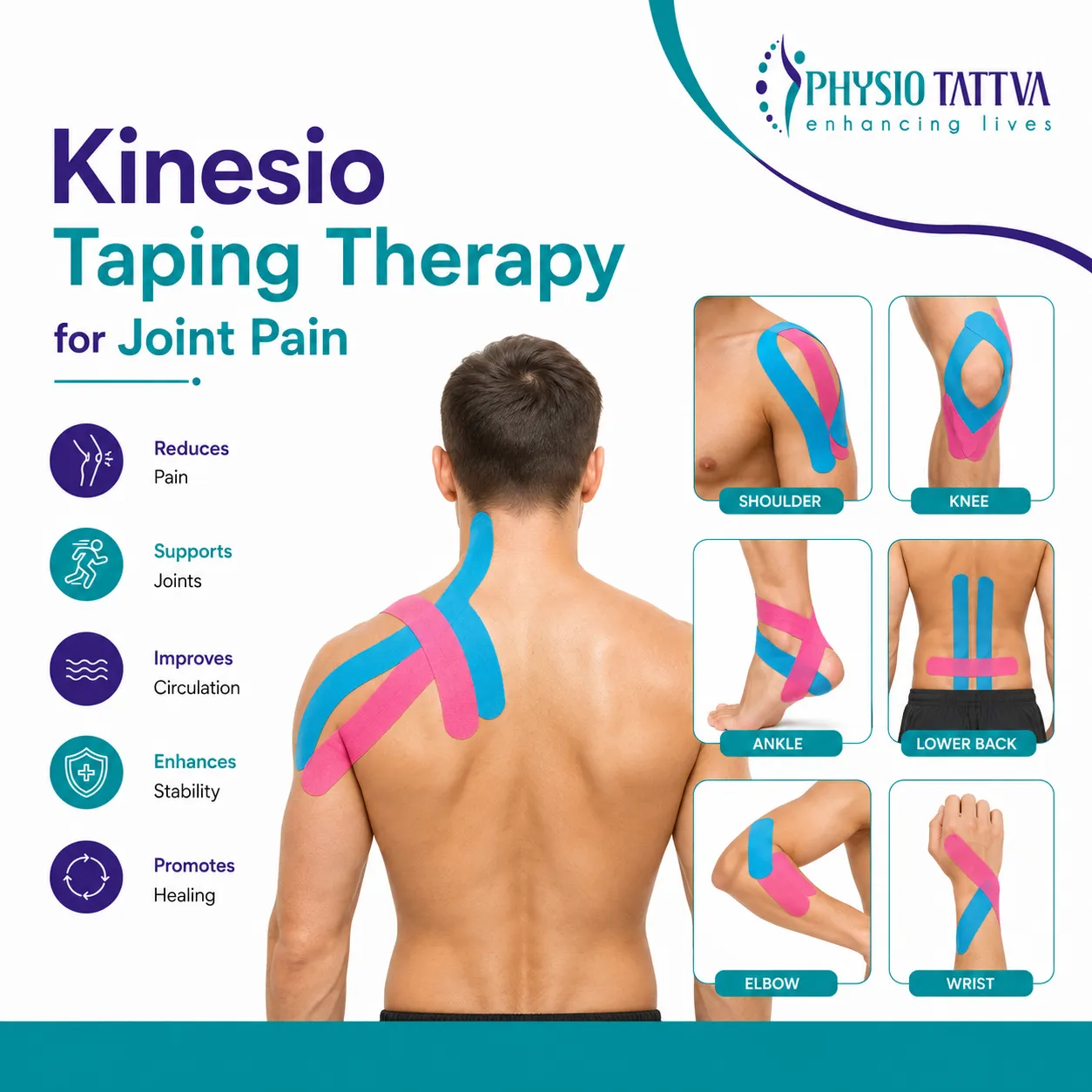
- Knee Pain: Effective for runner's knee, patellofemoral pain syndrome, osteoarthritis, meniscus issues, and providing general stability.
- Shoulder Pain: Used to treat rotator cuff injuries, shoulder impingement, and instability by helping to position the shoulder joint correctly and offload strained muscles.
- Back Pain: Provides potent relief for non-specific lower back pain, muscle strains, and can offer postural support to reduce strain during daily activities.
- Ankle & Foot Pain: A popular treatment for acute ankle sprains, Achilles tendonitis, and plantar fasciitis, where it can support the arch and reduce tissue strain.
- Wrist & Elbow Pain: Helps manage symptoms of carpal tunnel syndrome, tennis elbow, and golfer's elbow by reducing repetitive strain on inflamed tendons.
How to Apply Kinesio Tape: Basic Principles for Self-Application
Crucial Disclaimer: For an accurate diagnosis and the most effective taping strategy, it is always best to consult a certified physiotherapist. They can teach you the correct application techniques for your specific condition. The following are general principles for safe application.
- Prepare the Skin: The area must be clean, dry, and free of any oils, lotions, or hair. Shaving the area can improve adhesion and comfort.
- Cut and Round the Edges: Cut the tape to the desired length and shape (e.g., I-strip, Y-strip). Rounding the corners with scissors prevents them from catching on clothing and peeling prematurely.
- Create an Anchor: The first 1-2 inches of the tape—the "anchor"—is always applied with zero stretch. Peel the paper backing off this section and place it firmly on the skin.
- Apply with Correct Tension: Depending on the goal, you will apply the middle section of the tape with a specific amount of stretch. For pain and swelling, a very light "paper-off" stretch (10-15%) is used. For structural support, a moderate stretch (25-50%) may be required.
- Lay Down the Tail: Like the anchor, the final 1-2 inches of the tape is always laid down with zero stretch. This prevents the tape from pulling on the skin and causing irritation.
- Activate the Adhesive: Rub the tape briskly from the center outwards for several seconds. The friction generates heat, which fully activates the medical-grade adhesive for a long-lasting bond.
Benefits vs. Limitations of Kinesio Taping
Kinesio taping offers a range of advantages, especially for those seeking a non-invasive solution for joint pain. However, as with any therapeutic tool, it also has its limitations. It's important to understand both the benefits and the potential drawbacks to determine if Kinesio taping is the right choice for you.
Benefits of Kinesio Taping:
Kinesio taping therapy provides several key advantages, particularly for those looking for a non-invasive, drug-free solution to manage joint pain. Some of the primary benefits include:
- Provides drug-free pain management.
- Can be worn for 3-5 days, through showering and exercise.
- Supports joints during activity without restricting movement.
- Helps reduce swelling and inflammation.
- Extremely low risk of significant side effects.
Limitations of Kinesio Taping:
While Kinesio taping can be highly effective for pain management and support, it’s important to be aware of its limitations. It works best when combined with other treatments, and there are some considerations to keep in mind:
- It is not a cure. It is a therapeutic tool that works best as part of a comprehensive rehabilitation program that includes exercise.
- Effectiveness is highly dependent on the accuracy of the application.
- It is not a substitute for a proper medical diagnosis.
- Some individuals with sensitive skin may experience minor skin irritation or an allergic reaction to the adhesive.
When to See a Professional for Joint Pain
While Kinesio tape is widely available, you should always see a professional if:
- Your pain is severe, the result of a significant trauma, or does not improve.
- You are unsure of the cause of your joint pain.
- You need a taping strategy for a complex or chronic condition like osteoarthritis or a sports injury.
A certified Kinesio taping practitioner or physiotherapist can provide an accurate diagnosis and create a personalized taping strategy tailored to your anatomy and goals.
Kinesio Taping for Joint Pain Relief at Physiotattva
Kinesio taping therapy for joint pain is far more than just colorful tape. It is a scientifically-backed tool that helps manage pain, reduce swelling, and improve function by working with your body's own systems. By decompressing tissue, modulating pain signals, and enhancing proprioception, kinesiology tape for pain relief offers a powerful, non-invasive way to regain control and get back to an active life. When applied correctly, it can be a game-changing addition to your joint health toolkit. At Physiotattva, our trained professionals can help you incorporate Kinesio taping into your rehabilitation plan for optimal results.
At Physiotattva physiotherapy clinics in Bangalore and Hyderabad, you receive personalised care tailored to your specific needs, ensuring effective results and comfort throughout your journey to recovery.
Don’t wait to start your recovery! Get in touch with Physiotattva for more details! Contact us at +91 89510 47001.
Why Physiotattva?
22+
50,000+
95%
200+
25+
4.8
Cities We Serve

Bangalore
At Physio Tattva, we are committed to bring access to quality physio care through ultra-modern clinics and high-skilled practitioners to all.
.webp)
Hyderabad
At Physio Tattva, we are committed to bring access to quality physio care through ultra-modern clinics and high-skilled practitioners to all.
.webp)
Vishakhapatnam
At Physio Tattva, we are committed to bring access to quality physio care through ultra-modern clinics and high-skilled practitioners to all.
Core Treatments
Core Conditions
Core Symptoms
Frequently Asked Questions
How long can you leave Kinesio tape on?

What is the difference between Kinesio tape and regular athletic tape?
Can Kinesio tape help with arthritis joint pain?
Are there any side effects of Kinesio taping?






%20(1)-p-3200.jpeg)


.jpg)
.webp)
.webp)
.webp)