




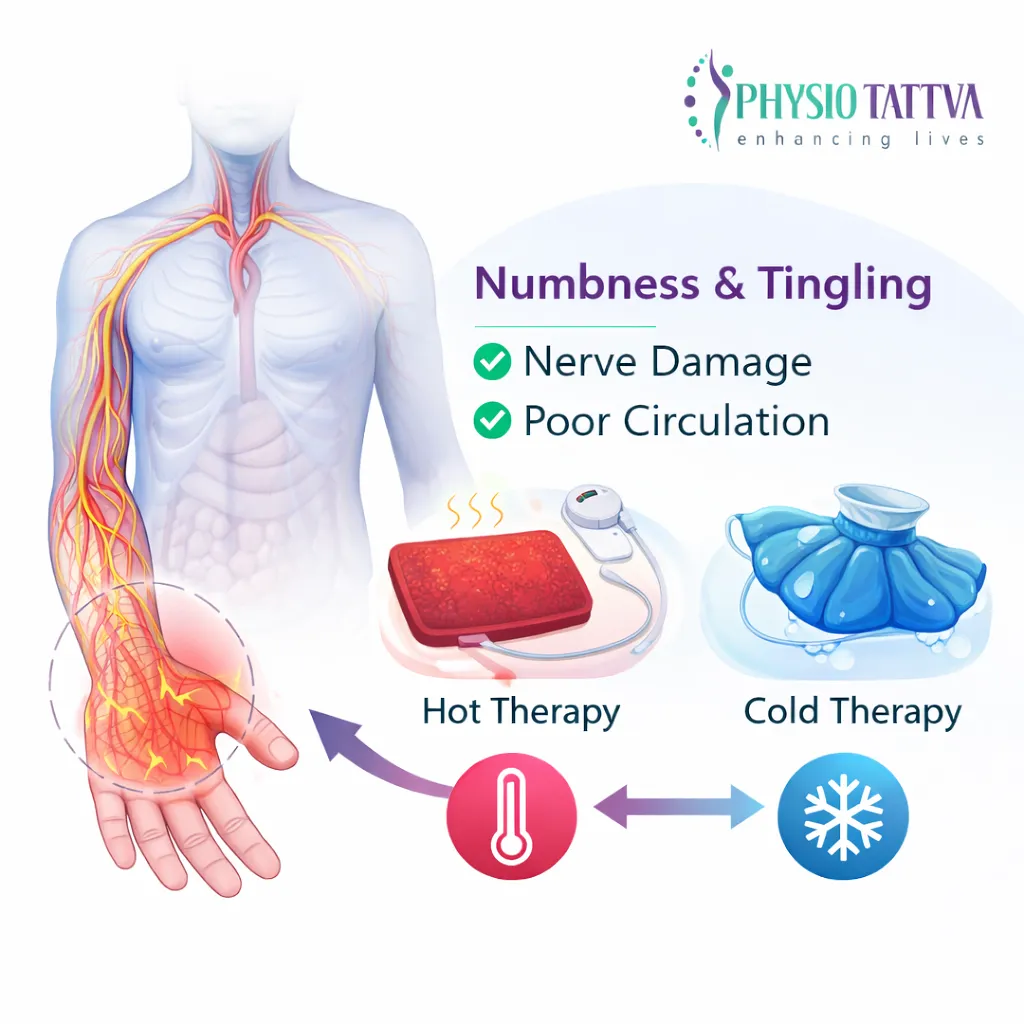
Numbness and tingling (medically known as paresthesia) are common symptoms that can arise from a wide range of issues, from a simple pinched nerve to a more complex chronic condition. While it's crucial to get a proper diagnosis from a healthcare professional, hot and cold therapy can be an effective, non-invasive way to manage these uncomfortable sensations.
The key is knowing when to use heat and when to use cold, as each therapy works in a very different way.
How Do Hot and Cold Therapies Work? Understanding the Mechanisms
Hot and cold therapies are widely used to treat various types of pain and discomfort. Each has unique mechanisms that help target different symptoms. By understanding how they work, you can apply the right therapy at the right time for optimal results.
Hot Therapy (Thermotherapy)
Heat works by promoting vasodilation, which means it widens your blood vessels. This increases blood flow, delivering more oxygen and nutrients to the affected area.
It relaxes tight muscles, soothes stiff joints, and reduces chronic nerve pain by increasing circulation.
Cold Therapy (Cryotherapy)
Cold works by causing vasoconstriction, which narrows your blood vessels. This reduces blood flow to the area.
It reduces inflammation and swelling, numbs sharp pain by slowing nerve signals, and is ideal for acute injuries.
When to Use Heat vs. When to Use Cold for Numbness and Tingling?
Choosing between heat and cold therapy depends on the cause of your numbness and tingling. Each therapy has distinct benefits for different conditions, so it’s important to understand when to apply each. Below are some general guidelines for when to use heat or cold based on your symptoms:
Use Hot Therapy (Heat) For
Heat therapy is effective for relieving numbness and tingling caused by muscle tightness, joint stiffness, or poor circulation. It works by relaxing muscles, improving blood flow, and increasing mobility. Use heat for:
- Chronic Muscle Tightness & Spasms: If your tingling is caused by tight muscles compressing a nerve (e.g., sciatica from piriformis syndrome), heat can relax the muscle and relieve the pressure on the nerve.
- Stiff Joints: If numbness is caused by joint stiffness or arthritis, heat therapy helps improve mobility and increases blood flow to the affected area.
- General Poor Circulation (with caution): For tingling in hands and feet due to poor circulation (but not linked to a severe medical condition), a warm soak or heat therapy can encourage blood flow to the area.
- Before Stretching or Activity: Applying heat before gentle stretching or exercise warms up the muscles, making them more flexible and potentially reducing nerve compression.
Use Cold Therapy (Ice) For
Cold therapy is ideal for reducing inflammation, numbing sharp pain, and managing symptoms after injury or overuse. It works by constricting blood vessels and slowing nerve signals. Use cold for:
- Acute Injury & Inflammation: If your numbness or tingling began after a recent injury (like a sprain or strain) within the past 48-72 hours, cold therapy helps reduce swelling and inflammation in the affected area.
- Repetitive Strain Flare-Ups: For conditions like carpal tunnel syndrome or tendonitis that have worsened from overuse, cold therapy can reduce inflammation in the tissues pressing on the nerve.
- Sharp, Acute Nerve Pain: Cold therapy acts as a local anesthetic, temporarily numbing the area and relieving sharp, "shooting" pains caused by nerve irritation.
- After Activity or Exercise: If activity worsens your symptoms and causes inflammation, applying cold therapy afterward can help manage the inflammation and provide relief.
How to Apply Hot and Cold Therapy Safely?
Improper application can lead to skin damage, burns, or frostbite. This is especially important when treating an area with reduced sensation like numbness.
How to Apply Heat?
Applying heat therapy correctly is important to ensure safety and effectiveness. Here are some simple steps to follow:
- Methods: Electric heating pad, microwaveable gel pack, warm/moist towel, or a warm bath/shower.
- Rule 1: Use a Barrier. Never place a heat source directly on your skin. Wrap it in a dry towel.
- Rule 2: The 20-Minute Rule. Apply for 15-20 minutes at a time.
- Rule 3: Check Your Skin. Since your sensation may be compromised, visually check the skin every 5 minutes for excessive redness or signs of a burn. The area should be warm and pink, not bright red or painful.
How to Apply Cold?
Cold therapy can effectively reduce inflammation and numb pain when applied correctly. Follow these steps for safe use:
- Methods: Ice pack, gel pack from the freezer, or a bag of frozen vegetables (like peas).
- Rule 1: Use a Barrier. Never place ice directly on your skin. Wrap it in a thin, damp towel for better conduction.
- Rule 2: The 15-Minute Rule. Apply for 10-15 minutes at a time. Longer exposure can cause nerve or skin damage.
- Rule 3: Check Your Skin. Remove the pack if your skin becomes bright red, white, or develops welts.
Alternating Hot and Cold Therapy (Contrast Therapy)
This technique involves alternating between heat and cold. It can be useful for sub-acute injuries (after the initial 72 hours) or chronic conditions that involve both stiffness and inflammation.
- How to do it: Start with cold to reduce any lingering inflammation, then switch to heat to promote blood flow.
- A common cycle: 10 minutes of cold, followed by 10 minutes of heat. Repeat 2-3 times, always ending with cold if inflammation is a concern.
Important Precautions and When to See a Professional
Hot and cold therapy is for symptom management, not a cure. It is critical to see a doctor for a proper diagnosis.
Do NOT Use Hot or Cold Therapy
While heat and cold therapies can be highly effective, they should be avoided in certain conditions to prevent further harm. Here are situations where these therapies should not be used:
- You have an open wound, broken skin, or a rash in the area.
- You have a serious circulatory condition like peripheral vascular disease (PVD) or deep vein thrombosis (DVT).
- The area is so numb that you cannot reliably feel temperature changes, as the risk of burns or frostbite is very high.
- You have a condition like diabetic neuropathy. Consult your doctor first, as nerve damage can severely impair your ability to sense temperature.
When to See a Doctor for Your Numbness and Tingling?
If you're experiencing numbness and tingling, it’s important to be aware of certain warning signs that require immediate medical attention. These may indicate a serious underlying condition that needs prompt evaluation and care:
- Starts suddenly after a head, neck, or back injury.
- Affects an entire arm or leg, or one entire side of your body.
- Is accompanied by weakness, paralysis, confusion, slurred speech, or loss of bladder/bowel control (these are signs of a stroke or serious spinal injury).
- Is persistent, unexplained, or worsening over time
Find Effective Relief for Numbness and Tingling at Physiotattva
Hot and cold therapies can provide effective, non-invasive relief for numbness and tingling by addressing symptoms like muscle tightness, inflammation, and nerve irritation. Heat is beneficial for chronic conditions, muscle stiffness, and improving circulation, while cold therapy is ideal for acute injuries, inflammation, and sharp nerve pain. However, it's essential to apply these therapies safely and in the right circumstances. Always use a barrier to protect your skin, limit the application time, and check the area regularly for any adverse reactions. Most importantly, seek a proper diagnosis from a healthcare professional to address the root cause of your numbness and tingling. If symptoms persist or worsen, consult a doctor for further evaluation and treatment.
At Physiotattva physiotherapy clinics in Bangalore and Hyderabad, you receive personalised care tailored to your specific needs, ensuring effective results and comfort throughout your journey to recovery.
Don’t wait to start your recovery! Get in touch with Physiotattva for more details! Contact us at +91 89510 47001.
Why Physiotattva?
22+
50,000+
95%
200+
25+
4.8
Cities We Serve

Bangalore
At Physio Tattva, we are committed to bring access to quality physio care through ultra-modern clinics and high-skilled practitioners to all.
.webp)
Hyderabad
At Physio Tattva, we are committed to bring access to quality physio care through ultra-modern clinics and high-skilled practitioners to all.
.webp)
Vishakhapatnam
At Physio Tattva, we are committed to bring access to quality physio care through ultra-modern clinics and high-skilled practitioners to all.
Core Treatments
Core Conditions
Core Symptoms
Frequently Asked Questions
Should I use hot or cold therapy for numbness and tingling?

How do I safely apply hot or cold packs for this?
Which is better for nerve-related pain, heat or ice?
When should I avoid using hot or cold therapy for numbness?
What if hot and cold therapy doesn't relieve my numbness and tingling?






%20(1)-p-3200.jpeg)


.jpg)
.webp)
.webp)
.webp)