


Hot and Cold Therapy
Hot and Cold Therapy for Neck Pain
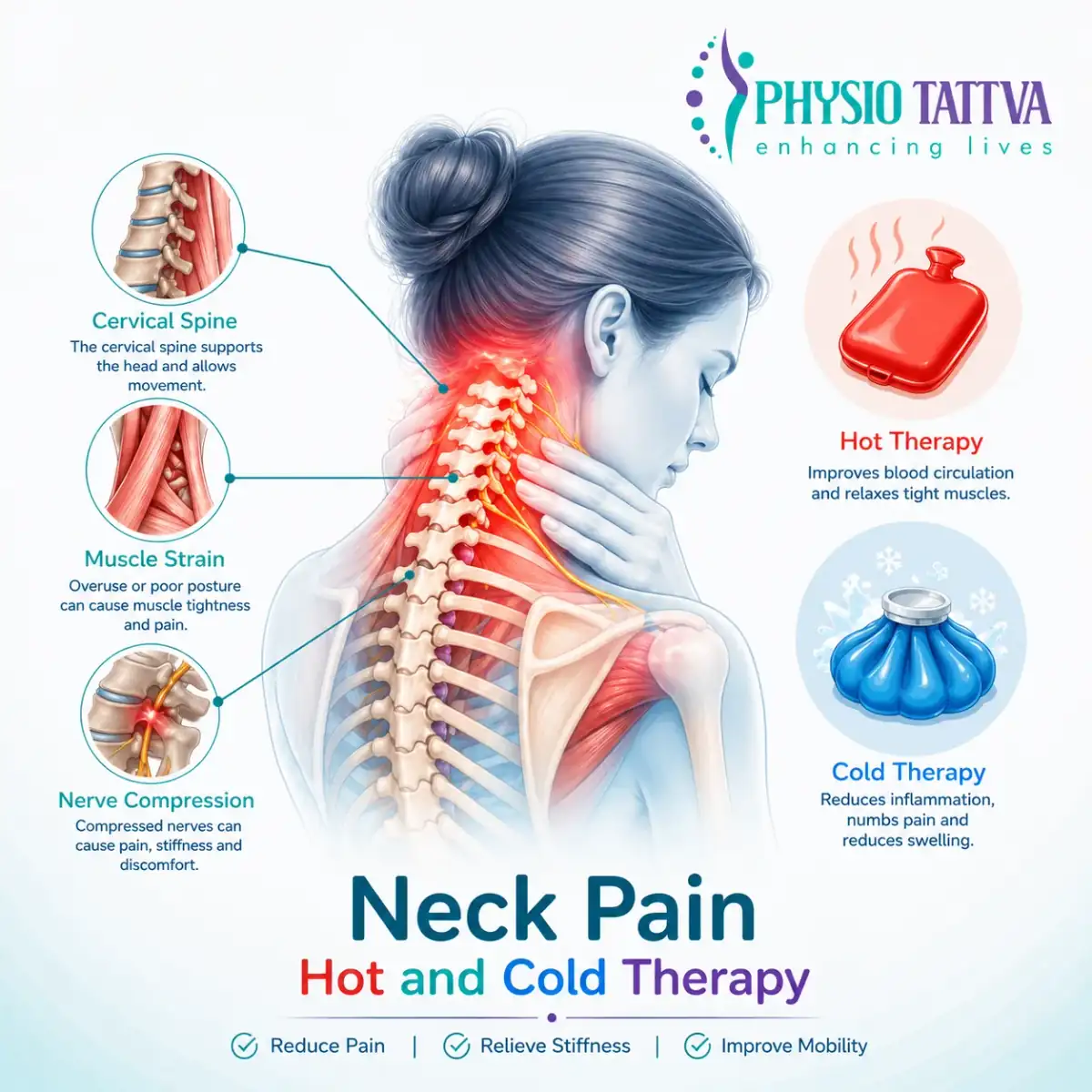
Hot and cold therapy for neck pain offers targeted relief by addressing inflammation, muscle stiffness, and postural strain. Ice helps control swelling during the early stages of an injury, while heat enhances blood flow and reduces chronic tension. Understanding exactly when and how to use each method can improve your recovery and prevent worsening symptoms. This guide walks you through safe, effective home application.
Neck pain is a common problem that can interfere with your daily routine, disturb your sleep, and make simple movements difficult. Fortunately, one of the easiest and most affordable ways to manage it at home is hot and cold therapy.
But using the right method at the right time is essential. Applying heat or ice incorrectly can reduce its effectiveness or even make your pain worse. This article will help you understand exactly when to use heat or cold for neck pain and how to do it safely for the best results.
Cold Therapy (Cryotherapy) for Neck Pain
Think ICE for Injury, Constriction, and Emergencies. Cold therapy is the go-to treatment for fresh, acute neck injuries. It’s most effective within the first 24–72 hours, when inflammation and swelling are at their peak.
Cold therapy helps control pain and prevent further tissue damage during this critical window. It’s ideal when symptoms are sudden, sharp, or caused by trauma.
When to Use Cold Therapy?
Use a cold pack within the first 24-72 hours of an acute injury. This is when inflammation is at its peak.It's particularly helpful for:
- Sudden Injury: After a sports injury, whiplash from a car accident, or a fall.
- Muscle Strain: If you wake up with a sharp, sudden pain from sleeping in an awkward position.
- New Pain: When you've overdone it at the gym or with physical labor and the pain is new and sharp.
- Flare-ups: If a chronic condition suddenly becomes inflamed and swollen.
How Cold Therapy Works?
Cold therapy, or cryotherapy, causes vasoconstriction, which means it narrows your blood vessels. This:
- Reduces Blood Flow: Slows down circulation to the injured area.
- Decreases Inflammation & Swelling: Less fluid rushes to the site of the injury.
- Numbs the Area: Acts as a local anesthetic, providing immediate pain relief by slowing down pain signals to the brain.
How to Apply Cold Therapy Safely?
Cold therapy can be very effective for reducing swelling, inflammation, and sharp pain, especially in the first few days after a neck injury or flare-up. However, it must be applied correctly to avoid skin damage and get the full benefit.
Follow these simple steps to use cold therapy safely:
- Get a Cold Source: Use a gel pack, an ice pack, or even a bag of frozen vegetables (peas work great!).
- WRAP IT UP: Never apply a frozen pack directly to your skin. This can cause ice burns or frostbite. Always wrap it in a thin, dry towel or cloth.
- Apply to the Neck: Place the wrapped pack on the most painful area of your neck.
- Time it Right: Apply for 15-20 minutes at a time.
- Take a Break: Remove the pack for at least 40-45 minutes to allow your skin to return to normal temperature before reapplying. You can repeat this cycle several times a day for the first 1-3 days.
Hot Therapy (Thermotherapy) for Neck Pain
Hot therapy is one of the most effective treatments for managing chronic neck pain, stiffness, and muscular tension. It works best when used correctly and at the right stage of recovery.
Think HEAT for Healing, Elasticity, And Tension. Heat therapy is ideal for loosening tight muscles, improving flexibility, and reducing chronic discomfort from postural stress or old injuries.
When to Use Hot Therapy:
Use a heat pack after the initial 72-hour inflammatory phase has passed, or for ongoing, chronic issues.
- Muscle Stiffness & Soreness: For a stiff neck from stress, poor posture, or lingering pain from an old injury.
- Chronic Pain: For conditions like osteoarthritis, where joints are stiff but not acutely swollen.
- Before Activity: Applying heat before stretching can increase muscle flexibility and reduce the risk of strain.
- Stress & Tension: To relax tight neck and shoulder muscles from a long day at the computer.
How Hot Therapy Works?
Hot therapy, or thermotherapy, helps ease neck pain by improving circulation and relaxing soft tissues. When applied correctly, it causes vasodilation, the widening of blood vessels, which leads to a cascade of therapeutic effects in the targeted area:
- Increases Blood Flow: Stimulates circulation to the area.
- Promotes Healing: Delivers more oxygen and nutrients to damaged tissues.
- Relaxes Muscles: Soothes muscle tightness and reduces spasms.
- Increases Flexibility: Makes connective tissues more pliable and eases stiffness.
How to Apply Hot Therapy Safely?
Using heat can soothe stiff neck muscles and boost circulation, but it’s important to apply it the right way to avoid skin irritation or burns. Here’s how to do it safely and effectively:
- Choose a Safe Heat Source: Use an electric heating pad, a microwavable gel pack, a hot water bottle, or a warm, damp towel. A warm shower or bath can also be very effective (this is called moist heat).
- Use a Barrier: To prevent burns, place a layer of cloth between the heating pad and your skin, especially if using a high setting.
- Apply to the Neck: Place the heat source on the stiff, sore muscles.
- Time it Right: Use heat for 15–20 minutes at a time. Prolonged exposure can lead to overheating or skin damage..
- Avoid Hazards: Never fall asleep with an electric heating pad on. Many have auto-shutoff features, but it's a dangerous habit.
Alternating Hot and Cold Therapy (Contrast Therapy)
For certain subacute neck injuries, typically after the first 72 hours, alternating between hot and cold therapy can speed up recovery. This approach, known as contrast therapy, creates a pumping effect: cold reduces inflammation by constricting blood vessels, while heat promotes healing by improving blood circulation.
How to Do It: This method is especially useful when swelling has started to subside but stiffness or discomfort remains. Here’s how to apply contrast therapy for neck pain:
- Step 1: Apply heat for 15 minutes: Use a warm compress or heating pad to gently warm the muscles and promote relaxation.
- Step 2: Switch to cold therapy for 15 minutes: Apply a cold pack to reduce any lingering inflammation or swelling in the area.
- Step 3: Repeat as needed: You can cycle between hot and cold up to two times, but always end with cold if swelling is still present.
Use this method with caution, and always ensure there's a protective layer (like a towel) between your skin and any hot or cold source to avoid burns or frostbite.
When to See a Doctor for Your Neck Pain?
While hot and cold therapy is effective for managing mild to moderate neck pain at home, some symptoms require professional medical attention. You should consult a doctor if you experience any of the following:
- Neck pain after a serious injury, such as a car accident, sports trauma, or a major fall.
- Severe, constant, or worsening pain that doesn’t improve with rest or self-care.
- Pain that radiates down your arm or leg, may indicate nerve involvement.
- Numbness, tingling, or weakness in your arms, hands, or fingers.
- Pain accompanied by fever, headache, or stiffness, especially if you cannot bend your neck forward (touch chin to chest).
- Neck pain that lasts more than a week despite using home treatments like ice, heat, or rest.
- Difficulty with coordination or balance, which could signal a more serious condition affecting the spine.
If any of these symptoms occur, seek prompt evaluation to rule out underlying issues and begin the right treatment.
Transforming Everyday Pain into Lasting Comfort at Physiotattva
Neck pain may be common, but that doesn’t mean you have to live with it. By understanding when to use hot or cold therapy, you’re already one step ahead in managing your recovery. Whether you're treating a fresh injury or easing tension built up over time, these simple techniques can bring real relief.
Don’t ignore your body’s signals, act early, apply therapy safely, and give yourself the care you deserve. And if things don’t improve, reach out to a professional who can guide you further. Your healing starts with action.
At Physiotattva physiotherapy clinics in Bangalore and Hyderabad, you receive personalised care tailored to your specific needs, ensuring effective results and comfort throughout your journey to recovery.
Don’t wait to start your recovery! Get in touch with Physiotattva for more details! Contact us at +91 89510 47001
Answers
Frequently asked questions
Start with an assessment
We measure what you've lost, find the cause, and set out a plan with a target and a timeline.
- Call us+91 89510 47001
- Email usinfo@physiotattva.com
- Visit a clinic24 clinics across Bangalore, Hyderabad and Visakhapatnam
- Or stay homePhysiotherapy at home