





Knee pain is one of the most common physical complaints, affecting people of all ages. Whether from a sudden injury, a chronic condition like arthritis, or simple overuse, finding effective relief is a top priority. Two of the simplest, oldest, and most effective home treatments are hot and cold therapy.
But which one should you use? And when? Using the wrong one can be ineffective or even make your pain worse. This guide will break down the science behind hot and cold therapy (thermotherapy and cryotherapy) so you can confidently treat your knee pain at home.
Understanding Knee Pain and How to Manage It
Knee pain is one of the most common musculoskeletal issues, often caused by overuse, injury, or aging. Whether you're dealing with acute pain from a recent injury or chronic discomfort from conditions like osteoarthritis, understanding the root causes of your knee pain is key to effective treatment. Knee pain can result from issues such as ligament sprains, meniscus tears, patellar tendinitis, or conditions like osteoarthritis, which involves cartilage breakdown. Managing knee pain effectively involves targeting the root cause and addressing inflammation, stiffness, and muscle weakness through therapies like hot and cold therapy, strengthening exercises, and professional care.
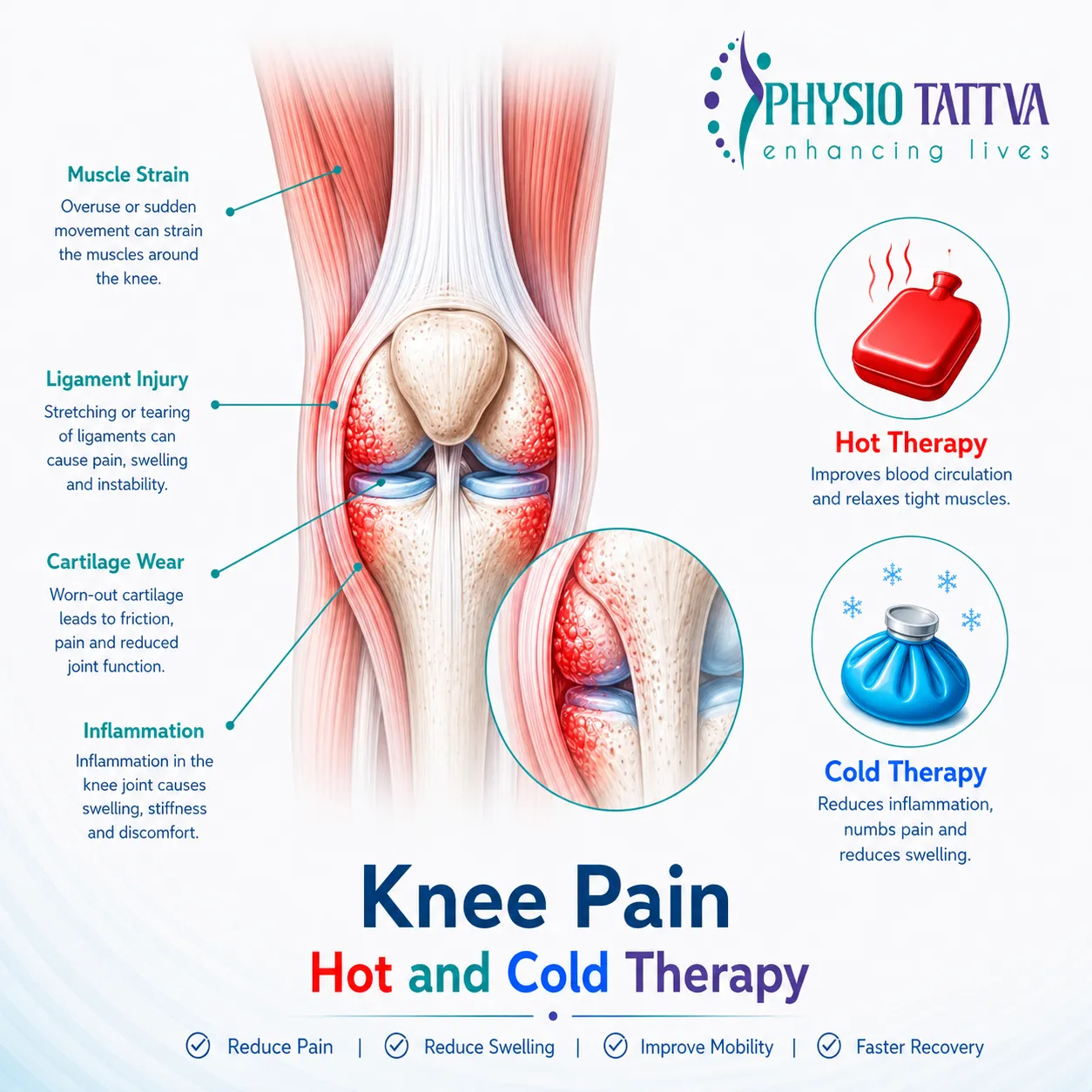
When to Use COLD Therapy (Cryotherapy) for Knee Pain?
The Simple Rule: COLD is for a NEW injury. Think inflammation, swelling, and sharp, acute pain.
Cold therapy works by constricting blood vessels (vasoconstriction). This process:
- Reduces Blood Flow: Limits the amount of swelling and inflammation in the injured area.
- Numbs the Area: Acts as a local anesthetic, providing immediate pain relief by slowing down pain signals to the brain.
- Decreases Muscle Spasms: Helps calm overactive muscles around the joint.
Use Cold Therapy For
Cold therapy is most effective when the knee is newly injured, swollen, or inflamed.
- Acute Injuries (First 48-72 hours): This includes knee sprains, strains, twists, bangs, and falls.
- Post-Exercise Pain: If your knee is swollen and sore after a run, workout, or sports activity.
- Inflammatory Flare-Ups: For conditions like gout or a rheumatoid arthritis flare-up where the joint is hot, red, and swollen.
How to Apply Cold Therapy?
Follow these simple steps to use cold therapy safely and effectively at home.
- Tools: Use a commercial gel pack, a bag of frozen peas, or a plastic bag filled with ice and a little water.
- Protect Your Skin: Never apply ice directly to your skin. Always wrap the cold pack in a thin towel or cloth to prevent frostbite.
- Duration: Apply for 15-20 minutes at a time.
- Frequency: You can reapply every 2-3 hours during the first 24-48 hours after an injury. The classic RICE method (Rest, Ice, Compression, Elevation) is your best friend for new injuries.
When to Use HEAT Therapy (Thermotherapy) for Knee Pain?
The Simple Rule: HEAT is for CHRONIC pain. Think stiffness, achiness, and sore muscles.
Heat therapy works by dilating blood vessels (vasodilation). This process:
- Increases Blood Flow: Stimulates circulation, bringing more oxygen and nutrients to the area to promote healing.
- Relaxes Muscles: Soothes tight muscles and reduces stiffness in the joint.
- Provides Comfort: Offers a comforting, analgesic effect for dull, persistent aches.
Use Heat Therapy For
Heat works best when the knee feels stiff, tight, or chronically achy rather than swollen.
- Chronic Conditions: Especially osteoarthritis, where the main issue is cartilage wear-and-tear and joint stiffness, not acute inflammation.
- Morning Stiffness: Applying heat first thing in the morning can help loosen a stiff knee.
- Before Activity: Using heat before stretching or light exercise can warm up the muscles and improve flexibility, making movement less painful.
- Muscle Soreness (Non-Swollen): For general achiness around the knee that is not accompanied by swelling.
Important Note: Do not use heat on a fresh injury or a swollen, inflamed joint. It will increase blood flow and make the swelling and pain worse.
How to Apply Heat Therapy?
These simple guidelines help you use heat safely and get the maximum relief.
- Tools: Use an electric heating pad, a microwavable heat pack, a warm, damp towel, or take a warm bath or shower. Moist heat is often more effective than dry heat.
- Protect Your Skin: Use a medium temperature setting. Place a cloth barrier between the heating pad and your skin to prevent burns. Never fall asleep with a heating pad on.
- Duration: Apply for 15-20 minutes at a time.
- Frequency: Use as needed, often before activities or to soothe end-of-day achiness.
What About Contrast Therapy? (Alternating Hot and Cold)?
Contrast therapy involves alternating between hot and cold applications. This creates a "pumping" action, where blood vessels dilate and then constrict, which can help flush out swelling and reduce stiffness simultaneously.
- When to Use: It's often recommended for recovering from intense exercise or in the "sub-acute" phase of an injury (after the first 48 hours but when some swelling remains).
- How to Do It: Follow these simple steps to safely perform contrast therapy:
- Start with heat for 3-4 minutes.
- Immediately switch to cold for 1 minute.
- Repeat this cycle 3-5 times, always ending with the cold application.
Important Precautions for Using Hot and Cold Therapy
Before using heat or cold, make sure it’s safe for your skin and circulation, as the wrong application can worsen symptoms.
Avoid hot or cold therapy if you have:
- Poor circulation: Your tissues may not tolerate temperature changes well, increasing the risk of damage.
- Nerve damage or decreased sensation (neuropathy): Common in diabetes; you may not feel burns or frostbite developing.
- Open wounds, rashes, or skin infections: Heat or cold can irritate the area and delay healing.
- Raynaud’s syndrome (for cold therapy): Cold may trigger severe blood vessel spasms and pain.
When to See a Doctor for Knee Pain?
While hot and cold therapy are excellent tools, they are not a substitute for professional medical advice. Consult a doctor or physical therapist if:
- You heard a "popping" sound at the time of injury.
- You are unable to bear weight on your knee.
- The knee looks deformed or has severe swelling.
- Your pain is severe and doesn't improve with home care.
- You have a fever, redness, or other signs of infection.
A professional can give you an accurate diagnosis and a comprehensive treatment plan that may include physical therapy, medication, and specific exercises in addition to hot and cold therapy.
Making the Right Choice for Long-Term Knee Relief
Hot and cold therapy remain simple yet highly effective ways to manage knee pain when used correctly. Ice helps control swelling and acute pain in the early stages of an injury, while heat improves circulation, relaxes tight muscles, and reduces chronic stiffness once inflammation settles. Alternating both methods can further support recovery during the sub-acute phase. Using each therapy appropriately not only speeds up healing but also helps you stay active with greater comfort and confidence.
At Physiotattva physiotherapy clinics in Bangalore and Hyderabad, you receive personalised care tailored to your specific needs, ensuring effective results and comfort throughout your journey to recovery.
Don’t wait to start your recovery! Get in touch with Physiotattva for more details! Contact us at +91 89510 47001.
Why Physiotattva?
22+
50,000+
95%
200+
25+
4.8
Cities We Serve

Bangalore
At Physio Tattva, we are committed to bring access to quality physio care through ultra-modern clinics and high-skilled practitioners to all.
.webp)
Hyderabad
At Physio Tattva, we are committed to bring access to quality physio care through ultra-modern clinics and high-skilled practitioners to all.
.webp)
Vishakhapatnam
At Physio Tattva, we are committed to bring access to quality physio care through ultra-modern clinics and high-skilled practitioners to all.
Core Treatments
Core Conditions
Core Symptoms
Frequently Asked Questions
Is heat or ice better for knee pain?

How long should I apply heat or ice to my knee?
Should I use heat or cold for knee arthritis?
Is it okay to alternate between hot and cold therapy on my knee?
When should I avoid using hot or cold therapy for knee pain?






%20(1)-p-3200.jpeg)


.jpg)
.webp)
.webp)
.webp)