





Foot pain is an incredibly common ailment, but thankfully, two of the most effective, inexpensive, and accessible treatments are likely already in your home: ice and heat. Knowing when and how to use hot and cold therapy (also known as thermotherapy and cryotherapy) is the key to fast and effective relief.
This article will break down which therapy to use for your specific type of foot pain.
How Hot and Cold Therapy Can Reduce Foot Pain
Hot and cold therapy are simple yet effective treatments for foot pain. Cold therapy, or cryotherapy, helps reduce swelling and inflammation by constricting blood vessels, making it ideal for acute injuries like sprains or plantar fasciitis flare-ups. It also numbs the area, providing immediate pain relief.
On the other hand, hot therapy, or thermotherapy, works by increasing blood flow to the affected area, relaxing tight muscles, and improving circulation. It’s especially beneficial for chronic conditions like arthritis or muscle stiffness. By increasing flexibility and promoting healing, heat therapy helps relieve persistent aches and pains.
Using both therapies together in a technique called contrast therapy can further enhance healing. Alternating between hot and cold can improve circulation and reduce swelling while soothing stiffness and discomfort, offering a comprehensive approach to foot pain relief.
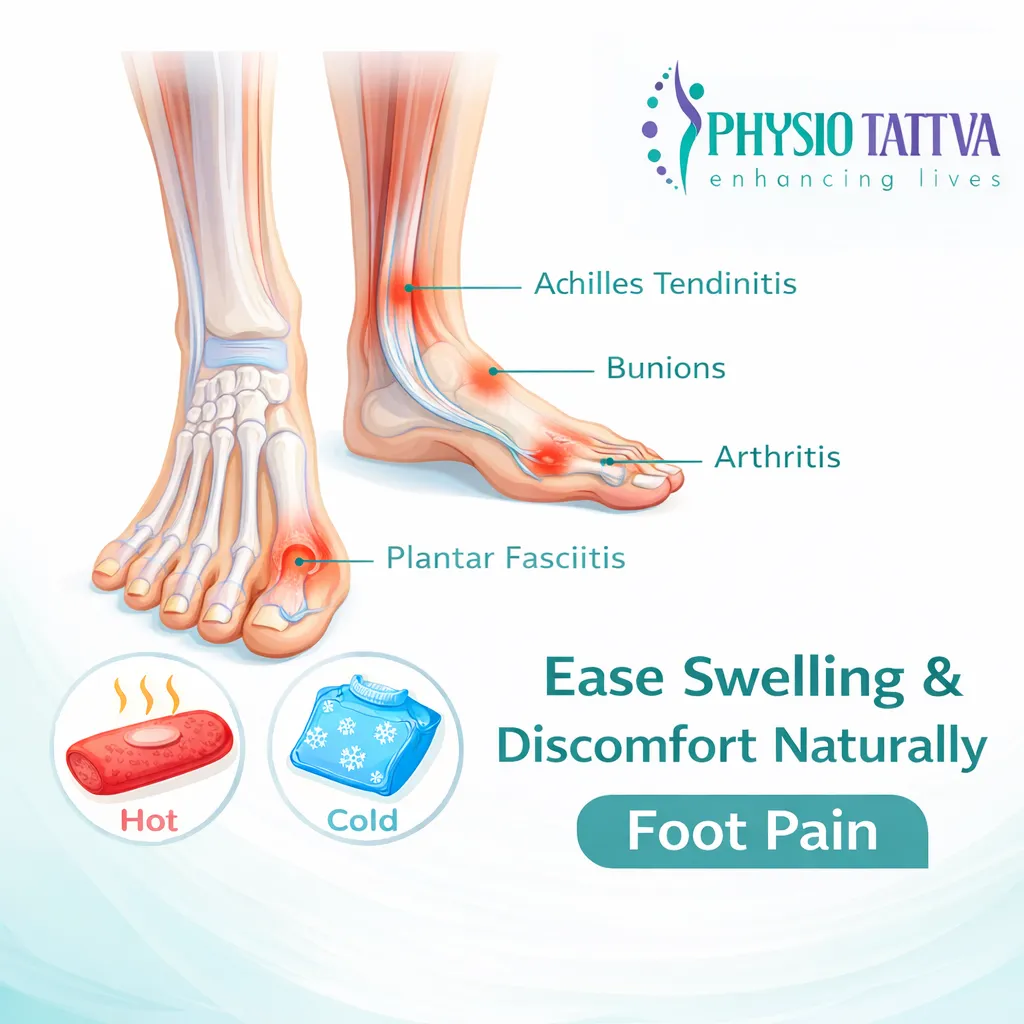
The Fundamental Rule for Using Hot and Cold Therapy
Understanding when to use hot or cold therapy is key to getting the most effective relief for foot pain. Here's a simple guideline to help you decide:
- COLD for INJURY & INFLAMMATION: Use ice for acute injuries (within the first 48-72 hours), swelling, and sharp pain. It helps reduce inflammation and numbs the area for immediate pain relief.
- HOT for MUSCLE STIFFNESS & ACHES: Use heat for chronic conditions, muscle soreness, and stiffness where there is no significant swelling. Heat promotes circulation, relaxes muscles, and alleviates persistent aches.
When to Use Cold Therapy (Cryotherapy)?
Cold therapy works by causing vasoconstriction—the narrowing of your blood vessels. This action provides several key benefits for acute foot pain:
- Reduces Swelling & Inflammation: Less blood flow to the area means less fluid buildup.
- Numbs Pain: Cold temporarily desensitizes nerve endings, acting as a local anesthetic.
- Slows Tissue Damage: By reducing metabolic activity in the area, it can limit secondary damage around an injury.
Use Cold Therapy For the Following Foot Conditions
Cold therapy is most effective for conditions that involve inflammation or sharp pain. It helps to reduce swelling, numb the affected area, and alleviate discomfort. Here’s when to use cold therapy for foot pain:
- Plantar Fasciitis (Flare-ups): Especially after a long day of standing or after exercise when the fascia is inflamed and painful.
- Ankle Sprains & Strains: Immediate application is crucial to control swelling and pain.
- Tendonitis (e.g., Achilles Tendonitis): After activity that has irritated the tendon.
- Gout: During a flare-up to help reduce the intense inflammation and pain in the joint.
- Bruises & Impact Injuries: From dropping something on your foot or stubbing a toe.
- Post-Exercise Soreness: If you have sharp pain or swelling after a run or workout.
How to Apply Cold Therapy for Foot Pain
To effectively use cold therapy, follow these methods for targeted relief:
- Ice Pack: Wrap a gel pack or bag of ice in a thin towel to prevent direct contact with the skin (never apply ice directly). Apply to the affected area for 15-20 minutes.
- Frozen Water Bottle: Freeze a water bottle and roll it under the arch of your foot, especially useful for plantar fasciitis. This method simultaneously ices and massages the fascia, providing dual relief.
- Ice Bath: Fill a small basin with cold water and ice. Submerge your foot for 10-15 minutes. This method is intense but highly effective for overall foot inflammation.
Duration: Apply for 15-20 minutes at a time. Wait at least one hour before reapplying to allow the tissue to return to normal temperature.
When to Use Hot Therapy (Thermotherapy)?
Hot therapy works by causing vasodilation, the widening of your blood vessels. This increases blood flow to the area, providing these benefits:
- Relaxes Muscles: Increased circulation helps soothe tight muscles and reduce stiffness.
- Promotes Healing: The rush of oxygen and nutrients in the blood helps repair damaged tissue.
- Reduces Chronic Pain: It can soothe the dull, persistent aches associated with arthritis and chronic stiffness.
Use Hot Therapy For
Hot therapy is beneficial for chronic foot conditions and muscle stiffness. It helps increase blood flow, relax tight muscles, and reduce discomfort. Here’s when to apply heat therapy for foot pain:
- Chronic Plantar Fasciitis (Stiffness): Use heat before activity, like in the morning, to warm up the fascia and improve flexibility. Do not use heat if it's acutely inflamed.
- Arthritis (Osteoarthritis): Heat is excellent for relieving the joint stiffness common with arthritis.
- General Muscle Soreness & Aching: Perfect for tired, aching feet after a long day without any acute injury or swelling.
- Pre-Stretching Warm-up: Applying heat before stretching can make the muscles and ligaments more pliable and reduce the risk of injury.
How to Apply Hot Therapy?
To effectively use hot therapy, follow these methods for soothing relief:
- Warm Foot Soak: This is a fantastic method. Fill a basin with warm water (not scalding, 92-100°F or 33-38°C is ideal). Soaking for 15-20 minutes provides gentle, surrounding heat. Adding Epsom salts can further help with muscle relaxation.
- Heating Pad: Use a commercial electric heating pad on a low or medium setting. Place a towel between the pad and your skin.
- Warm, Moist Towel: Soak a towel in warm water, wring it out, and wrap it around your foot.
Duration: Apply for 15-20 minutes at a time. Be careful not to fall asleep with a heating pad on.
Advanced Technique: Contrast Therapy (Alternating Hot & Cold)
For stubborn pain that involves both inflammation and stiffness, contrast therapy can be very effective. The rotation between hot and cold creates a "pumping" action in the blood vessels, helping to flush out inflammation while promoting circulation.
Use Contrast Therapy For
Contrast therapy is an advanced technique that alternates between hot and cold treatments to target both inflammation and muscle stiffness. It enhances circulation, reduces swelling, and promotes healing by creating a "pumping" action in the blood vessels. Here are the primary conditions where contrast therapy can be beneficial:
- Post-workout Recovery: Helps relieve foot pain after exercise.
- Chronic Injury with Swelling: Reduces swelling and speeds up healing for long-term injuries.
- Improving Circulation: Boosts blood flow to help recover damaged tissues.
How to Apply Contrast Therapy for Foot Pain Conditions?
Here’s how to do contrast therapy for your foot:
- Step 1: Prepare Two Basins: Fill one basin with cold water (and ice, if possible) and another with warm water. The cold should be 50-60°F (10-15°C), and the warm should be 92-100°F (33-38°C).
- Step 2: Start with Heat: Soak your foot in the warm water for 3 minutes to relax the muscles and improve circulation.
- Step 3: Switch to Cold: Move your foot into the cold water for 1 minute. This helps reduce swelling and numb the pain.
- Step 4: Repeat: Alternate between hot and cold 3-5 times, always ending with cold to reduce inflammation.
Tip: Make sure the water temperature is comfortable to avoid discomfort. You can repeat this process a few times for the best results.
Important Safety Precautions for Hot and Cold Therapy
Hot and cold therapy is generally safe, but there are certain conditions where it should be avoided. Do not use hot or cold therapy if you have the following health concerns:
- Poor Circulation or Peripheral Neuropathy: Conditions like diabetes can reduce your ability to feel temperature, increasing the risk of burns or frostbite. Always consult with your doctor before using hot or cold therapy.
- Open Wounds or Broken Skin: Never apply heat or ice directly to an open wound or broken skin, as it can lead to further damage or infection.
- Raynaud's Disease: Cold therapy can trigger an attack in people with Raynaud’s disease, causing further complications.
When to See a Doctor for Foot Pain Treatment?
While home therapy is great for minor foot issues, you should seek medical attention if:
- You cannot put weight on your foot: If you experience difficulty or pain while bearing weight, consult a doctor for a proper diagnosis.
- The pain is severe, constant, or worsening: Persistent or intensifying pain may indicate a more serious issue that requires professional evaluation.
- You notice signs of infection: If you observe symptoms such as redness, pus, warmth, or fever, seek medical attention immediately.
- The area is numb or tingling persistently: Prolonged numbness or tingling may signal nerve damage or another underlying condition.
- You suspect a fracture or a complete tear of a ligament/tendon: If you believe you've fractured your foot or torn a ligament/tendon, it’s crucial to see a healthcare professional for proper treatment.
Effective Pain Relief with Hot and Cold Therapy at Physiotattva
Hot and cold therapy are accessible and effective treatments for foot pain, offering relief for conditions like plantar fasciitis, arthritis, and muscle soreness. By using the right therapy for the right condition, you can target inflammation, improve blood flow, and relieve discomfort. Always follow safety precautions and seek medical advice if pain persists. When used correctly, these therapies can significantly enhance your recovery and mobility.
At Physiotattva physiotherapy clinics in Bangalore and Hyderabad, you receive personalised care tailored to your specific needs, ensuring effective results and comfort throughout your journey to recovery.
Don’t wait to start your recovery! Get in touch with Physiotattva for more details! Contact us at +91 89510 47001.
Why Physiotattva?
22+
50,000+
95%
200+
25+
4.8
Cities We Serve

Bangalore
At Physio Tattva, we are committed to bring access to quality physio care through ultra-modern clinics and high-skilled practitioners to all.
.webp)
Hyderabad
At Physio Tattva, we are committed to bring access to quality physio care through ultra-modern clinics and high-skilled practitioners to all.
.webp)
Vishakhapatnam
At Physio Tattva, we are committed to bring access to quality physio care through ultra-modern clinics and high-skilled practitioners to all.
Core Treatments
Core Conditions
Core Symptoms
Frequently Asked Questions
When should I use cold therapy for my foot pain?

When should I use hot therapy for my foot pain?
How long should I apply heat or cold to my foot?
Can I alternate hot and cold therapy for foot pain? (Contrast Bath)
What are the best methods for applying heat or cold to my feet?






%20(1)-p-3200.jpeg)


.jpg)
.webp)
.webp)
.webp)