


Hot and Cold Therapy
Hot and Cold Therapy for Back Pain
Struggling with back pain? Hot and cold therapy can offer relief. Ice helps reduce swelling and inflammation from new injuries, while heat soothes muscle tension and chronic pain. Find out how to use these therapies effectively for better movement, less pain, and faster recovery. Start feeling better with these simple, home remedies.
When back pain strikes, two of the simplest, most affordable, and effective treatments are right at your fingertips: ice and heat. However, knowing which one to apply and when is essential for optimal relief. Using the wrong therapy at the wrong time can either offer no benefit or even exacerbate your pain. This article will help you understand how to properly use hot and cold therapy, ensuring you get the most effective relief for your specific type of back pain.
The Golden Rule: Ice First, Heat Later
One of the simplest ways to remember which therapy to use is by following this easy rule:
- ICE for INJURY: Use cold therapy for new, acute injuries within the first 24 to 72 hours. Ice helps reduce inflammation, swelling, and numbs the pain, making it the ideal choice for fresh injuries, sprains, strains, or any sudden back pain.
- HEAT for ACHES: Use heat therapy for chronic pain, stiffness, or sore muscles. Heat helps to relax tight muscles, improve blood flow, and soothe ongoing discomfort that persists beyond the initial injury phase.
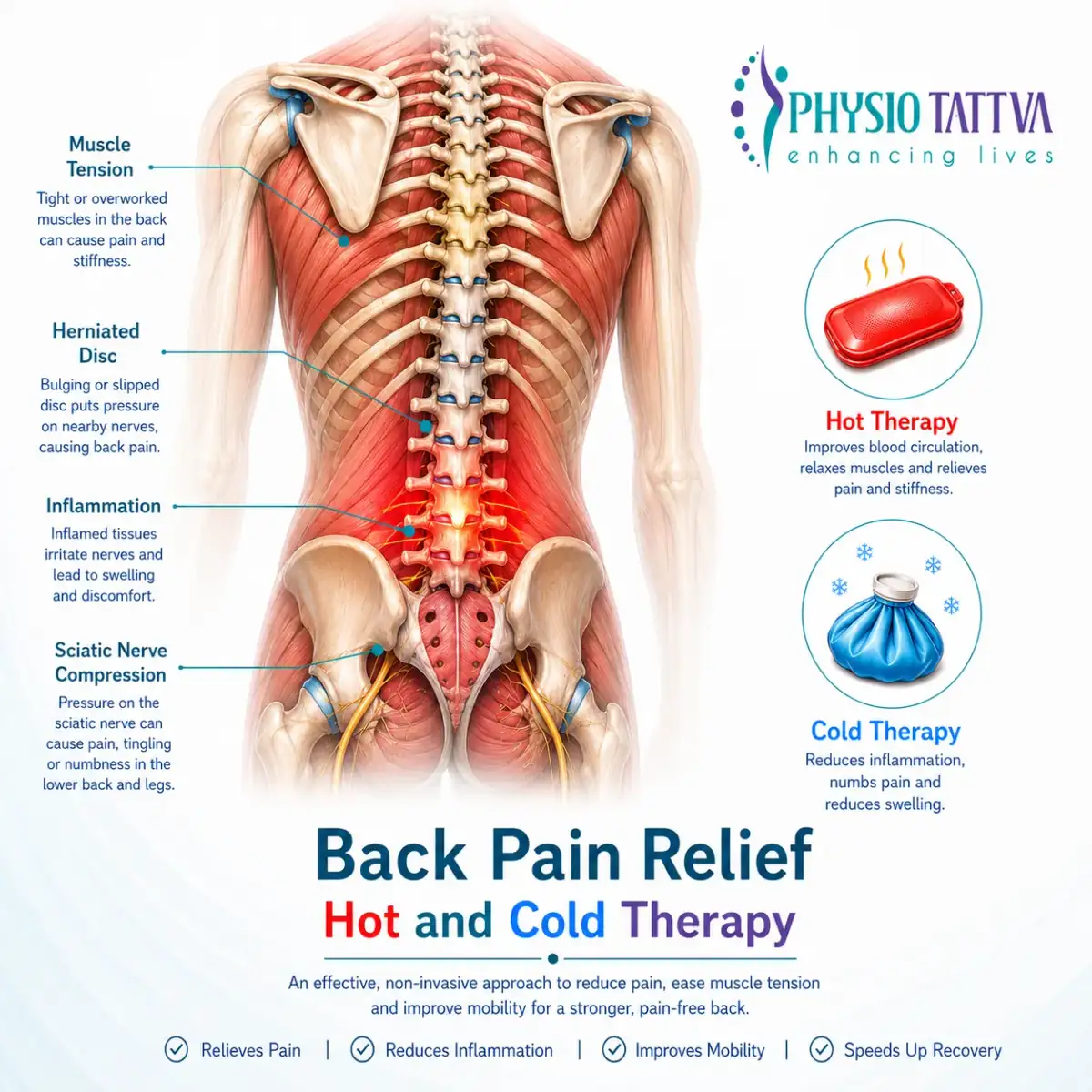
Cold Therapy (Cryotherapy) for Back Pain
Cold therapy works by inducing vasoconstriction, which narrows the blood vessels in the targeted area. This physiological response offers several important benefits for managing back pain:
- Reduces Inflammation & Swelling: By decreasing blood flow to the affected area, cold therapy helps minimise swelling and inflammation, which can reduce pressure and discomfort.
- Numbs the Pain: The cold acts as a local anesthetic, temporarily numbing the area to provide fast, effective pain relief.
- Slows Nerve Impulses: Cold therapy slows down nerve activity in the treated area, which helps block pain signals from reaching the brain and provides additional relief from acute pain.
When to Use Cold Therapy?
Use ice for acute back pain, which is typically the first 24 to 72 hours after an injury. This is the "inflammatory phase" where the body rushes fluid to the area.
- Sudden Injury: You just twisted the wrong way, lifted something too heavy, or had a fall.
- A "Pulled" Muscle: You feel a sharp, immediate pain in your back.
- Post-Activity Soreness: After a strenuous workout or activity that has caused a fresh flare-up.
- If you see visible swelling or bruising.
How to Apply Cold Therapy?
To get the most effective relief from cold therapy, follow these simple steps:
- Tools: Gel packs, an ice pack, or even a bag of frozen vegetables (like peas) wrapped in a towel.
- Method: Never place ice directly on your skin. Always use a thin towel or cloth as a barrier to prevent ice burn and frostbite.
- Duration: Apply for 15-20 minutes at a time.
- Frequency: You can re-apply every 1-2 hours throughout the day during the first 48 hours.
Heat Therapy (Thermotherapy) for Back Pain
Heat therapy works by inducing vasodilation, which means it expands your blood vessels and increases circulation. This process offers several key benefits, especially for chronic pain and muscle stiffness:
- Improves Circulation: The increased blood flow helps deliver oxygen and vital nutrients to the damaged tissue, supporting the healing process and promoting recovery in the affected area.
- Relaxes Muscles: Heat therapy helps to soothe tight, stiff muscles, reducing tension and alleviating muscle spasms. It’s especially effective for relieving discomfort from chronic muscle stiffness or post-activity soreness.
- Reduces Chronic Pain: The comforting warmth can help decrease the perception of persistent, nagging pain. By relaxing muscles and improving circulation, it provides long-lasting relief from ongoing back pain and helps reduce overall discomfort.
When to Use Heat Therapy?
Use heat for chronic back pain, stiffness, and muscle soreness. This is pain that has lasted longer than a few weeks or is not related to a new injury. Do not use heat on a fresh, acute injury, as it can increase inflammation and swelling.
- Chronic Conditions: For ongoing pain from arthritis, old injuries, or fibromyalgia.
- Muscle Stiffness: For a stiff back upon waking up or after sitting for a long time.
- Muscle Soreness: Before stretching or light activity to warm up tight back muscles.
- Stress & Tension: For back pain caused by muscle tension from stress.
How to Apply Heat Therapy?
For effective heat therapy, follow these guidelines to ensure safe and beneficial treatment:
- Tools: Electric heating pad, hot water bottle, moist heat pack, warm bath/shower, or adhesive heat wraps.
- Method: Use a low to medium setting on a heating pad to avoid burns. If using a moist towel, be careful not to make it scalding. A warm bath (92-100°F or 33-38°C) is an excellent way to apply gentle, full-body heat.
- Duration: Apply for 15-20 minutes for direct applications like a heating pad. A warm bath can be longer. Adhesive wraps provide low-level heat for up to 8 hours.
- Safety: Never fall asleep with an electric heating pad on. Check your skin periodically for redness to prevent burns.
Advanced Technique: Contrast Therapy
For stubborn pain that persists after the initial 72-hour acute phase, contrast therapy can be a highly effective method. By alternating between hot and cold treatments, you create a "pumping" action that helps flush out lingering inflammation while promoting the flow of healing nutrients to the affected area.
- Method: Start with 15 minutes of heat to increase blood flow and relax the muscles, followed immediately by 15 minutes of ice to reduce swelling and numb the area. Repeat this cycle for optimal results.
- When to Use: Contrast therapy is ideal after the first 2-3 days of an injury, once the acute inflammation has subsided. It’s also beneficial for recovery after intense physical activity or exercise, as it helps reduce muscle soreness and promotes faster healing.
Important Precautions & When to See a Doctor
While hot and cold therapy is generally safe and effective, there are certain situations where caution is needed. If you have any of the following conditions, you should avoid using heat or cold therapy, or consult with a healthcare provider before proceeding.
Do NOT use hot or cold therapy if you have:
It’s important to avoid heat or cold therapy in certain conditions to prevent further complications:
- Open Wounds, Broken Skin, or Rashes: Applying heat or cold to these areas can aggravate the condition and slow down the healing process.
- Poor Circulation: Conditions like diabetes or peripheral vascular disease can reduce your ability to feel temperature changes, increasing the risk of burns or frostbite.
- Certain Skin Conditions (e.g., Dermatitis): Heat or cold therapy can worsen skin irritations, leading to increased discomfort or damage.
Consult a Doctor for Your Back Pain if:
Seek medical attention if your back pain shows signs of a more serious condition:
- The pain is severe and doesn’t improve after a few days of self-care: Persistent, severe pain could indicate an underlying condition that requires professional treatment.
- You experience numbness, tingling, or weakness in your legs: These could be signs of nerve involvement, such as a herniated disc or spinal injury.
- You have loss of bladder or bowel control (this is a medical emergency): This may signal a serious condition like cauda equina syndrome, requiring immediate attention.
- The pain is the result of a significant fall or trauma: Injury-related pain needs professional evaluation to rule out fractures or internal injuries.
- The pain is accompanied by a fever or unexplained weight loss: These symptoms could indicate infection or more serious health issues like cancer, requiring medical evaluation.
Effective Back Pain Treatment with Hot and Cold Therapy at Physiotattva
Hot and cold therapy are simple, cost-effective methods for managing back pain. Ice therapy is ideal for acute injuries, as it reduces inflammation, swelling, and numbs the pain within the first 24-72 hours. Heat therapy, on the other hand, is perfect for chronic pain, muscle stiffness, and soreness, helping to relax muscles, improve blood flow, and alleviate discomfort. Understanding when to apply each therapy is crucial for effective relief. Always follow safety guidelines to avoid skin damage, and consult with a healthcare provider if pain persists or worsens. With the right approach, hot and cold therapy can help you manage back pain and speed up your recovery.
At Physiotattva physiotherapy clinics in Bangalore and Hyderabad, you receive personalised care tailored to your specific needs, ensuring effective results and comfort throughout your journey to recovery.
Don’t wait to start your recovery! Get in touch with Physiotattva for more details! Contact us at +91 89510 47001.
Answers
Frequently asked questions
Start with an assessment
We measure what you've lost, find the cause, and set out a plan with a target and a timeline.
- Call us+91 89510 47001
- Email usinfo@physiotattva.com
- Visit a clinic24 clinics across Bangalore, Hyderabad and Visakhapatnam
- Or stay homePhysiotherapy at home