




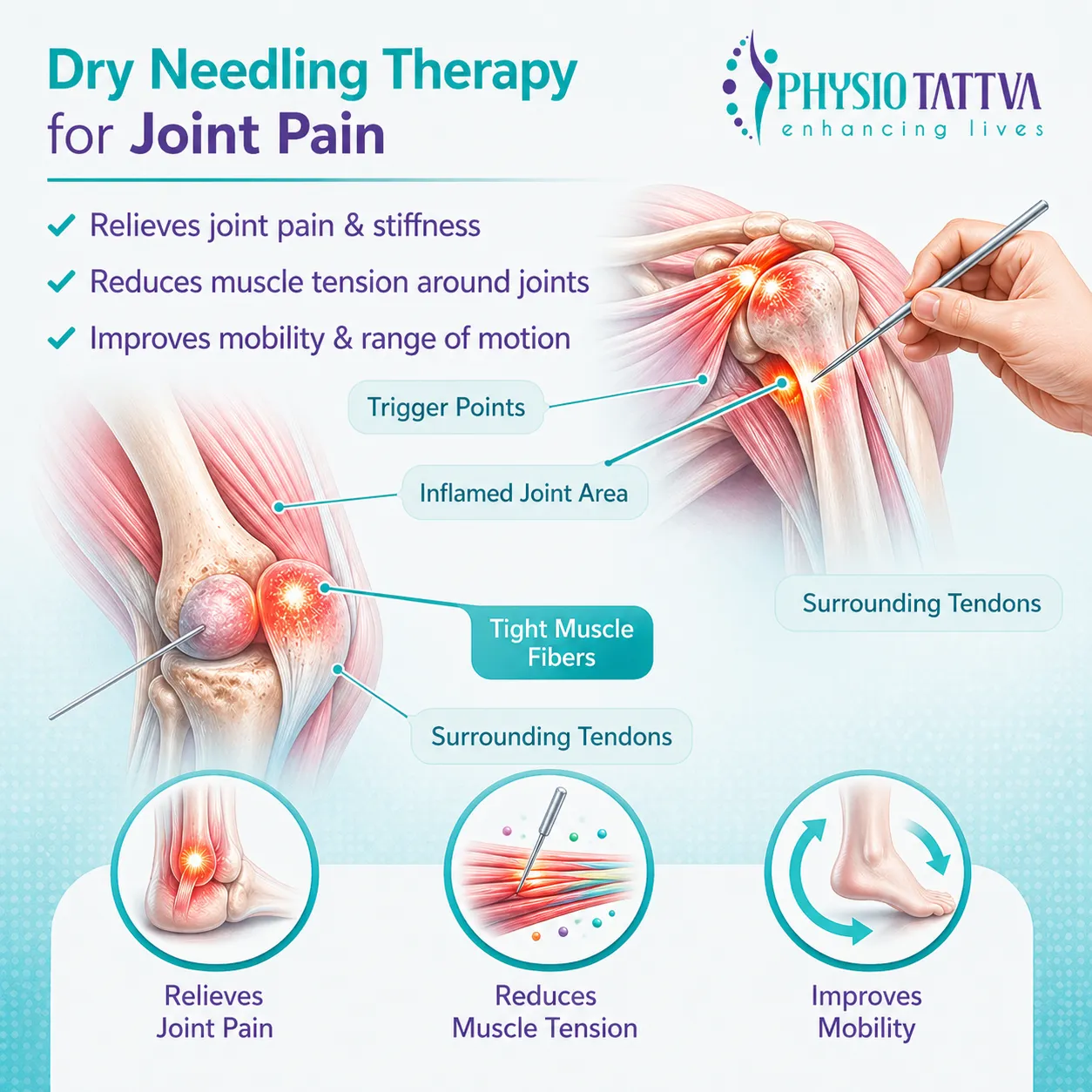
Dry needling is a specialized, hands-on treatment performed by licensed physical therapists that targets muscle trigger points to relieve joint pain and improve function. Unlike acupuncture, which is based on traditional Eastern practices, dry needling is rooted in Western medicine and neurophysiology. The technique involves inserting a thin, sterile needle into tight muscle bands to release muscle tension, reduce pain, and restore normal muscle function. This process helps improve blood flow, downregulate inflammation, and address the underlying muscular causes of joint pain.
What is Dry Needling?
Dry needling is a skilled treatment performed by a licensed physical therapist. It involves inserting a very thin, sterile, solid-filament needle into a "trigger point" within a muscle.
A trigger point is essentially a hyper-irritable knot in your muscle tissue that can cause pain, tightness, and referred pain to other areas—including your joints. The goal of inserting the needle is to release that knot, reduce pain, and restore normal muscle function.
It's important to understand that dry needling is not acupuncture. No medication is injected (hence the term "dry"), and the technique is based on modern Western neuroanatomy and the scientific study of the musculoskeletal system.
How Does Dry Needling Specifically Help Joint Pain?
Joint pain often isn't just about the joint itself. It's heavily influenced by the muscles, tendons, and ligaments that surround and support it. When these muscles are tight and dysfunctional, they place abnormal stress on the joint, leading to pain, inflammation, and reduced mobility.
Dry needling helps joint pain by:
- Releasing Muscular Trigger Points: By targeting and deactivating trigger points in the muscles around your knee, shoulder, or hip, we can immediately reduce the tension and strain placed on the joint. This alleviates pain and improves the joint's biomechanics.
- Inducing a Local Twitch Response: When the needle contacts a trigger point, it often causes a "local twitch response"—an involuntary spinal cord reflex that feels like a tiny muscle cramp or twitch. This response is therapeutic; it's the muscle's way of "resetting" itself, relaxing the tissue, and breaking the pain cycle.
- Improving Blood Flow: The needle insertion creates a micro-lesion that stimulates the body's natural healing process. This increases blood flow to the area, delivering oxygen and essential nutrients that promote tissue repair and reduce soreness.
- Downregulating Inflammation: The therapy helps modulate the chemical environment of the muscle, decreasing the presence of inflammatory chemicals and pain-causing substances that contribute to chronic joint issues.
The Critical Difference: Dry Needling vs. Acupuncture for Joint Pain
A common question we receive is about the difference between dry needling and acupuncture. While both treatments involve the use of thin needles, their philosophies, techniques, and goals are entirely different. Here's how they compare:
Underlying Philosophy
- Dry Needling: Based on Western medicine, anatomy, and neurophysiology.
- Acupuncture: Based on Traditional Chinese Medicine (TCM) and the flow of "Qi" (energy) along meridians.
Practitioner
- Dry Needling: Performed by licensed Physical Therapists, Chiropractors, or Medical Doctors with specialized certification.
- Acupuncture: Performed by licensed Acupuncturists.
Technique
- Dry Needling: Needles are inserted into tight muscle bands and trigger points to elicit a twitch response.
- Acupuncture: Needles are inserted into specific points along meridian lines to rebalance energy flow.
Goal
- Dry Needling: To release muscle tension, relieve pain, and restore musculoskeletal function.
- Acupuncture: To treat a wide variety of conditions by balancing the body’s energy.
Application for Joint Pain
- Dry Needling: Targets specific muscles (e.g., quads, glutes, rotator cuff) causing stress on the joint.
- Acupuncture: Targets points on meridians believed to influence the joint and associated organs.
Understanding these differences helps in determining which therapy best addresses joint pain and its underlying causes. Dry needling directly focuses on muscular dysfunction, while acupuncture works on energy flow.
Which Types of Joint Pain Respond Best to Dry Needling?
Dry needling can be incredibly effective for a wide range of joint-related conditions because it addresses the muscular component of the pain.
- Knee Pain: Excellent for pain caused by Osteoarthritis, Patellofemoral Pain Syndrome (Runner's Knee), and IT Band Syndrome by releasing tightness in the quadriceps, hamstrings, and glutes.
- Shoulder Pain: Highly effective for Rotator Cuff Tendinopathy, Frozen Shoulder (Adhesive Capsulitis), and Shoulder Impingement by targeting the rotator cuff muscles, deltoids, and upper back muscles.
- Hip Pain: Provides relief for Hip Bursitis, Gluteal Tendinopathy, and Impingement by releasing deep trigger points in the gluteus medius, minimus, and piriformis muscles.
- Jaw Pain (TMJ): Can significantly reduce pain and clicking by targeting the tiny, overworked muscles of the jaw and neck.
- Elbow & Wrist Pain: or Tennis Elbow and Golfer's Elbow, dry needling addresses trigger points in the forearm extensors and flexors, helping to relieve pain and promote healing.
The Dry Needling Process: What to Expect During Your Session
We understand that trying a new therapy can be intimidating. Here’s a step-by-step breakdown of what you can expect, ensuring you feel comfortable and informed.
- Initial Assessment: Your licensed physical therapist will conduct a thorough evaluation to identify the source of your joint pain and locate the specific trigger points responsible.
- The Procedure: You will be positioned comfortably. Your therapist will clean the skin and use a sterile, single-use needle. You may feel a tiny prick as the needle is inserted. The key sensation is the local twitch response—a brief, deep ache or muscle jump. This is the sign that the treatment is working.
- Post-Treatment: The needles are removed after a short period. The treated area may feel a bit sore, similar to post-workout muscle soreness. Your therapist will provide you with specific instructions, which usually include gentle stretching, staying hydrated, and applying heat.
Is Dry Needling Safe? Potential Side Effects
When performed by a certified and licensed physical therapist, dry needling is a very safe procedure. The most common side effects are minor and temporary, including:
- Muscle soreness or aching in the treated area, which typically lasts 24-48 hours
- Minor bruising at the needle site
- Fatigue
These side effects are generally mild and subside quickly. Your therapist is highly trained in safe needle handling and anatomical knowledge to minimize any risks. Transparency and your safety are our top priorities, ensuring a safe and effective treatment experience.
Find Real Relief with Dry Needling Therapy at Physiotattva
Don't let joint pain dictate your life. Dry needling therapy, as part of a comprehensive physical therapy plan, offers a targeted, powerful path toward real relief. By addressing the root muscular causes of your pain, dry needling helps reduce inflammation, enhance mobility, and restore normal muscle function. This safe, non-invasive treatment can be a game-changer in managing chronic pain and improving quality of life. If you’re struggling with joint pain, speak with a licensed therapist today to see how dry needling can help you get back to living fully and comfortably.
At Physiotattva physiotherapy clinics in Bangalore and Hyderabad, you receive personalised care tailored to your specific needs, ensuring effective results and comfort throughout your journey to recovery.
Don’t wait to start your recovery! Get in touch with Physiotattva for more details! Contact us at +91 89510 47001.
Why Physiotattva?
22+
50,000+
95%
200+
25+
4.8
Cities We Serve

Bangalore
At Physio Tattva, we are committed to bring access to quality physio care through ultra-modern clinics and high-skilled practitioners to all.
.webp)
Hyderabad
At Physio Tattva, we are committed to bring access to quality physio care through ultra-modern clinics and high-skilled practitioners to all.
.webp)
Vishakhapatnam
At Physio Tattva, we are committed to bring access to quality physio care through ultra-modern clinics and high-skilled practitioners to all.
Core Treatments
Core Conditions
Core Symptoms
Frequently Asked Questions
Is dry needling therapy painful?

How long does a dry needling session take?
How many dry needling sessions will I need?
Is dry needling covered by insurance?






%20(1)-p-3200.jpeg)


.jpg)
.webp)
.webp)
.webp)