


Dry Needling Therapy
Dry Needling Therapy for Back Pain
Dry needling therapy is an effective treatment for back pain. By targeting muscle knots and trigger points, it helps reduce pain, ease muscle tension, and restore flexibility. Whether dealing with sciatica or chronic back pain, dry needling provides lasting relief. Experience improved mobility and faster recovery today with this modern therapy!
Dry needling therapy is a physiotherapy technique used to relieve back pain by targeting tight muscle trigger points that develop due to strain, posture issues, or muscle overuse. During treatment, a physiotherapist inserts thin sterile needles into these muscle knots to help release tension, improve blood circulation, and reduce pain signals. While dry needling does not treat structural spinal problems directly, it may help reduce muscle stiffness, improve mobility, and support recovery when combined with physiotherapy exercises and rehabilitation.
What is Dry Needling Therapy for Back Pain?
Dry needling therapy for back pain is a physiotherapy technique used to relieve muscle pain by targeting myofascial trigger points, which are tight muscle knots that develop due to strain, injury, or prolonged muscle tension. During the procedure, a trained physiotherapist inserts a very thin, sterile needle into these trigger points to help release tight muscle fibres and restore normal muscle function.
Trigger points can cause localised pain, stiffness, and reduced range of motion, and they may also refer pain to nearby areas. For example, a trigger point in the lower back can sometimes cause pain that radiates toward the hips or legs. By releasing these muscle knots, dry needling therapy may help reduce pain, improve mobility, and support overall recovery from back-related musculoskeletal conditions.
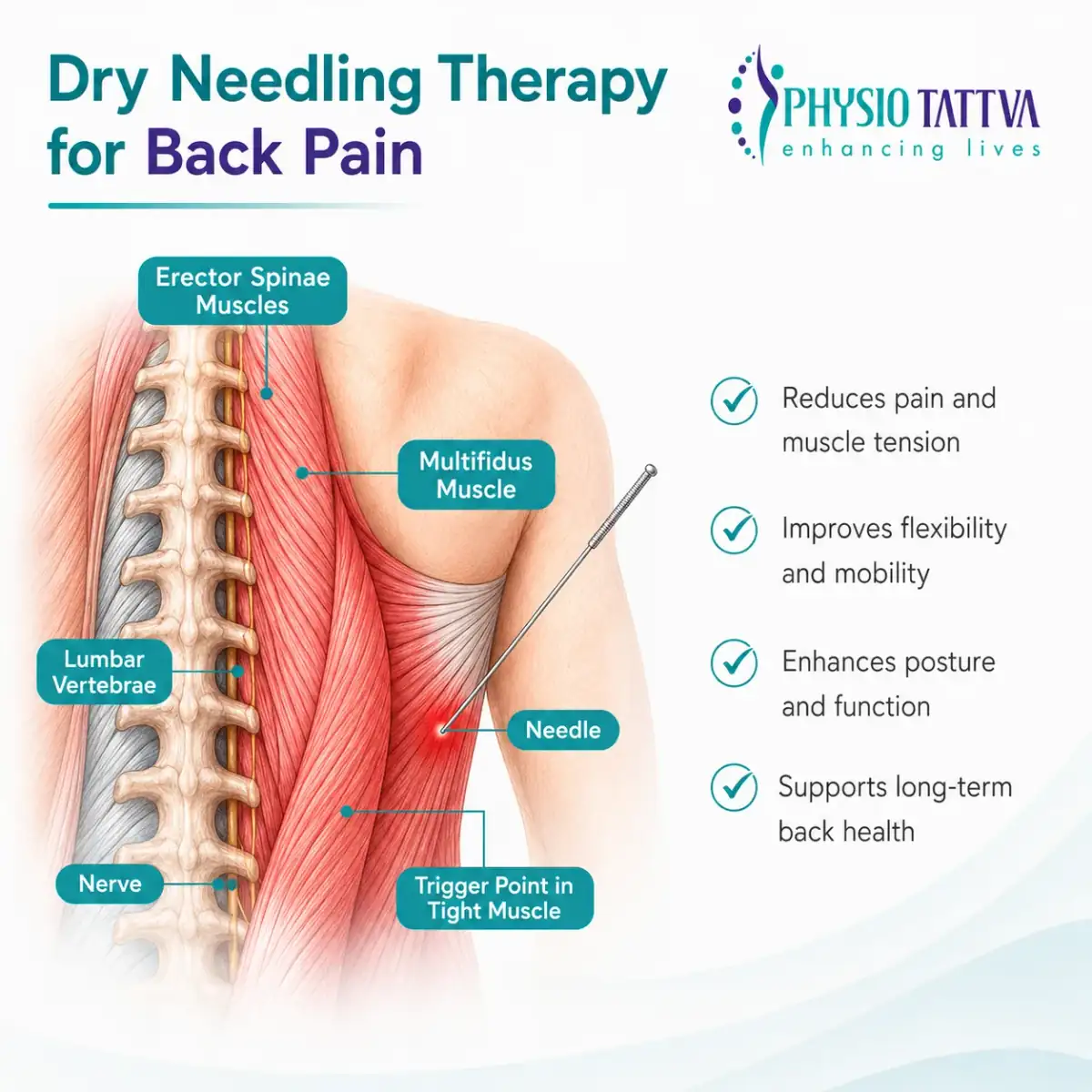
How Does Dry Needling Work for Back Pain?
Dry needling helps relieve back pain by targeting tight muscle trigger points that contribute to muscle tension, restricted movement, and persistent pain. By inserting a thin sterile needle into these trigger points, the treatment helps relax the muscle, improve circulation, and reduce pain signals.
When back muscles such as the erector spinae, quadratus lumborum, or gluteal muscles develop trigger points, they can cause stiffness, local pain, or pain that spreads to nearby areas. Dry needling works by stimulating these tight muscle fibres and encouraging them to release.
The relief from dry needling therapy typically occurs through several physiological responses:
- Local Twitch Response: When the needle reaches an active trigger point, it may cause a brief involuntary muscle twitch. This reflex helps release the tight muscle fibres and reduce tension within the affected muscle.
- Improved Blood Flow: The needle stimulation encourages increased circulation in the treated area. This helps deliver oxygen and nutrients to the muscle while removing inflammatory chemicals that contribute to pain.
- Pain Signal Modulation: The stimulation of nerve fibres can influence how pain signals are transmitted to the brain. This mechanism, often described as the gate control theory of pain, may help reduce the perception of pain.
- Release of Natural Pain-Relieving Chemicals: Dry needling may stimulate the release of natural pain-relieving substances such as endorphins and enkephalins, which help the body manage discomfort and support recovery.
What Types of Back Pain Can Dry Needling Treat?
Dry needling therapy is most effective for back pain that originates from muscle tension or myofascial trigger points. When muscles in the back become tight or develop painful knots, they can cause stiffness, restricted movement, and referred pain to nearby areas. By targeting these trigger points, dry needling may help reduce muscle tension and improve mobility.
Dry needling therapy may be beneficial for the following types of back pain:
- Chronic Lower Back Pain: Persistent lower back pain often develops from prolonged muscle tightness caused by poor posture, repetitive strain, or past injuries. Dry needling may help relax these tight muscles and reduce discomfort.
- Sciatica or Sciatic-Like Symptoms: Tight muscles in the piriformis or gluteal region can sometimes irritate the sciatic nerve. Dry needling may help relieve tension in these muscles and reduce pressure around the nerve.
- Upper and Mid-Back Pain: Trigger points in muscles such as the trapezius and rhomboids are common in people who spend long hours sitting or working at a computer. Dry needling may help release these knots and improve back mobility.
- Myofascial Pain Syndrome: This chronic pain condition occurs when sensitive trigger points develop within muscle tissue and cause pain in other areas of the body. Dry needling specifically targets these trigger points to help relieve symptoms.
- Post-Surgical Back Pain: Muscle stiffness and guarding can occur after back surgery as the body protects the healing area. Dry needling may help reduce muscle tightness and support rehabilitation.
- Acute Muscle Strains: When muscles are strained due to sudden movement or overuse, they may develop tight trigger points. Dry needling may help improve circulation and assist in muscle recovery.
What Are the Common Dry Needling Techniques Used for Back Pain?
Dry needling therapy for back pain can be performed using different techniques depending on the location of the trigger points, the severity of muscle tightness, and the patient’s overall condition. Physiotherapists select the appropriate approach to target painful muscle knots and improve muscle function.
Some commonly used dry needling techniques for back pain include:
- Trigger Point Dry Needling: This is the most common technique used for back pain. The physiotherapist inserts a thin sterile needle directly into a tight muscle knot (trigger point) to help release tension, reduce pain, and restore normal muscle movement.
- Deep Dry Needling: In this method, the needle is inserted deeper into the muscle to reach trigger points located in larger or deeper muscles such as the erector spinae or quadratus lumborum. It is typically used when deeper muscle layers contribute to persistent back pain.
- Superficial Dry Needling: This technique involves placing the needle just beneath the skin rather than deep into the muscle. It may be used for patients who are sensitive to deeper needling or when the goal is to stimulate the nervous system to help reduce pain signals.
- Pistoning or Dynamic Needling Technique: In this approach, the practitioner gently moves the needle in and out of the trigger point to stimulate a local twitch response. This technique may help release tight muscle fibres more effectively and improve blood circulation in the affected area.
These techniques may be used individually or combined during a treatment session, depending on the patient’s symptoms and the specific muscles involved in their back pain.
What Are the Benefits of Dry Needling Therapy for Back Pain?
Dry needling therapy for back pain helps relieve muscle tension by targeting tight trigger points that contribute to pain, stiffness, and restricted movement. By releasing these muscle knots, the treatment may improve mobility, reduce discomfort, and support recovery from musculoskeletal back pain.
Some potential benefits of dry needling therapy for back pain include:
- Pain Reduction: Dry needling may help decrease back pain by relaxing tight muscle fibres and influencing how pain signals are processed by the nervous system.
- Trigger Point Release: The treatment directly targets painful muscle knots, helping to release tension in muscles that contribute to persistent back discomfort.
- Improved Range of Motion: When tight muscles relax, it may become easier to bend, stretch, and move the back without stiffness or restriction.
- Reduced Muscle Tightness: Dry needling helps loosen overactive muscles in the back, which may improve overall muscle balance and reduce strain on surrounding tissues.
- Better Blood Circulation: Needle stimulation may increase blood flow to affected muscles, supporting tissue healing and muscle recovery.
- Enhanced Rehabilitation Support: Dry needling is often combined with physiotherapy exercises and stretching programmes to improve treatment outcomes and support long-term back pain management.
Is Dry Needling Therapy for Back Pain Safe? Risks and Precautions
Dry needling therapy for back pain is generally considered safe when performed by a trained and qualified physiotherapist using sterile, single-use needles and appropriate clinical techniques. The procedure is minimally invasive and specifically targets muscle trigger points that contribute to pain, stiffness, and restricted movement.
Most people tolerate the treatment well, and serious complications are uncommon when the therapy is performed by an experienced professional. However, understanding the possible side effects and safety precautions helps patients know what to expect during and after treatment.
Common Side Effects of Dry Needling Therapy
Most side effects associated with dry needling therapy are mild and temporary. These reactions usually resolve within a short period after the treatment session.
Common temporary effects may include:
- Mild muscle soreness similar to post-exercise discomfort
- Minor bruising at the needle insertion site
- Slight bleeding after needle removal
- Temporary fatigue or muscle heaviness in the treated area
- Local tenderness around the needled muscle
These effects typically settle within 24–48 hours and may improve with hydration, gentle movement, and light stretching.
Precautions Taken During Dry Needling Treatment
Physiotherapists follow several precautions to ensure dry needling therapy is performed safely and effectively. A proper clinical assessment is conducted before treatment to identify the muscles involved and determine whether the therapy is appropriate.
Key precautions may include:
- Using sterile, single-use needles for every session
- Carefully selecting safe anatomical areas for needling
- Adjusting technique based on the patient’s pain tolerance and muscle condition
- Monitoring the treated area for unusual reactions after the session
- Combining dry needling with physiotherapy exercises and rehabilitation strategies when necessary
These precautions help minimise risks and support safe treatment outcomes.
Who Should Avoid Dry Needling Therapy for Back Pain?
Although dry needling is widely used in physiotherapy, certain medical conditions may require additional caution or temporary postponement of treatment.
Dry needling therapy may need to be avoided or delayed in the following situations:
- Bleeding disorders or use of blood-thinning medication, which may increase the risk of bruising or bleeding
- Infection, inflammation, or skin injury near the treatment area
- Severe needle anxiety or phobia, where alternative therapies may be more suitable
- Pregnancy, particularly when treating certain muscle regions, unless medically advised
- Reduced sensation or neuropathy, where irritation may not be easily detected
Clinical caution: A comprehensive physiotherapy assessment is essential to confirm that back pain is primarily muscular and suitable for dry needling therapy. Your physiotherapist will evaluate your symptoms, medical history, and overall condition before including dry needling as part of your rehabilitation plan.
What Happens During a Dry Needling Session for Back Pain?
A dry needling session for back pain involves inserting thin, sterile needles into tight muscle trigger points to help release tension and improve movement. The treatment is performed by a trained physiotherapist and usually targets the muscles contributing to your back pain.
Here is what you can generally expect during a dry needling therapy session:
- Assessment: The physiotherapist examines your back to identify painful trigger points.
- Needle insertion: A thin sterile needle is gently inserted into the tight muscle area.
- Muscle response: The muscle may briefly twitch or feel like a deep ache as the trigger point releases.
- Short treatment time: Needles may stay in place for a few seconds or up to 10–15 minutes.
- Aftercare: Gentle stretches or massage may follow to support recovery.
After the session, mild muscle soreness may occur for 24–48 hours, similar to post-workout discomfort, and usually settles quickly.
How Long Does It Take to See Results From Dry Needling Therapy for Back Pain?
The time it takes to see results from dry needling therapy for back pain can vary depending on the severity of the condition, muscle tightness, and individual response to treatment.
- Immediate muscle response: Some patients notice improved movement or reduced muscle tightness shortly after the session.
- Relief within 24–48 hours: Once temporary soreness settles, many people experience reduced back pain and improved flexibility.
- Early improvement after 1–3 sessions: Mild or recent muscle-related back pain may improve within a few treatments.
- Multiple sessions for chronic pain: Long-standing back pain often requires several sessions combined with physiotherapy exercises.
- Better results with rehabilitation: Dry needling is often more effective when combined with stretching, strengthening, and posture correction programmes.
How to Find a Qualified Practitioner for Dry Needling Therapy for Back Pain
A qualified dry needling practitioner should be a licensed healthcare professional with specialised training in dry needling and experience treating musculoskeletal conditions such as back pain. Choosing a trained practitioner helps ensure the treatment is performed safely and effectively.
When selecting a dry needling practitioner, consider the following:
- Licensed physiotherapist or physical therapist (PT, DPT) with certified training in dry needling techniques
- Chiropractor (DC) trained in trigger point therapy and musculoskeletal treatment
- Medical doctor (MD) with experience in pain management or musculoskeletal care
- Documented training or certification in dry needling therapy
- Experience treating back pain and myofascial trigger point conditions
Before starting treatment, it is advisable to ask about the practitioner’s training, certification, and experience with dry needling therapy for back pain. A proper clinical assessment and personalised treatment plan are important signs of safe and professional care.
How Should You Prepare for Dry Needling Therapy for Back Pain?
Dry needling therapy for back pain typically requires very little preparation. However, following a few simple steps before your appointment can help ensure the treatment is safe, comfortable, and effective.
Before your session, consider the following:
- Wear comfortable clothing: Choose clothing that allows easy access to the back muscles so the physiotherapist can easily reach the treatment area.
- Avoid applying lotions or creams on the back: Clean skin allows the therapist to perform the procedure safely and maintain proper hygiene.
- Eat a light meal beforehand: Having a small meal can help prevent lightheadedness during treatment.
- Stay hydrated: Drinking enough water helps support muscle function and recovery after the session.
- Inform your physiotherapist about your medical history: Share details about medications, bleeding disorders, recent injuries, or previous treatments.
- Bring any relevant medical reports: MRI scans, X-rays, or previous physiotherapy notes can help guide the treatment plan.
Preparing in this way helps ensure that dry needling therapy for back pain is delivered safely and integrated effectively into your overall physiotherapy and rehabilitation programme.
How Does a Comprehensive Physiotherapy Plan Support Back Pain Treatment?
A comprehensive physiotherapy plan supports back pain treatment by combining therapies such as dry needling, manual therapy, and rehabilitation exercises to reduce pain, restore mobility, and strengthen the muscles that support the spine.
A personalised physiotherapy plan for back pain may include:
- Detailed clinical assessment: The physiotherapist evaluates posture, movement patterns, and muscle tightness to identify the underlying cause of back pain.
- Targeted therapy techniques: Treatments such as dry needling therapy, manual therapy, or electrotherapy may be used to reduce muscle tension and relieve pain.
- Strengthening and rehabilitation exercises: Custom exercises help strengthen the back and core muscles, improving spinal stability and reducing the risk of recurring pain.
- Posture and movement correction: Guidance on ergonomics and posture helps reduce strain on the spine during daily activities.
- Ongoing progress monitoring: The physiotherapist reviews your progress and adjusts the treatment plan to support safe and effective recovery.
A structured physiotherapy approach helps ensure that back pain treatment focuses not only on symptom relief but also on long-term recovery and injury prevention.
Start Your Recovery From Back Pain With Dry Needling Therapy at Physiotattva
Dry needling is a safe, minimally invasive treatment that has proven to be highly effective for many individuals suffering from musculoskeletal pain, particularly back pain. By targeting specific trigger points, it helps to relieve pain, reduce muscle tension, and restore mobility, offering significant improvements in quality of life. However, it’s important to consult with your healthcare provider before starting treatment. While it is generally safe, your provider may suggest trying other less invasive treatments first, depending on your specific condition.
At Physiotattva physiotherapy clinics in Bangalore, Hyderabad, and Visakhapatnam- our latest clinic, you receive personalised care tailored to your specific needs, ensuring effective results and comfort throughout your journey to recovery.
Don’t wait to start your recovery! Get in touch with Physiotattva for more details! Contact us at +91 89510 47001.
Key Takeaways:
- Dry needling targets tight muscle knots that cause back pain and stiffness.
- Thin sterile needles are inserted into trigger points to relax tight muscles.
- The treatment may reduce pain and improve back movement.
- It is commonly used for chronic back pain, muscle strains, and sciatica-like symptoms.
- Mild soreness may occur after treatment, usually settling within 24–48 hours.
- Dry needling is often combined with physiotherapy exercises for better recovery.
- Sessions are usually short, often lasting about 10–15 minutes per treated area.
- A trained physiotherapist performs the treatment after assessing the cause of your back pain.
Answers
Frequently asked questions
Start with an assessment
We measure what you've lost, find the cause, and set out a plan with a target and a timeline.
- Call us+91 89510 47001
- Email usinfo@physiotattva.com
- Visit a clinic24 clinics across Bangalore, Hyderabad and Visakhapatnam
- Or stay homePhysiotherapy at home