





Shoulder pain is one of the most common musculoskeletal complaints, affecting millions of people and limiting everything from daily chores to athletic performance. If you've struggled with persistent shoulder pain from a rotator cuff injury, frozen shoulder, or general stiffness, you may be looking for effective treatment options. One increasingly popular and effective modality is dry needling therapy for shoulder pain.
This article will walk you through what dry needling is, how it works, the specific shoulder conditions it can treat, and what you can expect from a session.
What is Dry Needling? (And How is it Different from Acupuncture?)
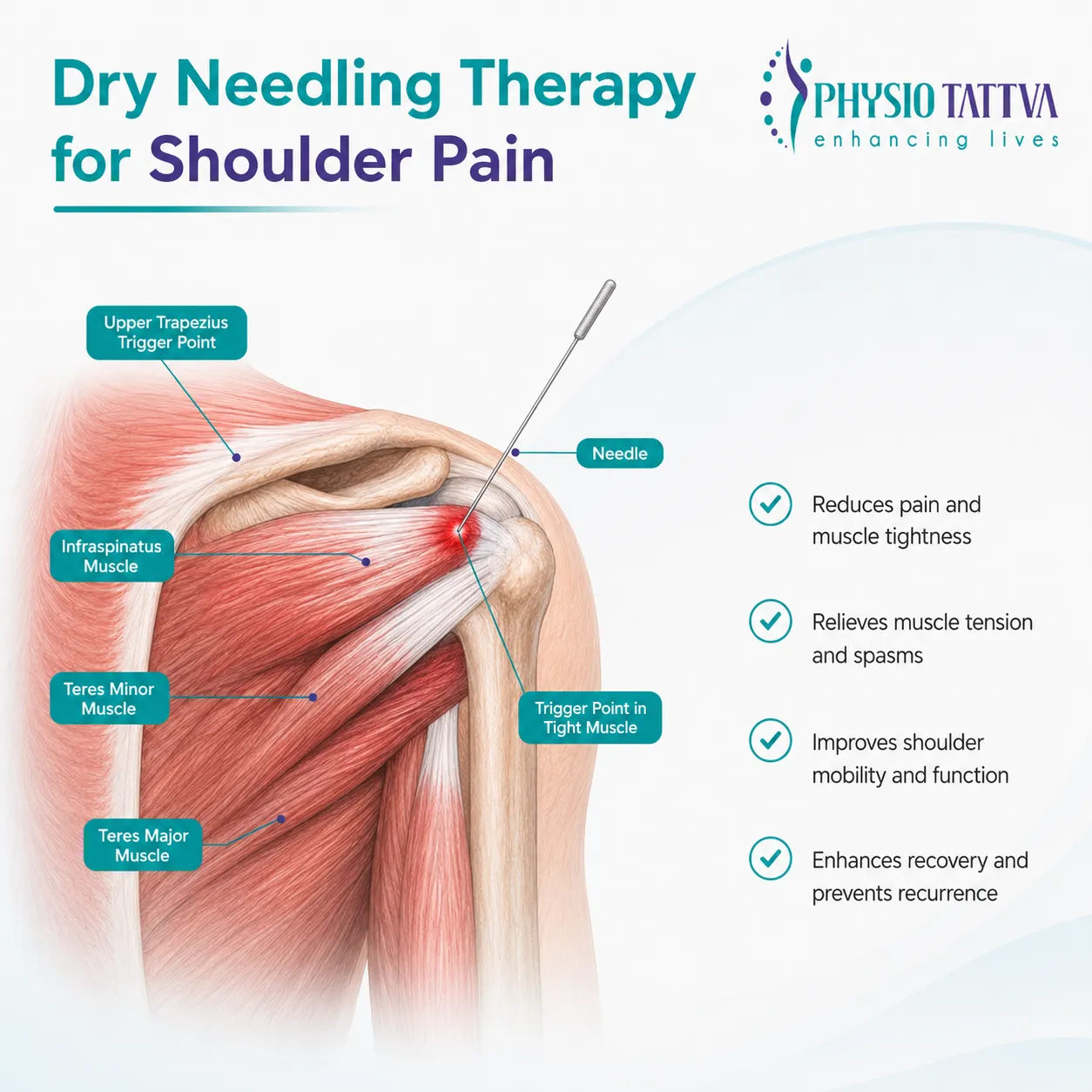
Dry needling is a modern therapeutic technique performed by trained physical therapists, chiropractors, and other healthcare professionals. It involves inserting a thin, solid filiform needle (the same kind used in acupuncture) into the skin and muscle to target underlying myofascial trigger points.
A trigger point is essentially a hyper-irritable "knot" or tight band within a muscle. These knots can cause direct pain, limit your range of motion, and refer pain to other areas. For the shoulder, a trigger point in the upper trapezius muscle can often cause pain that radiates up the neck or down the arm.
The primary goal of dry needling is to release these trigger points, reduce muscle tension, and alleviate pain.
Key Distinction: Dry Needling vs. Acupuncture
While both dry needling and acupuncture use similar needles, their underlying principles and goals are very different.
Philosophy
Dry needling is based on Western neuroanatomy and modern scientific principles, focusing on treating musculoskeletal issues. It targets the physical dysfunctions in the body. In contrast, acupuncture is rooted in Traditional Chinese Medicine (TCM), where the goal is to restore the flow of "Qi" (energy) along pathways called meridians.
Goal
The primary goal of dry needling is to release myofascial trigger points (muscle knots), reduce muscle pain, and improve overall function. Acupuncture, however, aims to balance the body’s energy, or Qi, by influencing specific acupuncture points along the meridians to promote healing and restore harmony.
Application
In dry needling, needles are inserted directly into muscle trigger points to alleviate pain and tension. For acupuncture, the needles are placed at specific points along the body's energy channels, known as meridians, to stimulate the flow of Qi.
Practitioners
Dry needling is performed by licensed physical therapists, chiropractors, or medical doctors who have received specialized training. On the other hand, acupuncture is performed by licensed acupuncturists, who are trained specifically in Traditional Chinese Medicine techniques.
How Does Dry Needling Work for Shoulder Pain?
When the needle is inserted into a trigger point in a shoulder muscle (like the rotator cuff, deltoid, or trapezius), it elicits a "local twitch response" (LTR). This LTR is an involuntary spinal cord reflex in which the muscle fibers briefly contract and then relax.
This response is the key to the therapy's effectiveness and leads to several physiological benefits:
- Releases Muscle Tension: The LTR effectively "reboots" the dysfunctional muscle fibers, causing them to release their persistent contraction.
- Improves Blood Flow: Releasing the knot reduces compression on tiny blood vessels, improving circulation and delivering oxygen-rich blood to the deprived tissue.
- Reduces Pain Signals: The needling process helps disrupt the pain signals being sent to the brain and stimulates the release of the body's natural painkillers, such as endorphins.
- Decreases Inflammation: It can help reduce the concentration of inflammatory chemicals that have built up around the trigger point.
Common Shoulder Conditions Treated with Dry Needling
Dry needling therapy for shoulder pain is rarely a standalone treatment but is highly effective as part of a comprehensive physical therapy plan. It is used to treat a wide range of conditions:
Rotator Cuff Injuries & Tendinopathy
The rotator cuff muscles are prone to developing trigger points due to overuse, poor posture, or acute injury. Dry needling can release tension in these deep muscles (supraspinatus, infraspinatus, etc.), reducing pain and improving the shoulder's mechanics.
Shoulder Impingement Syndrome
This occurs when rotator cuff tendons are pinched in the narrow space of the shoulder joint. By releasing tightness in the surrounding muscles (like the deltoid, trapezius, and pectoral muscles), dry needling can help create more space in the joint and reduce impingement.
Frozen Shoulder (Adhesive Capsulitis)
In the early, painful stages of frozen shoulder, dry needling can significantly reduce pain and muscle guarding. This allows the patient to tolerate stretching and manual therapy better, helping to restore range of motion more quickly.
Myofascial Pain Syndrome
This condition is defined by the presence of trigger points. Dry needling is the most direct way to treat these trigger points in the shoulder girdle, neck, and upper back that contribute to chronic shoulder pain.
Bursitis
While dry needling does not target the bursa directly, it reduces the abnormal muscle tension that often contributes to the compression and irritation of the bursa, thus alleviating the source of the problem.
What to Expect During a Shoulder Dry Needling Session
If you're considering this treatment, it's helpful to know what the process looks like:
- Assessment: Your physical therapist will conduct a thorough examination of your shoulder, assessing your range of motion, strength, and posture. They will palpate (feel for) the muscles to locate the specific trigger points contributing to your pain.
- Preparation: You will be positioned comfortably (often lying on your stomach or side). The therapist will clean the skin over the treatment area with an alcohol swab.
- Needle Insertion: The therapist will insert the sterile, single-use needle into the identified trigger point. You may feel a slight prick, but often people feel nothing at all. As the needle reaches the trigger point, you may feel the characteristic "local twitch response," which can feel like a brief muscle cramp or spasm. This is a positive sign that the treatment is working.
- Duration: The needles may be left in place for a few seconds or a few minutes, sometimes with gentle manipulation by the therapist to maximize the release.
- Post-Treatment: After the needles are removed, you may experience some muscle soreness for 24-48 hours, similar to how you'd feel after an intense workout. Your therapist will likely recommend gentle stretching, applying heat, and staying hydrated to minimize this soreness.
Potential Risks and Side Effects
When performed by a trained and licensed professional, dry needling is very safe. However, like any procedure, it has potential side effects.
- Common/Minor: Bruising, minor bleeding at the insertion site, and muscle soreness.
- Rare but Serious: Infection (risk is minimal with sterile needles and proper skin cleaning) or pneumothorax (a collapsed lung), which is an extremely rare risk when needling near the chest wall/rib cage. A well-trained practitioner is acutely aware of thoracic anatomy and takes every precaution to avoid this.
Always consult with a licensed physiotherapist before undergoing dry needling to ensure it is the right treatment for you, and to discuss any potential concerns based on your individual health conditions.
Is Dry Needling Right for Your Shoulder Pain?
Dry needling can be a powerful tool for accelerating recovery from shoulder pain, especially when pain and muscle tightness are major limiting factors. It is most effective when integrated into a complete treatment plan that includes:
- Therapeutic Exercise: To strengthen the rotator cuff and scapular muscles.
- Manual Therapy: To improve joint mobility.
- Postural Education: To correct the underlying habits that may have caused the problem.
If you are experiencing persistent shoulder pain and have not found relief with other treatments, consult a qualified physical therapist to see if dry needling therapy for your shoulder pain is an appropriate option for you.
Experience Effective Shoulder Pain Management with Dry Needling at Physiotattva
Dry needling is a highly effective treatment for shoulder pain, targeting trigger points to reduce muscle tension, improve blood flow, and alleviate pain. Whether you're dealing with rotator cuff injuries, shoulder impingement, or myofascial pain syndrome, dry needling can accelerate your recovery when combined with a comprehensive treatment plan. If you've been struggling with persistent shoulder pain, consult a licensed physical therapist to determine if dry needling is right for you.
At Physiotattva physiotherapy clinics in Bangalore and Hyderabad, you receive personalised care tailored to your specific needs, ensuring effective results and comfort throughout your journey to recovery.
Don’t wait to start your recovery! Get in touch with Physiotattva for more details! Contact us at +91 89510 47001.
Why Physiotattva?
22+
50,000+
95%
200+
25+
4.8
Cities We Serve

Bangalore
At Physio Tattva, we are committed to bring access to quality physio care through ultra-modern clinics and high-skilled practitioners to all.
.webp)
Hyderabad
At Physio Tattva, we are committed to bring access to quality physio care through ultra-modern clinics and high-skilled practitioners to all.
.webp)
Vishakhapatnam
At Physio Tattva, we are committed to bring access to quality physio care through ultra-modern clinics and high-skilled practitioners to all.
Core Treatments
Core Conditions
Core Symptoms
Frequently Asked Questions
What is dry needling and how does it help shoulder pain?

Is dry needling an effective treatment for shoulder conditions?
Does dry needling for the shoulder hurt?
How many dry needling sessions are needed for shoulder pain?
Is dry needling safe for the shoulder area?






%20(1)-p-3200.jpeg)


.jpg)
.webp)
.webp)
.webp)