




That persistent "pins and needles" sensation. The arm that "falls asleep" for no reason. The tingling in your feet that won’t go away. Numbness and tingling, medically known as paresthesia, can be more than just a minor annoyance. It can be frustrating, concerning, and can significantly interfere with your daily life.
While many factors can cause these sensations, one of the most common and overlooked culprits is muscular dysfunction. Fortunately, a highly effective and targeted treatment is gaining recognition for its ability to address this root cause: dry needling therapy. If you're searching for a solution to your numbness and tingling, this article will explain how dry needling can help you find lasting relief.
What's Causing Your Numbness and Tingling?
Before we dive into the solution, it's essential to understand the problem. Numbness and tingling are sensory symptoms that occur when the communication pathway of a nerve is disrupted. Think of it like a kink in a garden hose, reducing water flow.
While serious conditions require medical evaluation, many cases of paresthesia are traced back to musculoskeletal issues, including:
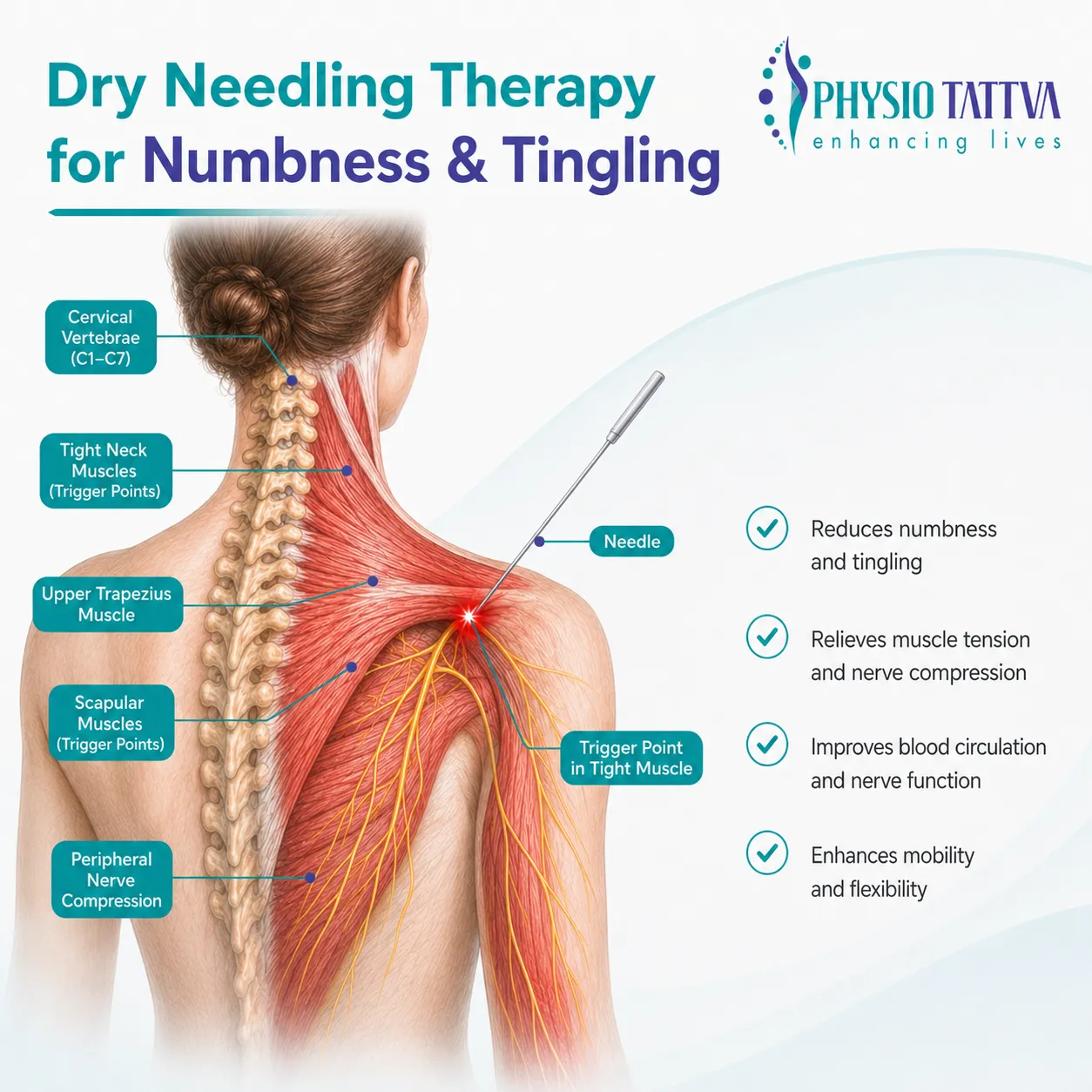
- Myofascial Trigger Points: These are hyper-irritable "knots" in a tight band of muscle. A trigger point doesn't just cause local pain; it can refer sensations—like pain, numbness, and tingling—to other areas of the body by compressing or irritating nearby nerves.
- Nerve Entrapment/Compression: When muscles surrounding a nerve become chronically tight, they can physically squeeze or "entrap" the nerve. This constant pressure interferes with the nerve's function, leading to symptoms along its path.
- Reduced Blood Flow: Tight, knotted muscles can also constrict blood vessels, reducing circulation to the nerve and the tissues it supplies. Nerves need a healthy blood supply to function correctly, and a lack of it can cause tingling and numbness.
How Dry Needling Therapy Directly Addresses the Root Cause
Dry needling is a skilled intervention performed by a trained physical therapist or practitioner. It involves inserting a very thin, sterile filiform needle (the same kind used in acupuncture) directly into a dysfunctional myofascial trigger point.
Unlike injections, nothing is put into the body—hence the term "dry." The magic is in the needle's precise placement and the physiological responses it triggers.
Here’s how dry needling therapy for numbness and tingling works:
- Releases Trigger Points: When the needle contacts a trigger point, it often elicits a "local twitch response"—an involuntary spinal cord reflex that causes the muscle fibers to contract and then relax. This response effectively "resets" the muscle, deactivating the trigger point and releasing the deep-seated tension.
- Decompresses Nerves: By releasing the tight muscle knot that was compressing or irritating a nearby nerve, dry needling directly alleviates the pressure. This "un-kinks the hose," allowing the nerve to resume its normal function and stopping the aberrant signals that cause numbness and tingling.
- Improves Blood Flow and Healing: The twitch response and the micro-trauma from the needle stimulate a healing process. Your body increases blood flow to the area, bringing oxygen-rich blood and vital nutrients to flush out pain-causing chemicals and promote tissue repair. Improved circulation is essential for nerve health.
- Modulates the Nervous System: Dry needling helps "calm down" a hypersensitive nervous system. It can interrupt the pain and dysfunction cycle, helping to retrain the brain's interpretation of signals from the affected area.
Common Conditions Causing Numbness & Tingling We Treat with Dry Needling
Dry needling is not a generic treatment; it's used to target the specific muscles causing your symptoms. It's particularly effective for:
- Sciatica & Piriformis Syndrome: Tingling, numbness, or pain running down the leg and into the foot is often caused by tight piriformis or gluteal muscles compressing the sciatic nerve. Dry needling can release these deep hip muscles with a precision that manual therapy sometimes cannot achieve.
- Carpal Tunnel Syndrome: Numbness and tingling in the hand, thumb, and fingers can be caused by tight forearm muscles (flexors) that compress the median nerve. Dry needling these forearm muscles can provide significant relief and may help avoid more invasive procedures.
- Thoracic Outlet Syndrome (TOS): Numbness or tingling in the arm and hand caused by compression of nerves and blood vessels in the space between the collarbone and first rib. Dry needling the pectoral and scalene (neck) muscles can open this space and relieve pressure.
- Cervical Radiculopathy (Pinched Nerve in the Neck): When neck muscles are tight, they can contribute to the compression of nerve roots exiting the spine. Dry needling can help reduce this muscular compression, working as a powerful adjunct to other physical therapy treatments.
What to Expect During Your Dry Needling Session
When you go for dry needling therapy, the session will typically follow these steps:
- Assessment: Your therapist will first conduct a thorough evaluation to identify the source of your numbness and tingling and pinpoint the exact trigger points responsible.
- Procedure: You will be positioned comfortably. The therapist will clean the skin and use single-use, sterile needles. You may feel a small prick upon insertion, but the most significant sensation is the "local twitch response," often described as a deep cramp or ache that quickly subsides. This is the sign that the treatment is working.
- Aftercare: It's common to feel muscle soreness, similar to a hard workout, for 24-48 hours after treatment. Your therapist will provide instructions on gentle stretching, heat application, and hydration to maximize results.
Most patients report a noticeable improvement in their symptoms, often after the very first session, with cumulative benefits over a series of treatments.
Experience Lasting Relief at Physiotattva with Dry Needling Therapy
If you’re dealing with persistent numbness and tingling, Physiotattva offers an effective solution through dry needling therapy. This non-invasive, evidence-based treatment targets the root cause of your symptoms by releasing muscle trigger points and decompressing nerves, ultimately restoring proper function and alleviating discomfort. By enhancing circulation and promoting cellular healing, dry needling therapy can help you regain mobility and reduce the "pins and needles" sensation that disrupts your daily life. At Physiotattva, our experienced therapists provide personalized care to ensure optimal results. Don’t let numbness and tingling control your life any longer.
At Physiotattva physiotherapy clinics in Bangalore and Hyderabad, you receive personalised care tailored to your specific needs, ensuring effective results and comfort throughout your journey to recovery.
Don’t wait to start your recovery! Get in touch with Physiotattva for more details! Contact us at +91 89510 47001.
Why Physiotattva?
22+
50,000+
95%
200+
25+
4.8
Cities We Serve

Bangalore
At Physio Tattva, we are committed to bring access to quality physio care through ultra-modern clinics and high-skilled practitioners to all.
.webp)
Hyderabad
At Physio Tattva, we are committed to bring access to quality physio care through ultra-modern clinics and high-skilled practitioners to all.
.webp)
Vishakhapatnam
At Physio Tattva, we are committed to bring access to quality physio care through ultra-modern clinics and high-skilled practitioners to all.
Core Treatments
Core Conditions
Core Symptoms
Frequently Asked Questions
Is dry needling the same as acupuncture?

Is dry needling therapy painful?
How many dry needling sessions will I need for my numbness and tingling?
Are there any side effects of dry needling?






%20(1)-p-3200.jpeg)


.jpg)
.webp)
.webp)
.webp)