Flat Feet vs Arch Feet: Assessment & Treatment by Physiotherapists
Do you end your day with aching feet, or wonder why your ankles, knees, or even your back hurt after a simple walk? Many people don’t realise that the structure of their foot arch plays a critical role in their overall comfort and mobility. Both flat feet (pes planus) and high arches (pes cavus) are common conditions that can lead to pain and complications if left unmanaged. Fortunately, physiotherapists are experts in assessing, diagnosing, and providing effective treatment for both conditions, guiding you toward a personalised recovery and a more active life.
Do you end your day with aching feet, or wonder why your ankles, knees, or even your back hurt after a simple walk? Many people don’t realise that the structure of their foot arch plays a critical role in their overall comfort and mobility. Both flat feet (pes planus) and high arches (pes cavus) are common conditions that can lead to pain and complications if left unmanaged. Understanding the core issues in the flat feet vs arch feet debate is the first step toward finding relief. Fortunately, physiotherapists are experts in assessing, diagnosing, and providing effective treatment for both conditions, guiding you toward a personalised recovery and a more active life.
Why Arch Type Matters (Flat Feet vs High Arches)
This section explains the crucial role of foot arches in body mechanics and introduces the common symptoms associated with both flat feet and high arches.
Your foot's arch is an engineering marvel, designed to support your body weight, absorb shock, and help you move efficiently. Its shape determines how your foot makes contact with the ground and distributes force up through your body. The key difference lies in foot alignment:
- Flat feet tend to roll inward excessively (overpronation).
- High arches are often rigid and cause the foot to roll outward (supination).
While flexible flat feet are common and often painless in children, both conditions can cause problems in adults. When asking is it better to have flat feet or arched feet, the answer is neither; a neutral, well-supported arch is ideal for optimal function. Symptoms like foot fatigue, persistent pain, and instability are signs that your arch type may be impacting your health.
Anatomy & Biomechanics of the Foot Arch
Delve into the structural components of the foot arch and how its anatomy impacts overall body movement and biomechanics.
The foot arch is a complex, spring-like structure made of bones, ligaments, and tendons. Its integrity is fundamental to proper biomechanics. To understand why both flat feet and high arches can cause problems, it’s essential to first appreciate the arch’s intricate design and its role in everything from standing still to running a marathon.
Structure of the Medial Longitudinal Arch
The primary arch we refer to is the medial longitudinal arch. It's formed by the tarsal (calcaneus, talus, navicular, cuneiforms) and metatarsal bones. These are held together by a network of strong ligaments, most notably the plantar fascia and the "spring ligament," which prevent the arch from collapsing under your body’s weight.
Role in Shock Absorption & Balance
When you walk or run, the arch acts like a natural shock absorber. It slightly flattens upon impact to dissipate force and then recoils to provide a rigid lever for pushing off. In flat feet, the arch collapses too much, offering poor shock absorption. With high arches, the arch is too rigid and fails to flatten, sending jarring forces up the leg.
Muscular Support
Dynamic support for the arch comes from key muscles and tendons. The tibialis posterior is the primary muscle supporting the arch from above. The plantar fascia acts like a tie-rod, preventing the arch from spreading. Finally, the intrinsic foot muscles (the small muscles within your foot) provide fine-tuned stability and support.
How Physiotherapists Diagnose Arch Types
Discover the comprehensive assessment process physiotherapists use to diagnose foot arch types, from visual inspection to advanced gait analysis.
A precise diagnosis is the cornerstone of effective treatment. A physiotherapist doesn’t just look at your foot; they perform a comprehensive evaluation to understand how your arch type affects your entire body. This multi-step process ensures your treatment plan is tailored specifically to you.
Clinical Observation & Posture
Your physiotherapist will start with a visual examination of your feet, ankles, and legs from the front, side, and back while you stand. They'll look for the presence or absence of an arch, the alignment of your heel, and any associated issues like bunions. They will also analyse the wear patterns on your shoes, which can provide clear clues about overpronation or supination.
Functional Tests
Simple, effective tests help differentiate between flexible and rigid foot types. The toe-standing test, where a flexible flat foot will form a visible arch when you stand on your toes, is a common one. Jack’s Test (or Hubscher’s maneuver), involving passively lifting the big toe, also reveals whether a rigid or flexible flat foot is present, which is crucial for determining the treatment approach.
Gait Analysis
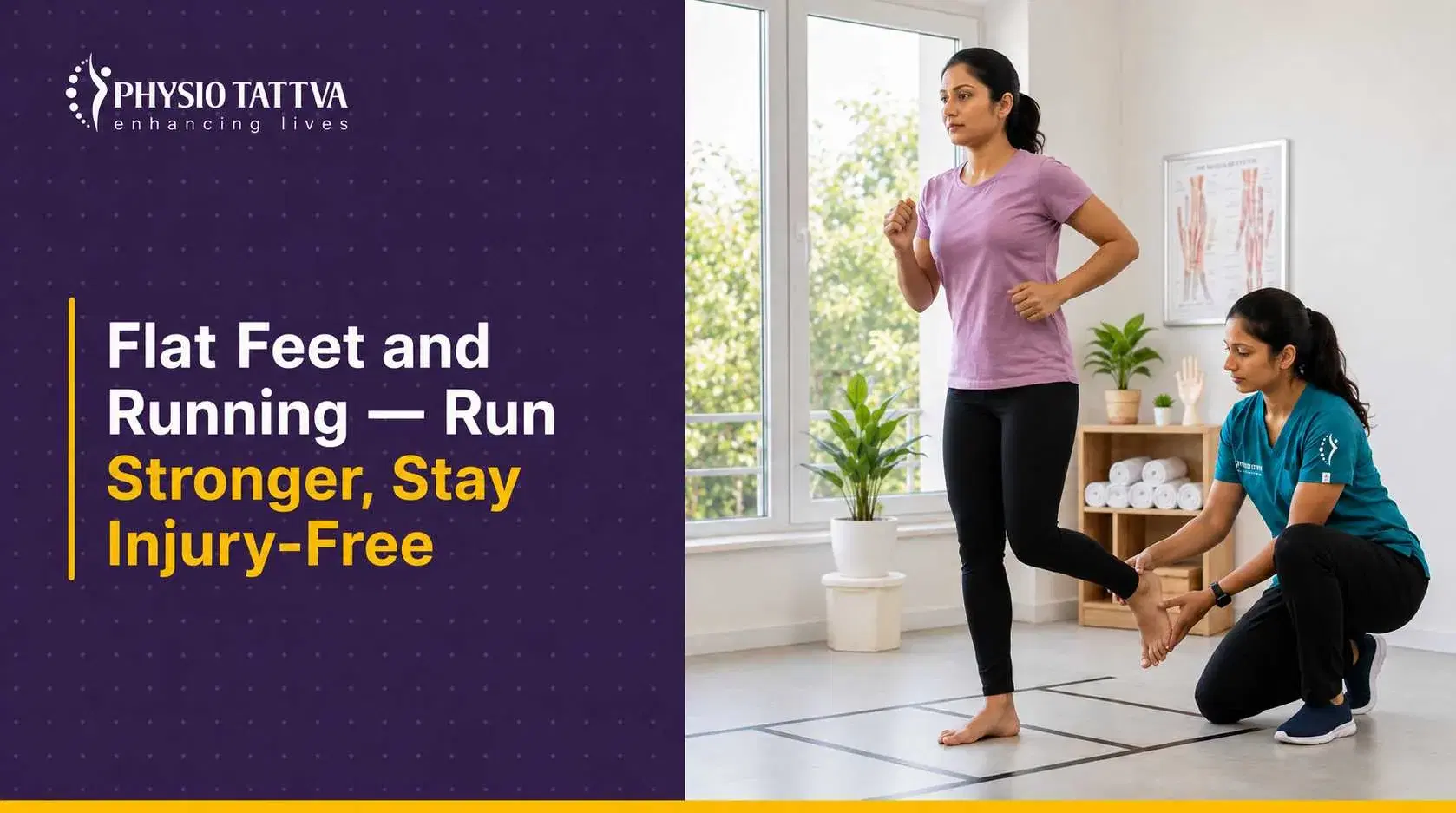
Watching you walk or run is essential. A physiotherapist can identify abnormal movement patterns like overpronation (inward ankle roll common with flat feet) or oversupination (insufficient inward roll common with high arches). Many clinics, including Physiotattva, use video gait assessment to slow down and analyse the movement frame-by-frame for a more accurate diagnosis.
Imaging When Needed
While not always necessary, imaging can be useful in complex cases. An X-ray can identify arthritis or bone alignment issues like tarsal coalition (a congenital fusion of bones). CT scans or MRIs may be ordered if a tendon tear (like in the posterior tibial tendon) or other soft tissue damage is suspected.
Flat Feet (Pes Planus): Types, Causes & Signs
Flat feet, or pes planus, occur when the arch on the inside of the foot is flattened, allowing the entire sole to touch the floor when standing. While often painless, it can sometimes lead to significant discomfort and biomechanical issues that require attention.
Types of Flat Feet
- Flexible Flat Foot: This is the most common type. An arch is visible when the foot is not bearing weight but disappears upon standing.
- Rigid Flat Foot: The arch is absent whether the foot is bearing weight or not. This type is less common and can be associated with underlying bone or joint issues.
- Congenital: Present from birth, sometimes due to genetic factors or conditions like tarsal coalition.
- Acquired: Develops over time due to age, injury (e.g., posterior tibial tendon dysfunction), obesity, or diseases like rheumatoid arthritis.
Symptoms & Clinical Signs
While many people with flat feet have no symptoms, others experience:
- Pain along the inner arch, heel, or ankle.
- Swelling along the inside of the ankle.
- Knee, hip, or lower back pain due to poor alignment.
- General foot fatigue or aching after standing or walking.
High Arches (Pes Cavus): Features & Concerns
A summary of the structural characteristics, common symptoms, and typical causes of high-arched feet.
High arches, or pes cavus, are less common than flat feet. This condition is characterised by an abnormally high medial longitudinal arch. Because the foot is often rigid, it’s less effective at absorbing shock, placing excess stress on the ball and heel of the foot.
Structural Features of High Arches
The distinctive shape of a high-arched foot often leads to secondary issues. The heel may be angled inward (varus), and toes may curl into a "claw" position. The plantar fascia is typically very tight, and the entire foot structure is less flexible compared to a neutral foot.
Symptoms of High Arches
The primary complaints related to arched feet vs flat feet are different. With high arches, patients often report:
- Foot instability and frequent ankle sprains.
- Pain in the ball of the foot (metatarsalgia).
- Calluses on the ball, side, or heel of the foot.
- Plantar fasciitis due to a tight plantar fascia.
Causes of High Arches
Unlike flat feet, high arches are often linked to an underlying cause. Many cases are associated with neurological conditions such as Charcot-Marie-Tooth disease, spina bifida, or cerebral palsy. They can also be inherited genetically or develop as a result of a past foot trauma.
Complications & Problems of Flat Feet vs High Arches
A comparative look at the distinct long-term complications that can arise from untreated flat feet and high arches.
Ignoring symptoms related to either foot type can lead to a cascade of problems. Untreated arch issues can cause chronic pain, permanent deformities, and a significant loss of mobility, impacting your quality of life. The complications of flat feet or high arch differ but are equally serious.
Common Complications of Flat Feet
- Posterior tibial tendon dysfunction: The primary tendon supporting the arch becomes stretched, torn, and inflamed.
- Plantar fasciitis: The plantar fascia is overstretched, causing heel pain.
- Bunions and hammertoes: Deformities caused by poor foot mechanics.
- Shin splints: Pain along the shin bone due to muscle strain.
- Aching feet after prolonged standing or activity.
- Knee, hip, and lower back pain from the body's attempt to compensate for poor foot alignment.
Arched Feet Problems
- Metatarsalgia: Pain and inflammation in the ball of the foot due to excessive pressure.
- Plantar fasciitis: Pain in the heel and arch from a perpetually tight plantar fascia.
- Stress fractures: The rigid foot's inability to absorb shock increases the risk of fractures in the metatarsals or tibia.
- Ankle instability and recurrent sprains: The outward tilt of the foot makes it prone to rolling.
- Claw toes and hammertoes: Toes buckle due to the foot's structure.
- Increased risk of arthritis due to concentrated pressure on joints.
Physiotherapy Management Strategies for Flat Feet and High Arches
Explore customised, evidence-based physiotherapy treatments that restore foot function, reduce pain, and improve gait for both arch types.
Physiotherapy offers a highly effective, non-surgical pathway to managing both flat feet and high arches. The approach is never one-size-fits-all; it requires a customised plan to restore function, alleviate pain, and correct gait abnormalities. At Physiotattva, we specialise in these evidence-based therapies to help you get back on your feet, pain-free.
Orthotics & Footwear
For flat feet, custom orthotics provide arch support to control overpronation. For high arches, they help redistribute pressure away from the heel and ball of the foot and provide shock absorption. A physiotherapist can also recommend the right type of supportive shoe for your specific foot type and activity level.
Strengthening Exercises
Targeted exercises are crucial. For flat feet, this includes strengthening intrinsic foot muscles (like "towel curls") and the posterior tibialis muscle. For high arches, strengthening the muscles that evert the foot (peroneals) can help improve stability.
Manual Therapy Approaches
Hands-on techniques can make a significant difference. A physiotherapist may use joint mobilisation to improve the mobility of rigid joints in a high-arched foot or soft tissue release to alleviate tension in the over-stressed muscles and fascia associated with both conditions.
Stretching & Mobility Work
For both foot types, stretching the calf muscles and Achilles tendon is vital for improving ankle flexibility. For high arches, specific stretches for the tight plantar fascia can provide significant relief. For flat feet, mobility work can help improve foot mechanics.
Gait Retraining & Balance Exercises
The final piece of the puzzle is teaching your body to move correctly. Proprioception (balance) training on unstable surfaces helps improve ankle stability, which is especially important for high arches. Gait retraining involves conscious cues to correct overpronation or improve shock absorption while walking.
When to See a Professional or Specialist for Flat Feet or High Arches
Learn to recognise the red flags, like persistent pain or sudden changes, that indicate it's time to consult a specialist for your foot condition.
While many cases can be managed with physiotherapy and lifestyle changes, some situations require a specialist. You should see a professional if you experience:
- Pain that is severe, persistent, or worsening despite conservative care.
- A sudden change in the shape of your foot or a newly acquired flat foot in one leg.
- Symptoms of nerve involvement, such as numbness or tingling.
- Difficulty walking or performing daily activities.
- A rigid flat foot or a high arch associated with neurological symptoms.
In these cases, a physiotherapist may refer you to a podiatrist or orthopaedic surgeon for further evaluation and to discuss options like advanced bracing or surgery.
Prevention & Long-Term Care
Discover proactive strategies and daily habits, from choosing the right shoes to simple exercises, for maintaining long-term foot health.
Managing your foot health is a lifelong commitment. Consistent habits are key to preventing pain and avoiding complications, whether you have flat feet or high arches.
Lifestyle Modifications
Maintaining a healthy weight is one of the most effective ways to reduce stress on your feet. Opting for low-impact exercises like swimming or cycling can help you stay active without overloading your arches.
Daily Habits
Make supportive footwear your default choice. Avoid flimsy shoes, flip-flops, or walking barefoot on hard surfaces for extended periods if you are symptomatic. If you've been prescribed orthotics, use them consistently as your physiotherapist recommends.
Home Exercise Programs
Your physiotherapist will design a home exercise program for you. Consistency is crucial. Regularly performing your prescribed stretches and strengthening exercises will maintain your foot’s strength, flexibility, and function for years to come. Common exercises include:
- Calf Stretches: Against a wall.
- Towel Curls: To strengthen intrinsic foot muscles.
- Heel Raises: To strengthen calves and support muscles.
- Arch Lifts (Short Foot Exercise): To actively engage the arch.
Recover Better with Physiotattva’s Flat Feet and High Arch Treatments
Reclaim your mobility with Physiotattva’s expert-led, personalised physiotherapy programs designed to treat foot pain without surgery.
Don't let foot pain dictate your life. Whether you are dealing with the biomechanical challenges of flat feet or the rigid instability of high arches, physiotherapy offers a proven path to recovery. At Physiotattva, our expert physiotherapists develop personalised rehabilitation programs focused on non-surgical interventions that correct alignment, build strength, and eliminate pain. We combine manual therapy, targeted exercises, gait retraining, and footwear education to address the root cause of your discomfort.
If you are struggling with the flat feet vs arch feet treatment dilemma, let our team provide the clarity and care you need. Contact Physiotattva today for a comprehensive evaluation and take the first step toward pain-free movement.
At Physiotattva physiotherapy clinics in Bangalore and Hyderabad, you receive personalised care tailored to your specific needs, ensuring effective results and comfort throughout your journey to recovery.
Don’t wait to start your recovery! Get in touch with Physiotattva for more details! Contact us at +91 89510 47001.