


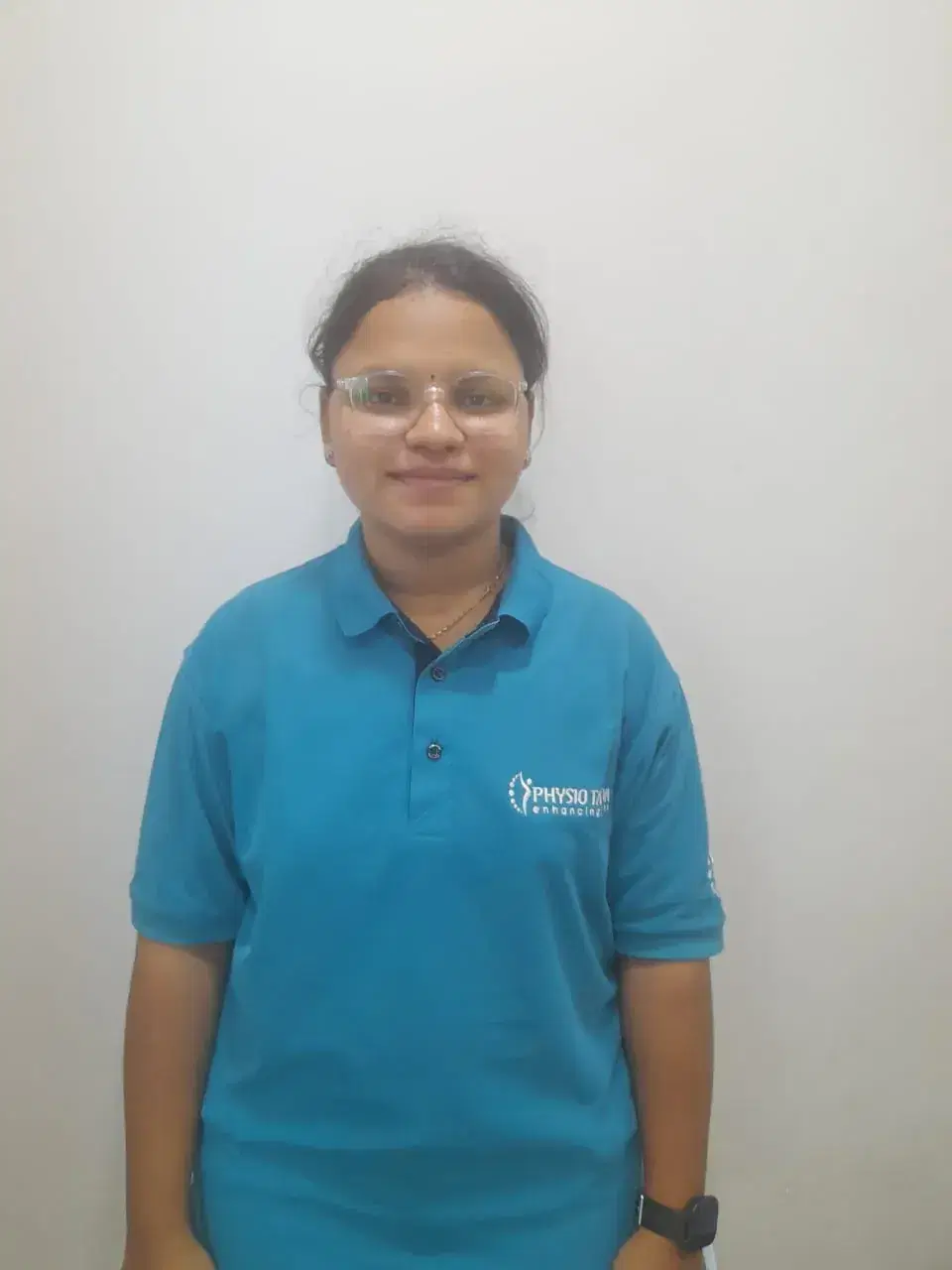
Physiotherapist
Singam Sivani
Clinical Physiotherapist
Kukatpally
- Pain management
- cupping
- dry needling
- soft tissue manipulation
- joint mobilisation.
- Experience
- 2 Years
- Languages
- English, Telugu
- Qualification
- Bachelor of Physiotherapy
- Clinic
- next bank of baroda, no.216,phase 1 &2, Kukatpally Housing Board Colony, Kukatpally, Telangana 500085
Singam Sivani is a Physiotherapist with 2 years of experience, and she is skilled in pain management and trained in therapeutic techniques including cupping, dry needling, soft tissue manipulation, and joint mobilisation. Her role involves conducting assessments, assisting elderly patients with tailored exercises, and supporting clinical documentation and patient follow-ups. With experience managing both in-clinic and home-based physiotherapy sessions, she ensures compassionate, structured, and evidence-informed care. Sivani is also adept at training junior assistants, contributing to a collaborative and patient-focused care environment.
From the blog
Articles by Singam Sivani
 Health18 January 2026
In this article, we explore the different aspects of hand ligament injuries so that it becomes easy to identify symptoms. We also discuss the diagnostic methods to understand…
 Shoulder Pain31 October 2025
Myofascial Pain Syndrome is a chronic pain condition distinguished by localised muscle discomfort and trigger points, which are hyperirritable knots. These trigger points can…
 Knee Pain31 October 2025
In this article, we dissect knee muscle tears, elucidating causes, symptoms, and treatment options. From understanding triggers like sudden movements to recognising symptoms like…
 Health30 October 2025
Juvenile Idiopathic Arthritis (JIA) is a chronic autoimmune disorder affecting children and adolescents. It causes joint inflammation, pain, and stiffness, often leading to impaired mobility. JIA has various subtypes, and its exact cause remains unknown. Early diagnosis and tailored treatment plans, including medication, physical therapy, and lifestyle adjustments, are crucial to managing symptoms and improving the quality of life for young individuals with this condition.
 Health30 October 2025
A neck hump forms due to fat buildup, poor posture, or spinal changes. It affects movement and may signal underlying issues. It is important to recognise signs like stiffness, pain, or imbalance, which help identify the cause and take early action. A hump on back of neck can sometimes appear gradually, making it essential to monitor any unusual developments closely.
Start with an assessment
We measure what you've lost, find the cause, and set out a plan with a target and a timeline.
- Call us+91 89510 47001
- Email usinfo@physiotattva.com
- Visit a clinic23 clinics across Bangalore, Hyderabad and Visakhapatnam
- Or stay homePhysiotherapy at home